Lifestyle
Bowen Yang invited Tina Fey onto his podcast. He's still dwelling on what she said

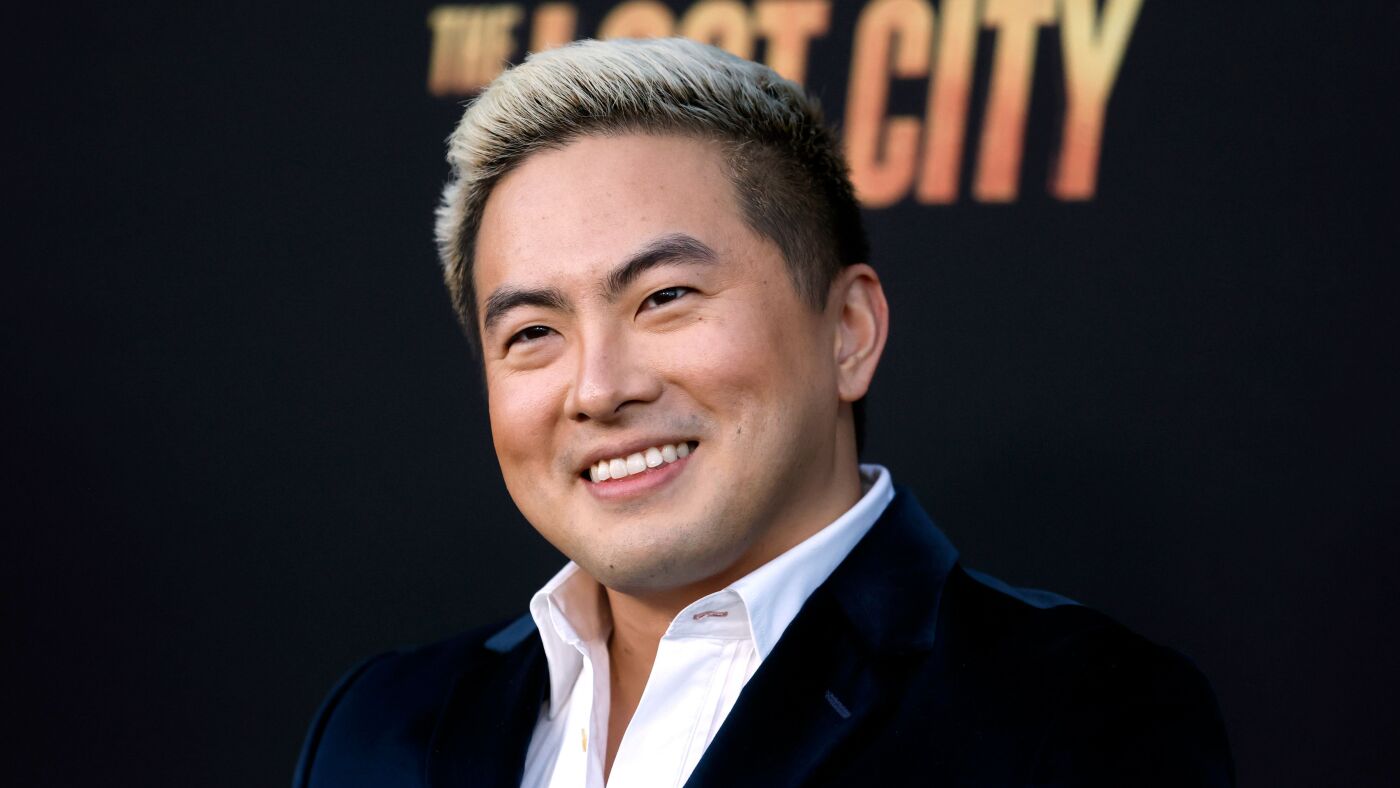
Bowen Yang talks to Wild Card about his proudest moment as a kid, hard truths from Tina Fey and why he thinks there’s more to reality than we can see or touch?
Frazer Harrison/Getty Images
hide caption
toggle caption
Frazer Harrison/Getty Images
A note from Wild Card host Rachel Martin: So, I gotta tell you, I take research very seriously. My team and I spend hours digging through articles and profiles of our guests, trying to understand them. This is serious work. And of course this is what I did to prepare for my conversation with Bowen Yang.
A lot of it I already knew – like the fact that he’s the first Chinese American cast member on Saturday Night Live. And I knew the inside jokes from his podcast Las Culturistas, which he hosts with his best friend Matt Rogers.

But I also have to cop to the fact that the research for this interview was just a good time. Because I had an excuse to watch a lot of SNL clips. The iceberg that sank the Titanic, the Chinese spy balloon, the intern at the Tiny Desk Concert – Bowen Yang classics all.
But as much as I love him on SNL, it was the 2022 rom-com Fire Island that made me fall in love with him. He turned what could have been a light and easy role as the best friend who never gets the guy into something heartbreakingly real and joyful. So it was my very great pleasure to get to talk to Bowen on Wild Card.
Bowen Yang as the iceberg that sunk the Titanic on a Saturday Night Live.
Weekend Update: The Iceberg on the Sinking of the Titanic – SNL
YouTube
This Wild Card interview has been edited for length and clarity. Host Rachel Martin asks guests randomly-selected questions from a deck of cards. Tap play above to listen to the full podcast, or read an excerpt below.
Question 1: What was a moment when you felt proud of yourself as a kid?
Bowen Yang: In the first grade — or year one as we called it in Canada, I was in Montreal at the time — there was just a class one day in school where we drew. I had pastels and then there was just unstructured drawing time, right? First-grade classic. I drew a clown with blue hair, a flower in his shirt, standing outside the circus, and then there was a speech bubble on the clown and he was saying, “Allô,” your French Quebecois greeting, “Allô.”
Pretty simple stuff, right? But apparently, the teacher at the time thought it was so sophisticated that she submitted it to this art contest and then I won a full 20 Canadian dollars. And I think it was a pretty vital moment of creative validation for me growing up, and my parents were very excited.

Martin: Did your parents think you were going to be an artist, or you just moved on from that?
Yang: No, they really pushed that, and for some reason, art was acceptable creative outlets for an Asian child of immigrants.
Martin: Those are the high arts! The high arts.
Yang: It was the high arts! And so I think they were very confused when I pivoted years later to improv comedy and, like, telling jokes on stage because they were like, “This is completely crude.”
Question 2: What have you learned to be careful about?
Yang: Ugh. This is really something that I’ve dwelled on for the past, oh, two, three months? Tina Fey came on my podcast, and she — in a very playful, so brilliant way — was railing against me for sharing my real opinions on movies on the podcast and just my real opinions in general.
Basically, what Tina was saying was, this is a permanent record. It’s like that thing of like, the internet is written in permanent marker. And the phrase that kind of went a little viral from that was her saying, “Authenticity is dangerous and expensive.”
And I really am still reckoning with that idea where I’ve always been an open book. I’ve always shared my thoughts pretty extemporaneously on things and haven’t really regretted them too much. But now I think I’m reevaluating what it means or like, how worth it it is to be honest about everything. But then at the same time like, if you kind of start to self-censor a bit, then what does that do to your idea of yourself?
Question 3: Do you think there’s more to reality than we can see or touch?
Yang: Yeah, definitely, definitely. I am generally a skeptic with things. I read too many Carl Sagan books in college. But I feel like there is this meta-reality or something that exists that people can tap into because – I know the question is not necessarily implying anything supernatural – but we had on a medium for the [Las Culturistas] podcast, Tyler Henry. He’s also known to some people as the Hollywood Medium. And, again, it invites skepticism because you’re like, how much did he know beforehand? And he said things to me that were really conceptual and not necessarily, “Oh, this person is in this other dimension and they’re trying to communicate this to you.”
For me, it was just like, “Oh, what I’m picking up from you is that you have this legacy of people who were not able to share their lives or the legacy is a little bit blurred.” My dad grew up in a rural part of China where most of his relatives are not really documented. There was just no family tree or history to go off of, and no one could read, and no one went to school, and he was the first in his family to even go to college.
And so what Tyler Henry was basically saying was like, you are able to end this cycle of one, shame, and two, record in a weird way. Like, you get to – through being yourself and being like a citizen of this world now where people are constantly tracking things and things are easily recorded for posterity – that gets to sort of be one of your motivating forces in life. And that’s something that I kind of loved hearing. It was very meaningful to hear because it was borrowed from this metaphysical space but at the same time it applies to something that I can do now and it is from a reality that is unobservable which I kind of love.
Want to hear this whole conversation? Listen to the full Wild Card episode with Rachel and Bowen Yang.


Since leaving office, former Vice President Mike Pence founded the policy and advocacy organization Advancing American Freedom.
Drew Angerer/Getty Images
hide caption
toggle caption
Drew Angerer/Getty Images

Since leaving office, former Vice President Mike Pence founded the policy and advocacy organization Advancing American Freedom.
Drew Angerer/Getty Images
Former Vice President Mike Pence played a key role in bringing President Trump to power in 2016. By putting his name on the Republican ticket, he helped reassure the Republican establishment and evangelical voters who were wary of Trump’s brash brand of populism.
Pence’s departure from Trump’s leadership of the Republican party began when Trump called on Pence to refuse to certify the results of the 2020 election — pressure Pence rejected.
“For four years, we had a close working relationship. It did not end well,” Pence wrote in his memoir So Help Me God, which was released in 2022.
In the years since leaving office, Pence has been advocating for an ideological restructure of the Republican party, and founded the policy and advocacy organization Advancing American Freedom. Pence builds on the theme of reimagining the Republican party in his new book What Conservatives Want, which provides a critique of the second Trump administration and what he terms the “populist right.”
In an interview with Morning Edition, Pence detailed to NPR’s Steve Inskeep his critique of the second Trump administration, shared his perspective on civil rights legislation and challenged Trump’s tariffs and other interventions in the economy.
Listen to the full interview by clicking on the blue play button above; and read highlights from the conversation below.
‘The populist right’ does not represent conservative beliefs
Pence believes that Trump has embraced “the populist right” over traditional conservatives in the Republican party.
The sale of economic American company U.S. Steel to Nippon Steel in Japan exemplifies this shift, Pence said.
In his first term, President Trump opposed the sale. But in his second term, he approved the sale and took a golden share — a class of shares in which a government can own a very small percentage of the company but has outsized voting rights.
Pence said that he was taken aback by Trump’s decision to take a golden share.
Free trade is essential to American conservatism
Pence takes umbrage with his former boss’ tariff-laden economic policy.
Pence said it violates conservatism’s bedrock belief in the power of free trade, and Trump has gone about granting exceptions to tariffs in an unfair way.
Granting waivers to large corporations from certain tariffs is “one of the lesser reported aspects of the tariff regime that’s been imposed by the administration,” Pence added.
Trump and Pence ran in 2020 on a mission to “drain the swamp,” rooting out government corruption and wasteful spending. However, Pence said Trump appears to have shifted from those goals.
“There’s maybe nothing more swampy than the battle over getting tariff waivers for big business,” Pence said.
Women’s rights on the right
There is a debate among the ultraconservative right about the role of women in civic life.
The concept of “household voting,” has become a familiar talking point for ultra-right-wing communities online. Supporters of “household voting” advocate that every American household should get one vote, the vote being that of the husband’s. This concept has been promoted by figures such as Abby Johnson, a prominent anti-abortion activist who spoke at the 2020 Republican National Convention. When asked about whether he supported household voting, Pence said he is not aligned
“It’s one person, one vote in this country. And people have bled and died for that principle throughout the years of our history,” Pence said.
He added that American families don’t need to be propped up by government programs to boost childbirth. “What American families need is an application of the kind of principles that will create higher wages, more opportunities, more jobs,” Pence said.
Should conservatives stand for civil rights?
Pence said he was an admirer of senator and one-time presidential candidate Barry Goldwater.
Notably, Goldwater voted against the Civil Rights Act of 1964.
“Should conservatives stand for civil rights?” asked Inskeep.
Pence responded that civil rights are important to conservatives, but that equality of opportunity is what legislation ought to enshrine, not equality of outcome.
Pence added that he stood by the Supreme Court’s decision to ban partisan gerrymandering on the basis of race, rendering ineffective a key provision of the Voting Rights Act of 1965.


Milly Alcock in Supergirl.
Warner Bros. Pictures
hide caption
toggle caption
Warner Bros. Pictures
Hollywood’s newest Supergirl is kind of a dirtbag — in the good way. Fearless and grumpy, Supergirl (Milly Alcock) sets out on a quest to support a new pal’s revenge journey and to make a point that should be clear by now: Never mess with a lady’s dog. Also featuring David Corenswet and Jason Momoa, is Supergirl a worthy follow up to Superman?
If you want more DC superhero action, check out these episodes:
‘Superman’ takes off and nails the landing
‘The Batman’ puts the emo in emote
Connect with Pop Culture Happy Hour:
Letterboxd / Facebook
Our weekly newsletter
Support Pop Culture Happy Hour+
-

 Texas4 minutes ago
Texas state school board approves mandated reading list including Bible passages
-

 Utah11 minutes ago
Utah, Salt Lake County awarded grants for community cleanup
-

 Vermont14 minutes ago
West Rutland man dies in hit-and-run, police seek vehicle
-

 Virginia19 minutes ago
Vandals smash windows of nearly 3 dozen cars in Arlington Mill
-

 Washington26 minutes ago
The Washington Capitals Select Oliver Suvanto | Washington Capitals
-
 Wisconsin29 minutes ago
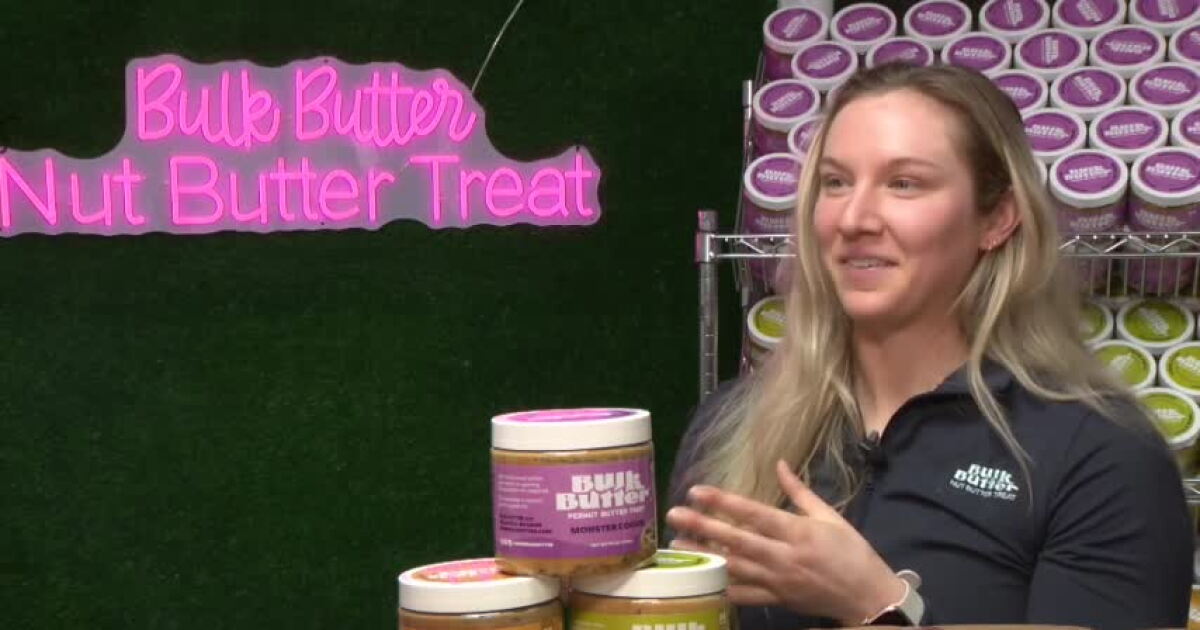
From bodybuilding to business: Wisconsin entrepreneur builds success with Bulk Butter
-

 West Virginia34 minutes ago
West Virginia First Foundation advances key initiatives at second quarterly board meeting
-

 Wyoming41 minutes ago
At 6,000-year-old crossing, Gov. Gordon OKs Wyoming’s first-ever designated pronghorn migration route – WyoFile

