Politics
Opinion: Interracial marriage went from criminal to commonplace. Could it go back?

American love stories have a default race: white. If the love story is “interracial,” one person is white, and the other person is not. In a standard American rom-com, the only nonwhite characters are the white lead’s helpful best friends or underwritten colleagues.
Quincy, a Black man, and I, a South Asian woman, are none of these things.
“All I could think on the way here is when am I going to kiss you,” Quincy told me one day in 2009, three weeks after we had met. It was the “when” that got me; I was that impatient too.
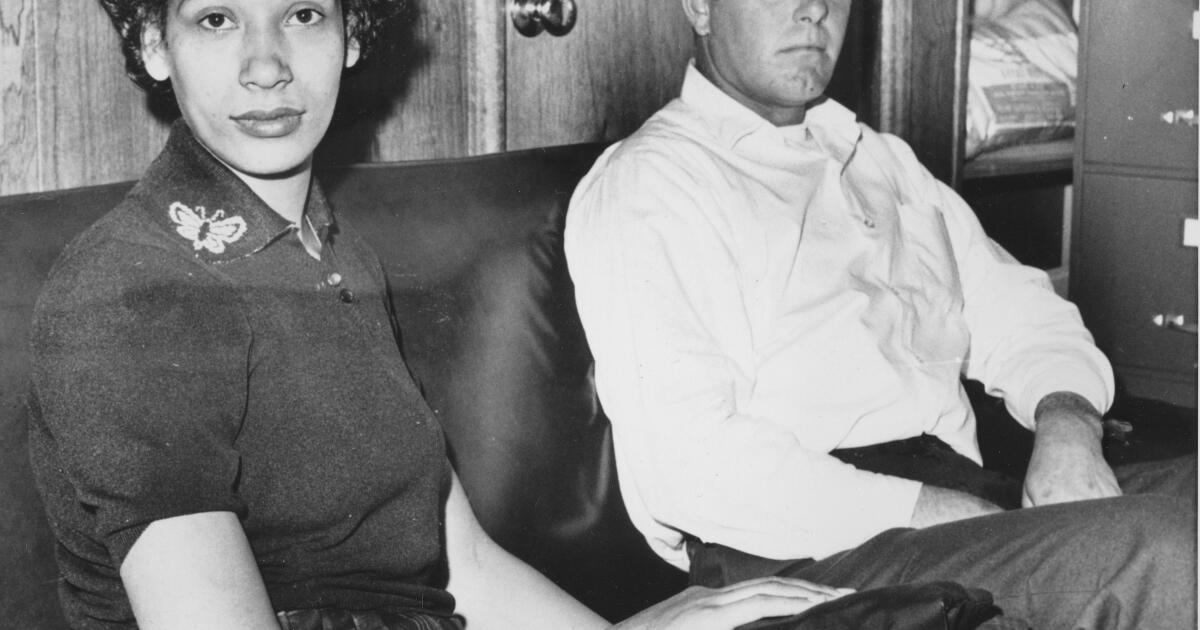
More than 50 years earlier, on July 11, 1958, Richard and Mildred Loving woke up around 2 a.m. to find their local sheriff shining a flashlight over them.
“What are you doing in bed with this woman?” he demanded of Richard.
Richard was white, and Mildred was black.
The Lovings were charged with violating Virginia’s Racial Integrity Act of 1924, which criminalized marriage between people classified as “white” and “colored.” The Lovings took their case all the way to the U.S. Supreme Court, which unanimously struck down Virginia’s law and ended race-based legal marriage restrictions nationwide on June 12, 1967.
The date is now recognized by cities, states and organizations across the country as Loving Day. It should be a national holiday.
I’m not sure how the authorities would have regarded Q and me back then — whether we would have been deemed an interracial couple or not. Would they have even cared about our union given that neither of us is white?
What I do know is that paranoia about interracial relationships is not unique to white Americans.
Early 20th century Indian immigrants to the United States, for example, invoked anti-miscegenation rhetoric as a way of establishing their claims to citizenship. Bhagat Singh Thind, a writer and World War I veteran, used the language of caste apartheid to make his own case to the Supreme Court in 1923: “The high-caste Hindu regards the aboriginal Indian Mongoloid in the same manner as the American regards the Negro, speaking from a matrimonial standpoint.” His argument was, in short, that as a person of high caste, he was practically white and therefore eligible for citizenship under federal immigration law, which limited naturalization to people of European and African descent.
Thind’s gambit — to weaponize one kind of discrimination against another — failed. The court ruled against him, and some 50 Indian Americans had their citizenship revoked over the next three years as a result.
Five years after Loving vs. Virginia, my parents, joined by the kind of inter-caste “love” marriage that Thind argued against, would come to the United States. Their passage was facilitated by the Immigration and Nationality Act of 1965, with which the country opened its doors wider than ever to immigrants of Asian descent, though it prioritized skilled professionals who could contribute to the Space Race and other national priorities: scientists, engineers, doctors.
The U.S. government’s desire to beat the Russians may have played a role in the legislation, while schooling, class and caste privilege made medical and engineering degrees attainable for many Asian immigrants of the period. But it was the civil rights movement led by Black Americans that truly gave these newcomers a shot at a more humane, equitable life here.
And yet if it weren’t for Loving Day, I’m not sure I would have been aware of the Lovings as civil rights pioneers.
It was Quincy who pointed me to their story. In 2017, he — by then my husband — found a call for interracial couples to re-create an iconic 1965 image of Richard and Mildred Loving, shot by Grey Villet for Life magazine seven years after their arrest. I suggested we participate.
I always read the photo as showing Mildred in the course of doing something else when Richard scooped her into his arm. The husband’s face is tilted toward the camera as he leans in to kiss his wife. Mildred looks busy: Maybe it’s her posture, not leaning toward Richard but standing straight; maybe it’s her hair, not done up for the camera but in utilitarian bobby pins. It seems to capture a moment of embrace, of love, in the midst of a typical day.
Perhaps that’s what made me feel as if we could inhabit this photo. Quincy is always trying to scoop me up while I’m motoring about doing one of 10 million things in a day.
I think that’s the power of the photo. America doesn’t tend to read race as a love story. Race in America is seen as a story of pain and tragedy. But people are more than pain, more than tragic. Our lives together are ordinary as much as extraordinary.
That’s exactly what Richard and Mildred were fighting for: the right to an ordinary, kissing-amid-the-10-million-things-of-the-day kind of life.
The Lovings’ case would become a precedent for the Supreme Court’s ruling in Obergefell vs. Hodges, which legalized same-sex marriage in 2015. The court ruled that “the right to marry is a fundamental right inherent in the liberty of the person, and … couples of the same sex may not be deprived of that right and that liberty.”
The Pew Research Center found a more than fivefold increase in interracial marriage in the half-century since Loving vs. Virginia, with about 1 in 6 newlyweds married to someone of a different race.
For me, Loving Day is a testament to the everyday-ness of some civil disobedience. It’s also a challenge to the anti-Blackness that addles South Asian communities. From Thind onward, complicity in racism against Black people has been one way South Asians have tried to claim citizenship in America, so anti-Blackness is forever bound up with both assimilation and caste-based oppression.
“When am I going to kiss you?” Quincy said. We waited out of politeness, for privacy and to freely express our passion for each other. But that freedom is fragile.
In their dissent from the 2022 decision overturning Roe vs. Wade, Justices Stephen G. Breyer, Elena Kagan and Sonia Sotomayor warned that “no one should be confident that this majority is done with its work,” calling Roe and Obergefell “part of the same constitutional fabric, protecting autonomous decision making over the most personal of life decisions.”
Like the Lovings, we can’t be sure history won’t pluck us out of our 10 million things, threatening us with a flashlight from the edge of our bed. Loving Day is not merely to celebrate the past. It’s to ensure that a future of freedom for love in all its forms is not an “if” but a “when.”
Nina Sharma is the author of “The Way You Make Me Feel: Love in Black and Brown.”


SACRAMENTO — Gov. Gavin Newsom reached an agreement Friday with legislative leaders on a $351.7-billion state budget in his final year as governor, a spending plan that uses a tax windfall to avoid major cuts and lessen California’s chronic deficit in the years ahead.
The deal provides nearly $2 billion in state revenue next year through tax hikes on corporations, new levies on software sales and a revamped tax on managed healthcare organizations. Lawmakers and the governor continue major investments in public schools, healthcare and agreed to increase spending on subsidized childcare and affordable housing.
“We want to leave the next governor not only a balanced budget, but a budget that is substantially structurally sound, and we’re going to accomplish that,” Newsom said in an interview Friday. “We were very cautious in terms of new spending,”
The agreement ends weeks of lobbying by outside interests and negotiations among lawmakers and the governor at the state Capitol about how to handle a surge of income tax collected on stock market gains related to artificial intelligence.
Early forecasts last June projected a $12.6-billion deficit in 2026-27, according to the California Department of Finance. Updated predictions now suggest the state will end the year with a surplus of $4.5 billion.
Democrats, following Newsom’s lead, are tucking away $6.4 billion for future years, which allows the governor to knock down a deficit previously projected through 2027-28 and assuage criticism about his spending habits.
But economists say the fix and revenue increase are likely only temporary.
Spending in California has generally exceeded revenue growth during Newsom’s tenure in the governor’s office, creating a chronic shortfall. Despite the extra funding, the budget continues a trend of relying on reserves, shifting funds, borrowing and suspending debt payments to balance state spending.
The Legislative Analyst’s Office, the nonpartisan fiscal advisor for lawmakers, has warned of a roughly $10-billion annual gap between the amount of money the state brings in and spends, which could grow dramatically worse if the stock market turns downward. The LAO has said the existence of any operating deficit during a revenue boom is a red flag and that the state is “ill-prepared” for even a modest decline.
Christopher Thornberg, an economist and founder of the consulting firm Beacon Economics, said it’s business as usual in Sacramento.
“They love increasing spending. But it seems politically impossible to go the other way,” Thornberg said. “We’ve seen this play out over and over again.”
Lawmakers and the governor offered a different take and asserted that their decision to put the $6.4 billion into a short-term reserve, called the Projected Surplus Temporary Holding Account, and ask voters to allow them to store more money in the rainy day fund are examples of prudent budgeting.
“You see us save more and you see us try to address the immediate needs of our community, but also the structural budget that potentially awaits us,” said Senate President Pro Tem Monique Limón (D-Goleta) in an interview. “We are forecasting a moment where we will need to address these issues and we want to start now to think about the future as well.”
Under a progressive tax structure, the state budget is dependent on income taxes paid by the ultra-rich on earnings largely from capital gains. The set up leaves California vulnerable to the unpredictable nature of the stock market, dramatic swings in revenue and, in recent years, reliant on poor projections.
Negotiations at the state Capitol included an agreement on a constitutional amendment that seeks to offset the revenue highs and lows.
If approved by voters on the statewide ballot in November, the amendment would raise a cap on mandatory deposits into the rainy day fund from 10% to 20% of general fund revenue. The measure would also allow lawmakers to exempt money they put into the rainy day fund and the temporary holding account from state spending limits.
Under an existing state appropriations restraint, also known as the Gann Limit, lawmakers cannot spend more than an amount determined by a formula that takes annual tax proceeds, changes to the population and cost of living into consideration. Tax revenue above the limit must be divided between schools and refunds to taxpayers.
With few exceptions, the limit applies to most appropriations of tax revenue, including when lawmakers put money away in the rainy day fund and other reserves.
Newsom said the change will leave the state in a much better position to weather the volatility. Though calls for tax reform remain in California, the governor said being able to place more money into the reserves could ultimately solve the state’s budget challenges.
“The one thing missing is the one thing that I think we finally landed, which is the change in the reserves,” Newsom said. “It changes the political dynamic, where now you’re not exchanging general fund priorities.”
Republicans criticized the proposed constitutional amendment, which passed in a budget trailer bill this week, for failing to require that excess revenue pays down the state’s $22 billion in unemployment insurance debt.
State Sen. Tony Strickland (R-Huntington Beach) called it a missed opportunity.
“It does not require debt payment to go to the UI debt,” Strickland said. “It facilitates more spending, exempting reserve deposits from the state spending limit.”
The proposed change to the state Constitution also jabs the president and asks voters to approve a 100% tax on payments any California taxpayers receive from the “Anti-Weaponization Fund” Trump established for allies who claim they were unjustly targeted by the federal government.
As part of the overall budget negotiations, lawmakers agreed to delay some healthcare cuts that would have required monthly premiums for immigrants and eliminated dental care. The deal adopts a Medi-Cal asset test of $21,000 on July 1, 2027, instead of $2,000.
The budget agreement includes a provision requiring California’s next governor to develop options to reduce taxpayer subsidies for corporations whose employees receive state-sponsored healthcare through Medi-Cal instead of the company’s health plan. The plan is aimed at raising revenue to offset federal cuts that are expected to leave millions of Californians without access to healthcare.
To generate $11.25 billion for affordable housing, Democrats approved a bond for the November ballot that would include down payment and mortgage assistance to veterans and low-income families. Democrats also approved $900 million in Homeless Housing, Assistance, and Prevention grants, marking a $400-million increase from Newsom’s budget proposal in May.
The California Department of Finance said state reserves are expected to total $28.8 billion under the 2026-27 budget.
Politics
Warren tells Trump to ‘sign the damn bill’ as bipartisan housing package remains stalled in Washington

NEWYou can now listen to Fox News articles!
Sen. Elizabeth Warren, D-Mass., lashed out at President Donald Trump during a recent local television interview, labeling him a “man-child” throwing a “tantrum” over his refusal to sign a sweeping bipartisan housing package.
Appearing on WCVB’s “On the Record,” the left-wing senator did not hold back her frustration over the stalled legislation, delivering a blunt message to the president: “Sign the damn bill.”
“If he cared about the American people, he’d have already signed the damn thing,” Warren said during the interview, arguing that Trump “does not care about the economic survival of America’s working families.”
FILE – The Senate previously advanced the massive housing package geared toward lowering the costs of homes and supercharging the housing supply. Sen. Elizabeth Warren, D-Mass., pitched it as legislation to prevent America from becoming a “nation of renters.” (Jemal Countess/Getty Images for Protect Borrowers ; Anna Moneymaker/Getty Images)
TRUMP-BACKED HOUSING BILL CLEARS HOUSE AFTER GOP DEFIES SENATE PRESSURE CAMPAIGN
The 21st Century ROAD to Housing Act is an expansive bipartisan package that she said contains nearly 50 provisions designed to address the nationwide housing emergency.
Warren noted that decades of under-building have driven prices up, leaving the U.S. in need of millions of new units.
The primary focus of the bill is to lower the costs of construction and make it easier to build new homes.
FILE – President Donald Trump previously said lawmakers must first approve the SAVE America Act before he moves forward with the housing package. (Yuri Gripas/Abaca/Bloomberg)
BIPARTISAN HOUSING PUSH ADVANCES, BUT TRUMP-BACKED INVESTOR BAN FACES RESISTANCE
The bill, which was co-sponsored by Sen. Tim Scott, R-S.C., also includes a secondary focus aimed at blocking corporate consolidation of the housing market.
Warren explained that the legislation is designed to keep private equity firms from buying up local neighborhoods and turning America “into a nation of renters.”
According to Warren, the legislation had widespread support from both sides of the aisle before it was stalled.
TRUMP VOWS BLOCK ON SIGNING NEW LAWS UNTIL SAVE AMERICA ACT PASSES SENATE
She claimed the bill was “handed to the president on a silver platter” and that lawmakers from both parties were eagerly taking credit for the legislation.
“Republicans were all going online, saying, ‘well, I helped write that bill. This bill is terrific,’” Warren said. “So everybody’s out there saying, ‘my bill, I helped make this happen,’ right up until the man-child has a tantrum and announces he will not be signing it.”
FILE – Sen. Elizabeth Warren called President Donald Trump a “man-child” during the interview, describing his refusal to sign the bill as a “tantrum.” (Chip Somodevilla/Getty Images)
CLICK HERE TO DOWNLOAD THE FOX NEWS APP
Critics of the legislation claim it does not allocate fresh federal funding, directly address rising costs of homeownership, or go far enough to address permitting issues.
The president previously canceled a scheduled signing event, insisting lawmakers must first approve the unrelated SAVE America Act, a voting-focused measure, before he moves forward.
The White House did not immediately respond to Fox News Digital’s request for comment.
Fox News Digital’s Alex Miller contributed to this report.
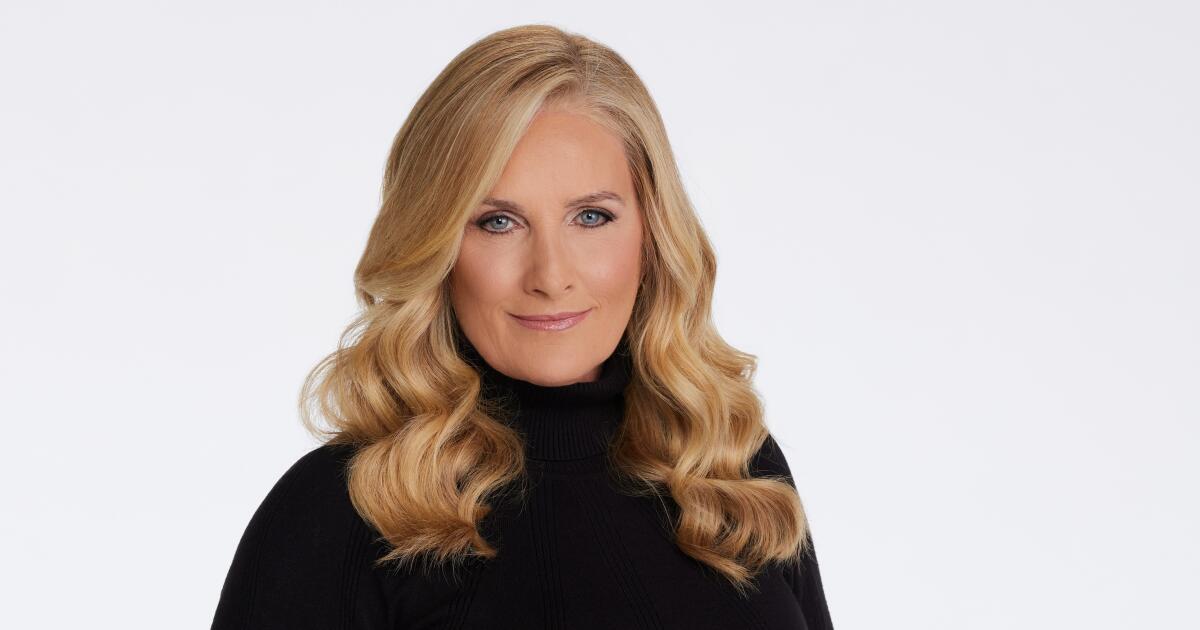
Veteran MS NOW anchor Alex Witt is leaving the news network, which is moving away from live evening programming on weekends.
The new weekend programming strategy announced Friday is a cost-saving measure that will give parent company Versant more resources for a new direct-to-consumer streaming offering that makes MS NOW available to consumers without a pay-TV subscription. The company is also looking to expand its live event business.
According to a memo from MS NOW President Rebecca Kutler, “The Weekend: Primetime,” a live discussion program launched last year, will have its final airing Saturday.
One of the program’s co-hosts, Antonia Hylton, will take over Witt’s midday shifts later this year. Hylton’s co-hosts Ayman Mohyeldin, Catherine Rampell and Elise Jordan will remain with MS NOW and continue to appear on other programs.
Kutler said job losses from the moves are minimal and encouraged staffers who lose their current roles to apply for 40 current job openings at the company with more on the way. MS NOW has been staffing up its news operation since separating from NBC News last year.
MS NOW changed its name from MSNBC in November. The network, along with other Comcast-owned cable channels, were spun off into Versant in January.
Weekends have long been a ratings weak spot for MS NOW, which while a distant second to Fox News, has seen audience growth in 2026 and remains ahead of CNN. The network has started to rely on podcasts such as “Pod Save America,” from Crooked Media, to fill some hours. The episodes have performed strongly enough for MS NOW to try similar deals with outside podcast producers.
“Throughout the summer, we will expand our taped strategy and announce new content partnerships,” Kutler said in her memo.
With the changes, MS NOW will still have 20 hours of live programming each weekend and will be staffed to handle breaking news.
Witt joined the network formerly known as MSNBC in 1999, long before it began its strong tilt toward progressive political commentary. Over the years, Witt’s weekend newscast became one of the few programs on the network that delivered straight news without opinion.
Kutler called Witt “a beloved longtime member of our MS NOW family” and “a continued, trusted, and steady presence for our audiences.”
While Witt works through the summer, Hylton will anchor the 11 a.m. weekday time period, which will eventually be handled by former NBC News White House correspondent Peter Alexander.
-
 Business40 seconds ago
Commentary: Puncturing the myth of Alan Greenspan, whose policies gave us the Great Recession
-
 Entertainment6 minutes ago
On 10th anniversary, Boleros de Noche’s legacy is celebrated by L.A. City Hall
-
 Lifestyle13 minutes ago
They started playing L.A. Municipal softball 50 years ago. They’re still at it
-
Politics16 minutes ago
Newsom, California Legislature reach $351.7-billion budget deal
-
 Sports28 minutes ago
Roki Sasaki struggles with command early, Dodgers fall to Padres
-

 World36 minutes ago
Trump threatens 100% tariffs over EU digital tax
-

 News1 hour ago
Utah County declares State of Emergency as wildfires ‘ravage’ the state
-

 Los Angeles, Ca2 hours ago
Man found guilty of sex trafficking victim along L.A.’s Figueroa Corridor

