Lifestyle
In L.A., sometimes waiting in line is the whole event

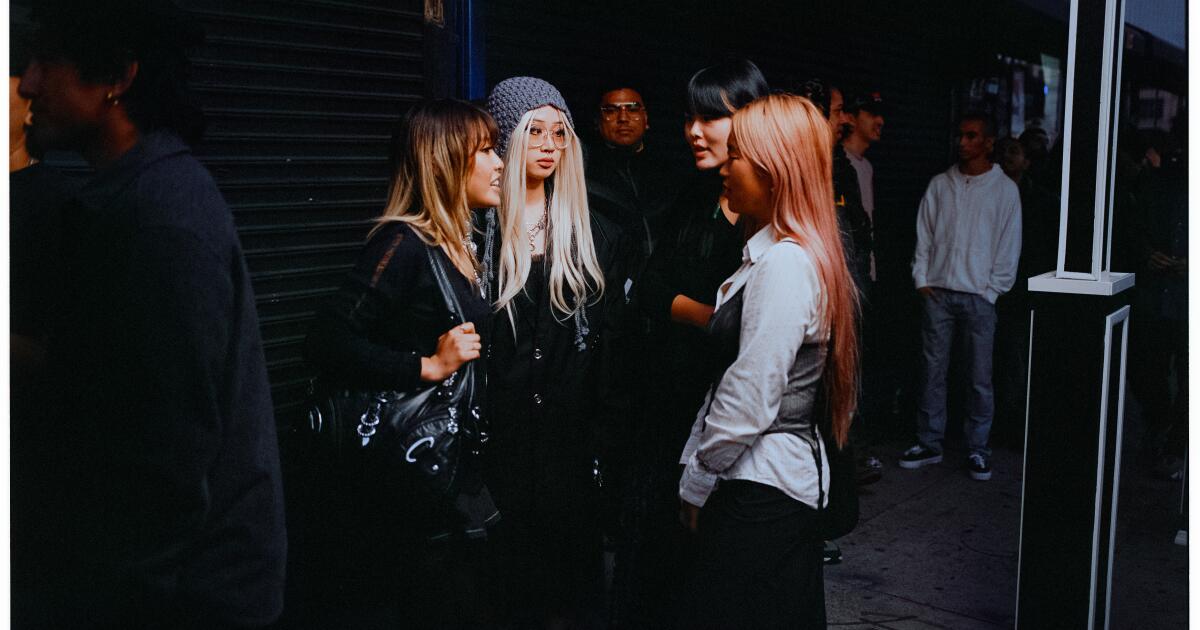
As a child, I hated nothing more than waiting in line at school. I remember not being able to go back to class from the school yard unless we were in a perfectly straight, unnaturally silent line. “Why?” I found the courage to ask my seventh grade math teacher once. She smirked with 30 years of knowledge on me and said, “Trust me. You will always have to wait in line.” Of course, Mrs. Willis was right, and at the time I thought she put a curse on me. But I’ve come to accept lines, especially in L.A., where they’ve become a part of the city’s social architecture.
From Mindless Behavior concerts at The Novo to Maru Coffee to Born X Raised Sadie Hawkins, I’ve found myself reeling in ridiculously long lines, planning my days and outfits around them, gawking at them when I couldn’t be bothered.
In the words of Virginia Woolf, “Time, unfortunately, though it makes animals and vegetables bloom and fade with amazing punctuality, has no such simple effect on the mind of man.”
People reveal the best and worst parts of themselves while waiting in a queue. For sample sales, for example, I get a little competitive. Surely, no one likes this brand like I like the brand. Except, of course they do. Why else would we make ourselves a part of a spectacle to passersby on a sunny Sunday afternoon on Fairfax?
Once that fact settles after hours, a sense of community is formed. We’re all eavesdropping on our line neighbors. We all hope that the coveted item from five drops ago is 70% off. We all need our spot saved to refill the parking meter. We’re marveling at how folks have assembled pieces we were either too broke or unsure to buy. It’s inspiring, even comforting.
In L.A., lines wield a transcendent power to reveal who we are, our desire to be seen and what we’re willing to do for them.
The line outside Courage Bagels on a weekend morning.
Courage Bagels, 10:06 a.m.
You can smell everything from down the block. The everything, that is — salt, onions, garlic, poppyseeds — all on a hot, freshly baked bagel.
I’d driven by Courage Bagels numerous times — on my way to afternoon open mics at the Lyric Hyperion or to a group show at Guerrero Gallery. And I used to roll my eyes and ask myself, what could possibly draw someone to want to wait in line first thing in the morning?
Contrary to the stereotypes, the city’s pace can be chill, but it’s not languorous by any means. So for many Angelenos, waiting in line for breakfast on a Saturday morning is a chosen moment of pause. It can be as much a retreat from the churn of the week as a weekend trip to San Diego.
Over the course of an hour, a Courage line stander is almost in a meditative state. Here, there’s an understanding that experiencing every second is what grants access to the next and eventually the ultimate boon: staring down that handwritten menu in the window. And folks have come ready for battle: securing allyships (couples and friend groups yap the hour away), wearing a suit of armor (Gymshark set, Moncler cap and New Balance sneakers on) and expecting the unexpected (a light removable layer in case of inclement weather).
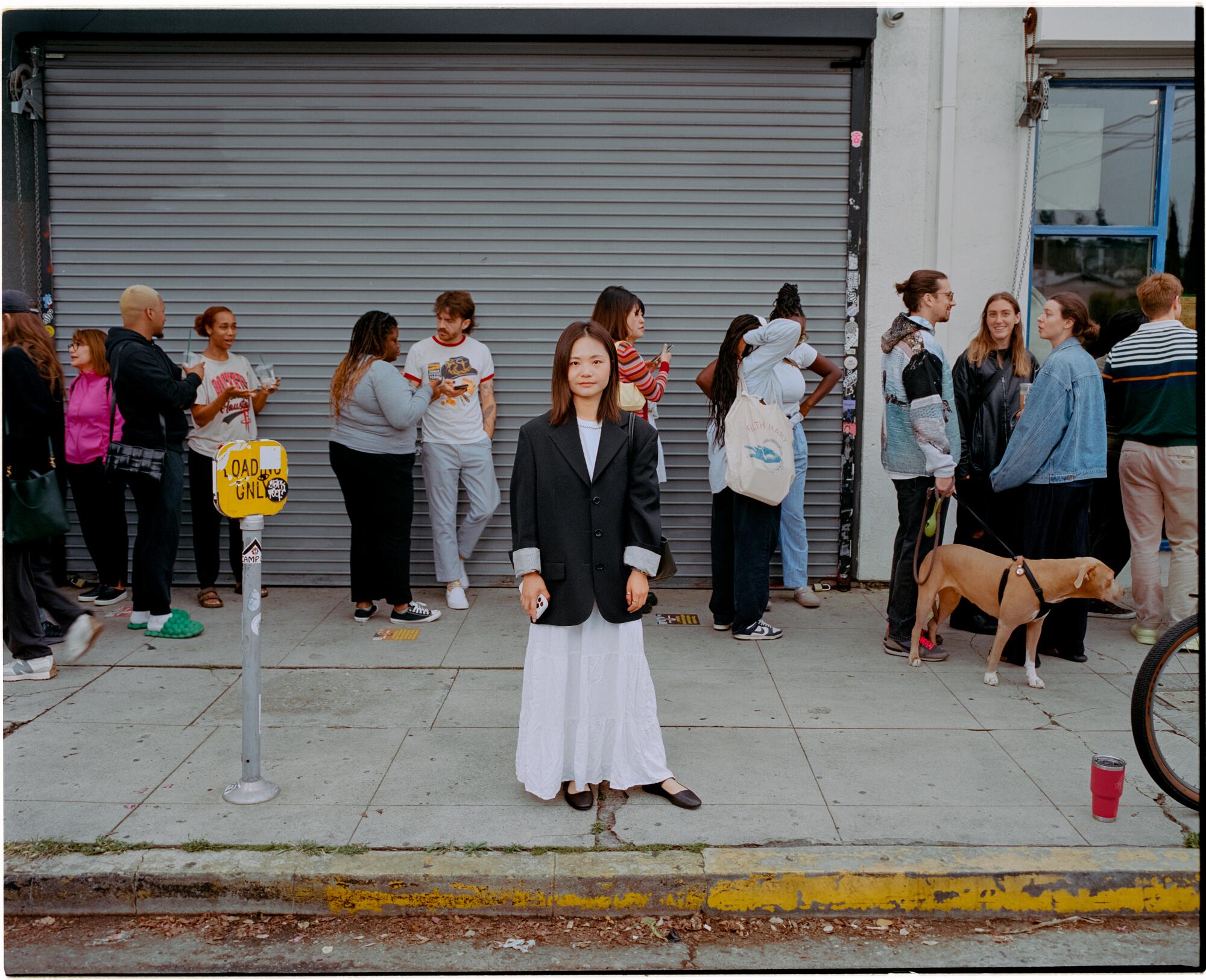
Even Shen wears Acne Studios jacket, Brandy Melville skirt, Bode T-shirt, the Row shoes, the Row purse.
Even Shen, fashion data analyst
Position in line: Seventh.
Time spent in line: 1 hour.
How often do you find yourself waiting in line in L.A.?
A lot, actually. We just came from this cafe in the Melrose area called Community Goods. I think we were probably 20-30 minutes for a cup of drink there. Every popular spot, you need to wait in line. We even got those portable stools.
At what point do you feel like you’ve had enough of a line?
On the weekends, I don’t have any events to go to anyway, so it’s fine to just chat with friends in line because the food is actually good. I feel like it’s worth it.
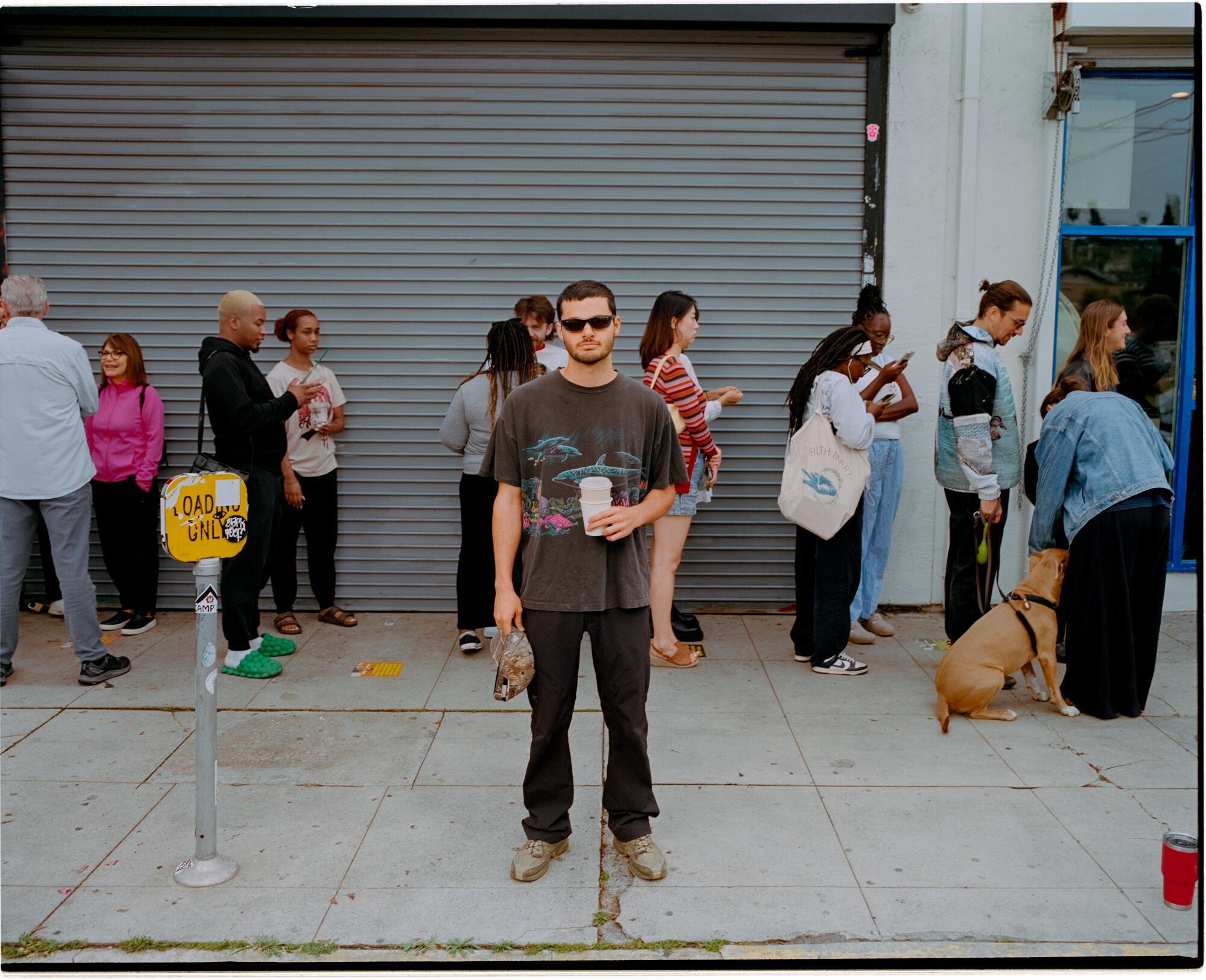
Michael Manos wears Maui Jim sunglasses, SeaWorld T-shirt, Arc’teryx pants, Salomon shoes.
Michael Manos, graphic designer
Position in line: 14th.
Time spent in line: 40 minutes.
I overheard your friend say that he’s not a “line guy.”
Yeah, my friend said, ‘Oh, I’m not a line guy.’ And I said, ‘Who is a line guy?’ I don’t think anyone’s dying to go wait in the line. I think it’s worth it, what’s at the end of the line. I’m a bagel guy. I’ll wait in an absurd line for a good bagel. I also think I’m an idiot.
Besides the destination, what’s the best part about waiting in line?
The line here is famously long, but I think anyone who comes to Courage knows what they’re getting themselves into. It’s almost part of the order. To get your bagel, you get a long line. If you come here alone and wait in line alone, it’s not gonna be that fun. But if you come here with your friends, it’s not a bad experience. It’s part of the experience.
The Courage line is misunderstood, kind of slept on. I’ve had some good memories in the Courage line. There was one time this guy came [down the line] just high-fiv[ing] everybody. True story. I think there’s some camaraderie to it, sitting in some insane line for a bagel.
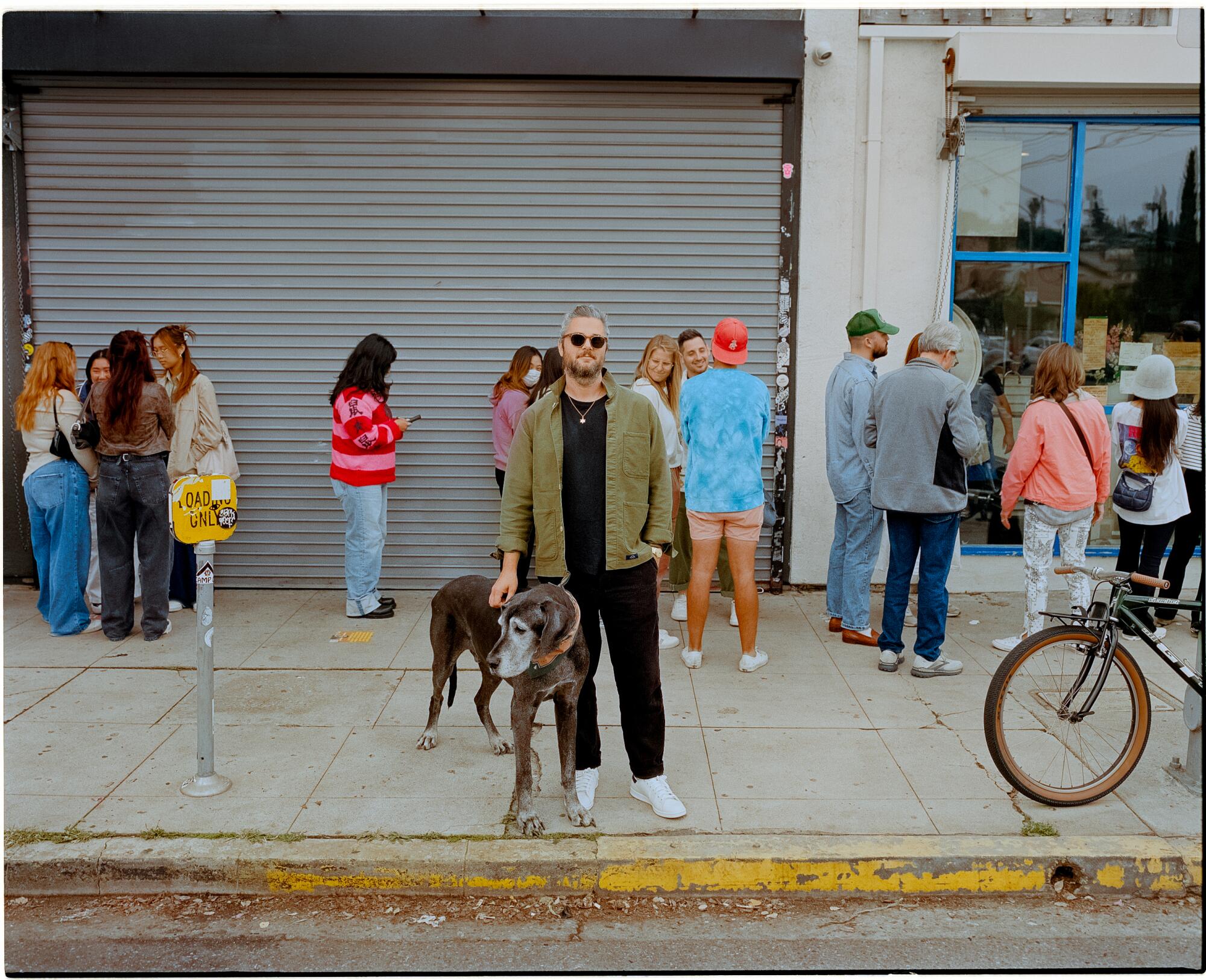
Jeff Forrest wears a Buck Mason T-shirt, Bleu de Paname button-up, Universal Works pants, Industry of all Nations underwear, Adidas Stan Smith shoes, Luum Jewelry necklace and ring. Charles wears a Marfa, Texas, Gift Shop bandana.
Jeff Forrest, designer
Position in line: 24th.
Time spent in line: 45 minutes.
What’s been your experience waiting in line in L.A.?
We’re happy to wait in line. We meet really interesting people in line. Because of the dog, we get a lot of attention, and chat with other [dog] owners and talk about the city.
L.A. is a really closed-off city. I come from Toronto, and a lot of my work is in New York, too, so I’m used to the hustle and bustle of being around people. When I’m here in L.A., I don’t get that a lot. We live in Studio City. Silver Lake is a little bit of a different story. But we don’t have random run-ins a lot of times, like we would in a walking city. So when we come to Silver Lake, we like it because it reminds us of back home, and the line is kind of the epicenter of it, in a way.
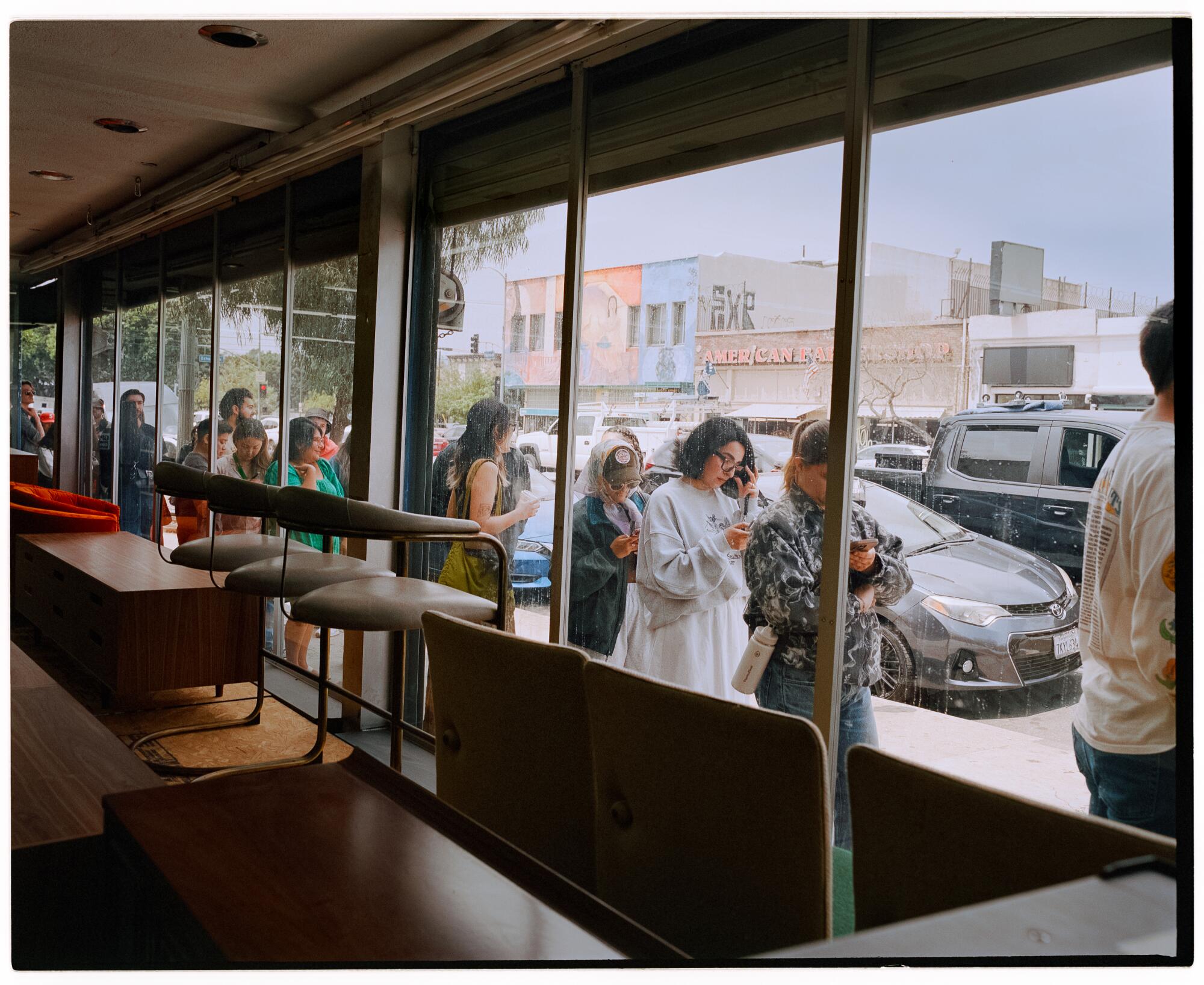
The line outside the Gustaf Westman pop-up.
Gustaf Westman pop-up shop, 1:22 p.m.
Past the brunch rush, the sunlight starts melting the clouds away. Ceramics enthusiasts file in for the Gustaf Westman pop-up shop in Echo Park, pressing themselves against the store to hide away from a nosy sun.
The Swedish designer’s first solo pop-up shop graces Sunset Boulevard, beckoning hundreds of local fans to score the TikTok-famous cups, plates, mirrors and seats found in the homes of Yung Lean, Emma Chamberlain, Reign Judge, Matilda Djerf and Tyler, the Creator.
“If you know, you know, and we definitely know” is definitely the vibe here.
“What’s the line for?” a Patagonia-vested tourist asks, and a Miu Miu bag-touting baddie completely ignores him.
Within the first two hours of the shop opening, the sunk-cost fallacy is in full effect. “Dude, let’s just go,” mutters a guy to his friend. Excitement grows into restlessness. There’s only so much satisfaction you can glean from watching people pose with their pink paper bags in triumph.
Sometimes, it’s not just about the journey. It’s what you have to show for it.
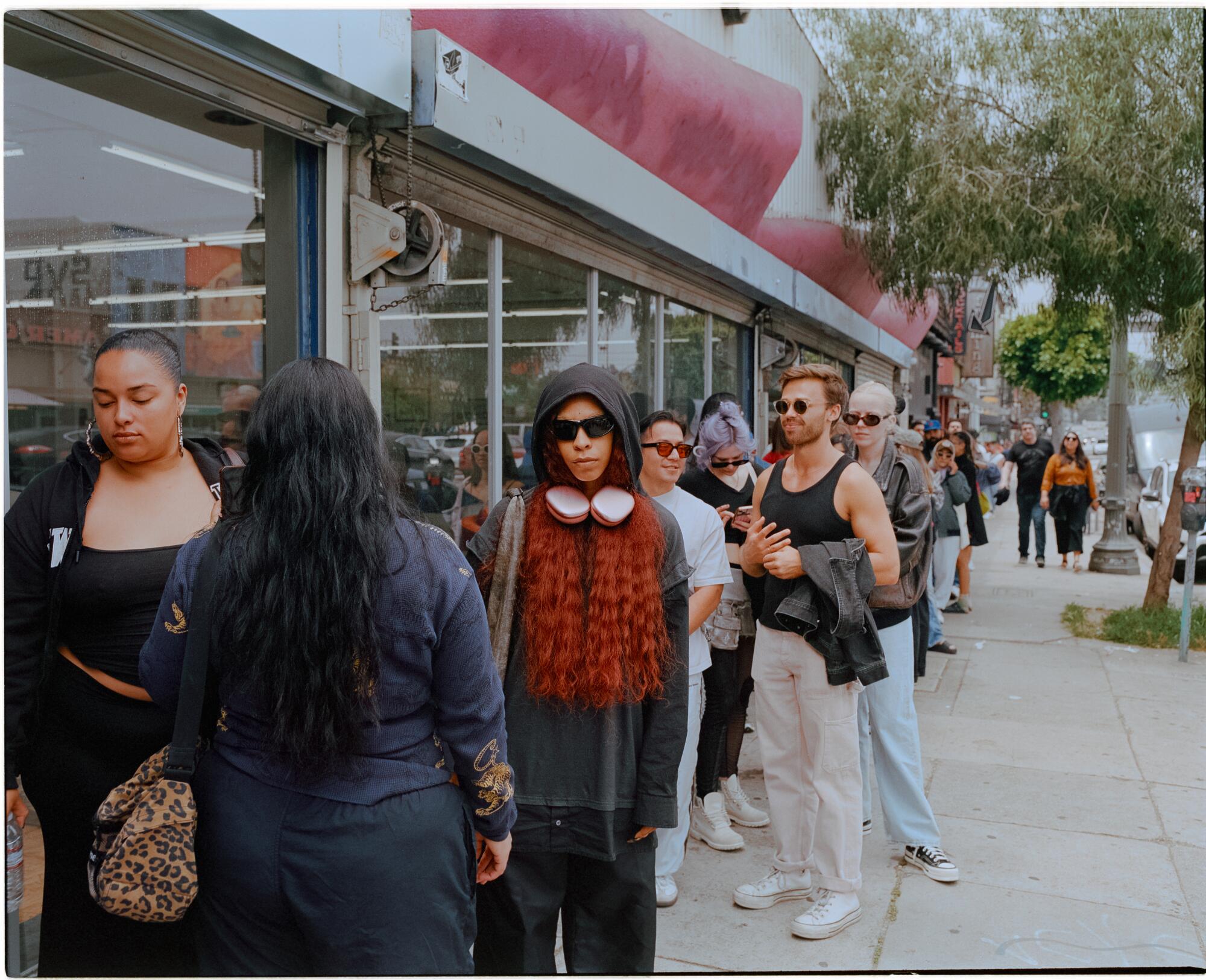
Rico Nasty wears AKILA x Bricks and Wood sunglasses, Maison Margiela top, Maison Margiela pants, Maison Margiela Bag, Louis Vuitton boots and Apple Airpods Max Headphones.
Rico Nasty, rapper
Position in line: 12th.
Time spent in line: 1 hour, 40 minutes.
Are you a patient person?
No. I was complaining the entire time. [Her friends] were like ‘Oh, this is what your fans do for you.’ And I was like, ‘Wow.’ I don’t know how they love me so much, but I definitely see them in a different light. My legs hurt.
You are Rico Nasty. Why are you in line?
I don’t know [Gustaf Westman]. I just feel like it shows respect. Like, I respect him. I just feel like you can wait in line for s— sometimes. Everything doesn’t have to be, ‘Hey, I’m a celebrity. Let me in.’”
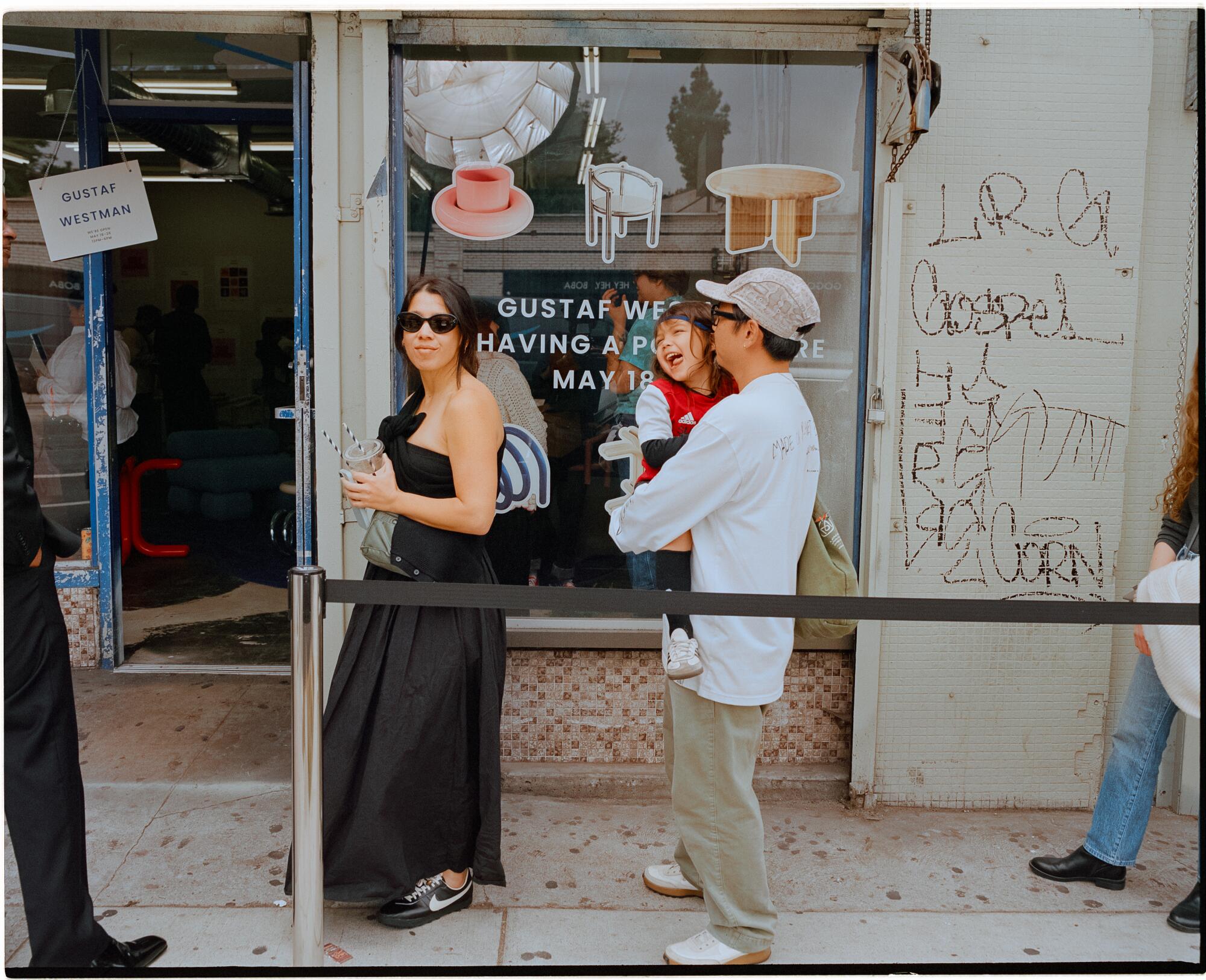
Nicole Duque wears Celine sunglasses, the Frankie Shop dress, Nike x Bode Sneakers and Porter-Yoshida and Co. bag. Matthew Yuguchi wears a Nike Supreme hat, Nike x ACG shirt, Moscot glasses, Goros and Miansai necklace pendants, Vintage pants, Tom Sachs x Nike shoes. Theo Yuguchi wears Adidas soccer jersey, shorts, socks and shoes.
Nicole Duque, fashion merchandising buyer, Matthew Yuguchi, executive creative director, and Theo Yuguchi, aspiring soccer star
Position in line: First.
Time spent in line: A little under 2 hours.
How does it feel to be at the front of the line?
Nicole Duque: Ready to go. We’re really excited to head in.
How often do you find yourself waiting in line?
ND: I grew up here and so it’s not something that I love to do. Rarely do I actually have the patience to do it. But there’s a really cool vase in there, also maybe a little book stand. There’s also a table stand. Those are definitely some of the items that piqued our interest.
How’d you guys pass the time?
ND: Well, they went to eat. I stayed here [Laughs].
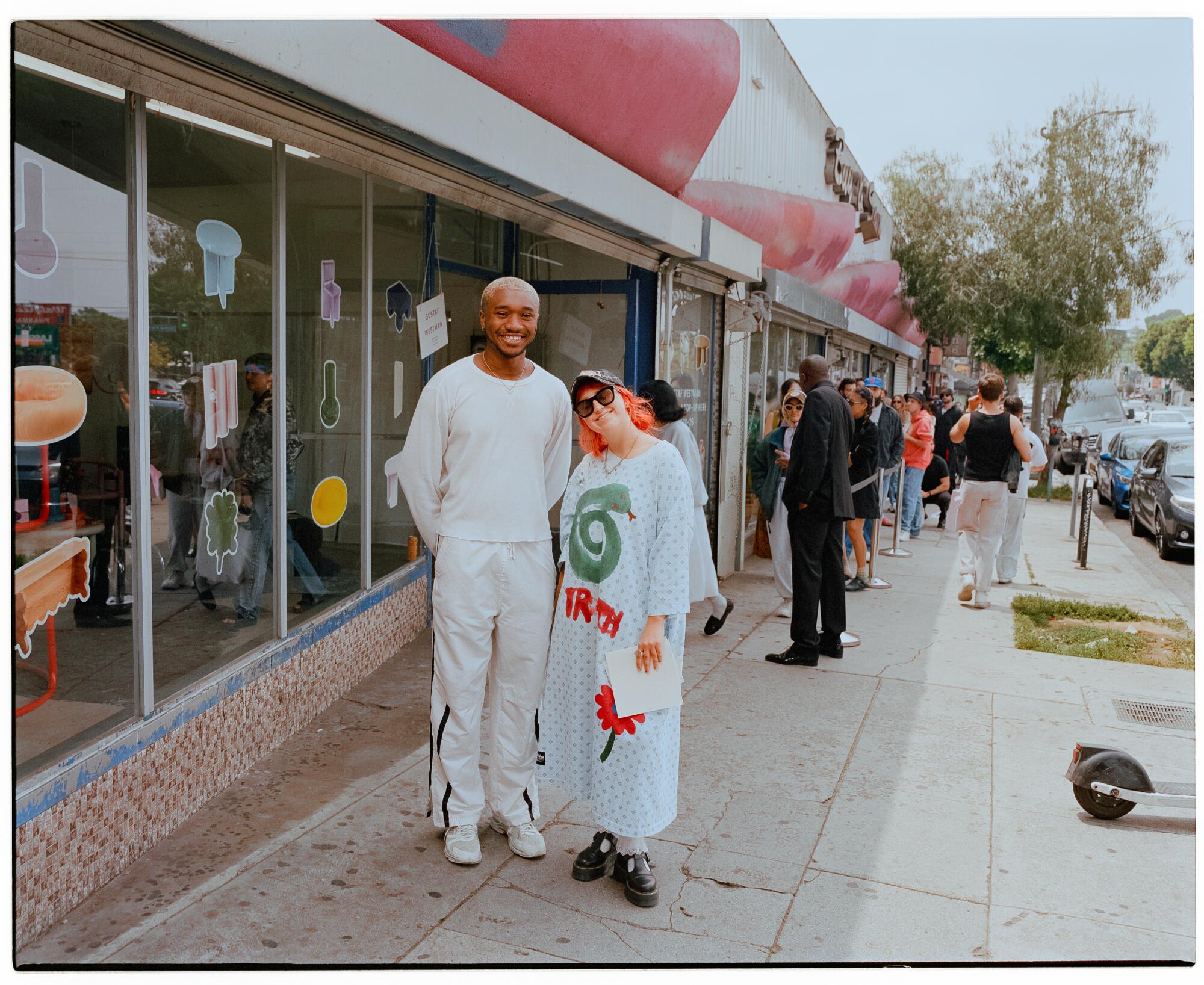
Amelia Moore wears Tigran Avetisyan dress, Urban Outfitters hat. Quartz sunglasses. Dr. Martens shoes, Simon Miller purse, Acne Studios and Flea Market rings. Ti’lien Dallas wears a Vintage shirt. Vintage pants. Asics shoes, Flea Market rings.
Ti’lien Dallas, administrative assistant, and Amelia Moore, musician
Position in line: On the other side.
Time spent in line: 2.5 hours.
What was your line strategy?
Amelia Moore: I got here 15 minutes before it opened, and the line was down the street already. I was planning initially to get here earlier, but I just got lazy and got a coffee to make myself not hate myself in line. But we waited. We committed.
What did you guys get?
Ti’lien Dallas: I didn’t really come to buy something today. I just came with her. If we have small tasks to do we usually just meet up, grab food and run all errands, chitchat. I just think there’s no better feeling than having to do nothing with friends.
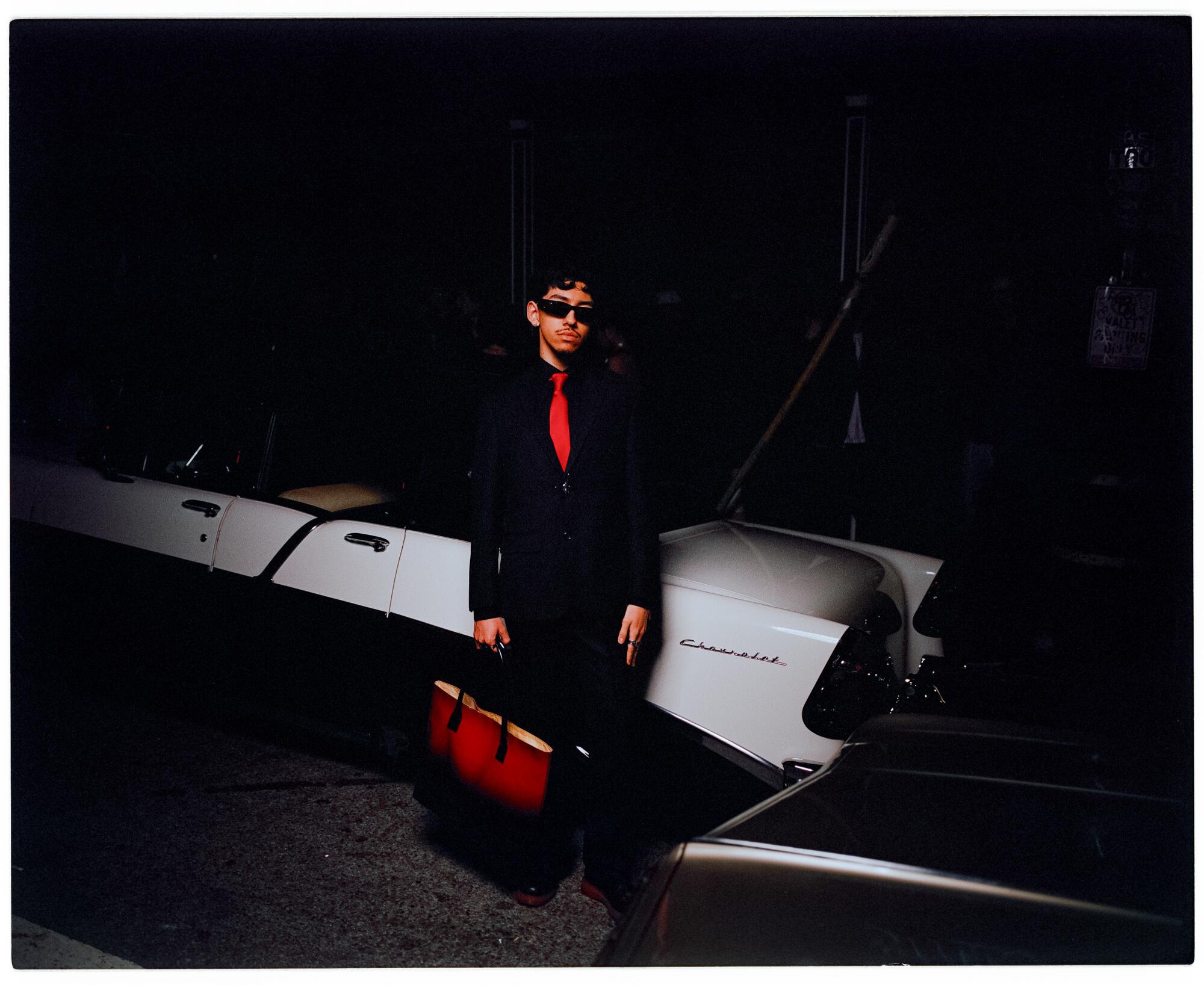
Outside the Firmé Atelier show.
Firmé Atelier’s “Til Death Do Us Part” show, 7:27 p.m.
“Oh there’s a line?” I hear on three separate occasions at the door of the Firmé Atelier show at John Doe Gallery. Inside, the atelier is showcasing a meticulous couture bridal collection in a museum-style exhibition. The line isn’t exactly inconspicuous. It casually flows under scaffolding. 11th Street is lined with sleek lowriders and old friends have reunited as the DJ spins ‘90s and 2000s R&B. It feels like a really well dressed block party. Whether asked in oblivion or in jest, once they step back to notice the queue of people behind the bouncer what follows is one of three outcomes.
Outcome 1. Look for your homie to get you in. While curious passersby and fans of the brand wait, friends of the atelier met with the line are escorted to skip it.
Outcome 2. Cut someone: Alfonso Gonzalez Jr., who did not have to wait in line, commented, “You can cut, but there’s a respectful way to cut.” You have to have the audacity. Be stealth and steadfast. Commit. Go for it.
Outcome 3. Just go to the end of the line. A few folks who come straight to the door are turned away and asked to wait. In actuality, getting sent to the back of a quickly moving line isn’t as bad a condemnation as it seems. But I would be lying if I said we didn’t enjoy seeing people getting turned away and doing a kind of walk of shame to the end of the line.
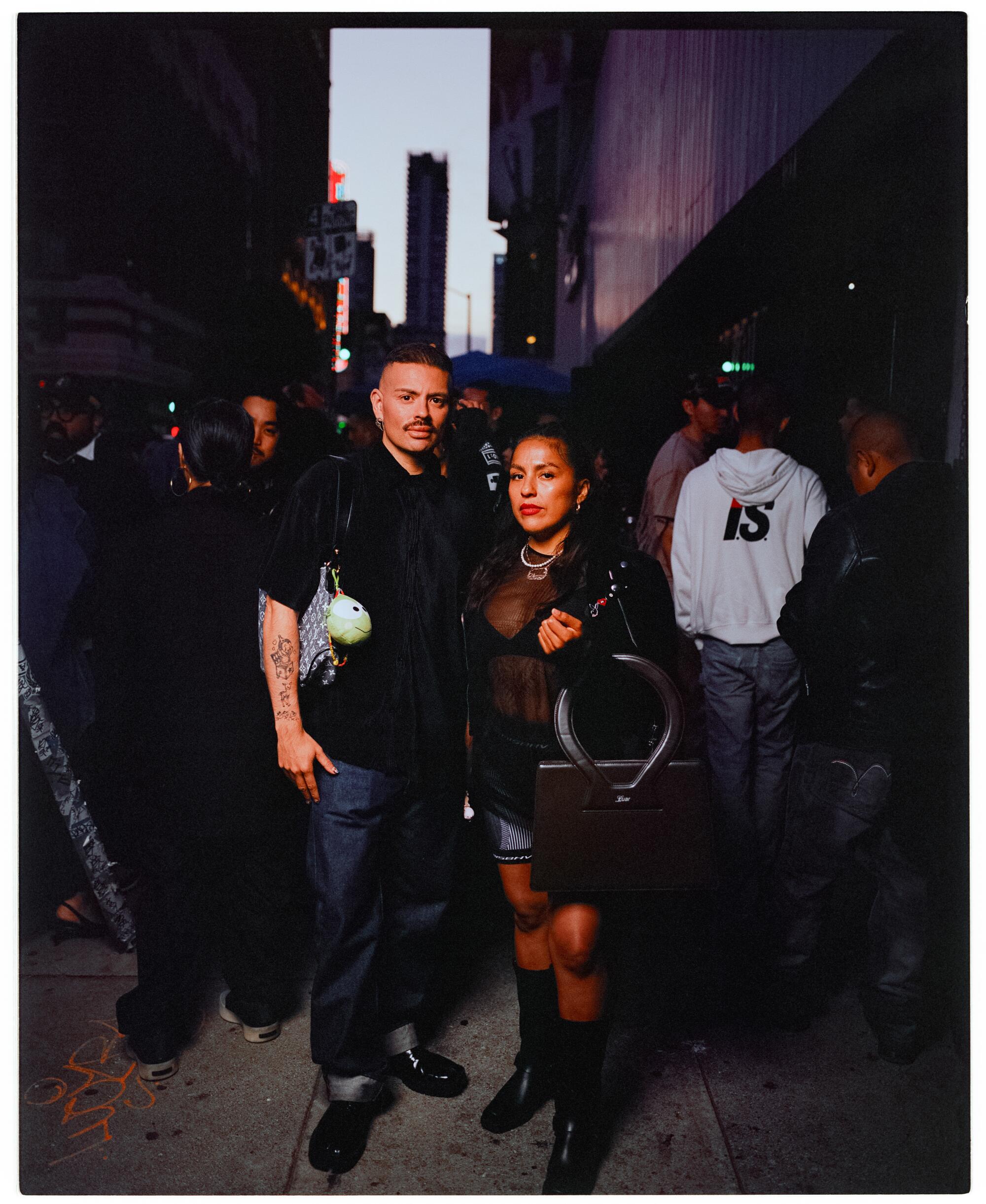
NoNo wears a Lilith Paris top, MSBHV bottoms, Moschino jacket, Frye boots, and Luar bag. Isaías Cabrera wears a Common Market top, Louis Vuitton bag, Levi’s jeans and Maison Margiela shoes.
Isaías Cabrera, a.k.a Blondchyna, president of Somos Loud LA, and NoNo, addiction and mental health professional
Position in line: Second.
Time spent in line: About 3 minutes.
So you just cut the line. I’m assuming you’re not ones for waiting.
Isaías Cabrera: To be honest, not to be conceited, but no.
NoNo: I mean, if these people behind us trip, I’ll just get out of line.
IC: I think it’s gonna be OK.
What are the rules or best practices for cutting the line?
IC: Go to the front of the line, and live in opulence. You own everything.
What if someone cuts you?
IC: I let them. Because I do the same.
Is there anything worth waiting in line for?
IC: I was just in line for a Heaven bag. I love Heaven. I love Marc Jacobs. I think it’s worth it.
Which bag was it?
It was the Blumarine collaboration.
Any other thoughts about waiting in line?
IC: We work hard. What are we doing lines for?
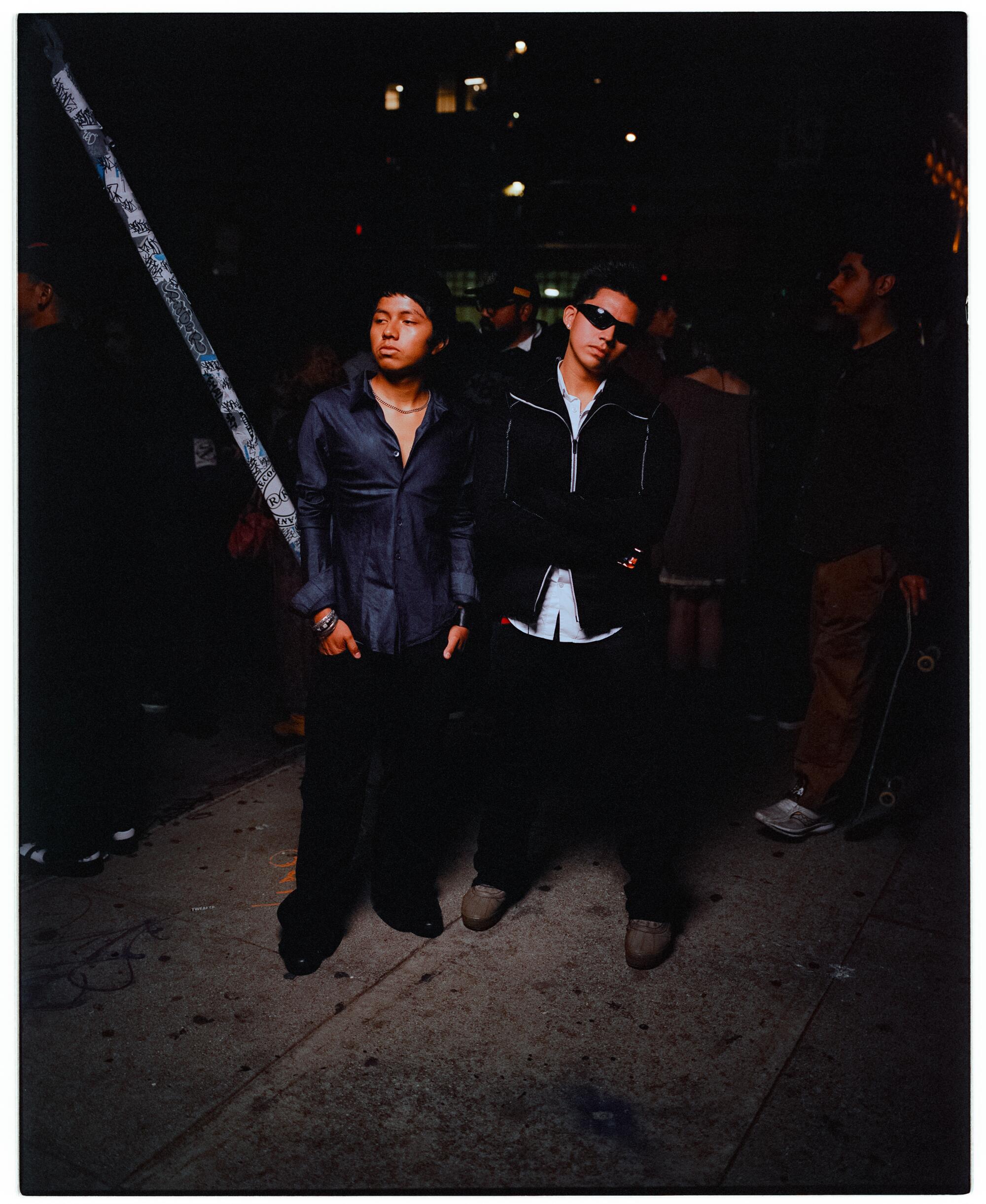
Alex Palma wears a Selfdestrct shirt, Selfdestrct pants and The Last Conspiracy shoes. Juan Carlos Palma wears Selfdestrct pants, Zam Barrett hoodie, Yeezy 950 boots.
Juan Carlos Palma, designer, and Alex Palma
Position in line: Fifth.
Time spent in line: 20 minutes.
What brings you out tonight?
Juan Carlos Palma: I follow the page @firmeatelier. I’m from New York/New Jersey and my brother lives out here in California and I came here because he graduated. I said, “Let me see some fashion events out here. Let me pop out.” I’m tired of streetwear to be honest, and this is really haute couture level.
How has your experience been waiting in line?
JCP: It’s cool. Because you see people with different styles. It’s interesting seeing L.A. fashion because I’m usually in New York. I just observe. What else can you do?
Alex Palma: I think the most interesting [thing] is how people style themselves to fit their personalities and say, “Let me show it through the outfits.”
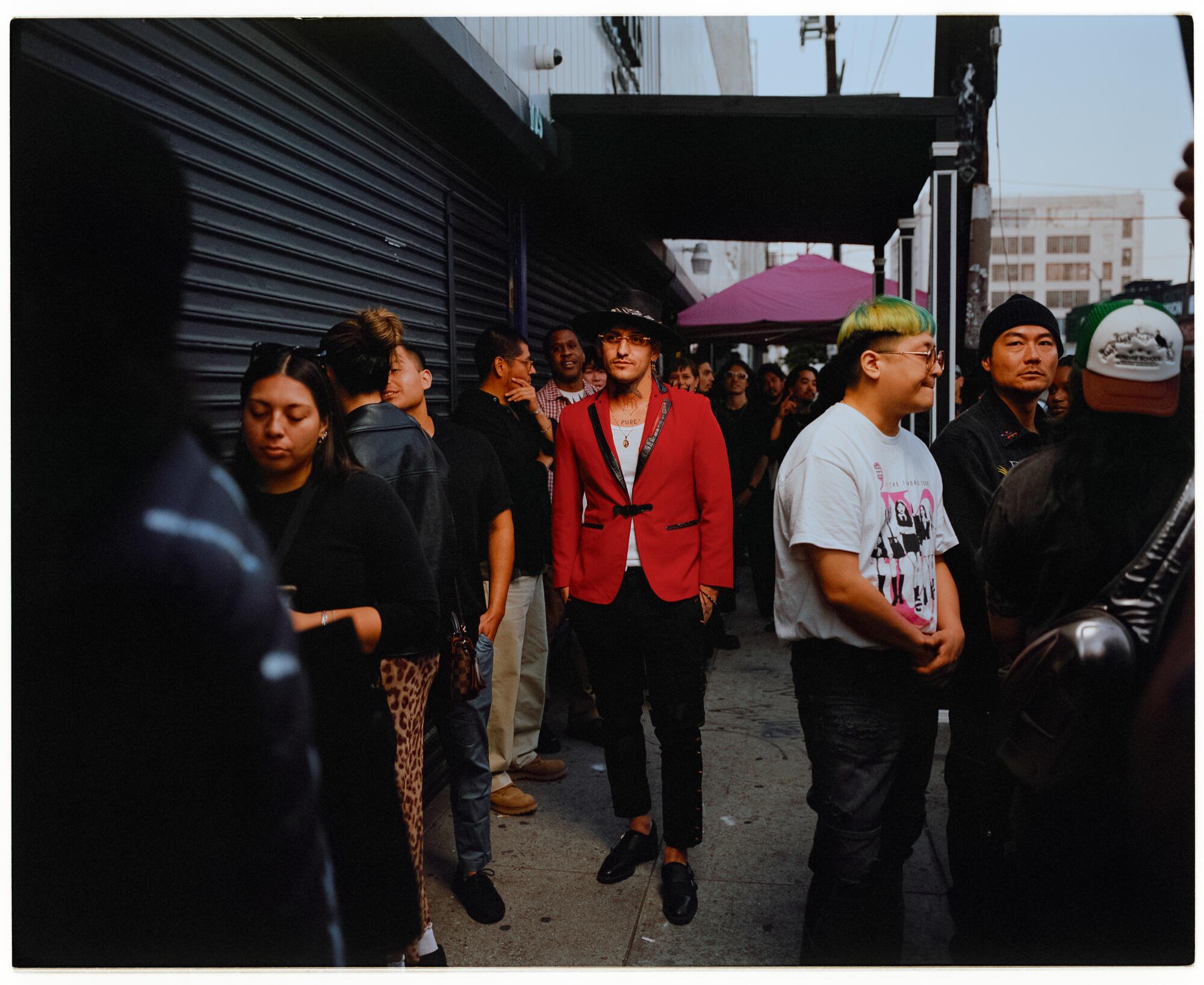
Robert Aubert wears Sinners Saints hat, Sinners Saints jacket, Sinners Saints pants, Christian Louboutin shoes, Nouvintage sunglasses.
Robert Aubert, designer
Position in line: Fourth.
Time spent in line: “Too long.” (Couldn’t have been longer than 15 minutes.)
I saw you get turned away from the front. How does that feel?
I didn’t know there was a line. I was here earlier, then they told me I had to get in line. I helped with the production on the shirts, so I should be inside. I’m just kidding. But no, I’m here to support the show. I’m out here as a rider. It doesn’t matter how long I wait.
Would you consider yourself a patient person?
Absolutely not. It’s killing me to stand in line.
Astrid Kayembe is a writer from South-Central Los Angeles covering style, food, art and L.A. culture. She was a 2022-23 reporting fellow at the Los Angeles Times. Her work has appeared in USA Today, ABC7, L.A. TACO, The Memphis Commercial Appeal and Refinery29.


Sunday Puzzle
NPR
hide caption
toggle caption
NPR

On-air challenge
Today’s theme is “hot.” Every answer is a familiar two-word phrase in which the first word starts HO- and the second word starts with T-.
Ex. Rowdy bar with country music, in slang –> HONKY TONK
1. Guided walkthrough of a property
2. Any member of the N.H.L.
3. Lone Star State metropolis that’s the fourth-largest city in the U.S.
4. Like an animal with its four legs bound (hyph.)
5. Instruction manual (hyph.)
6. A little pompous and arrogant, informally (hyph.)
7. Punny greeting from a magician
8. Someone who steals animals from a stable
9. Congestion that drivers encounter around July 4th, say
10. Acquisition of a company against its will.
11. Exclamation for “wow!” on TV’s “Batman”
Last week’s challenge
Last week’s challenge comes from Evan Kalish, of Bayside, N.Y. Take the name of a nocturnal creature, in two words. The first word is a spooky sound. Move the last letter of the first word to the start of the second word and you’ll get another spooky, nocturnal sound. What is the creature and what are the sounds?
Answer: Screech owl –> howl
Winner
Dan Sadoff of St. Paul, Minnesota
This week’s challenge
This week’s challenge comes from Rawson Sheinberg. of Plymouth, Mich. Think of a U.S. city with a two-word name. Add a letter to the first word, without rearranging letters, to name a country. Then, without adding a letter, rearrange the letters of the second word to name another country. What places are these?
If you know the answer to the challenge, submit it here by Thursday, July 2 at 3 p.m. ET. Listeners whose answers are selected win a chance to play the on-air puzzle. Important: include a phone number where we can reach you.

If you’re struggling to use up leftovers like a half-eaten rotisserie chicken, turn the assignment into a creative exercise, says chef Margaret Li. It’ll make the cooking process more fun and less guilt-driven.
Pulse/Getty Images/Corbis RF Stills
hide caption
toggle caption
Pulse/Getty Images/Corbis RF Stills
On a recent weeknight, I opened up my fridge and found an assortment of half-eaten or ignored food.
That included takeout that I didn’t find appetizing enough to eat for lunch. A rotisserie chicken with most of the meat picked off. A couple of raw vegetables from the farmers market that were starting to wilt.
“There’s nothing to eat,” I told myself. Yet even I knew that was ridiculous. There was plenty of food in my fridge. I just didn’t feel inspired to cook with it.
So I asked some chefs for guidance. How could I more consistently use leftovers and the other ingredients I tend to overlook?
Start with a mindset shift, says Margaret Li, chef and co-author of the cookbook Perfectly Good Food: A Totally Achievable Zero Waste Approach to Home Cooking. Think about cooking with leftovers as a creative, experimental exercise, not a guilt-driven one.
“It ends up being this fun game where you are creating something from what seems like nothing and solving this puzzle, and then you get to eat it,” she says.
There are other good reasons to use up your food scraps. Nationally, about a quarter of food products go to waste, according to the nonprofit ReFED. In my own household, where we spend about $200 a week on groceries, that means I might be throwing out the equivalent of $50 of food — an unnecessary burden on my wallet, not to mention the environment.
The chefs I spoke to had some practical tips about using up more of the food we buy. Here are a few that I put to the test.
Find your “hero recipes”
Build up an arsenal of go-to recipes that are flexible enough to use up just about any ingredient. Li calls them “hero recipes.”
I tried one of these from her cookbook, called “Make-It-Your-Own Stir-Fry.” (Scroll down for the recipe.) It includes loose ingredients like “1 pound crisp-crunchy vegetables” or “4 cups leafy greens.”
In the spirit of the recipe, I pulled vegetables out of my fridge at random and did not measure them out. The sauce was a simple mixture of soy sauce, vinegar, sugar and water. By the time I topped my bowl with chopped scallions, the dish looked like a gourmet meal, not an afterthought.
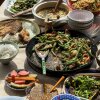
Other ideas: “You could put anything in a frittata, and it’ll be great,” says Tamar Adler, chef and author of The Everlasting Meal Cookbook: Leftovers A-Z.
Or, if you have day-old rice on hand, cook it alongside other ingredients to make fried rice. “Saute some aromatics — ginger, garlic, onion — in oil,” Adler says. Then add your rice and whatever leftover bits you have, like the rotisserie chicken and older produce I had in my fridge.
“Just take the approach of making it more flavorful and crispy and then spicy, and then usually adding a squeeze of lemon,” Adler says.
Label your leftovers
Keep a permanent marker and painter’s tape in your kitchen to label and date your leftovers, Li says. “That is a classic chef’s method for knowing what something is and when it was made. That saves you the guessing game.”
Adler takes the concept a step further and labels her leftovers with their intended use. Leftover blueberries are labeled “muffins-to-be on Tuesday,” she says. “I really like doing that — assigning the destiny of the food.”

So after a night of Ethiopian takeout, when we ended up with an entire container of leftover injera, I followed Adler’s advice and thought about what it might become in the future.
I imagined scrambling the spongy, tangy bread with eggs, akin to scrambling matzo into matzo brei. “Injera for eggs,” I wrote on the container. Sure enough, their destiny was fulfilled the following morning.

Li keeps a dedicated bag in her freezer just for scraps from which to make chicken or vegetable stock. That bag houses carrot peels, the ends of onions, extra garlic cloves and chicken bones.
Flavia Morlachetti/Getty Images/Moment RF
hide caption
toggle caption
Flavia Morlachetti/Getty Images/Moment RF
Don’t forget your odds and ends
Adler encouraged me to never, ever throw away the stems of herbs. Stems don’t get as much glory as tender, pretty leaves, but they still have the same herby taste.
“I’m going to chop these herbs up or stick them in a blender with a clove of garlic,” she says. Then add olive oil. “And then it’s just gonna be my base sauce for everything.”
So I foraged a few varieties of half-cut herbs from my refrigerator drawers, most of them sad looking and unidentifiable.
I threw out the stems that had turned brown and gooey and put the rest in a blender. I added garlic on Adler’s instructions, nuts and kale for bulk, and plenty of olive oil and salt. Then, on a whim, I added a splash of olive juice for brightness.
The result was somewhere between a pesto and a chimichurri, and it elevated that night’s otherwise routine dinner. And Adler was right: Once the stems were blended, it tasted exactly the same as the leaves. (The same idea applies for broccoli stems in a cheesy broccoli soup, Li says.)
Li likes to keep her odds and ends organized with an “Eat Me First” box in her fridge. That’s where she keeps half-used lemons, leftover coconut milk or produce that’s starting to get wrinkly. “You kind of have an idea for, OK, here’s where you look first,” she says.
Don’t strive for perfection
Cooking these meals did feel like a game, as Li had suggested. It brought me unexpected joy to use up as many existing ingredients as possible — to the point where I often spent much longer in the kitchen because I kept thinking of new ideas: If I turn these wrinkly sweet potatoes into a soup, then I can caramelize this half-cut onion for a topping, and then I can use the leftover soup as a sauce tomorrow …
Did I cook more often, though? Probably not. My cooking energy burned brighter but fizzled out after a few nights, at which point I ordered takeout.
So I was glad to hear Li’s take: If you’re too hard on yourself, you’re not going to enjoy it at all. “ I try not to be too obsessive about eating absolutely everything,” she says. If my takeout was truly terrible, I’m allowed to toss it or, better yet, compost it.
If you really want to use up everything, you can always chuck ingredients into the freezer. Li has dedicated freezer bags for different dishes, like vegetable scraps for soups or fruit discards for smoothies. (She labels them, of course.)
And how does that smoothie taste? It’s “delicious,” she says, “even if it’s made up of all the things that have been rejected in the past,” she says.
Recipe: Make-It-Your-Own Stir-Fry
Excerpted from Perfectly Good Food: A Totally Achievable Zero Waste Approach to Home Cooking. Copyright ©2023 by Irene Li and Margaret Li. Used with permission of the publisher, W. W. Norton & Company, Inc. All rights reserved.
Sauce
- 1 tablespoon soy sauce
- 1 tablespoon water
- 1 teaspoon sugar
- 1 teaspoon black vinegar, rice vinegar, lime juice, or other acid
- 1 tablespoon neutral oil, or enough to lightly coat the bottom of your wok or skillet
- 1 garlic clove, thinly sliced or minced, or more as desired
- ½-inch piece fresh ginger, minced or grated (optional)
- Pinch chili flakes or 1 small chile pepper, diced (optional)
- 4 cups leafy greens, torn into bite-size pieces, or 1 pound crisp-crunchy vegetables, cut into chunks
- Kosher salt
Stir the sauce ingredients together in a small bowl and set by the stove.
Heat a wok or large skillet over high heat until just smoking, then add the neutral oil and tilt to coat the bottom of the pan.
Add the garlic, ginger (if using), and chili flakes (if using) and stir-fry for 10 seconds. Add the greens and/or vegetables, in stages as necessary, and toss in the garlicky oil, then add the sauce and cook to your liking, stirring frequently.
Vegetable chunks may need 4 to 7 minutes — if you want to speed up the process, cover the pot so the vegetables steam for a minute or two, then uncover and toss again. Sturdy greens may need 3 to 5 minutes to get tender (we like to let them sit for a bit and char for extra texture).
Lighter leaves will need less than a minute to wilt down. Stir in a spoonful of any additional sauce you like, season with salt to taste, then sprinkle with your favorite garnishes and a generous drizzle of sesame oil.
A sprinkle of crunch is a great way to finish a stir-fry. Our favorites include crushed cashews or peanuts, toasted sesame seeds, thinly sliced scallions, and fried onions or shallots.
Your turn: What are your favorite go-to leftover recipes?
We’d love to hear from you! Share your recipe with us at lifekit@npr.org with your full name. We may publish it on NPR.org.
The story was edited by Malaka Gharib. The visual editor is CJ Riculan. We’d love to hear from you. Leave us a voicemail at 202-216-9823, or email us at LifeKit@npr.org.
Listen to Life Kit on Apple Podcasts and Spotify, and sign up for our newsletter. Follow us on Instagram: @nprlifekit.

Stephen Malkmus & the Jicks perform onstage during day two of the Boston Calling Music Festival at Boston City Hall Plaza on September 26, 2015 in Boston, Massachusetts. (Photo by Mike Lawrie/Getty Images)
Mike Lawrie/Getty Images
hide caption
toggle caption
Mike Lawrie/Getty Images
This week’s show was recorded in Chicago with host Peter Sagal, judge and scorekeeper Alzo Slade, Not My Job guest Stephen Malkmus and panelists Emmy Blotnick, Joyelle Nicole Johnson, and Gianmarco Soresi. Click the audio link above to hear the whole show.
Who’s Alzo This Time
Pool Problems; Don’t Forget to Hydrate; The Rise of Hot Podium Guy
Panel Questions
TSA Gets A Dressing Down
Bluff The Listener
Our panelists tell three stories about game shows in the news, only one of which is true.
Not My Job: Stephen Malmus, lead singer and guitarist for Pavement, answers our questions about road construction
Indie rock legend and founder of Pavement, Stephen Malkmus, joins us to play a game called, “Pavement repairs are underway!” Three questions about road construction.
Panel Questions
The Battle Over A Home Sale; The Best Three Words To Get Over A Loss and Out of a Meeting?; A New Job in the Dating World
Limericks
Alzo Slade reads three news-related limericks: Good News For Gym Slobs; Cruisin’ For A Tattooin’; Fringe Food Benefits
Lightning Fill In The Blank
All the news we couldn’t fit anywhere else
Predictions
Our panelists predict what will find after the reflecting pool is emptied
-

 Georgia2 minutes ago
What is a Heat Dome and How it’s Impacting South Georgia
-

 Hawaii7 minutes ago
Journey adds second show to final performance in Hawaii | Honolulu Star-Advertiser
-

 Idaho15 minutes ago
Torrential thunderstorms, hail flood suburban streets with ice floats on first full summer weekend in Idaho
-

 Illinois17 minutes ago
Four people hospitalized after Joliet police chase ends in crash: officials
-

 Indiana22 minutes ago
Chicago Bears assess land at Wolf Lake Terminals for possible new stadium site
-

 Iowa29 minutes ago
Iowa State Basketball Has Potential Emerging Star on Their Roster
-

 Kansas32 minutes ago
DOJ sues Kansas over in-state tuition for undocumented immigrants; Governor fights back
-

 Kentucky38 minutes ago
4 dead amid flooding caused by heavy rains, Kentucky governor says

