Seattle, WA
‘Appearance of segregation’ at Seattle Police Department, captain says in lawsuit


This is a developing story and will be updated.
Seattle Police Captain Eric Greening filed a lawsuit against Chief Adrian Diaz on Monday, alleging that Diaz discriminated against women and people of color at the department.
Greening also claims that Diaz retaliated against him for bringing issues of bias to the chief’s attention, despite Greening being in a position that required him to do so.
Greening, a Black man, has been with Seattle Police for nearly 30 years. He previously held the role of assistant chief, intermittently served as acting chief, and was a finalist for the role of police chief before Mayor Bruce Harrell chose Diaz for the job.
He’s also the third former assistant chief to accuse Diaz of racist and sexist behavior in lawsuits. Diaz demoted all three former assistant chiefs prior to their legal claims. Former Assistant Chief Steve Hirjak settled for $600,000 in 2023.
Additionally, four female cops sued Diaz last month, alleging sex discrimination, harassment, and grooming.
This latest lawsuit paints the chief as unwilling to hear sincere advice, even from Greening, a longtime colleague. Greening’s claims echo a warning police have shared amongst themselves since 2020, when Diaz took power: Don’t disagree with the chief, or you may face retaliation.
Greening claims Diaz harmed his reputation, caused him shame and embarrassment, and diminished future career prospects. He now has trouble sleeping and is anxious about further retaliation from Diaz, his attorney Toby Marshall wrote in the lawsuit.
“He feels humiliated,” Marshall wrote.
A spokesperson with the Seattle City Attorney’s Office said they’re unable to comment on pending litigation.
The Seattle Police Department did not respond to requests for comment by publication time.
‘Appearance of segregation’
According to the lawsuit, in September 2021, Greening told Diaz that the department discriminated against female and BIPOC officers by assigning them to community outreach work, but not their white male colleagues.
At the time, Greening led the Collaborative Policing Bureau — a department that leads community outreach — and sat on a race and social justice team. In these roles, Greening was expected to raise racism and gender bias issues to Diaz and propose solutions.
Greening told the chief he worried about “the appearance of segregation” within the department, and about “cultural taxation,” which is extra work placed on underrepresented groups pertaining to equity, diversity, and inclusion.
Greening raised concerns about discrimination again, when he was interviewed as part of a complaint filed by former Assistant Chief Steve Hirjak in November 2021.
Hirjak alleged Diaz and the department treated him differently because of his race, and retaliated against him. Greening said Hirjak received fewer resources and support as incident commander, compared to his white colleagues, and that Hirjak and other female and BIPOC command staff members were left out of decision making.
Two months later, in January 2022, Greening told Diaz that he believed he, the chief, discriminated against Black supervisors by circumventing them and making direct requests to their subordinates — including his own.
In the same meeting, Diaz, according to the lawsuit, said he’d heard rumors about “the good old boys” in command staff.
According to the lawsuit, “Greening responded by saying that there was truth to the assertion because Chief Diaz took counsel from only the white men in command staff, leaving the two female assistant chiefs and Mr. Greening as the “out group.”
Greening told Diaz that while the department was diverse, “it was only inclusive when convenient to the dominant power group,” the lawsuit states.
He handed Diaz, who is Latino, a copy of the Continuum of Becoming an Anti-Racist Multicultural Organization — a chart that outlines the six phases of becoming an anti-racist multicultural department.
“I can’t fix all of this,” Diaz responded, according to the lawsuit.
Greening raised concerns he had about discriminatory practices at Seattle Police, including those allegedly committed by Diaz, with human resources and the city ombuds office in 2022 and 2023.
In January 2023, Greening asked Diaz to release him of his responsibilities as lead of the department’s race and social justice team, a role no white person has ever held.
Then he handed Diaz a research article about cultural taxation.
After this meeting Greening claims that Diaz soured against him.
When Diaz was made permanent chief in January 2023, and on the hunt for a deputy, Greening told Diaz about his interest in the position and applied.
Diaz ignored his request and chose Eric Barden, a white man, instead.
Diaz demoted Greening in July, which resulted in a $27,000 pay cut and reduced the value of future pension payments.
Diaz abolished the outreach bureau that Greening led for two years, and moved him to the Force Review Unit, where he oversaw less than 10 employees and had no contact with the public.
Greening filed a retaliation complaint against Diaz with Seattle’s Office of Inspector General for Public Safety two months after his demotion, in September. An outside attorney has been hired to investigate the complaint.
But like other complaints made against Diaz, there’s been no resolution.
Last July, several Office of Police Accountability complaints accused Diaz of hiring a woman he allegedly had an affair with to be a top-level advisor. The case has remained at the intake level for 10 months — a long time when compared to complaints against members of the Seattle Police Officer Guild, which are held to an intake deadline of 30 days.
Diaz has faced no immediate consequences despite seven colleagues and four lawsuits coming out against him.
Mayor Harrell said in April that he would hire an outside consultant to examine sexism and harassment allegations against Diaz, but that it could take “months and months” because he wanted to allow for “due process.”
Three city council members have made statements about their concern over these allegations, chief among them Rob Saka, who was the first to speak out vociferously.
“That type of behavior has no place in our police department,” he wrote. “I plan to exercise my oversight authority to get to the bottom of these culture issues. To that end, I support the women on the force and plan to be in conversation about what we can do as a city to better support them.”


PHOTOS BY OLIVER HAMLIN FOR WEST SEATTLE BLOG
Hundreds of people spent Sunday admiring and photographing the 12 gardens spotlighted on this year’s West Seattle Garden Tour. Among them was WSB contributing photojournalist Oliver Hamlin, who presents a scene from each garden (including some of the gardeners. First, at Garden A, “A Show of Northwest Natives“:
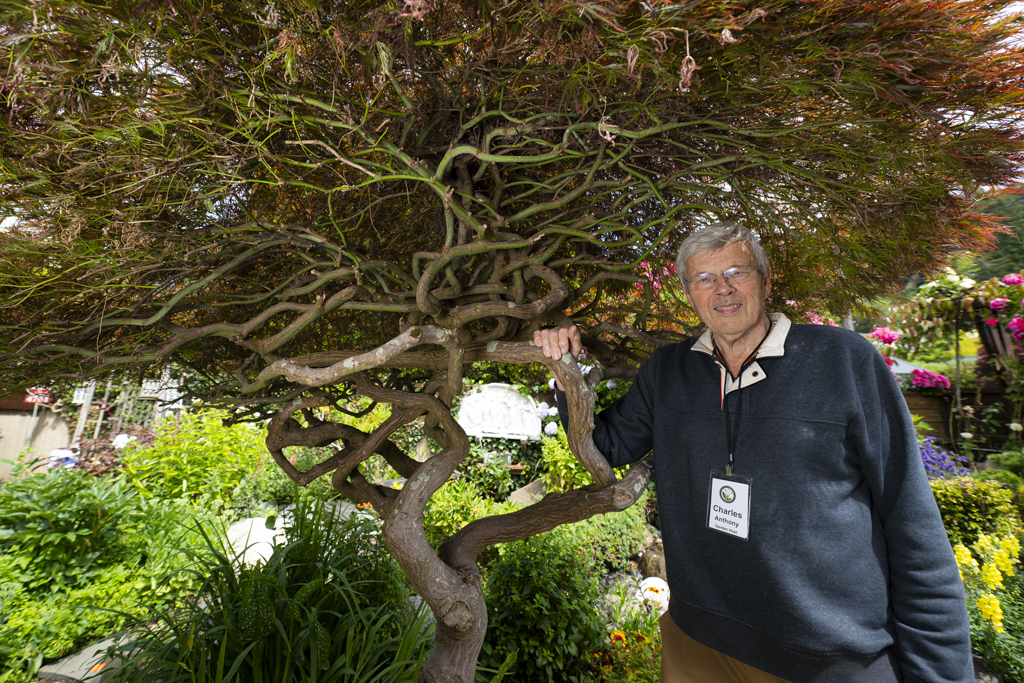
Charles Anthony, who created Garden B, “Salish Sea Sanctuary,” posed with his Japanese Maple:
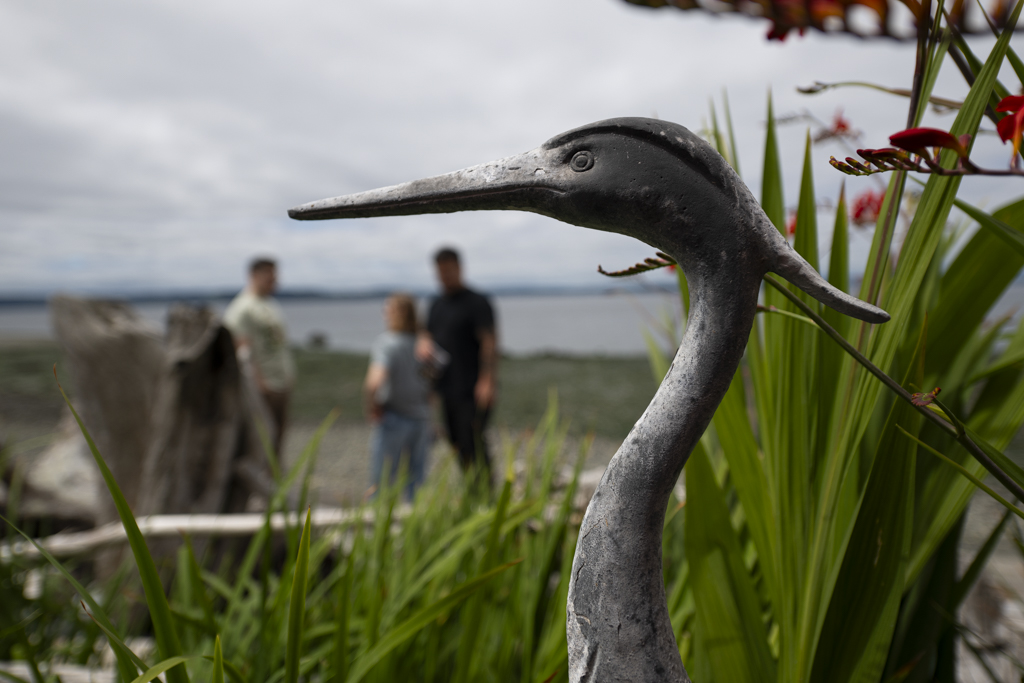
Garden C, “Heron Cove,” has its namesake standing sentinel:
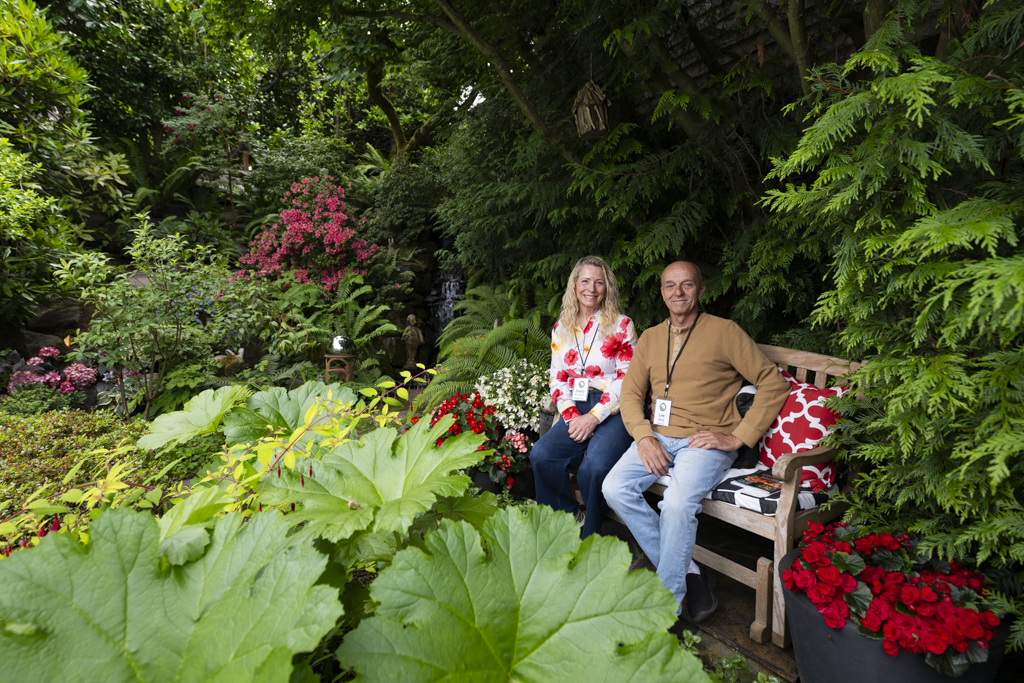
Below are Debra Montgomery and Lee Kelly; she bought the “Heron Cove” house 7 years ago and inherited Lee, who has been the gardener for 40 years. She said the previous homeowners sought out a buyer who wouldn’t tear down the house and would keep caring for the garden, which she and Lee both now do.
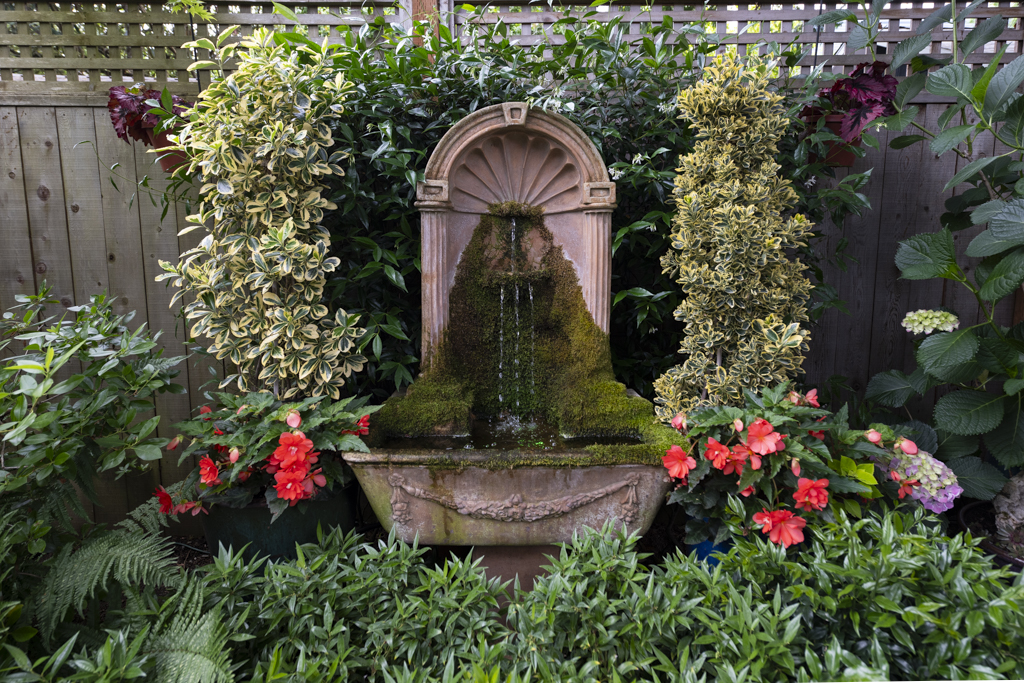
Garden D was described as “Small Spaces, Big Moments”:
Below (L-R) are the gardeners behind Garden D, Laird Applegate and Brian Pelzel:
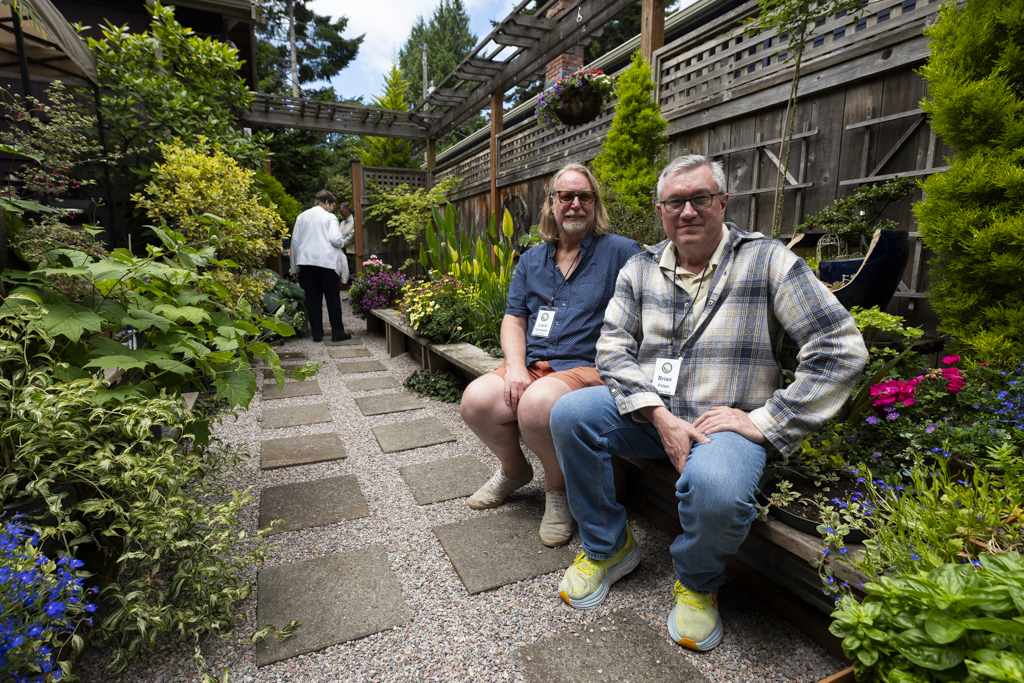
Garden E was “From a Sprawling Lawn and One Tree to …”
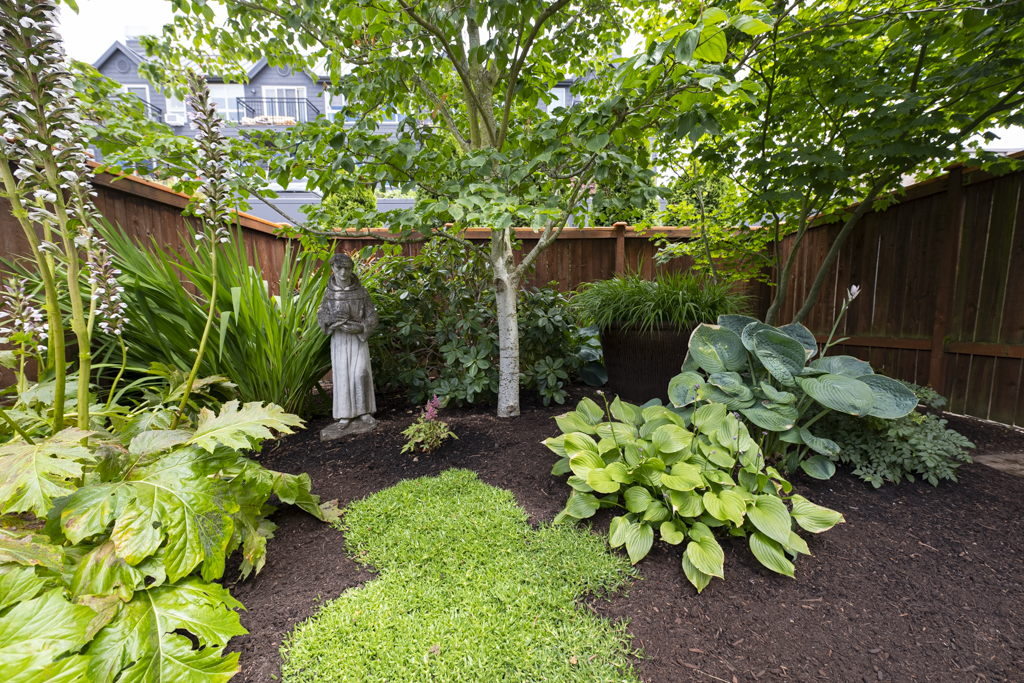
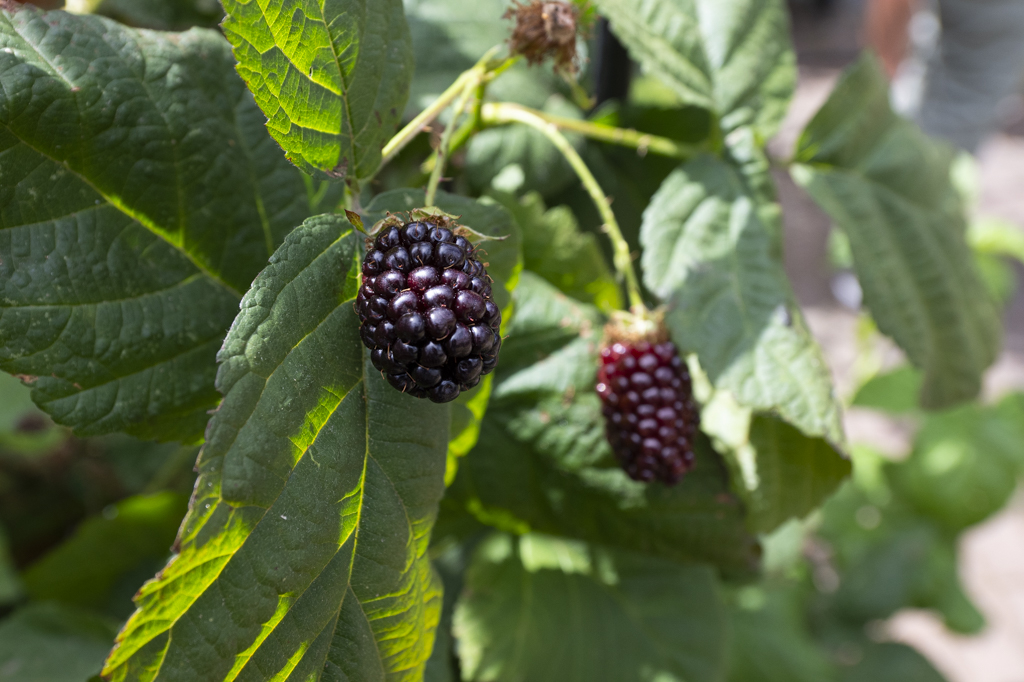
Blackberries are often the bane of a gardener’s existence, but in Garden F, “Transformation,” they were beautiful:
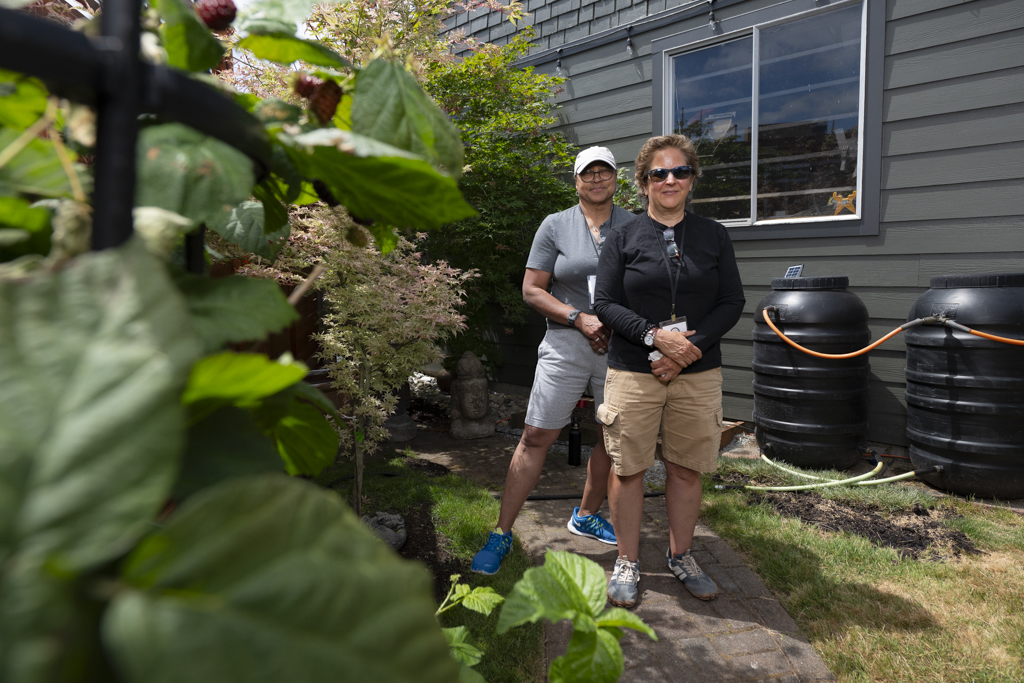
Garden F’s (L-R) Diane Elie and Raquel Gonzalez store water in 60-gallon rainbarrels and told Oliver that it fills most of their irrigation needs:
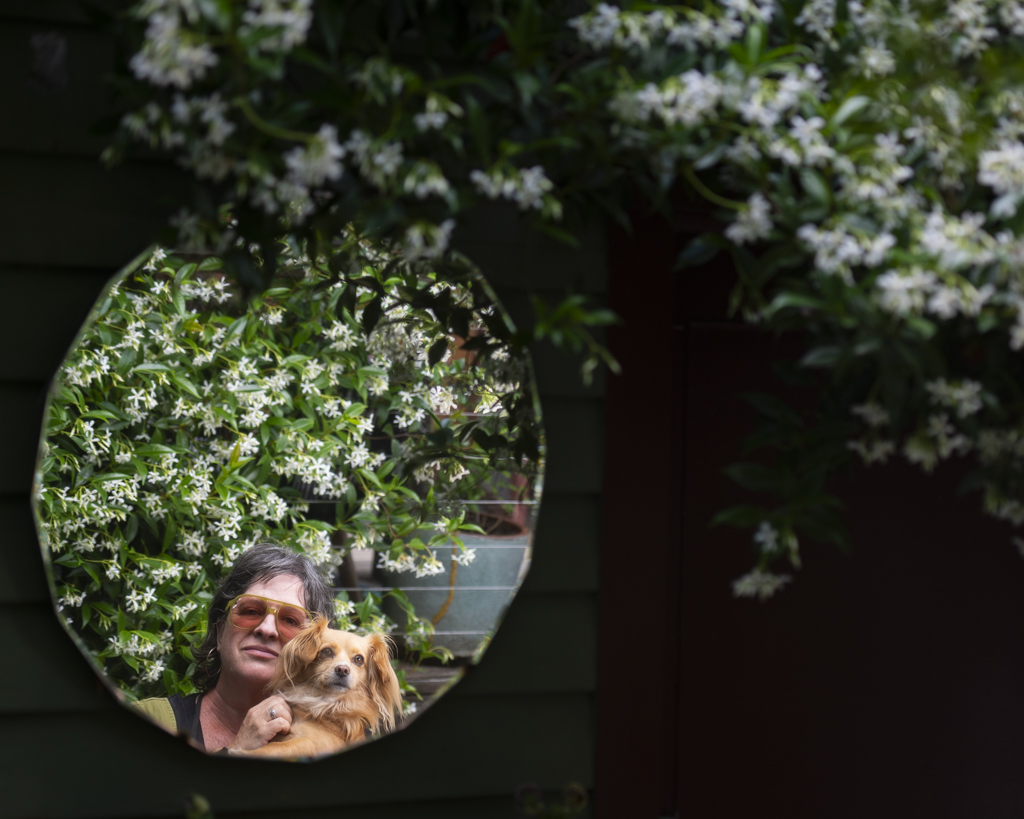
At Garden G, “Hidden Gem,” Julie Robinson-Jasper and Maple the dog are seen through a mirror surrounded by star jasmine at Garden G, “Hidden Gem”:
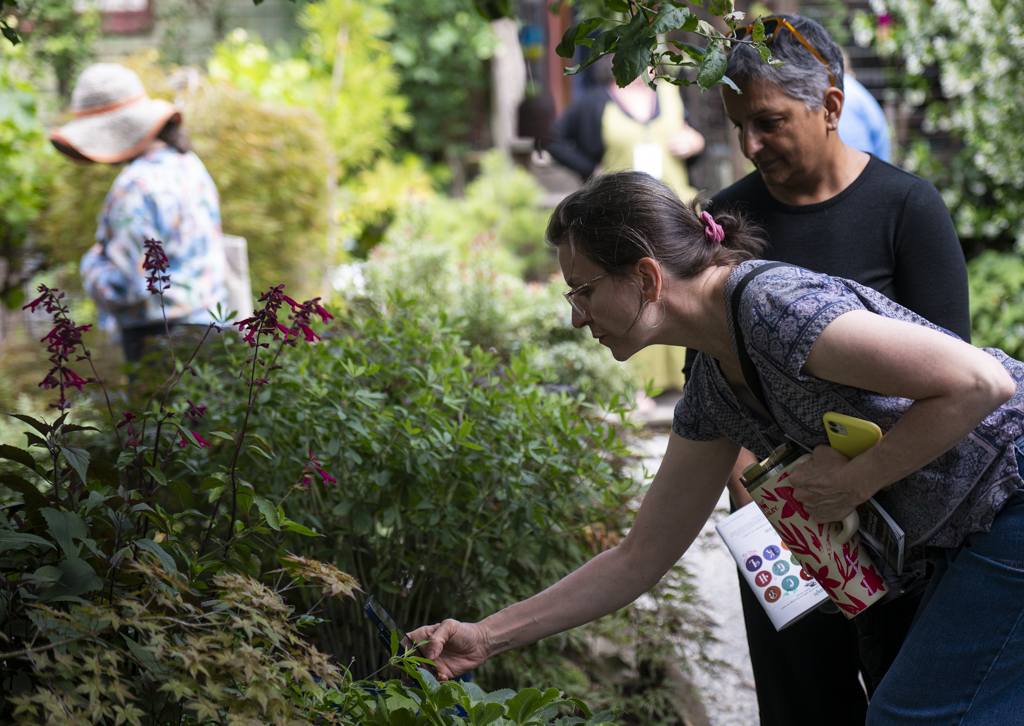
Another scene from Garden G:
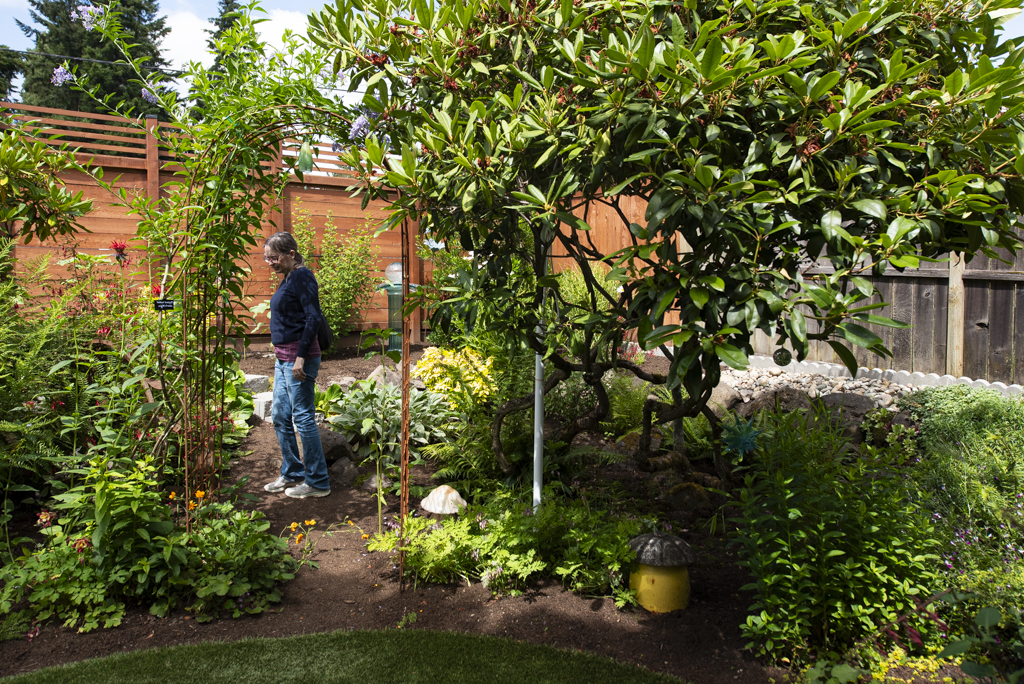
Garden H, “Behind the Fences,” sported an arch of bittersweet nightshade:
A clawfoot bathtub graced Garden I, “A Fresh Look for A Once-Beloved Garden“:

Garden J, “Garden of Many Rooms,” was conducive to wandering:
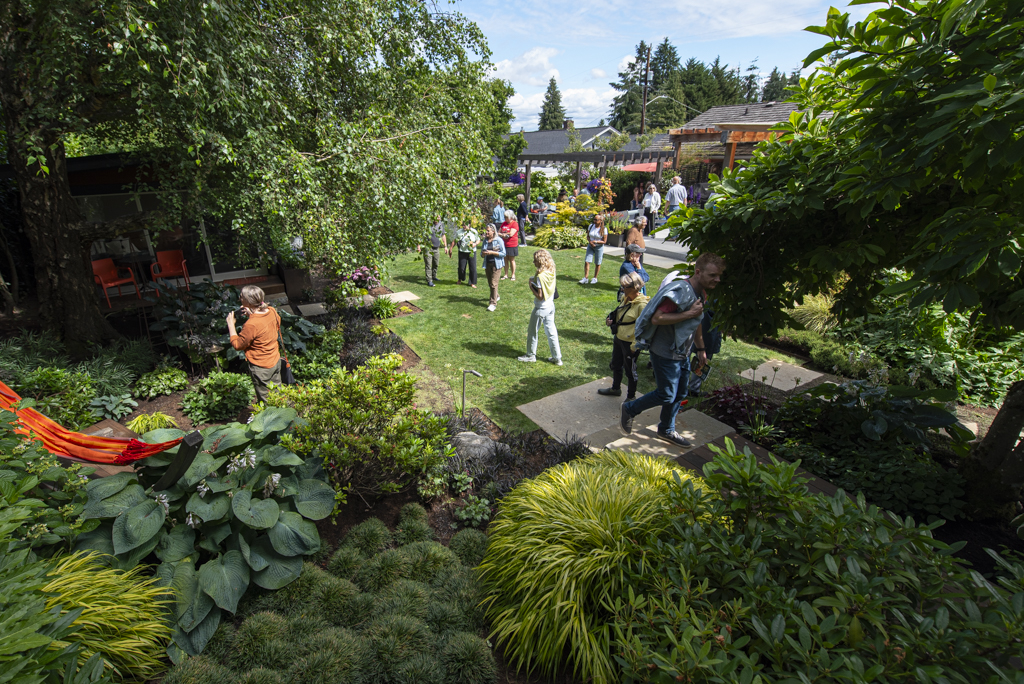
Garden K offered onlookers “Plants from Around the World“:
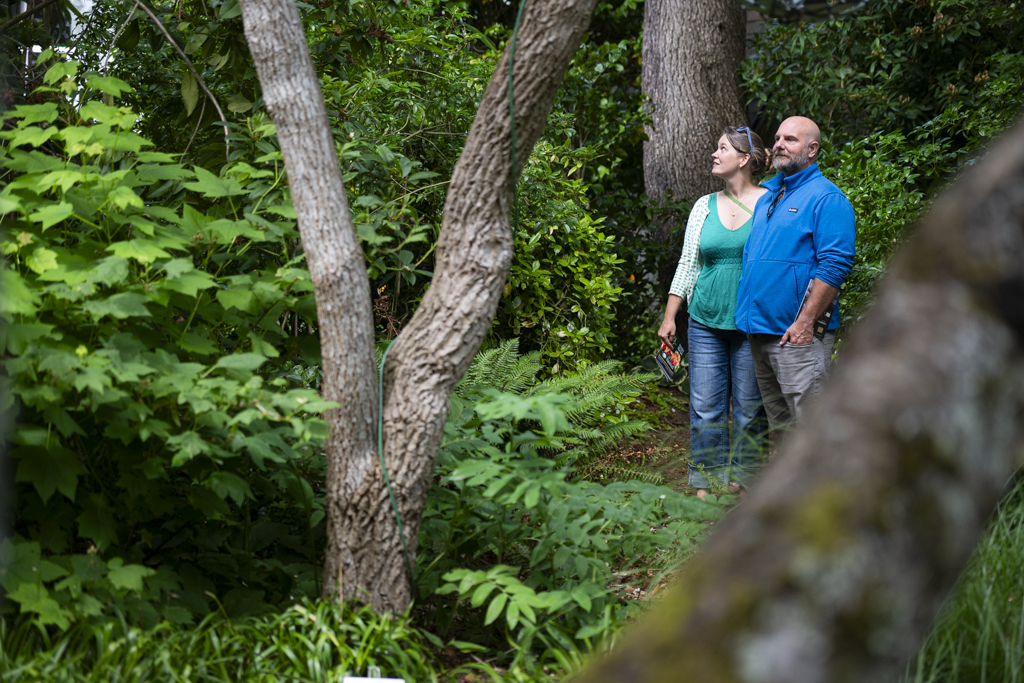
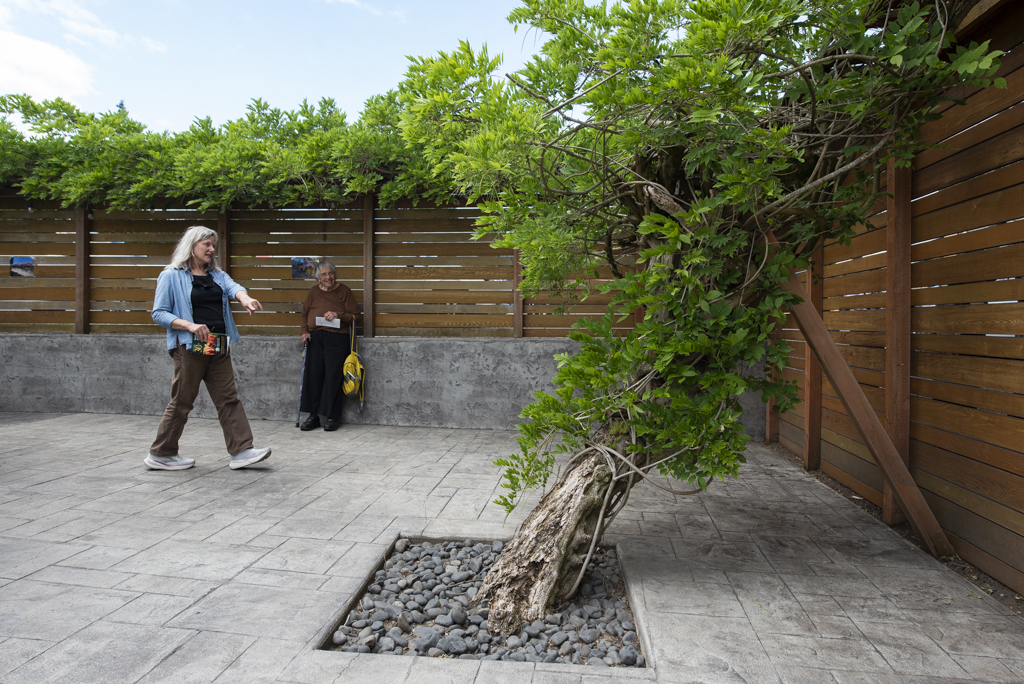
And Garden L, “Conifer Corner,” featured a 75-year-old wisteria:
(Read details of each garden here.) The West Seattle Garden Tour is organized by a nonprofit that uses the proceeds to support other nonprofits – here are this year’s grant recipients; see how to apply for one of next year’s grants by going here (July 15 is the deadline).

Three robberies occurred within 30 minutes of each other on Friday in Seattle, with law enforcement believing they were connected due to the timing, proximity, and similar descriptions of the suspects.
The first of three robberies began at 4:30 a.m. in the 200 block of Highland Drive near Kerry Park, when the Seattle Police Department (SPD) received reports of two men pointing guns at a man, SPD told KIRO Newsradio.
As officers arrived on scene, they located a 32-year-old man. The victim was sitting in his car when two suspects parked their car beside his and approached him with guns. The suspects ordered the victim to exit his vehicle and give them his necklace.
The victim claimed he had nothing of value, and the suspects ultimately fled in a dark sedan, possibly west on W. Highland Drive. The suspects were described as Black males, possibly in their late teens to 20s. Each suspect wore a mask and gloves, but the victim could not accurately recall what the suspects were wearing.
Second Seattle robbery came minutes after the first, this time at a store
Two minutes later, at 4:32 a.m., dispatch received a report of a robbery at a convenience store in the 1600 block of Queen Anne Avenue N. At the scene, officers made contact with a 25-year-old man.
The victims stated that two suspects entered the store, threatened them, and took money from two of the cash register drawers.
Soon after, the suspects fled the scene in a dark colored sedan. One suspect was described as a Black male in his 20s, roughly 6 feet, 2 inches tall with a medium build, wearing a mask, gloves, and dark-colored clothing. The second suspect was described as a Black male, 6 feet tall, with a medium build, wearing a mask, gloves, and dark-colored clothing.
Final robbery targeted a Beacon Hill convenience store with two victims
At 4:51 a.m., dispatch received a third report of a robbery, this time at a convenience store in the 4800 block of Beacon Avenue S.
Officers arrived and made contact with two victims, a 55-year-old man and a 24-year-old man. The SPD investigation revealed that one of the victims was in the cooler and the other was behind the counter when the two suspects first entered the store.
The victim in the cooler exited to see what was happening, then shut the door to the employee area and stayed there until it was safe to come out.
The 24-year-old victim was behind the counter when the suspect pointed a firearm at him. The suspect forced the victim to open the cash register and took the cash while the other suspect stood by the main entry door with a handgun.
Both suspects exited the store and fled the scene in an unknown direction. The first suspect was described as a Hispanic or Black male in his 20s, with a medium build, wearing a mask, gloves, and dark clothing. The second suspect was described as a Hispanic or Black male in his 20s, wearing a mask and gloves, with light colored pants and dark shoes.
No victims reported injuries as a result of each of the three robberies, and no suspects have been apprehended as of this reporting.
SPD’s Robbery Unit has been assigned to each case.
Anyone with information is urged to contact SPD’s Violent Crimes Tip Line at (206) 233-5000.
Follow Jason Sutich on X. Send news tips here.


The Mariners have made the first move in what’s sure to be a rip-roaring Trade Deadline season, acquiring INF Buddy Kennedy from the Giants in exchange for cash considerations.
Kennedy was designated for assignment by San Francisco earlier this morning as outfielder Heliot Ramos returned from the Injured List.
Advertisement
The 5’10” infielder has spent most of the season with Triple-A Sacramento, hitting well, even for the PCL. He’s in the 78th percentile for xWOBA, has a nearly identical K% and BB% (12.6%/12.1%) and rarely whiffs. This all has come out to a .322 batting average and a 152 wRC+. He’s made just a minimal impression in the bigs this season, with 8 plate appearances in 7 games, and zero hits.
Kennedy is likely to head to Tacoma. He can play 3B and 2B in a pinch, and will likely backfill Patrick Wisdom’s role if Wisdom is called up to take over right-handed pinch hitting duties from the currently-employed Rob Refsnyder.
The 27-year-old has not found much traction in the five years since his debut with Arizona in 2022. He’s amassed less than 200 plate appearances across 74 games, with a career 50 wRC+. On the mound, Kennedy has made one appearance this season, pitching one inning and giving up four runs, all earned.
-
 News2 minutes ago
Michigan governor threatens to pull troops from D.C. if used for Trump task force
-

 New York1 hour ago
Metropolitan Diary Challenge Day 2: How to Write Your N.Y. Story
-

 Los Angeles, Ca1 hour ago
Company has weeks to complete cleanup of Boyle Heights warehouse fire, officials announce
-

 Detroit, MI2 hours ago
18 New Kid-Friendly Places That Opened in Metro Detroit in 2026 (So Far!)
-

 San Francisco, CA2 hours ago
Anza expedition celebrates 250th anniversary in San Francisco
-

 Dallas, TX2 hours ago
Preston Hollow residents oppose proposed $800 million mixed-use development in Dallas, survey reveals
-

 Miami, FL2 hours ago
Bradley Beal to Miami Heat rumors draw skepticism
-

 Boston, MA2 hours ago
Boston Pops surprise travelers at Logan Airport with July 4th preview performance

