Northeast
NYPD warns anti-Israel protesters a 'Seattle-style' occupation zone won't be tolerated

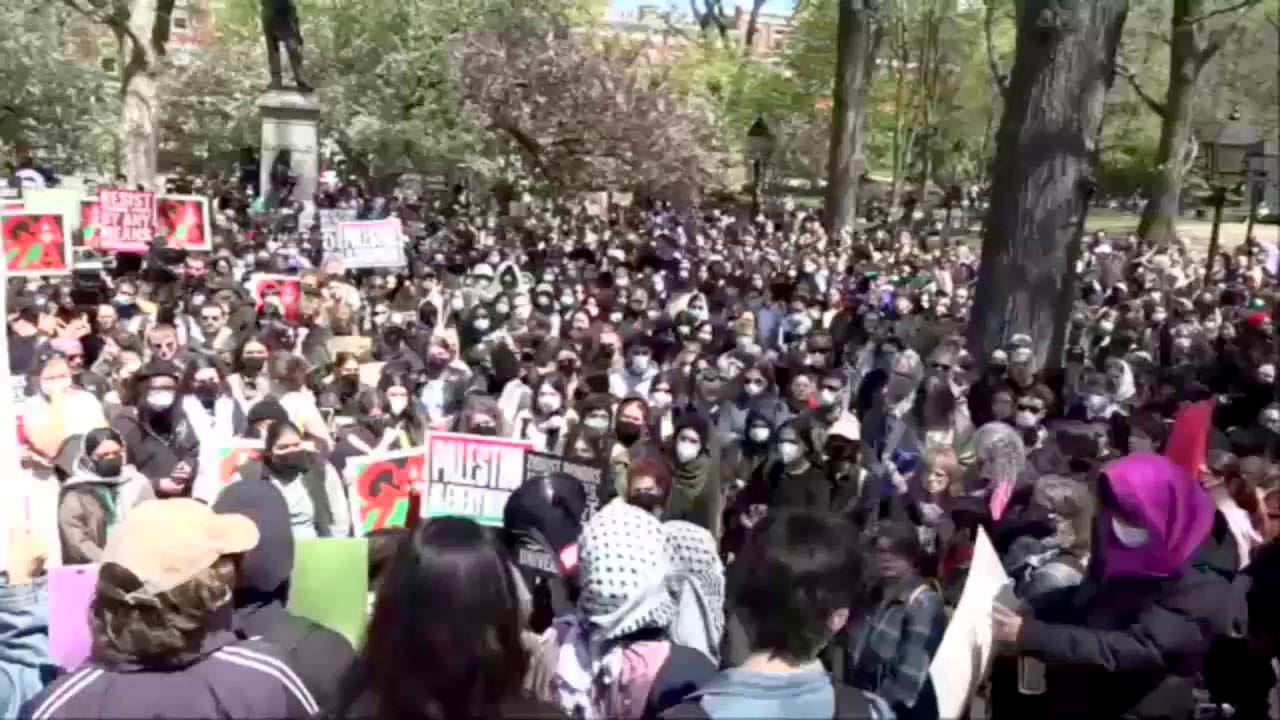
New York Police Department leaders attempted to shut down concerns Wednesday that the “liberated zones” on college campuses like Columbia and New York University could metastasize into the anarchical “autonomous zones” seen during the 2020 George Floyd riots.
On “The Story,” anchor Trace Gallagher was speaking with NYPD Chief of Patrol John Chell and NYPD Deputy Commissioner of Operations Kaz Daughtry when he reported on concerns the already raucous protests could devolve further.
Daughtry said when he worked alongside officers at NYU recently, he witnessed professors joining the student protests and ridiculing New York’s Finest for their attempts to keep the demonstrations under control.
As arrests of protesters who refused to vacate the area were being made, Daughtry heard epithets toward him and others that he said would have never been tolerated if the roles were reversed.
JEWISH COLUMBIA STUDENTS DENOUNCE CAMPUS ANARCHY AS RABBI WARNS THEM TO LEAVE
“Let’s just say, if my officers spoke how the professors and the faculty spoke to the officers — if my officers spoke like that, they would get a substantiated CCRB,” he said, referring to the city’s Civilian Complaint Review Board, through which transgressions by officers can result in loss of vacation, suspension or termination.
Gallagher noted some of the protests have evolved into being simultaneously anti-police, and that the NYPD was audibly compared to the Ku Klux Klan in some cases.
“You can see where a lot of people say they could see these areas becoming like the Seattle autonomous zone back in the George Floyd riots, where they linger and last all summer long and get bigger and more dangerous,” he said.
However, Chell appeared to immediately shut down the possibility, drawing a line between resistance and refusal to vacate.
ANTI-ISRAEL COLUMBIA STUDENTS STONEWALL, DIRECT FOX NEWS REPORTER TO ‘MEDIA TEAM’
“We will not have any Seattle-type encampments on the streets of New York City. I can guarantee you that — that would end rather quickly,” he said.
In Seattle, protesters took over a portion of the Capitol Hill neighborhood, which led to clashes between then-President Trump and Democratic then-Mayor Jenny Durkan over the handling of the zone.
Chell said there is a difference between the right to create encampments on campus quads and the right to do it in public. While the Columbia campus is zoned private, NYU-based protests have been held in places like Washington Square Park, which is public but considered part of the greater campus neighborhood.
“The fine line here is the street, the public property, which we’ll deal with, and the college is the private property,” Chell said.
“That’s why we got to strike this balance. Let me repeat, there will never be encampments on the streets of New York City while we’re in power — never going to happen.”
In Columbia’s case, the NYPD remained outside the Morningside Heights campus until President Nemat Minouche Shafik gave her blessing to have the cops raid her school’s encampment.
More than 100 people were detained and/or arrested during the April 18 operation, according to the New York Post.
Chell later said his officers made more than 200 arrests during a Tuesday night protest at Grand Army Plaza in Brooklyn, not far from Senate Majority Leader Chuck Schumer’s home, which was similarly besieged by anti-Israel demonstrators.
CLICK TO GET THE FOX NEWS APP
Near Schumer’s home, protesters held an “emergency Seder” — using a Hebrew term that at this time of year signifies the feast at the beginning of Passover — and demanded the Senate majority leader oppose U.S. “arming” of Israel, according to a statement from organizers reported by the Times of Israel.
Still, the NYPD prevented the protests from descending into chaos.
“We have done it flawlessly and we’re neutral and we know how to conduct ourselves,” Chell said. “And I think that the country’s watching on. I think our young men and women from this department and our bosses are doing a fantastic job in a very precarious situation.”
Read the full article from Here


Pittsburgh Regional Transit has started to install its ReadyFare vending machines as the agency prepares to roll out its new fare payment system.
PRT said it’s working to roll out its new ReadyFare system and has started to install the new machine at some of its light-rail stations.
The new machines recently were installed at PRT’s Gateway station in Downtown Pittsburgh.
PRT said that as it prepares to roll out the new system, current ConnectCard holders will receive a card in the mail with instructions on how to request a ReadyFare card.
The new ReadyFare cards will be able to be purchased at the new machines for $1.
PRT said that riders will be able to transfer any balances they have on a ConnectCard to the new ReadyFare cards using an online balance transfer form.

Multiple people were taken to the hospital following a crash on Interstate 91 in Hartford, officials said.
The Hartford Fire Department was called to the crash just before 6 p.m. The crash involved six to eight vehicles, according to officials, and happened on the southbound side near exit 33.
Multiple ambulances were also called to the scene, including one advanced life support unit.
Fire officials said all patients were helped at the scene before being taken to the hospital. It’s unknown at this time how many were injured and the severity of their injuries.
The Connecticut State Police assisted with traffic control and will investigate the crash.

A Massachusetts photographer was seriously injured when he was stabbed during a wedding reception last month in Raymond, Maine.
Donald Halsing, 26, was hospitalized for five days after the stabbing on May 23. NBC affiliate News Center Maine reported that 26-year-old Andrew Manderson was arrested and charged with elevated aggravated assault.
Still recovering, Halsing told NBC10 Boston the attack came out of nowhere — one moment, he was snapping photos on the dance floor, while the next, he was searching for help as blood spilled onto his camera.
“I was sitting there in that chair thinking, ‘There’s a real possibility I could die here,’” Halsing said. “Immediately, I put my hand on my chest here to try and stop the bleeding, get some pressure on it, and started yelling for help.”
Halsing was working at the reception at the Kingsley Pine Campgrounds. He took his last photo at 9:01 p.m., minutes before the stabbing.
“One of the wedding guests came up to me and started asking questions about our business,” he said.
Halsing said it was nothing out of the ordinary, and he tried to explain his photography business to the inquiring guest through the pulse of the DJ booth and celebrating guests.
“I thought he was going to reach in his back pocket for his phone, and instead, he didn’t pull out his phone — he pulled out a pocket knife and stabbed me,” he said.
Manderson, who faced a judge days later, is a cousin of the bride.
“There was this look in his eyes that he wasn’t quite all there,” Halsing said.
Halsing’s fiancée, Ashley Wall, was feet away as he struggled to stay awake. She has been his photography partner for eight years since they met at Framingham State University, and she was helping him work the wedding.
“People who were around me, they asked, ‘What can we do to help you? What do you need?’ And I said, ‘Please go check on Ashley. Please go check on my fiancée,’” he recalled.
Halsing spent five days in the hospital suffering from two lacerations to his liver, ultimately developing a blood clot in his left leg. But the road to recovery exceeds his physical wounds as he contemplates his mental state when he resumes photography next year.
“I’m also worried about what lingering effects there might be,” he said. “If we get out on the dance floor and I start remembering what happened, I don’t know how I’m going to react.”
Halsing still doesn’t know why he was attacked.
Manderson was released on $50,000 bail and is due back in court in October.
-

 Milwaukee, WI2 minutes ago
Friends, family gather to remember gunshot victim Pepe Sikisi-Belle Jr.
-

 Atlanta, GA9 minutes ago
As FIFA World Cup nears, some MARTA riders raise safety concerns after recent attacks on transit system
-

 Minneapolis, MN12 minutes ago
Minneapolis leaders split over ShotSpotter contract
-

 Indianapolis, IN17 minutes ago
Work completed on $3 million restoration of fountains at Garfield Park
-

 Pittsburg, PA24 minutes ago
Pittsburgh Regional Transit starting to install new ReadyFare machines
-

 Augusta, GA27 minutes ago
Five Augusta Women’s Tennis Players Honored on PBC All-Academic Team – Augusta University
-

 Washington, D.C39 minutes ago
Washington archbishop removes priest as exorcist after comments on UFOs and demons
-

 Cleveland, OH42 minutes ago
Male dead after running from crash scene and shooting another in Cleveland’s Slavic Village neighborhood, police say

