Tables and decorative plants: make an offer.
Washington, D.C
After a D.C. restaurant closes, selling pieces of a dream


Michael had spent more than a decade toiling in the food industry. Finally, he had his own place. And, for seven years, its doors remained open.
Sospeso survived the coronavirus. It survived inflation and confusion over tipping. It survived the Rosato family’s move from the H street area to the suburbs.
But, in March, the Rosatos decided to close. Business was flagging. Staff members had been carjacked. Crime in D.C. was on the rise. The restaurant’s carrying costs — $50,000 per month — were too high.
Day after day, the couple felt that they were just working for their landlord.
They had dreamed a dream, and it had come true.
But when a restaurant closes, the story isn’t over. Now, everything had to go.
Reader’s Digest Condensed Books: make an offer.
Sospeso served its last meal on April 7, and a liquidation sale was advertised on Instagram and by word of mouth for the following weekend. Dozens of people showed up, picking through what remained of the restaurant as ’90s rock blared.
The Rosatos weren’t just selling plates and flatware. All of the countless objects a modern restaurant demands were up for sale: Candlesticks. Half-empty bottles of alcohol. Deep-fryer baskets. Soup tureens. A cactus.
“We both have done a lot. We have done everything possible to make this work,” Hatice said. “Even your best is not enough.”
She stood among the shoppers, answering questions as her young children — Miles and Siena — gave impromptu restaurant tours. Miles wore a fedora and a skinny tie. Siena wore a princess dress and earmuffs.
The children felt at home here, Hatice said. A small loft space above Sospeso’s second floor was outfitted with a play kitchen where they whiled away idle hours.
Olivier Caillabet, who runs the ramen restaurant Toki Underground two blocks away, browsed through books in the second-floor dining room before heading to the kitchen. His feelings about Sospeso’s departure: “It sucks.”
Many H Street restaurants opened businesses more than a decade ago amid the corridor’s resurgence. Since then, costs and competition have increased. According to data from the Restaurant Association Metropolitan Washington, 75 percent of restaurants are less profitable than they were before the pandemic.
“The food was good,” Caillabet said. “The service was good. They did everything right. It’s tough.”
Sospeso Blanco Vermouth: $49 per liter.
Grapefruit juice: 50 cents.
Emma Hollandsworth and Hakeem Bisyir had come to say goodbye. They stood in line to buy small containers of lentils and hummus as Michael negotiated prices while navigating various payment systems.
“We always loved coming,” Hollandsworth said.
“It’s a little weird in here,” Bisyir said.
“We thought it would be a happier vibe,” Hollandsworth added.
On the second floor was a painting — a mural of what looked like an Italian village with the restaurant’s name stenciled in the sky. The painting, on three large pieces of plywood, was propped in front of an exterior door. A strong wind occasionally blew the door open, knocking the plywood to the floor.
Apparently not even a portrait of the restaurant could survive.
In the end, Michael didn’t get rid of everything he’d wanted to. Other restaurateurs would come by to see what was left.
They probably would get a bargain. Michael knew the dangers of holding out for a higher price on kitchen gear during a fire sale.
Closing Sospeso helped him remember, he said, that “special things happen in restaurants.” People have stopped in to remind him what a good time they had there. Some said they started drinking vermouth because of Sospeso. An employee met his wife working there.
“I’m happy that I did it,” he said. “Before opening the restaurant, I was tired of me saying, ‘I’m going to open a restaurant.’”
Most people never get to live their dream; at least the Rosatos lived one for a while. Now, Michael can focus on bottling and selling vermouth. Hatice can turn to her jewelry business.
The book of life has many chapters.
“It feels good,” Hatice said. “We are ready to move on.”

Washington, D.C
DC will pay $50,000 to man detained while protesting guard patrol with ‘Star Wars’ song, record says

WASHINGTON (AP) — The District of Columbia has agreed to pay $50,000 to settle a lawsuit filed by a resident who accused police officers of illegally detaining him for following an Ohio National Guard patrol while playing Darth Vader’s theme song from “Star Wars” on his cellphone, according to a document released Monday.
The plaintiff, Sam O’Hara, sued the district, four Metropolitan Police Department officers and a guard member from Ohio over what he says was his act of protest against President Donald Trump’s federal law enforcement surge in Washington, D.C.
A court filing on Thursday disclosed the settlement but didn’t specify any monetary terms. The amount is included in a copy of the settlement agreement that D.C. Attorney General Brian L. Schwalb’s office provided to The Associated Press.
The $50,000 settlement includes attorney’s fees and costs. O’Hara is represented by the American Civil Liberties Union of the District of Columbia. In an email on Friday, an ACLU spokesperson referred to the settlement’s financial terms as “a significant amount” that O’Hara “is pleased with” but said they weren’t disclosing the dollar figure to protect his privacy.
O’Hara, an artist who works in the hospitality industry, agreed to drop his claims against the district and the MPD officers within three business days of receiving the settlement payment. The settlement isn’t an admission of wrongdoing by the district, the agreement says.
O’Hara’s settlement with the district doesn’t resolve his related claims against an Ohio National Guard member, Sgt. Devon Beck, who has asked a judge to dismiss O’Hara’s claims against him.
O’Hara sued the district in October, claiming police officers violated his First Amendment rights to free speech and his Fourth Amendment rights against unreasonable seizures and excessive force.
O’Hara played “The Imperial March” theme from “Star Wars” on his phone as he followed several National Guard troops down a public street on Sept. 11, 2025. One of the troops summoned police officers, who stopped O’Hara and kept him handcuffed for 15 to 20 minutes before releasing him without charges, according to the lawsuit.
Trump’s ongoing deployment of guard members in Washington began last August after the Republican president issued an executive order declaring a crime emergency in the nation’s capital. The surge inflamed tensions with residents of the heavily Democratic district. Hundreds of guard members remain deployed in the district nearly a year later, with no clear end in sight.

US President Donald Trump escalated his criticism of Democratic mayoral nominee Janeese Lewis George, describing her as a “communist” and warning that her policy agenda could negatively affect Washington, DC, ahead of the city’s November mayoral election. Trump made the remarks on his Truth Social platform, placing crime, immigration and policing at the center of his criticism.Trump attacks Democratic agenda
In his statement, Trump claimed George supports measures including reducing prison populations, expanding sanctuary city policies, opposing Immigration and Customs Enforcement (ICE), restoring cashless bail, cutting police funding and resisting anti-crime initiatives. He argued that such proposals would weaken public safety in the US capital and reverse recent improvements.
George becomes favorite after primary victory
Janeese Lewis George secured the Democratic nomination earlier this month after winning the party’s mayoral primary in Washington, DC. Given the city’s strong Democratic voting base, her victory has positioned her as the leading candidate to succeed outgoing Mayor Muriel Bowser in the November general election.
Trump vows to protect Washington
Trump insisted that his administration would not allow Washington, DC, to be “destroyed,” arguing that the city has become significantly safer through crime reduction efforts and urban renewal projects. He also announced that he intends to meet with George, while describing the US capital as “again a Safe and Prestigious Community.”
Repeating his criticism, Trump said: “Many people, including myself, have worked long and hard to get it there, and we will not let it be destroyed by a Communist adherent who has no intention to, MAKE WASHINGTON GREAT AGAIN!”
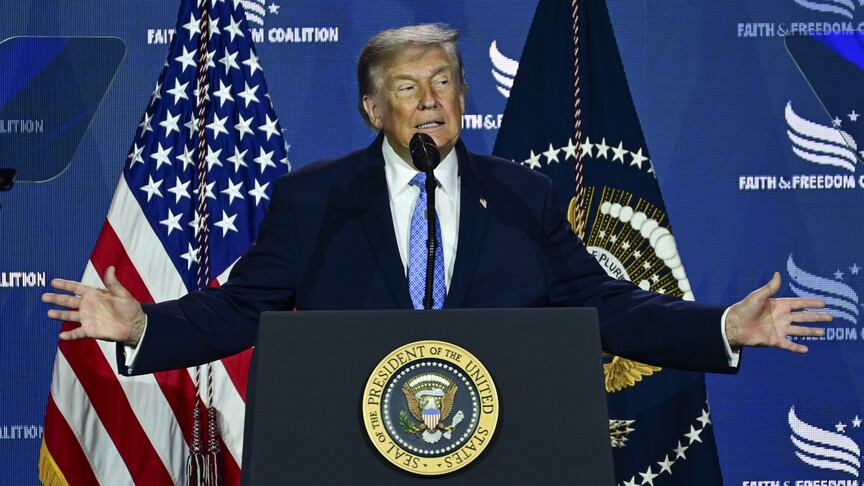
Berk Kutay Gokmen
28 June 2026•Update: 28 June 2026
US President Donald Trump on Sunday criticized Democratic mayoral nominee Janeese Lewis George, calling her a “communist” and attacking her policy positions ahead of Washington, DC’s mayoral election.
“Janeese Lewis George, the Communist who is almost certainly going to be elected Mayor of Washington, D.C., has stated that she wants to empty the prisons, make D.C. a Sanctuary City, oppose ICE, welcome Criminal Illegal Aliens back into our beloved Capital, resist Anti-Crime Crackdowns, Defund the Police, continue and expand Cashless Bail, and so many other Capital destroying ‘things’,” Trump wrote on his Truth Social platform.
George won the Democratic primary for mayor of Washington, DC, earlier this month, securing her party’s nomination in the heavily Democratic city and becoming the likely successor to outgoing Mayor Muriel Bowser after the November general election.
Trump said he would not allow Washington, DC, to be “destroyed.”
“In the end, it will never work out, nor will I let it even have a chance because I have worked too hard to make Washington, D.C., the Envy of the World, with almost No Crime, and a Beautification process that has been second to none,” he said.
Trump also said he would “meet with Janeese Lewis George,” adding that Washington, DC, is “again a Safe and Prestigious Community.”
“Many people, including myself, have worked long and hard to get it there, and we will not let it be destroyed by a Communist adherent who has no intention to, MAKE WASHINGTON GREAT AGAIN!” he added.
-
 Kansas26 seconds ago
New food trucks join Love Lot in Kansas City, benefit from World Cup excitement
-

 Kentucky6 minutes ago
Kentucky Cares, Lexington Humane Society offer free pet food after floods
-

 Louisiana13 minutes ago
Louisiana man sentenced in child sex crimes case involving dolls now banned by state law
-

 Maine16 minutes ago
Maine driver to honor friend Kyle Busch during Celebration of America 300
-

 Maryland21 minutes ago
Maryland man sentenced for making online threats toward Black and Muslim communities
-

 Michigan28 minutes ago
Michigan Lottery Daily 3, Daily 4 results for June 29, 2026
-

 Massachusetts30 minutes ago
Millions of gallons of wastewater discharged into Merrimack River due to broken pipe
-

 Minnesota36 minutes ago
Driver in fatal crash near Belview, Minnesota, was fleeing law enforcement

