Northeast
Hundreds accuse Massachusetts doctor of sexual abuse, inappropriate examinations

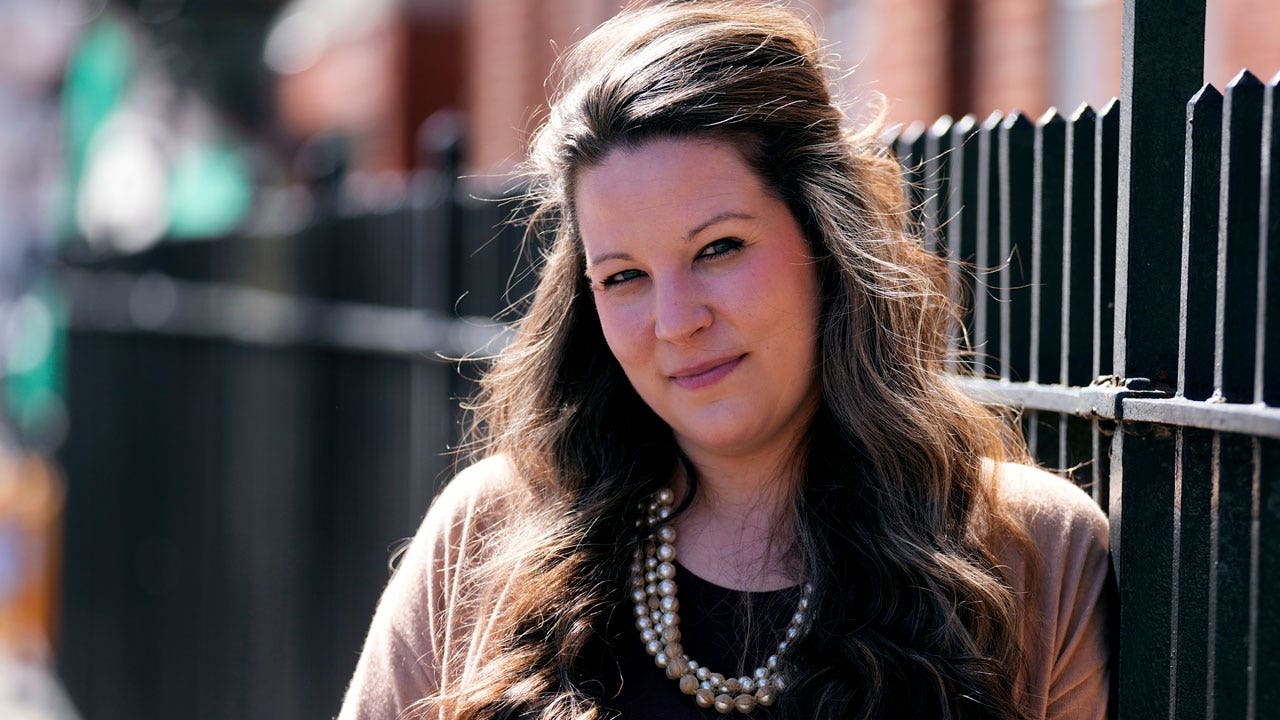
More than a decade ago, Kristin Fritz was struggling with pain in her spine and saw a rheumatologist recommended by her doctor at Brigham and Women’s Hospital in Boston.
The visit with Dr. Derrick Todd started normally for the 37-year-old New Hampshire woman. But as Todd progressed, he aggressively groped her breasts, she said, to the point that he “seemed to enjoy that a little too much.”
Only last year, when contacted by the hospital about Todd, she realized a line had been crossed. And she was not alone.
ATTACKS ON 3 FEMALE PASSENGERS ON SEPARATE FLIGHTS PROMPT WARNING ON UPTICK IN SEXUAL VIOLENCE ON PLANES
“I feel so violated,” she told The Associated Press. “I feel so ashamed of myself for not knowing better in the moment to do anything and to be like, yeah, this did feel wrong and I should tell somebody.”
The Associated Press generally doesn’t identify possible victims of sexual abuse, but Fritz allowed her name to be used. She is one of more than 200 women and several men who have joined a consolidated lawsuit against Todd in Massachusetts’ Suffolk Superior Court.
The lawsuit, combining several filed last year, accuses Todd of performing unnecessary pelvic floor therapy, breast examinations, testicular examinations and rectal examinations on patients.
Kristin Fritz, a plaintiff in a lawsuit against Dr. Derrick Todd is seen on April 8, 2024, in Portsmouth, New Hampshire. Fritz and more than 200 women have accused Todd of sexually abusing them by performing unnecessary pelvic and breast exams while under his care. (AP Photo/Charles Krupa)
It alleges that Todd — a former rheumatologist at Brigham and Women’s Hospital whose specialty involves treating inflammatory conditions of the muscles, joints and bones — began abusing patients in 2010. It also accused several dozen other defendants, including Brigham and Women’s Faulkner Hospital and Charles River Medical Associates, of knowing about the abuse and failing to stop it.
“It’s an extraordinary number of people who put their trust in Dr. Todd and who had that trust violated simply for his own personal, selfish gratification,” said William Thompson of Lubin & Meyer, whose Boston-based firm represents most of the victims.
“The other thing that strikes me about this case is how could this have been going on at the hospital, at the practice group for so long without somebody recognizing … that something suspicious was going on,” he continued. “Yet, they allowed him to continue to do this week after week, month after month, year after year, to more and more victims.”
A lawyer for Todd, Anthony Abeln, said his client would “not litigate this matter in the media, but he will defend his care as the case progresses through the Massachusetts Superior Court system.”
In April 2023, Brigham and Women’s received two anonymous complaints about Todd and launched an internal investigation. Todd was told he couldn’t conduct sensitive exams without a chaperone. In June, he was placed on administrative leave, then terminated a month later. The hospital said it also notified the Department of Public Health, the state Board of Registration in Medicine, law enforcement and his current and former patients.
In September, Todd reached a voluntary agreement with the Board of Registration in Medicine to stop practicing medicine anywhere in the country. No criminal charges have been filed against Todd but several former patients have been interviewed by law enforcement.
The Boston Globe reported last year Todd was under investigation by the Suffolk County District Attorney’s Office. A spokesperson for the office said it would not comment on the case.
“We are deeply troubled by the upsetting allegations of harmful conduct committed by Dr. Todd,” the hospital said in a statement. “We take our duty to care for our patients and keep them safe extremely seriously. We have, and always will, act decisively on any allegations of misconduct, as we did in this case.”
The Charles River Medical Associates said it was never made aware of any complaints of “inappropriate conduct” by Todd and said it reached out to patients to report their concerns.
“We are deeply troubled and saddened by these disturbing allegations and recognize the courage it took for these patients to come forward,” it said in a statement.
Thompson said victims ranged in age from teenagers to women in their 60s. The lawsuit alleged Todd would gain their confidence, go beyond treating their rheumatic diseases and become their only doctor while conducting invasive, unnecessary exams.
Among them was a 33-year-old Massachusetts woman who struggled to find a doctor during the COVID-19 pandemic. She was thrilled Todd called to help her with symptoms of tingling and numbness in her arms and hands.
Over two years, Todd became her primary doctor and gynecologist and, the lawsuit said, the abuse intensified during her visits — including repeated vaginal exams. She said Todd would routinely comment on her body, ask her to strip naked and make sure she was unaccompanied during exams.
“It honestly impacted every single component of my life because it just occupies every part of myself from my self-confidence,” said the woman, who reported Todd to the medical board after discussing his behavior with her gynecologist and realizing something was wrong.
Since learning there were many others and that Todd would no longer practice medicine, she said a weight “has been lifted off my chest” though she struggles to cope. “Even just thinking about work is super challenging,” she said. “I’m really, really, really still struggling today, big time.”
As for Fritz, she acknowledged the experience will stay her for the rest of her life. But she takes solace in the fact that Todd is already paying a price for his actions.
“You were a trusted medical professional in a world class facility. You abused and violated many, many, many patients. It’s just not right,” Fritz said of Todd. “For me, justice is him never being able to practice again. Him never being able to do this to women or any other patient that he had done this to.”
Read the full article from Here


HARTFORD, Conn. (AP) — Connecticut prison inmate J’Allen Jones was suffering a mental health crisis in 2018 when correctional officers struck him multiple times, stripped him naked, put a spit bag over his head and sprayed pepper spray at his face shortly before he died.
Video of the series of events was released Friday by a state judge in Hartford overseeing Jones’ family’s lawsuit against eight officers and a prison nurse, following a yearslong legal battle and after both sides agreed to certain redactions.
The Department of Correction had sought to keep it sealed since 2019, saying in part that its release could present security problems because it shows the physical layout of the prison and staffing patterns. But Jones’ family, the American Civil Liberties Union of Connecticut and local NAACP officials called for publicly releasing the video, saying transparency was needed in Jones’ death.
“The events in the video are as disturbing as the events in the video of George Floyd’s death,” Ron Murphy, a lawyer for Jones’ family, wrote in a court document, referring to the man killed by a Minneapolis police officer in 2020. “But in some ways, the video of J’Allen’s death is worse.”
Jones, 31, from Atlanta, was serving a 10-year sentence for robbery at Garner Correctional Institution in Newtown, about 25 miles (40 kilometers) west of New Haven when he died on March 25, 2018. Correction officers had been trying to take him to a medical unit in the prison at the time to get treatment for his mental illness.
Handcuffed inmate appeared in crisis as officers struck him
Portions of the 52-minute video show Jones handcuffed behind his back — and later with his legs shackled — as officers hit his legs and torso with their knees and fists, after he refused a strip search. At one point, an officer pins him down on a bed with a knee on his back while others hold him down.
Jones — who was having a schizophrenic episode, according to court documents — is heard yelling at this point, much of it unintelligible. He repeatedly shouts, “In the blood of Jesus Christ!” At one point, he tells officers, “I command you … to uncuff me now!”
Officers, meanwhile, tell Jones numerous times to stop resisting and to calm down. One officer tells Jones they’re just trying to help him.
About 17 minutes into the video, Jones appears to start having trouble breathing after the spit bag was placed over his head and he was pepper sprayed. Nearly five minutes later, Jones appears to be unconscious as officers struggle to hold him up and put him in a wheelchair. At around the 24-minute mark, an officer requests a nurse to evaluate Jones.
“Right now he’s just being dead weight, and I just want to make sure he’s OK,” the officer says, talking to the video camera held by another officer.
Minutes go by before life-saving measures are started
About 28 minutes into the video, a nurse starts performing CPR and an officer orders someone over the radio to call 911. An ambulance crew doesn’t arrive until more than 43 minutes into the video. Jones was pronounced dead at a local hospital.
Hours after Jones’ death, the Department of Correction put out a brief statement saying that Jones had become “non-compliant and combative with staff and then became non-responsive.” It did not say anything about officers striking Jones but noted that there were no immediate indications that excessive force was used. It said life-saving measures were performed and he was brought to a hospital.
The medical examiner’s office determined that the cause of Jones’ death was “sudden death during struggle and restraint with chest compression and pepper spray exposure in person with hypertensive and atherosclerotic cardiovascular disease.” It ruled his death a homicide, although that designation does not necessarily mean a crime was committed.
In January 2019, a state prosecutor investigating Jones’ death determined that no crimes were committed.
An internal Correction Department investigation found that excessive force was not used. But the eight officers and nurse violated policy by not recognizing for more than seven minutes that Jones was in medical distress — although not intentionally, the investigation report said.
Punishment of one-day suspensions without pay were handed down to the nine staff members, Correction Department records show.
The correctional officers’ union did not immediately return an email seeking comment.
Family lawyer hopes video release spurs calls for reforms
Allen was Black, and his lawyer says eight of the nine defendants are white. One is Black. In court papers seeking release of the video, Murphy said it’s important that the public sees the footage and can consider “whether his race or schizophrenia played any role in how his cries for help and gasps for air were perceived and handled.”
“I hope everyone who chooses to watch the video does so with an open heart, remembering that J’Allen Jones was a father and a son and that his family grieves every day,” Murphy said in a statement Friday afternoon, adding that he hoped the video leads to prison system improvements.
He added, “I found the video very difficult to watch as it depicts the painful death of another human being. So please take care of yourself while watching and if you experience overwhelming feelings, consider taking a break or reaching out to someone for support. Thank you.”
Responding to a series of questions from The Associated Press about the video and how officers dealt with Jones, the Correction Department’s interim commissioner Sharonda Carlos, said in a statement that the agency is continually focused on improving the services it offers to inmates experiencing mental health problems.
“Any loss of life in our facilities is a tragedy that we feel deeply, and our sympathy remains with Mr. Jones’ family and loved ones,” she said.
Carlos said she appointed a psychiatrist to lead the department’s inmate medical services in May, and the agency is rolling out major improvements to its mental health training for staff.
“Behind every individual in our care is a family hoping for their well-being, and we do not take that responsibility lightly,” she said.

PORTLAND (WGME) — Maine Governor Janet Mills has not yet decided whether the state will opt into a new federal tax credit program that would help fund private school tuition, tutoring and other educational services.
The program, called the Educational Choice for Children Act, would start next year. In states that opt in, individuals can receive up to $1,700 in tax credits for donations they make to scholarship-granting organizations, also known as SGOs. Those SGOs would then award grants to students to cover private school tuition, tutoring and other educational services.
Families earning up to 300 percent of the area median income can qualify for the scholarships in states that opt in.
Under the current framework, donors contribute to SGOs and receive federal tax credits, and SGOs use the funds to award scholarships for qualifying educational expenses, including tuition, fees, tutoring, curriculum materials and educational therapy for K-12 students. SGOs can also use donated money to award scholarships for educational expenses, including everything from private school tuition to special needs services and educational therapy.
Each state’s governor must opt in by filing IRS Form 15714. Once opted in, the state designates SGOs to operate within its borders and distribute EFTC scholarships to eligible families.
Republican State Senator James Libby of Cumberland, a member of the Education and Cultural Affairs Committee, says he is interested in bringing the program to Maine.
“What it really does is it takes dollars that would normally go to pay for taxes and put them directly into education,” Libby said. “The program itself allows for expenditures for other things besides school choice, so the states can set it up the nonprofit to have goals for whatever they want. There’s a lot of good parts to this legislation and I truly hope Maine will get involved.”
Democratic Rep. Kelly Murphy, who chairs the state’s education committee, says she believes the program would hurt Maine students.
“The Education Freedom Tax Credit favors families that already have the ability to pay for private schools at the expense of families with students enrolled in public schools,” Murphy said. “A decline in public school enrollment would result in a loss of state funding for local SAUs, as the costs for running schools continue to increase, putting additional pressure on property taxpayers to make up the gap. This program and others like it would hurt the majority of Maine students, especially those in small, rural schools across our state.”
The U.S. Department of the Treasury is in the process of finalizing rulemaking for the program. Currently, 30 states have opted into the program, and four states have opted out. In New England, New Hampshire is the only state that has opted in so far.
It is unclear if there is a hard deadline for states to opt in, but Mills is facing pressure to sign off this year so the Department of the Treasury can approve scholarship organizations before scholarships become available in January.

Local News
Voters have passed several major laws by initiative in past elections. A 2016 initiative legalized marijuana, and a 2022 initiative created a tax on millionaires.
This year, eight initiative petitions are likely headed to voters on the November ballot. The Legislature, which had a chance to approve the measures last month, opted not to approve any of them, requiring ballot committees to gather additional signatures this month.
Massachusetts voters have passed several major laws by initiative in past elections. A 2016 initiative legalized marijuana, and a 2022 initiative created a tax on millionaires.
But as the number of initiatives on the ballot has increased, lawmakers have grown frustrated with the system. House Speaker Ron Mariano and Senate President Karen Spilka criticized the ballot measure process in February, with Mariano describing it as “fraught with peril.” And the Legislative committee tasked with voting on potential initiatives — some of which targeted the Legislature — held a series of tense hearings in March.
Several elected officials and scholars have called for reform to the ballot measure process.
The Massachusetts Legislature is not the only state government critical of the initiative process. An increasing number of states have attempted to restrict the practice.
Still, direct democracy advocates say ballot measures serve as a check and balance on representative government.
“We believe that representative government is one of the most fundamental, best ways to govern,” said Dane Waters, founder of the Initiative and Referendum Institute. “But lawmakers, for whatever reason, whether through personal interest or conflict, sometimes just choose not to do things, and there needs to be a mechanism for the people to hold them accountable.”
What is an initiative?
Ballot initiatives allow citizens to adopt laws or constitutional amendments, depending on the state. Massachusetts permits both.
The ballot measure process emerged during the Populist and Progressive movements in the 1890s and early 1900s because the reformers believed state governments were controlled by moneyed special interests rather than the people.
In 1912, an Oregon initiative gave women the right to vote. A 1996 California initiative banned affirmative action. In 2012, Maine voters legalized same-sex marriage.
Initiative petitions can be direct or indirect, depending on the state. Direct initiatives are placed on the ballot without any legislative say. Indirect initiatives — Massachusetts’ approach — are first presented to the Legislature. The process of how a state legislature handles an indirect petition varies by state.
In every state with an initiative process, citizens must collect signatures to qualify for the ballot, though the requirements vary by state.
Initiatives are distinct from referendums, which ask voters to accept or reject legislation recently adopted by the Legislature.
Which states allow initiatives?
Twenty-three states have some form of initiative process, the majority of which are in the West. According to Waters, many of these states entered the union during the Progressive Era and were “more prone to want to have that mechanism versus states that had been around since the founding of our nation.”
Eastern states with initiative processes include Massachusetts, Florida and Maine, though those states tend to have more stringent processes.
From 1904 to 2024, California had the most initiatives (396), followed by Oregon (379), with approval rates of 35% and 36%, respectively. Colorado (259), North Dakota (202) and Washington (192) follow.
“If you were to factor out California and Oregon, I think it would probably represent like 30% to 40% of all the initiative usage ever,” Waters said.
He added that no state stands out as more likely to respond to ballot proposals with a legislative compromise.
“I respect representative government, but I seriously am hard pressed to find a single legislature that is supportive or sympathetic to the people using the process,” Waters said.
New Bedford lawmakers support ballot measure process
Despite legislative leaders’ opposition, several New Bedford lawmakers told The New Bedford Light they don’t view the ballot measure process as a threat.
Rep. Antonio F.D. Cabral, D-New Bedford, said ballot measures are a “useful democratic barometer” that informs the Legislature of residents’ priorities.
“At the core of our democracy is the belief that every resident deserves a meaningful voice in the decisions that shape their lives,” Cabral said in a written statement. “The ballot initiative process is an alternative avenue, alongside direct engagement between constituents and their elected officials, and stands as a valuable component of the democratic system in Massachusetts.”
Rep. Christopher Hendricks, D-New Bedford, said the ballot measure process can “nudge the Legislature sometimes in the right direction, where it otherwise wouldn’t happen.” He pointed to the Fair Share Amendment, which voters passed in 2022, creating an additional tax on millionaires.
Rep. Christopher Markey, D-Dartmouth, echoed this sentiment, using the 2016 initiative that legalized marijuana as an example.
Hendricks and Markey both argued that some issues are too complex to be decided at the ballot box, including a proposal to cut the state income tax from 5% to 4%, which the Supreme Judicial Court recently struck from the ballot.
“I think when you start to get into technical bills, where there’s a lot of issues, it’s really difficult for someone to understand the entire bill and understand the nuances that (lawmakers) get,” Markey said. “We get lots of meetings with people in special interest groups and advocacy groups so that we can learn the pluses and minuses of a particular bill in more detail.”
Waters disputes this commonly used argument.
“For democracy to work, you have to have faith in the voters,” he said. “If you’re going to trust voters to choose among a candidate, then you have to have faith in them that they can choose among an issue.”
Rep. Steven Ouellette, D-Westport, said that as long as a question is legal and constitutional, the Legislature should institute it. “Unless there’s some kind of legal issue argument, we are planning on going forward with what the people want,” he said.
Rep. Mark Syvlia, D-Fairhaven, told The Light that the ballot measure process is “important,” but that he appreciates that the Legislature has a chance to weigh in on the questions.
“(The Legislative review educates) the public about what a ballot question does and doesn’t do, and also identifies for the Legislature where there may be an opportunity to enact a potential ballot initiative that would be really beneficial,” Sylvia said.
He said he believes that the Legislature didn’t approve any of the November questions because of their substance, not out of disdain for the initiative process.
Massachusetts’ approach
Massachusetts has one of the most difficult initiative processes in the country.
The process begins with 10 petitioners who submit a proposed law or amendment to the attorney general for approval.
If the initiative is certified, petitioners must collect signatures equal to 3% of the total votes cast for governor at the last election — 74,574 signatures for the November 2026 election.
Massachusetts only allows indirect initiatives. If lawmakers don’t pass the initiative, petitioners must collect additional signatures — 0.5% of the gubernatorial votes, or 12,429, for the November election.
Initiatives for constitutional amendments require only one round of signatures, but must be approved by two consecutively elected legislatures.
Waters pointed to North Dakota — which has an indirect initiative process — as one of the easiest states to place a question on the ballot.
Massachusetts limits how many signatures can come from one county, but North Dakota has no distribution requirements.
According to Waters, signatures in North Dakota are presumed valid, but in Massachusetts, they must be certified.
Petitioners in North Dakota have one year to collect signatures — significantly more time than in Massachusetts, where petitioners have nine weeks to collect the first round of signatures and eight weeks in the second round.
Threats to the ballot measure process
Waters and other direct democracy advocates warn of growing threats to the ballot measure process.
“There’s been this full frontal attack in trying to make the process more difficult,” Waters said, noting that many ballot measure requirements don’t apply to the legislative process.
A 2026 report from the Ballot Initiative Strategy Center says states are “deploying a shared and increasingly sophisticated playbook to limit voter power.”
Several states have tried to regulate the signature gathering process, restricting how and where petitioners can collect signatures.
Lawmakers in states including Arizona, Florida and North Dakota have adopted or proposed supermajority requirements for citizen-led initiatives — meaning at least 60% of voters must approve them.
Other states have adopted single-subject rules, which “grant courts and officials wide discretion,” according to the report.
According to Waters, the threat to ballot measures stems from “an inherent conflict between lawmakers and the people.”
“Lawmakers typically … don’t like the people messing with them when they’ve been elected to enact laws,” he said.
In 2023, just months before Ohio voters were to decide on a measure to keep abortion legal in the state, legislators held a special election to try to raise the total signatures requirement, require signatures from each of the state’s counties, and raise the approval threshold to 60%. (Voters rejected the rule change, then approved the abortion-rights measure.)
After Nebraska and Missouri voters overwhelmingly passed paid sick leave initiatives in 2024, both state legislatures adopted bills to undermine the measures.
Critics call for reform
Lawmakers, scholars and the attorney general have called for various reforms to the state’s initiative process.
In March, the Massachusetts Senate passed a bill seeking to limit paid signature gatherers, including a prohibition on paying workers based on the number of signatures collected.
Ten states prohibit ballot committees from using paid signature-gathering firms, and Sylvia said he would be open to Massachusetts doing the same after reviewing the practice’s impact.
“(Paying signature gatherers) doesn’t feel democratic to me,” he said.
Markey also said paid signature gatherers undermine the grassroots nature of the process, but Ouellette argued that it’s not a problem as long as it’s done legally.
“When you need 1,000 or 10,000 signatures, that’s a lot of work,” Ouellette said.
Waters of the Initiative and Referendum Institute shares Ouellette’s view.
“We pay Uber drivers, we pay people to pick up our laundry, we pay dog walkers … Why is it wrong to pay people to collect signatures?” Waters said. “It doesn’t matter who collects the signatures. The reality is, only Massachusetts voters get to vote on it.”
Instead, Waters suggested other reforms to make the ballot measure process more accessible, including extending circulation periods and allowing digital signatures.
Criticism of Massachusetts’ initiative process — Article 48 in the state constitution — has intensified since a 2024 initiative law granted State Auditor Diana DiZoglio authority to audit the Legislature’s performance. Many experts and most lawmakers say the question violated the state constitution’s separation of powers.
Ballot measures can’t infringe on certain constitutional rights — such as freedom of speech — or involve excluded subjects. But the attorney general can’t weigh in on whether the questions propose laws that would violate the state constitution.
Instead, she certifies the proposal if it is in proper form, isn’t similar to initiatives from the past two elections, and adheres to subject matter regulations. Her office also writes a summary of the proposal, which appears on the ballot. Attorney General Andrea Campbell said in May that the process should change to allow her office to analyze the proposal’s legality.
Sylvia shares this view, noting that petitioners would benefit from knowing earlier in the process whether their question is constitutional. He pointed to the unresolved question about the audit and to a proposal to reform legislative stipends, which the state’s Supreme Judicial Court deemed unconstitutional in May.
The House, the Senate, or the governor can request an advisory opinion from the Supreme Judicial Court about a ballot proposal before it goes to voters.
In mid-June, the court struck a proposed income tax cut from the November ballot, because the justices concluded that the attorney general’s summary of the initiative proposal was “significantly misleading.” Taxpayers for an Affordable Massachusetts, one of the supporters of the tax cut initiative, said afterward that it will consider “advocating for procedural reforms” for ballot preparations.
Jerold Duquette — a political scientist who lives in Massachusetts and teaches at Central Connecticut State University — has also pushed for Article 48 reforms. However, he doesn’t advocate for eliminating the initiative process.
Since the audit question passed, Duquette and other experts have argued that the state constitution should be amended to exclude ballot questions that concern constitutional provisions about legislative functioning and the separation of powers.
Duquette noted that ballot question committees are not solely at fault for the trouble with Article 48.
“The politicians, journalists, and newspaper editors who play along without giving sufficient critical attention to the constitutional questions raised by experts share blame with the sponsors of constitutionally questionable ballot measures,” he said.
This year’s initiatives
This November, voters will likely consider eight initiative petitions on the ballot.
They include: • repealing the law that legalized recreational marijuana • applying the public records law to the Legislature and governor’s office • creating an “all-party” primary ballot system • allowing voters to register on Election Day • overriding local zoning laws to reduce barriers to single-family starter homes • changing the method of calculating the state tax revenue limit • giving Committee for Public Counsel Services workers the right to collectively bargain • redirecting sales tax on sport and outdoor recreational equipment into a conservation fund
Their second-round signatures, which were due June 17, need to be certified by the Secretary of State in July. Legislative compromises could result in a ballot committee agreeing to withdraw a proposal before then.
Three other initiative questions were rejected from the ballot due to Supreme Judicial Court decisions: rent control, an income tax cut, and reform of legislators’ stipends.
___
This story was originally published by The New Bedford Light and distributed through a partnership with The Associated Press.
-

 Colorado6 minutes ago
See the list of this year’s Fourth of July professional fireworks shows in the Denver area
-
Connecticut13 minutes ago
Newly released video shows Connecticut prison officers striking inmate before he died
-

 Delaware16 minutes ago
Annual Delaware River Sojourn honors the nation’s 250th anniversary
-

 Florida21 minutes ago
Florida Lottery Mega Millions, Jackpot Triple Play results for June 26, 2026
-
Georgia28 minutes ago
Georgia Lottery Mega Millions, Cash 3 results for June 26, 2026
-

 Hawaii31 minutes ago
Police recover 19 gaming machines, $7K in Kakaako gambling bust
-

 Idaho36 minutes ago
The reactor race has begun
-

 Illinois43 minutes ago
New Illinois bill aims to overhaul public defense system | The Chicago Report


