Wisconsin
Wisconsin mailbag: How did O-line become a question mark? Where will Badgers be better?


MADISON, Wis. — Wisconsin is one-third of the way through its 15 spring football practices. You had questions for the Badgers mailbag about where things stood for the program on multiple fronts. Here are the answers:
It sounds like OL depth is a concern. How did we get here? For the past few years, everyone was concerned that there wouldn’t be enough reps to go around because there was a backlog of four- and five-star guys on the second and third teams. How did things swing so drastically in the other direction? — John H.
The biggest reason Wisconsin finds itself in this position is because two of the players you’re talking about — Nolan Rucci and Trey Wedig — transferred, as did reserve lineman Dylan Barrett. Michael Furtney, who started all 13 games at right guard last season, used up his eligibility, and Tanor Bortolini left early for the NFL.
Wedig, in particular, was a tough loss because he started eight games in 2022 (five at right tackle, two at right guard and one at left guard) but had a substantially diminished role last season and moved on to Indiana. Rucci was the backup left tackle to Jack Nelson, and there likely weren’t going to be more opportunities for Rucci this season with Nelson returning. That’s why Rucci is now at Penn State, where he’s competing for the starting right tackle job.
Free, daily sports updates direct to your inbox. Sign up
Free, daily sports updates direct to your inbox. Sign up
Buy
In a hypothetical world where those guys stayed, then Wisconsin would have 15 scholarship offensive linemen and at least a couple of veterans in the second group. Wisconsin did not add an offensive lineman during the first transfer portal window, but the Badgers did sign five offensive linemen in the 2024 class.
What we’ve seen during the first five practices is a group working with the first-team offense that has good experience and talent: Jack Nelson, Joe Brunner, Jake Renfro, Joe Huber and Riley Mahlman. All those players other than Brunner started in the bowl game. What coaches have to figure out is how to handle the backup spots in the event of an injury because all the other offensive linemen have played a total of 33 snaps on the O-line, according to Pro Football Focus: 27 for JP Benzschawel and six for Barrett Nelson.
It’s worth pointing out that three of the signed offensive linemen — Derek Jensen, Ryan Cory and Emerson Mandell — won’t be on campus until the summer and Barrett Nelson has been sidelined this spring with an injury. Those absences have drastically impacted what the depth chart looks like, with six non-scholarship players working in the second and third units, including two players on the third team who weren’t listed on the initial spring practice roster.
During practice Tuesday, Wisconsin mixed up some of its offensive line rotations with the top unit. Brunner took snaps at left tackle and right tackle, which allowed Benzschawel to move up and play left guard. Huber also earned snaps at center in place of Renfro as the Badgers look for a capable backup to Renfro for next season. The second-team unit often has consisted of freshman early enrollee Kevin Heywood at left tackle, redshirt freshman James Durand at left guard, walk-on Kerry Kodanko at center, Benzschawel at right guard and walk-on Peyton Lange at right tackle.
“We’re just making sure that we build the depth there because we lost quite a bit with some of those guys that left and transferred that were really guys that were going to compete to play and to start,” Wisconsin coach Luke Fickell said after practice Tuesday.
I think the loss of Renfro last year was an underappreciated factor in the underperformance of our passing game. What can you tell us about the development of a No. 2 “true” center (including incoming freshmen)? — Jay B.
If the season began tomorrow and Renfro was unavailable, my sense is Wisconsin would simply shuffle around its top offensive line group by moving Huber to center and elevating Benzschawel at right guard. Huber can play every position along the offensive line. He started 12 games at right tackle for Cincinnati in 2022 and 13 games at left guard for Wisconsin last season, where he did not allow a sack over 475 pressure opportunities.
The other centers have been Kodanko working with the second group and freshman early enrollee Colin Cubberly working with the third group. Although Durand was a reserve center last season, coaches have him playing guard this spring. Cory, a three-star signee from Pennsylvania, is an interior lineman who could earn snaps at the position during preseason practices as well.
GO DEEPER
What I learned at Wisconsin practice: New wrinkles, impact transfers, QB battle and more
Any true freshman early enrollees standing out in practices or getting more opportunities? I know it is early in spring camp, but curious what these new recruits look like and if any are trending toward moving up the depth chart when fall camp rolls around. — CJ H.
It’s too early to say whether any of the early enrollees will carve out a significant role, but a few of them have caught my eye at this stage. Heywood playing left tackle with the second-team offense is, in part, due to the lack of experience behind the top group. But it also speaks to his talent as a four-star prospect and the No. 6 offensive tackle in the country, per the 247Sports Composite.
When Fickell was asked for his thoughts on some of the early enrollees dipping their toes in the water this spring, he immediately went to the offensive line.
“Well, the O-linemen have not dipped into the water,” Fickell said. “They’ve been thrown into the water and those guys, a lot of that is baptism by fire. They’re in there with the twos and they’re seeing Leon Lowery on the edge and they’re seeing John Pius on the edge and Darryl Peterson. They’re not guys that are maybe seeing some three work.”
A couple of early enrollees who have impressed me while working with the reserves are outside linebacker Thomas Heiberger and slot receiver Kyan Berry-Johnson. Heiberger’s athletic frame and instincts have allowed him to make a handful of plays, and Berry-Johnson caught a deep pass down the field from quarterback Mabrey Mettauer on Tuesday. Mettauer has earned some good work with the third-team unit as he learns the offense.
“That life as an early enrollee freshman is tough,” Badgers quarterback Braedyn Locke said. “I lived it. Most guys have. I think that he’s constantly trying to get his feet underneath him a little bit. I think he’s doing a good job. I think he cares a lot. I think he loves football and I think when you’re young, that’s what’s important.”
Any thoughts on whether we’ll make it past the spring transfer portal window with our current QB room intact? — Martin P.
I don’t envision Wisconsin losing any of its quarterbacks during the spring transfer portal window, though I’m obviously not inside the head of any player on the roster. Tyler Van Dyke and Braedyn Locke are competing for the starting job. Mabrey Mettauer was the first Class of 2024 prospect to commit under the new coaching staff and just got here.
The other two quarterbacks on scholarship are Nick Evers and Cole LaCrue. There has been a lot of talk this spring about how much progress Evers has made in one year with his knowledge and execution of the offense. He gives Wisconsin a totally different dynamic with his running ability, though he still appears to have plenty of ground to make up to compete on Van Dyke and Locke’s level.
I’m not sure where LaCrue fits into the future plans at quarterback, but the staff liked him enough to want him even though he committed before the new coaches came on board. LaCrue is not practicing this spring and posted on his X account that he had undergone two surgeries in two years, so he’s in the process of rehabbing his way back.

Bryson Green had 105 yards and a TD in the ReliaQuest Bowl. (Matt Pendleton / USA Today)
With so many things going wrong on offense last season (Tanner Mordecai injury, injured/depleted RBs, depleted TEs, poor OL performance, WR drops), where is this team going to be better? At which position (other than probably RB)? — Mark A.
I’ll start with wide receiver. Will Pauling had a breakout season when he led the team with 74 catches for 837 receiving yards and six touchdowns. He’s again going to be a focal point in Phil Longo’s offense. I think the pieces around him might better fit in Year 2. Trech Kekahuna, for example, is a true slot receiver who can complement Pauling.
Skyler Bell was second on the team in receptions with 38, but he was moved from the outside to the slot under the new coaching staff and never had a game where he finished with more than 53 receiving yards. Bell is now at UConn. Kekahuna went for 64 receiving yards in the bowl game, which was his first college game on offense.
I’m not going to make any bold proclamations about the receiving corps after what we saw last season. But Bryson Green is capable of being much more productive, and the hope is that he can build on the bowl, when he had 105 yards receiving and a touchdown. One key will be finding more consistency from the other wideout on the field, whether that be CJ Williams, Vinny Anthony II or Quincy Burroughs. Burroughs had a strong week of practice and made a great diving catching in the end zone on a reserve defense back during practice Tuesday.
Quarterback play has the potential to be better depending on how well Tyler Van Dyke can take to the offense. And, yes, the running backs offer plenty of intrigue. Chez Mellusi fits this system so well, which he showed before he broke his leg in Week 4. If he can stay healthy and Wisconsin can get contributions from Tawee Walker or one of the two incoming four-star freshmen, then there is reason for optimism at running back.
GO DEEPER
Can Tyler Van Dyke capitalize on fresh start at Wisconsin? ‘A lot to prove, just ready to work’
What do you see different from last year at the same time? We all were high on everything being done, but ended up with an underwhelming season. — Paul Q.
Longo said he turned on the video of the first two spring practices from a year ago and described what he saw this year as being “light years ahead.” A lot of that has to do with the fact that the installation of an entirely new system, both on offense and defense, slowed the learning curve last year. This time, there are 54 returning players on scholarship, by my count. That makes a big difference.
The challenge every year is trying to incorporate so many early enrollees (11 this spring) and transfers (12 this spring) because everything is going to be new for them. Having this many returning players has to help with that process. I’d say what’s noticeable isn’t so much a particular play being executed better but the speed and intensity at which it appears Wisconsin is performing. I asked Fickell how different he believed things were for the group in Year 2, and he noted that the staff had created more competition and added length and athleticism at some key positions.
“My objective is to continue to push as hard as I possibly can to all of us to increase the intensity and the attention to detail and how we do things so at the end of spring we’ve got a better idea,” Fickell said. “That’s what I didn’t feel like after Year 1 we really had a good idea —I didn’t — of who we were. I thought I did and then I thought as we performed, I didn’t know who we really were.
“Regardless of what we did last year, this competitive spirit that we’re trying to have more and more of and put them in some situations, hopefully we can all get a better grasp of who we think we really are. So as we go into fall, we can start to formulate a better plan for what we need to do to be successful.”
(Top photo: Jeff Hanisch / USA Today)



LAKE MILLS, Wis. (WFRV) – The City of Lake Mills Police Department alerted the public that they are looking for a missing endangered person early Saturday morning.
Police say that 24-year-old Alfred, “Al,” Pellatt of Lake Mills was last seen at approximately 2:45 a.m. on Friday, June 19. It was detailed that Pellatt left a bar in the 100 block of N. Main Street in Lake Mills heading north on foot. At around 2:43 a.m., Pellatt was viewed on foot in the 500 block of N. Main Street.
It was noted that Pellatt has special needs and is on medication, but does not have it with him.
Police describe Pellatt as a 6’0″ white male, weighing 215 pounds. He was last seen wearing a floral dress.
Lake Mills is located west of Milwaukee in Jefferson County.
Any information pertaining to Pellatt’s whereabouts should be shared with the City of Lake Mills Police Department.

Manuel Franco claims his $768 million Powerball jackpot
Manuel Franco, 24, of West Allis was revealed Tuesday as the winner of the $768.4 million Powerball jackpot.
Mark Hoffman, Milwaukee Journal Sentinel
The Wisconsin Lottery offers multiple draw games for those aiming to win big.
Here’s a look at June 19, 2026, results for each game:
Winning Mega Millions numbers from June 19 drawing
13-16-21-26-50, Mega Ball: 12
Check Mega Millions payouts and previous drawings here.
Winning Pick 3 numbers from June 19 drawing
Midday: 0-2-5
Evening: 5-1-1
Check Pick 3 payouts and previous drawings here.
Winning Pick 4 numbers from June 19 drawing
Midday: 1-2-0-1
Evening: 5-6-2-6
Check Pick 4 payouts and previous drawings here.
Winning All or Nothing numbers from June 19 drawing
Midday: 01-05-07-11-13-14-15-17-18-21-22
Evening: 01-02-08-09-12-14-17-18-20-21-22
Check All or Nothing payouts and previous drawings here.
Winning Badger 5 numbers from June 19 drawing
09-13-14-30-31
Check Badger 5 payouts and previous drawings here.
Winning SuperCash numbers from June 19 drawing
04-05-13-14-16-27, Doubler: N
Check SuperCash payouts and previous drawings here.
Feeling lucky? Explore the latest lottery news & results
Are you a winner? Here’s how to claim your lottery prize
- Prizes up to $599: Can be claimed at any Wisconsin Lottery retailer.
- Prizes from $600 to $199,999: Can be claimed in person at a Lottery Office. By mail, send the signed ticket and a completed claim form available on the Wisconsin Lottery claim page to: Prizes, PO Box 777 Madison, WI 53774.
- Prizes of $200,000 or more: Must be claimed in person at the Madison Lottery office. Call the Lottery office prior to your visit: 608-261-4916.
Can Wisconsin lottery winners remain anonymous?
No, according to the Wisconsin Lottery. Due to the state’s open records laws, the lottery must, upon request, release the name and city of the winner. Other information about the winner is released only with the winner’s consent.
When are the Wisconsin Lottery drawings held?
- Powerball: 9:59 p.m. CT on Monday, Wednesday, and Saturday.
- Mega Millions: 10:00 p.m. CT on Tuesday and Friday.
- Super Cash: 9:00 p.m. CT daily.
- Pick 3 (Day): 1:30 p.m. CT daily.
- Pick 3 (Evening): 9:00 p.m. CT daily.
- Pick 4 (Day): 1:30 p.m. CT daily.
- Pick 4 (Evening): 9:00 p.m. CT daily.
- All or Nothing (Day): 1:30 p.m. CT daily.
- All or Nothing (Evening): 9 p.m. CT daily.
- Megabucks: 9:00 p.m. CT on Wednesday and Saturday.
- Badger 5: 9:00 p.m. CT daily.
That lucky feeling: Peek at the past week’s winning numbers.
Feeling lucky? WI man wins $768 million Powerball jackpot **
WI Lottery history: Top 10 Powerball and Mega Million jackpots
This results page was generated automatically using information from TinBu and a template written and reviewed by a Wisconsin editor. You can send feedback using this form.

MILWAUKEE — Milwaukee has no shortage of ways to celebrate this weekend, from a Pride bar crawl to Father’s Day deals around the city and Juneteenth celebrations.
Summerfest and Northcott Neighborhood House are hosting a Juneteenth celebration filled with music and culture at the Summerfest grounds.
Watch: Kidd O’Shea breaks down this weekend’s events:
Wisconsin Weekend in a Minute: June 19-21
The event kicks off right after the traditional Juneteenth Day Festival wraps up.
Pride Bar Crawl
The 9th annual Pride Bar Crawl kicks off Saturday at 4 p.m. at Walker’s Pint.
Tickets include drinks and access to exclusive specials at partner bars. Twenty percent of proceeds will benefit the Milwaukee LGBT Community Center.
The crawl wraps up with an after-party and drag show at La Cage Nightclub.
Father’s Day
On Sunday, The Motor Restaurant at the Harley-Davidson Museum is offering a free beer for dad when purchased with a meal, along with free admission to the museum. Reservations are highly encouraged.
Families can also take dad to the Milwaukee County Zoo, where all fathers receive free admission on Sunday.
Let’s talk:
Hey there! At TMJ4 News, we’re all about listening to our audience and tackling the stuff that really matters to you. Got a story idea, tip, or just want to chat about this piece? Hit us up using the form below. For more ways to get in touch, head over to tmj4.com/tips.
It’s about time to watch on your time. Stream local news and weather 24/7 by searching for “TMJ4” on your device.
Available for download on Roku, Apple TV, Amazon Fire TV, and more.
Report a typo or error // Submit a news tip
-
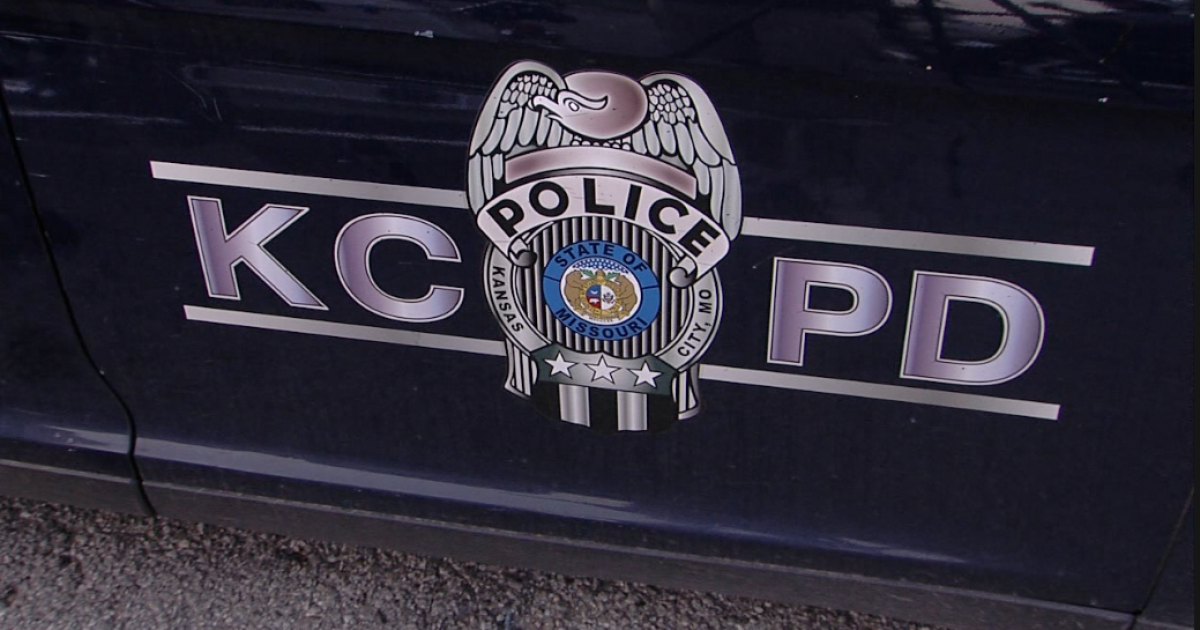 Kansas2 minutes ago
1 man dies after being shot June 9 in Kansas City, Missouri; police working to identify person of interest
-

 Kentucky9 minutes ago
Tornado ripped through Florence area during storms, NWS confirms
-

 Louisiana12 minutes ago
How Louisiana nitrogen gas executions could be affected by court ruling on Alabama
-

 Maine17 minutes ago
Two charged with assault after boater dies overboard in Hurricane Sound
-

 Maryland24 minutes ago
Two Injured In Waldorf Shooting, One Flown To Trauma Center – The BayNet
-

 Michigan27 minutes ago
Michigan QB Bryce Underwood on Year 1’s challenges and what’s next
-

 Massachusetts32 minutes ago
Mass. man charged with posing as teen, exposing himself to 12-, 13-year-old girls
-

 Minnesota39 minutes ago
Minnesota man arrested in WI for ‘numerous’ criminal sexual conduct charges against a child

