West
Hawaiian lawmakers poised to make 'shaka' the official state gesture

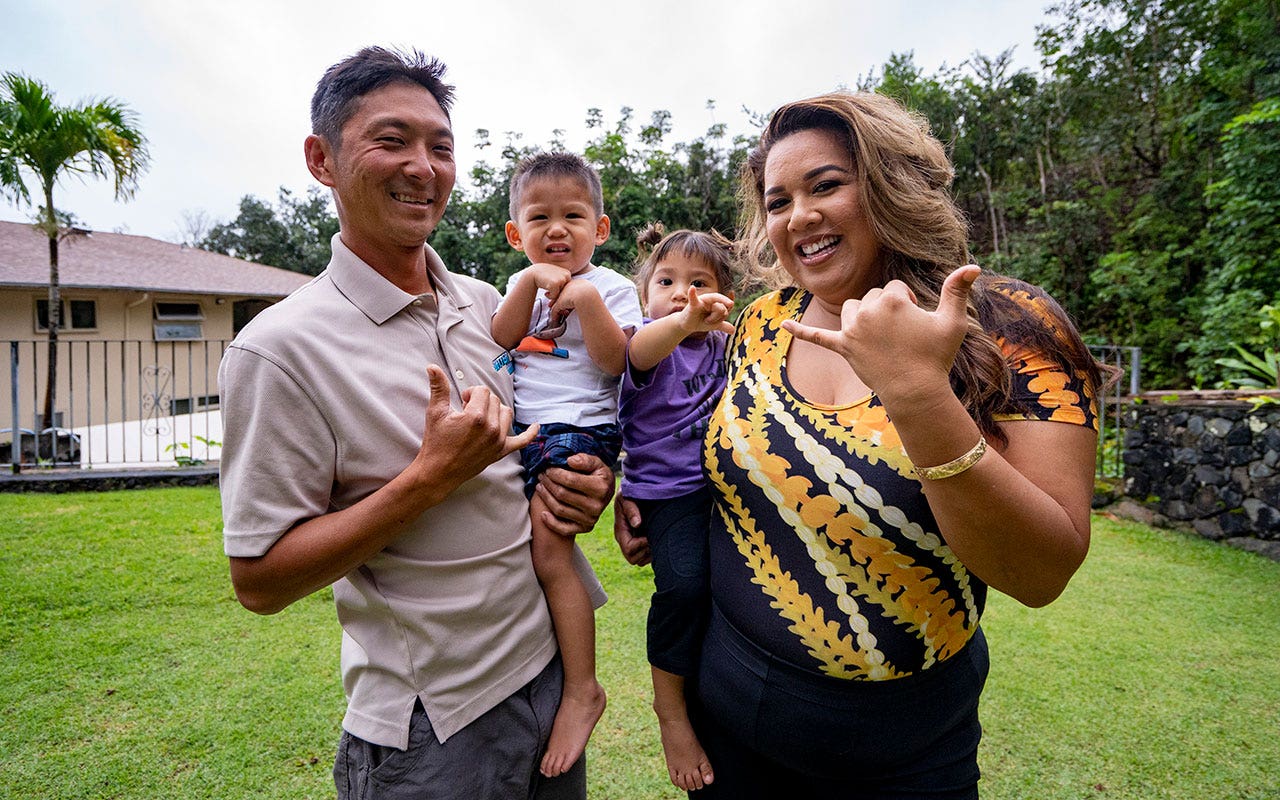
- The shaka gesture, characterized by extending the pinky and thumb with curled fingers, originates from Hawaii and symbolizes various warm sentiments like greetings, gratitude and aloha spirit.
- Proposed bills in the Hawaii State Legislature aim to designate the shaka as the state’s official gesture, acknowledging Hawaii as its birthplace.
- Sen. Glenn Wakai said he anticipates minimal opposition to the measure, expecting it to pass smoothly through legislative channels.
A pinky and thumb extended with the remaining fingers curled down: That’s the “shaka” in Hawaii.
The gesture is sometimes known outside the islands as the “hang loose” sign associated with surf culture, but it was a fixture of daily life in the islands long before it caught on in California, Brazil and beyond. People in Hawaii have a variety of shaka styles and use it to convey a range of warmhearted sentiments, from hi and bye to thanks and aloha, among other meanings.
When captains of the Lahainaluna High School football team, from the Maui community devastated by last summer’s deadly wildfire, were invited to the Super Bowl in Las Vegas last month, they flashed shakas for the cameras.
SMALL FAMILY FARMS MAKE AMERICAN-GROWN ROASTED COFFEE THE WORLD’S BEST BREW
Now, a pair of bills in the state Legislature would make the shaka the state’s official gesture and recognize Hawaii as its birthplace.
Cody Matsuda, KihaaPi’ilani Makainai-Matsuda, Keli’inowelo Makainai-Matsuda and Mailani Makainai flash a shaka on March 6, 2024, in Kaneohe, Hawaii. A pair of bills in the Legislature would make the shaka Hawaii’s official gesture. (AP Photo/Mengshin Lin)
Sen. Glenn Wakai, who introduced the Senate version, said he can’t imagine the measure meeting any opposition and expects it to “sail through.”
Here are some things to know about Hawaii’s shaka — including its purported origin with a seven-fingered fisherman.
WHAT IS THE SHAKA?
On paper, the House bill notes that the “shaka generally consists of extending the thumb and smallest finger while holding the three middle fingers curled, and gesturing in salutation while presenting the front or back of the hand; the wrist may be rotated back and forth for emphasis.”
In practice, the shaka is far more nuanced.
Some say the only requirement is an extended pinky and thumb. Others say shaking the shaka is a no-no.
Those from beach or rural communities tend not to shake their shakas. But in the capital city of Honolulu, it’s common.
“It’s just a strong movement — one movement,” said Chase Lee, who grew up just outside Honolulu. He was taught never to shake the shaka. If you do, “you’re a tourist,” he said.
But Erin Issa, one of his colleagues at Central Pacific Bank, likes to wag hers.
“I’m a very animated person,” she said. “I feel awkward if I’m just standing still.”
She prefers to flash a shaka with the palm facing outwards, as a sign of respect: “It’s shaka-ing to you, not to me.”
“As long as you get your pinky finger and your thumb out, you can wave it or you can just do just a flat shaka,” Dennis Caballes, a Honolulu resident, said while fishing at a beach park.
WHAT DOES IT MEAN?
The shaka carries friendliness and warmth — aloha spirit. Some hold it low when greeting a child, and some like to flash double shakas. It can convey greetings, gratitude or assent, or it can defuse tension. It was particularly useful in the early days of the COVID-19 pandemic, when people were afraid to shake hands.
“It’s such a versatile gesture,” said state Rep. Sean Quinlan, who introduced the House bill at the behest of a documentary filmmaker exploring the sign’s backstory.
Big Island state Rep. Jeanné Kapela, one of the House bill’s co-sponsors, said residents are “so lucky to have a visual signal for sharing aloha with each other.”
Shakas can avert altercations when people are cut off in traffic, said Wakai, the state senator who introduced the Senate version.
“The angst toward that driver kind of just immediately gets reduced,” Wakai said.
WHERE DOES THE SHAKA COME FROM?
The prevailing story of the shaka’s origin traces back to a Native Hawaiian fisherman named Hāmana Kalili, who lived on Oahu’s North Shore in the early 1900s. Mailani Makaʻīnaʻi, Kalili’s great-great-granddaughter, wants the bills amended to include his name — something lawmakers are considering.
Kalili lost three fingers in a sugar mill accident, she said.
After the mishap, Kalili worked as a guard on a train. Kids who jumped the train for a free ride would curl their middle fingers to mimic Kalili’s injured hand, giving other train-jumpers the all-clear, said Steve Sue, who researched shaka for his documentary.
Other residents adopted Kalili’s three-finger-less wave more broadly, according to family lore, and it spread, possibly fueled by the waves of tourists that began arriving after World War II.
“I love the compassion part of it, you know, where, ‘Oh, okay, he doesn’t have all three fingers. So, I’m going to say hi the way he’s saying hi,’” Makaʻīnai said. “It’s the idea that … I’m like you and you’re like me.”
There’s a bronze statue of Kalili, his right arm extended into a shaka, at the Polynesian Cultural Center in Laie.
There are various theories about how the term “shaka” became associated with the gesture. Some have suggested that the name came from Japan’s Shaka Buddha.
HOW IS THE SHAKA USED NOW?
The sign has spread around the world since the surfing boom of the 1950s and ’60s. It’s popular in Brazil, where it’s been used by martial arts aficionados. Brazil soccer greats Ronaldinho and Neymar Jr. incorporated it into their goal celebrations.
The shaka is such an integral part of Hawaii life that it’s easy to miss, said Sen. Chris Lee, chair of the Committee on Transportation and Culture and the Arts.
Some Honolulu city buses are outfitted with a digital shaka light that bus drivers can turn on to thank motorists for letting them merge. Texters have co-opted the “call me” emoji to symbolize the shaka, and local station KHON-TV has ended each evening newscast since the 1970s with clips of people flashing shakas.
HAWAII FACES HOUSING CRISIS AS REGULATORY COSTS DRIVE UP CONDO PRICES, REPORT SAYS
Longtime KHON anchor Howard Dashefsky said throwing a shaka is almost a reflex when people in the community recognize him and call his name.
“There’s a lot of other places where you only get a one-finger gesture,” he said.
Shakas also come out naturally when people from Hawaii are somewhere else in the world and want to display connection to their island roots.
Businesses often use the shaka to project community belonging.
Central Pacific Bank, for example, called their digital checking account Shaka Checking at the suggestion of electronic banking manager Florence Nakamura.
“It makes people feel good when they receive one,” she said.
Read the full article from Here



Staying safe at San Francisco’s Pride festivities
The SFPD has announced that officers from all districts, stations and specialized agencies will be positioned along the route for the Pride Parade to ensure the event is safe for attendees. The annual parade will be held this Sunday and is expected to attract hundreds of thousands of people from around the world.
San Francisco – San Francisco city and police officials said Wednesday that they want people to enjoy Pride festivities this weekend — including the popular parade on Sunday — and that they will be on the lookout for criminal activity.
“All of the leaders up here know how important this weekend is, and we are ready,” Mayor Daniel Lurie said while flanked by a host of officials at a news conference at San Francisco police headquarters.
Lurie said his message is simple: “Look out for one another. Report anything concerning and know that every first responder, city worker and volunteer has one goal: to help everyone celebrate safely.”
Hundreds of thousands expected at SF Pride Parade
What we know:
The annual Pride festivities and parade on Sunday are expected to draw hundreds of thousands of people from around the world to San Francisco. Police say they’re working with state and federal partners to monitor any potential threats while making sure people enjoy themselves.
“You’ll see many of our officers – including me – wearing Pride patches,” said Police Chief Derrick Lew, gesturing to a multicolored patch on his shoulder. “As always, we’re excited to showcase San Francisco, and our longstanding status as a safe haven for members of the LGBTQ+ community.”
No tolerance for hate, DA says
What they’re saying:
District Attorney Brooke Jenkins says she and other city leaders will have no tolerance for hate.
Just last week, she charged a man with a hate crime for allegedly spray-painting a homophobic message outside a Castro District flower shop and punching a witness.
“There will be accountability if anything like that happens here, and so as much as we want to be joyous, we also have to take this occasion very seriously,” Jenkins said.
Suzanne Ford, executive director of SF Pride agreed, saying, “I think we all have the responsibility of demonstrating that we can work together to make sure that the LGBTQ community is centered for this weekend.”
Sheriff Paul Miyamoto said those who don’t behave will go straight to jail.
“The one mode of transportation we want to make sure all of you avoid this weekend is the party buses that the sheriff’s department will have out there,” Miyamoto said.
City officials are urging everyone to celebrate responsibly, don’t drink and drive or accept drinks from strangers and to report any suspicious activity.
Henry Lee is a KTVU crime reporter. E-mail Henry at Henry.Lee@fox.com and follow him on X @henrykleeKTVU and www.facebook.com/henrykleefan
The Source: KTVU reporting, San Francisco police and sheriff, district attorney’s office

After making fans wait all through the first round only to trade back, the Denver Nuggets finally get their man as they select with the 35th pick in the draft: Trevon Brazile, the 6’9 combo forward from Arkansas.
So who is Brazile?
Trevon is a freak athlete at 6’9.5 barefoot with a wingspan of almost 7’4 and a 41″ vertical jump. He can fly, with transition dunks that amaze and helpside blocks that astound. He can also hit from behind the arc if you leave him open, and he has soft hands around the rims for lobs and finishes. He can also be a good perimeter defender using that wingspan and his quick feet to get in position and make life tough. As I said about him before the draft: “When he is playing hard and engaged, he looks like a first round talent who can spot up for 3 or kill you at the rim while hounding ball-handlers on the perimeter.”
He is 23 years old already, however, and he still hasn’t found the necessary motor to bring that explosion and game-changing play for the whole time he’s on the court. He only shoots 66% from the charity stripe and doesn’t have much of an in-between game, so if he’s not driving the hoop or taking open threes his creation bag is a little thin. He spent his freshman year at Missouri, the alma mater of both Michael Porter Jr. and Josh Kroenke, so Josh would obviously have some insight into him from early in his college career.
But Denver has been in dire need of some size and athleticism and they just got both in the same package. Brazile at his best absolutely looks the part of an NBA player who can make an impact at both ends of the floor. Whether he can grow his game in shorter bench stints early in his career is certainly going to be intriguing to watch – and the Nuggets finally have a drafted player to pour some interest and effort into themselves.
Welcome to the Nuggets, Trevon Brazile!
Seattle, WA
Council eyes street barricades in fight against violence, sex trafficking in north Seattle

SEATTLE — The Seattle City Council is expected to vote next week on a plan that would give the Seattle Department of Transportation (SDOT) the authority to close off street access for public safety reasons.
The proposal comes after months of outcry from residents in north Seattle who say sex traffickers and sex buyers are looping through the streets surrounding Aurora Avenue North.
The street-closure proposal passed the council’s Public Safety Committee on Tuesday and is expected to be voted on by the full council next week.
“I don’t think it’s hyperbole to say the crime has gotten much worse, much more violent, and much more predator,” said District 5 councilmember Debora Juarez. “I think that we do have the authority to shut down a street for bullets flying and endangering the lives of those who live there.”
Frustrated neighbors have installed their own homemade barricades after a spate of gun violence between sex traffickers in May.
RELATED | SDOT removes street barricades near Aurora Ave; neighbors doubtful of temporary measures
Councilmember Bob Kettle says street closures will help tamp down sex buying in certain areas, but he emphasizes it must be accompanied by an increase in outreach and enforcement.
“We have to have a sustained effort,” Kettle told KOMO News. “My concern is for every action, there’s a reaction. We need to take this flex and then really attack it … because if we do just a bit and our attention wanders, we could have this conversation three months from now and we’re talking about the same thing.”
A 15-year-old boy was shot near 95th Street and Aurora Avenue North around 10:45 p.m. last night. The teen initially claimed he had been shot while walking down the street, but investigators now say he was shot by a passenger in his car.
RELATED | Seattle police say ‘drive-by’ on Aurora Ave. was actually passenger shooting teen driver
Kettle credited the city’s Real Time Crime Center cameras with helping investigators quickly piece together the events of the shooting.
“Just as important to finding out what happened, the cameras help police determine what did not happen,” Kettle said.
According to Seattle police data, reports of shootings and shots fired in the north precinct area are at their lowest levels since 2021.
Through the end of May, there were 48 total reports of shootings or shots fired, with one fatal shooting and seven nonfatal injury shootings.
That’s down from 63 total reports of shootings and shots fired – one fatal and seven injuries – in 2025; and 64 shootings or shots fired reports – one fatal and 17 injuries – in 2024.
At Tuesday’s committee meeting, councilmembers pointed out residents are calling for a new police precinct to be built on Aurora Avenue.
Ten years ago, a new North Precinct building was slated to be built at 130th Avenue and Aurora Avenue North to replace the existing precinct building, which was decades old and did not have enough space for the department’s needs.
Led by former councilmember Kshama Sawant, the “Block the Bunker” movement successfully got the North Precinct replacement project killed in city council.
Kettle said the city’s current financial issues make it essentially impossible to bring back a project similar to the one the previous council defeated.
“We have to connect the dots back,” Kettle said. “If we want to know why we are where we are today, we have to look at decisions made over the last two councils.”
-
 Lifestyle17 minutes ago
Great movies you may have missed : Pop Culture Happy Hour
-

 Technology25 minutes ago
The best Apple deals you can get during Prime Day
-

 World32 minutes ago
Trump says Venezuela earthquakes left ‘devastating number of deaths’ as US readies aid
-

 Politics35 minutes ago
Closed-door outburst turns into victory for Trump’s Iran negotiations
-

 Health40 minutes ago
Former reality star opens up about new diagnosis after years-long health ordeal
-

 Sports47 minutes ago
Terrion Arnold, Lions’ 2024 first-round pick, charged with kidnapping and armed robbery in Florida
-
 Business55 minutes ago
An electric truck for less than $25,000? Deliveries begin this year
-
 Entertainment1 hour ago
Kylie Jenner hit with third lawsuit as former chef claims Palm Springs party led to miscarriage

