Midwest
Missouri Senate passes sweeping education bill

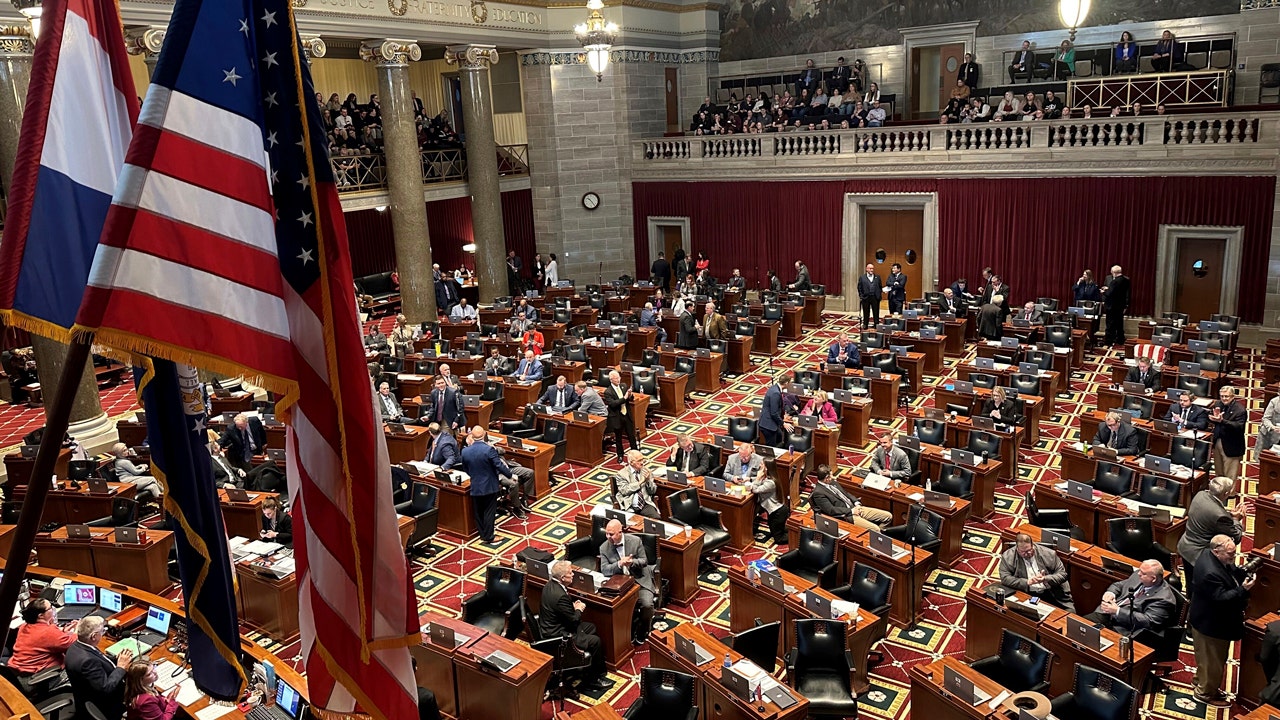
Students across Missouri could have access to scholarships for private schooling through an expanded tax credit program passed Thursday in the GOP-led state Senate.
Senators voted 19-10 to pass the sweeping education bill, an approval earned after weeks of bipartisan negotiation. The measure now heads to the Republican-led House for approval.
The legislation represents a win for advocates of greater access to non-traditional K-12 education, such as private, religious, charter and virtual schooling. Part of the proposal would allow charter schools to open in Boone County, for example.
MISSOURI AG SAYS JUVENILE SYSTEM MUST BE REFORMED AFTER TEEN ARRESTED FOR SLAMMING GIRL’S HEAD INTO PAVEMENT
“We were focusing on providing choices beyond just public school,” Republican bill sponsor Sen. Andrew Koenig said.
But the measure also includes concessions for ardent public school supporters opposed to using public funding to support charters and private schools.
Compromises included in the bill include hundreds of millions of dollars in added funding for K-12 public schools and more money for districts that keep a five-day school week.
“Senate Democrats have always held the position that we’re going to oppose privatization of education through the siphoning-off of taxpayer funding,” Democratic Sen. Lauren Arthur said. “So, yes, we strongly oppose vouchers and the expansion of charters. I will say there was a lot in the bill that made it very tempting to vote for.”
Lawmakers debate on the Missouri House floor in Jefferson City, Missouri, on Feb. 28, 2024. (AP Photo/David A. Lieb)
The heart of the legislation is the expansion of Missouri Empowerment Scholarships Accounts, a voucher-like program that offers education grants to low-income families. The scholarships are funded by private donors, who in turn receive tax credits.
The current program limits recipients to residents of the state’s largest cities and to families who make 200% of the federal poverty level, which is $62,400 a year for a family of four.
Supporters want to offer the scholarships statewide to families that make as much as 300% of the federal poverty level, or $93,600 for a family of four.
The legislation would increase the cap on tax credits from $50 million to $75 million per year.
Unrelated, the proposal would require a local vote for large-city school districts to go to four-day weeks.
In total, Republican and Democratic Senate leaders estimated the bill would cost the state between $400 million and $450 million a year once fully implemented.
In Missouri, the issue of so-called school choice has divided lawmakers beyond typical Republican-Democrat lines.
GOP legislators from rural Missouri have pushed back for years against allowing charter schools in their areas for fear that the institutions could draw students away from traditional public schools and undermine what’s seen as the backbone of their communities. And some Democrats want more options for students in cities with underperforming schools.
Lawmakers have until mid-May to send bills to Gov. Mike Parson.
Read the full article from Here


CEDAR RAPIDS, Iowa (Iowa Capital Dispatch) – The majority of U.S. states will soon have to pay 5% to 15% of federal nutrition assistance benefits in their state, according to the U.S. Department of Agriculture’s release Wednesday of Supplemental Nutrition Assistance Program payment error rates.
House Resolution 1, commonly known as the One Big Beautiful Bill Act that was enacted in 2025, stipulated that states with SNAP payment error rates greater than 6% would be required to foot 5%, 10% or 15% of SNAP benefits costs in their state.
Iowa, with a payment error rate of 5.34% in 2025, is just one of nine states with an error rate below 6% and that won’t have to match a portion of the SNAP benefits it pays out, starting in October 2027.
According to USDA, SNAP payment error rates measure the accuracy of states in determining who is eligible for SNAP and how much they receive. The rate is calculated via a series of reviews from state and federal agencies where instances of overpayments and underpayments are identified.
USDA’s SNAP quality control page says errors are “largely unintentional” and might be the fault of a state agency or a SNAP household.
Eighteen states had payment error rates above the national average of 10.62%. Per the quality control process, these states will have to either pay USDA a determined amount, or invest 50% of that amount into activities that will fix the root causes of the payment errors.
USDA said that while the 2025 average payment error rate is a “modest” decrease from the 2024 average error rate of 10.93%, it represents $10.1 billion in improper payments.
Secretary of Agriculture Brooke Rollins said the latest payment error rates show that “state accountability is severely lacking” in SNAP.
“USDA has taken historic action to help interested states curb SNAP waste, and I hope other states, regardless of political leadership, prioritize needy families and the American taxpayer over politics,” Rollins said in a news release.
An analysis of H.R. 1 from the Congressional Budget Office estimated that the law, which included several changes to SNAP benefits in addition to the error rate cost share, would reduce federal spending on the SNAP benefits by $255 billion between 2025 and 2034. CBO also estimated that state spending on SNAP benefits would increase during the same period by $85 billion.
Critics of the bill said the cost shift to states would endanger the SNAP program and stress state budgets.
According to the 2025 error rates from USDA, 41 states had payment error rates above the 6% threshold set by the 2025 law. South Dakota had the lowest error rate at 2.47%. Idaho, Kentucky, Nebraska, Utah, Vermont, Wisconsin and Wyoming were the other states with rates below 6%. Alaska had the highest error rate of 23.15%.
The higher the error rate, the greater the share, up to 15%, the state will have to pay of its SNAP benefits, which are otherwise 100% footed by the federal government.
In addition to the cost share, states with a payment error rate in excess of 6% are required to submit a corrective action plan to the Food and Nutrition Administration, formerly known as the Food and Nutrition Service, to explain the root cause of the payment errors and how the state plans to correct the errors.
Copyright 2026 KCRG. All rights reserved.
Kansas
Body believed to be Kansas City highway shooting suspect found in burned home’s basement by family: police

Manhunt for Kansas City shooting suspect enters seventh day
A large-scale manhunt for Oscar Sanchez-Munoz, 22, continues in Kansas City, Missouri, entering its seventh day. Sanchez-Munoz is suspected of killing one person and injuring four others in a recent shooting spree. His family reports he was exhibiting signs of schizophrenia as the FBI offers a $25,000 reward for information.
NEWYou can now listen to Fox News articles!
Police told Fox News on Wednesday that a body believed to be Oscar Sanchez-Munoz, the 22-year-old suspect in a deadly string of highway shootings near the Kansas City World Cup venues, was discovered by his family in the basement of a burned home.
Officials said the family contacted police at about 2 p.m. local time after finding decomposing remains hidden beneath piles of debris.
While the family had visited the home several times since it caught fire during an overnight police standoff, police said they only discovered the body after removing debris and noticing a distinct odor.
MANHUNTS ACROSS AMERICA IN 2025: FIVE CASES THAT LEFT CITIES, CAMPUSES AND TOWNS ON EDGE
Oscar Sanchez-Munoz was wanted in connection with at least six shootings across multiple states. (FBI)
Previously, investigators, federal partners and K-9 units had repeatedly searched the Independence, Missouri, property without success.
Authorities said the basement partially collapsed, flooded with water, and was filled with a large amount of “clutter,” which complicated the search.
The discovery brings a presumed end to a massive multi-agency manhunt that began after Sanchez-Munoz allegedly fired at vehicles along Interstate 70, just miles from Arrowhead Stadium where FIFA World Cup matches were being held.
MANHUNT INTENSIFIES FOR ARMY VETERAN SUSPECTED OF KILLING 4 IN BAR SHOOTING AFTER TRUCK FOUND ABANDONED
The FBI released a wanted poster seeking the public’s assistance in finding suspect Oscar Sanchez-Munoz. (FBI)
The spree of half dozen shootings left one person dead and several others seriously injured, including an Uber driver who was shot while transporting soccer fans.
During the search for Sanchez-Munoz, the FBI offered a $25,000 reward for information leading to his capture, warning the public that he was “armed and dangerous.”
Acting U.S. Attorney General Todd Blanche had publicly speculated that the suspect might be dead inside the Missouri home, though police were unable to confirm it at the time.
MANHUNT UNDERWAY AFTER MISSOURI DEPUTY SLAIN, SUSPECT’S TRUCK SPOTTED HEADING TOWARD ARKANSAS BORDER
FBI officials said suspect Oscar Sanchez-Munoz had visible acne scars and is 5 feet 8 inches tall. (FBI)
Officials said investigators are currently operating under the assumption that the deceased person is Sanchez-Munoz, noting clothing on the body matched what the shooter wore during last week’s attacks.
A medical examiner will confirm the identity and determine the cause of death.
CLICK HERE TO DOWNLOAD THE FOX NEWS APP
Officials assured the public there is no threat to the community, and added that all surviving victims are expected to recover.
Fox News Digital’s Kelsie Cairns contributed to this report.


Tourists bemused as Louvre closes early due to heat
France’s heat closed the Louvre in Paris early on June 24, 2026.
Reuters
Get ready to sweat, Michigan.
The summer’s first big heatwave is expected to start on Monday, bringing a four-day stretch of potential 90-plus-degree temperatures to much of the state, across the Midwest and parts of the East Coast.
The National Weather Service is advising Michiganians to limit time outdoors and stay hydrated in the leadup to Independence Day.
The heatwave is projected to peak on Tuesday, the final day of June, when virtually the entirety of Lower Michigan and surrounding states will be considered at major risk of heat-related effects, according to NWS.
Anyone without access to cooling or hydration or who must engage in prolonged outdoor activity or strenuous labor will face a significantly elevated risk of heat-related illness, including heat exhaustion or heat stroke.
The NWS office in Marquette said above-normal humidity is expected to accompany the high temperatures, elevating the risk.
About 16 people a year die from heat and heat-related illnesses in Michigan, according to data from the U.S. Centers for Disease Control and Prevention.
Relief will be minimal, experts advised. Thunderstorms are unlikely during the heatwave, AccuWeather reported, and overnight lows are expected to drop only into the mid-70s, according to NWS.
‘Heat dome’ bringing near-record temperatures
AccuWeather attributes the warmup to a “heat dome,” which is a high-pressure system that traps hot air and prevents cooling. The weather system will bring above-normal temperatures throughout the central and eastern states. St. Louis could log eight straight days of at least 90 degrees.
Lower Michigan is expected to see this summer’s first consecutive 90-plus-degree days. Monday, Tuesday and Wednesday are all currently expected to climb past that mark.
Currently, the hottest day on record this year in Detroit was May 18, when the mercury climbed to 90 degrees, according to NWS data.
High temperatures are likely to approach daily records during next week’s heatwave. Detroit’s record highs for June 29 through July 2 are 96, 96, 98 and 99, respectively. The weather service currently projects highs of 91, 97 and 95 for Monday, Tuesday and Wednesday. A high for Thursday is not yet available.
On average, temperatures during this time of year top out around 81 or 82, NWS data shows.
The high temperatures approach the United States as Western Europe swelters under a record-setting heatwave that is expected to persist through the end of the week. On Wednesday, Britain and France both logged the hottest June days on record, Reuters reported.
mreinhart@detroitnews.com
-

 Iowa34 seconds ago
Iowa one of nine states that won’t have to match portion of federal SNAP benefits
-

 Kansas3 minutes ago
Body believed to be Kansas City highway shooting suspect found in burned home’s basement by family: police
-

 Kentucky9 minutes ago
Kentucky’s Otega Oweh headed to Thunder in 2026 NBA Draft trade
-

 Louisiana16 minutes ago
GOP candidates trade attacks, differ on carbon capture in Louisiana Senate race
-

 Maine19 minutes ago
Hearts of Pine halt 4-game skid with emphatic win
-

 Maryland24 minutes ago
Republican candidates ask judge to block Maryland primary certification
-

 Michigan31 minutes ago
Michigan heatwave on way. See day likely to set a record high
-

 Massachusetts34 minutes ago
Massachusetts man accused of wanting sex with girl busted in World Cup trafficking operation

