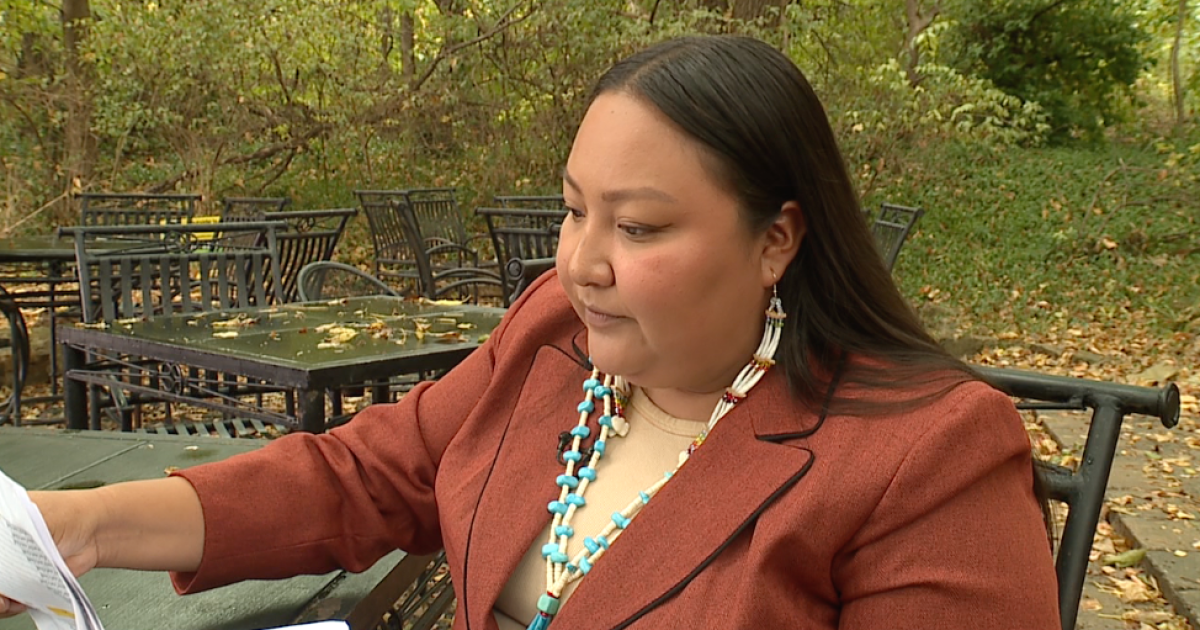
Attorney General Raúl Torrez plans to establish a task force focused on the disproportionate rates at which Indigenous people experience violence and go missing, the New Mexico Department of Justice announced Tuesday. The agency also launched the initial phase of an online portal for tracking cases of missing Indigenous people.
Gov. Michelle Lujan Grisham’s administration in mid-2023 dissolved a group dedicated to addressing a crisis of missing and murdered Indigenous people. Advocates and affected families spoke against the decision, saying their work was just beginning.
The Legislature seemed to agree, unanimously passing Senate Joint Memorial 2 last month calling on Torrez to convene tribal representatives, survivors and families, and law enforcement officials to update a state response plan created by the defunct task force in 2022 and offer legislative recommendations.
The state budget includes $200,000 for that purpose.
Advertisement
A spokesperson for Torrez, Lauren Rodriguez, said he’ll follow the Legislature’s guidance outlined in the memorial as he figures out the task force’s membership.
The public portal unveiled on Tuesday — which includes 201 missing Indigenous people, with an average time missing of 2,886 days, or nearly eight years — comes two years after lawmakers mandated it.
Lawmakers in 2022 passed a bill requiring the attorney general’s office to develop an online portal for cases of missing Indigenous people. The bill permits the department to give tribes grants, as well, to help them use the portal. Lawmakers appropriated $1 million for the work. In November, New Mexico In Depth reported none of the money had been spent.
“We have to break down barriers to communication in this space and give the public and key stakeholders direct access” to information, Torrez said in a news release, adding the portal is a “critical first step in that process and will provide invaluable insights for policymakers,” including the task force he intends to create.
The portal lists known missing persons cases and provides families with information about where they can file cases, depending on where they live.
Advertisement
But for the portal to be as useful as possible, it needs to include more information, said Darlene Gomez, a member of the defunct task force and attorney who represents affected families pro-bono.
Gomez pointed out the missing persons entries don’t have photos attached to them and don’t include many details.
“To me it just seems like something that they just threw up there to say they have a portal,” Gomez said. “And if this is what they’re going to produce, why did it take them two years to do so?”
The department is working to gain access to criminal justice information systems maintained by the FBI, Rodriguez said in an email, which will allow for more detailed entries, including photos.
Rodriguez said the department doesn’t yet have the ability to directly collect reports on the portal because that will require memorandums of understanding. For now, she said, the portal directs people to the appropriate law enforcement agency.
Advertisement
This reporting was supported by the International Women’s Media Foundation’s Fund for Indigenous Journalists: Reporting on Missing and Murdered Indigenous Women, Girls, Two Spirit and Transgender People (MMIWG2T).
NM FAST (New Mexico Federal and State Technology) is now accepting applications for a free space-sector accelerator cohort designed to help New Mexico-based technology companies compete for federal funding through the Small Business Innovation Research (SBIR) and Small Business Technology Transfer (STTR) programs. The cohort targets founders and researchers pursuing grants from NASA, Space Force and related federal agencies, with programming set to launch July 21.
The cohort will admit six to 10 New Mexico companies and run for 10 to 12 weeks, meeting in weekly sessions of approximately one and a half to two hours. Programming covers the full arc of federal commercialization strategy, including space-sector SBIR/STTR opportunities and federal funding pathways, proposal development for technical narratives and commercialization components, federal procurement positioning and agency discovery, capital strategy and follow-on funding options, and transition planning from Phase I to Phase II awards. Participants also receive targeted one-on-one advisory support throughout the program. The cohort is offered at no cost to accepted companies.
The program is open to companies at both the pre-award and early-award stages. The majority of cohort seats are designed for Phase 0 companies preparing to submit Phase I SBIR/STTR applications to NASA or Space Force. A limited number of seats are available for Phase I awardees working toward Phase II readiness and Phase III transition planning.
Advertisement
“New Mexico has a deep base of research and a growing pipeline of founders ready to translate that work into companies that can compete for federal R&D dollars,” said Carlos Murguia, director of the Technology and Innovation Gateway at Arrowhead Center. “This cohort focuses specifically on the space sector, pairing New Mexico companies with Larta’s expertise in SBIR and STTR commercialization to give founders a clear, structured path from early-stage research to federal award.”
Larta Institute, NM FAST’s commercialization partner for this program, will lead the full design and delivery of the accelerator curriculum. Larta has supported startups that have collectively raised more than $23.7 billion since 1993 and brings that track record to founders working in New Mexico’s growing aerospace and space technology sector.
The cohort aligns with the aerospace priority sector named in the New Mexico Entrepreneurship Programmatic Support Grant and is relevant to companies working at the intersection of advanced computing, bioscience and advanced energy applications in space-related contexts.
NM FAST is administered by Arrowhead Center at New Mexico State University and operates statewide, serving founders in Las Cruces, Albuquerque, Los Alamos and rural communities across New Mexico. Over more than a decade of programming, NM FAST has supported more than 470 New Mexico startups and helped companies secure nearly $28 million in federal SBIR awards. Targeted outreach is directed to rural, women, veteran and minority entrepreneurs.
The program is sponsored by the New Mexico Economic Development Department’s Technology and Innovation Office through the New Mexico Entrepreneurship Programmatic Support Grant, which supports continued statewide programming for SBIR/STTR-eligible companies in the four priority sectors.
Advertisement
Applications are open now and will be accepted through July 14, 2026. Interested companies can apply at forms.gle/CqSwEL7LahqB5pGu9. Space is limited, and selected companies will be notified before the program launch.
SANTA FE, N.M. – Santa Fe County and Edgewood approved a new agreement and ordinance that secures ongoing fire and EMS services for Edgewood residents.
According to a joint announcement from the Town of Edgewood and Santa Fe County on June 19, the two governments negotiated and adopted a new Joint Powers Agreement and ordinance to keep the Santa Fe County Fire Department serving the town.
County and town representatives drafted the agreement together. The town adopted the ordinance unanimously at a special meeting on June 16, putting an end to weeks of uncertainty.
Santa Fe County District 3 Commissioner Camilla Bustamante said, “I believe we are all relieved to know that the people of Edgewood will continue to have the fire and EMS services necessary to protect their homes, their families, and their community. This community deserves nothing less.”
Advertisement
The announcement said the ordinance takes effect five days after final publication. The statement also said no further action or approval is needed to guarantee continued fire suppression, fire prevention, and EMS services for Edgewood residents.
Both governments noted the agreement will continue indefinitely unless either side ends it with five years’ notice.