Kansas
MMIP Series | KSHB 41 I-Team discovers scant interest among Kansas police in MMIP training

KANSAS CITY, Mo. — Over the last two years, the KSHB 41 I-Team has investigated the MMIP (Missing and Murdered Indigenous People) crisis in our community.
It’s a national movement that highlights how Indigenous people, particularly women, face much higher rates of violence, including assault, rape, murder, and trafficking.
The I-Team covered the disappearance of Quana Big Spring, a Belton teenager, and the Independence cold case murder of Lakota Renville.
Those are two examples of how the crisis is playing out in the Kansas City area.
This is a place the public may not think is part of this nationwide epidemic.
During our investigation, we also learned Kansas lawmakers passed a bill in 2021 that offers free training to law enforcement officers on how to investigate MMIP cases, as they have certain cultural and jurisdictional aspects that set them apart.
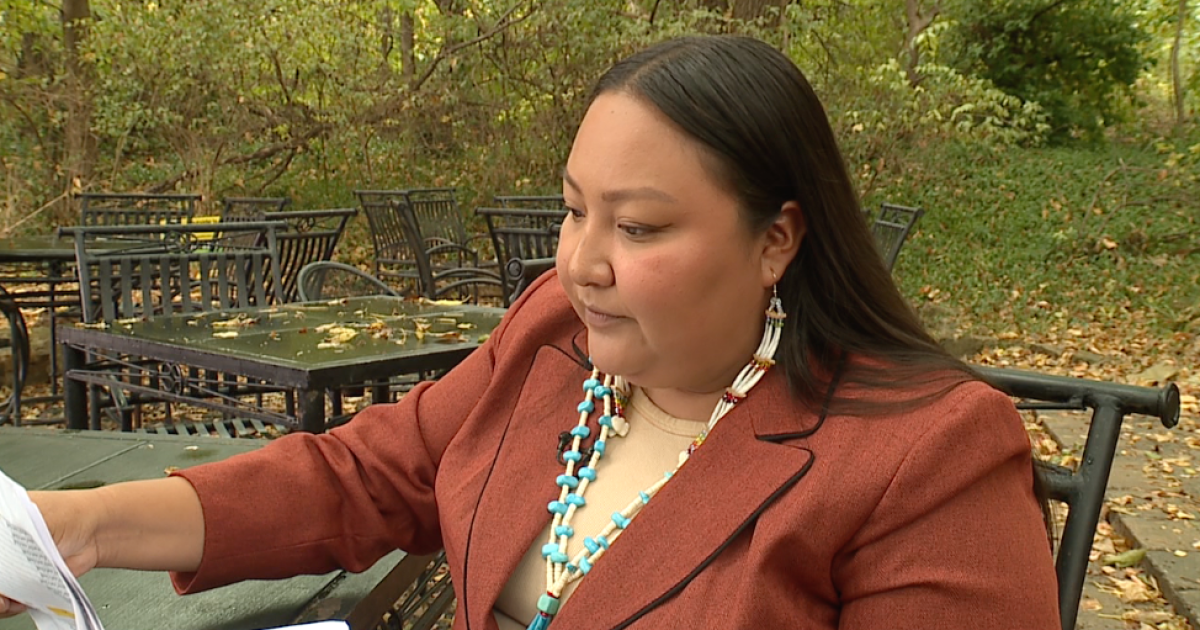
“It was Kansas’ first step for MMIP,” Kansas Representative Christina Haswood said, a Democrat from Lawrence who co-sponsored the bill and helped it pass.
The I-Team wanted to find out just how many law enforcement agencies actually took that step.
We reached out to every one of them, more than 300 police departments and sheriff’s offices across the state. We asked how many were aware of the MMIP training and had taken the class.
The class is voluntary, not mandatory.
37 agencies responded. 27 of those were aware of the training and nine agencies had already taken it, which is 3%.
Our findings shocked and disappointed Haswood, who is one of the only Native American lawmakers in the state.
“And you said you reached out to everyone?” Haswood said when we handed her our findings. The data was compiled onto a spreadsheet.
“That really gets me fired up because we can see with your findings that there’s such a big gap of communication and education, that there’s definitely work that needs to be done,” she said.
Fighting for this training is personal to her. Many of her constituents in Lawrence are Native and represent tribal nations across the country.
“It really angers me that we come together, and we say, ‘Here are the resources that you ask [for] and can hopefully get you elevated on your knowledge,’” Haswood said. “But when it’s given voluntarily, the resources are not being used.”
Haswood says there’s a perception at the statehouse that Native Americans don’t exist. She says she has spent a lot of time explaining to other lawmakers that Native Americans don’t just live on reservations and that Native issues are still relevant today.
Another perception the I-Team noticed was multiple law enforcement agencies saying the MMIP training isn’t a high priority because they’re not close to a reservation or they don’t know of any MMIP cases.
“This is an issue that even though you might not see every day with your own eyes, it is happening, and if we continue to operate like this, when it does happen, that we don’t have a system that’s robust enough to help Indigenous peoples,” Haswood said.
Kansas is home to four tribal nations: Prairie Band Potawatomi Nation, Kickapoo Tribe in Kansas, Iowa Tribe of Kansas and Nebraska, and Sac and Fox Nation of Missouri in Kansas and Nebraska.
Although MMIP cases don’t happen as frequently in Kansas as in other part of the U.S., the issue still hits close to home for many families.
We met some of those families last spring when we visited the Prairie Band Potawatomi Nation for a MMIW walk and ceremony.
“The MMIW movement is new, but the issues are not,” one speaker said.
Much of the movement focuses on Indigenous women, which is what the “W” stands for, though it was expanded to include all Indigenous people.
We talked to sisters Jessi and Rachelle Blacksmith, who run the MMIP chapter of northeast Kansas. They’re advocating for their brother, Willie Blacksmith, who was murdered in July 2022.
“We’re trying to make something good out of what happened to our brother to help others,” Rachelle said.
They learned about the state’s MMIP training and took it themselves. They say it would be beneficial to all police agencies.
“What are you supposed to do if a murder happens? This tells you what to do, this goes through the steps [of] what to do,” Jessi said.
Haswood says its about livelihoods and knowing that government systems have their back.
She hopes she can add more teeth to the training by making sure all agencies are aware of the training and set aside an hour to take it, and make it mandatory, instead of voluntary.
“I’ll continue to fight for this issue,” Haswood said.
Only one law enforcement agency, the Galena police department, out of the 325 in the state, said they’d make the training mandatory.
Several agencies said they’d take it or would consider taking it after we reached out.
The Gardner police department took the training the day we called.
During our investigation, we contacted Salina police about the training and a 2019 MMIP case in their jurisdiction. We later received a call from one of the department’s detectives, who told us he spent four hours investigating that 2019 case after we reached out. He discovered the missing man was an unclaimed body in Columbia, Missouri.
Although it’s a sad ending, the man’s daughter, who had spent years contacting morgues across the country, told us she was grateful to have closure and finally know what happened to her dad.
We shared that story with Haswood, who said the training is “literally helping people.”
Anyone can take the online training by going to the Kansas Law Enforcement Training Center page.



One of the top prospects in the 2027 boys’ high school basketball recruiting class recently trimmed his list of suitors, and the Kansas Jayhawks find themselves firmly in the mix.
KU is one of eight schools to make the cut for 2027 five-star small forward Demarcus Henry, according to On3 National Basketball Reporter Joe Tipton. His list of eight includes some of the best programs in the country: Kansas, Ohio State, Kentucky, North Carolina, BYU, Arkansas, UConn, and Louisville.
The 6-foot-7 Charlotte, North Carolina, native is one of the best players in the 2027 class. He’s currently ranked as the No. 5 player overall and the No. 1 player at his position, according to the most recent On3.com 2027 player rankings.
As a junior this past year at Compass Prep High School in Chandler, Arizona, Henry averaged 15.5 points, 8.2 rebounds, and 2.2 steals per game as he helped lead his team to a 25-3 record.
He followed that up with an impressive performance at the NBPA Top 100 camp this summer, leading all attendees in scoring (20.0 points per game) and rebounding (9.3 rebounds per game). He was also a member of the 2026 USA Men’s U18 National Team that earned a silver medal at the FIBA U18 AmeriCup earlier this summer in León, Mexico.
When speaking about his game, Henry mentions his versatility and how he’s developed over the past year.
“I’m just very versatile,” Henry told Rivals in a previous interview. “I can play one through four and just help my teammates and hit shots and play defense. I watch a lot of KD (Kevin Durant) and Paul George. How they score it, and how they could shoot off the dribble, shoot off the catch. I’ve gotten tougher and just more aggressive when I transferred AZ Compass and just being able to get downhill, I feel like that’s really developed for me.”
When asked about what he’s looking for in a potential home at the college level, Henry says he wants to be challenged and grow his game for the NBA.
“What I’m looking for in school is someone that just pushes me to be better,” Henry said. “Help me grow into the person I know I can be and someone who will help me reach my potential. I want to play for a coach that will hold me accountable and help me make me uncomfortable and keep growing and keep getting better and just help me reach the NBA, which is my ultimate goal.”
Early Contenders
Right now the early favorite to land Henry may be the basketball program with the least amount of notoriety of the final eight schools – and that is Ohio State.
Henry has a lot of familial ties to the university as his older brother Chris Henry Jr. is a five-star incoming freshman wide receiver for the Buckeyes football team this year, and his older sister Seini Henry is a talented women’s basketball player at Ohio State.
He’s already taken an unofficial visit to the school and has also taken an unofficial visit to BYU. Thus far, they are the only schools to have received a visit.
Follow

The Royals have been linked to shortstop Jacob Lombard out of Gulliver Prep (Fla.) — if he makes it that far — left-hander Gio Rojas out of Stoneman Douglas (Fla.) HS, outfielder Eric Booth Jr. out of Oak Grove (Fla.) HS, UC Santa Barbara right-hander Jackson Flora and Georgia Tech outfielder Drew Burress, among others. Maybe they shake up the board and go with Huntington Beach (Calif.) HS left-hander/outfielder Jacob Grindlinger, who is just 17 years old after reclassifying for this year’s Draft and has legitimate upside as a two-way player. Grindlinger is No. 16 on MLB Pipeline’s Top 250 Draft prospects list and is rising on boards as Draft day nears.
Prep players usually mean a lot of upside but with more risk, while college players bring a higher floor and more experience — often with a chance to move quickly. Over the full Draft, the Royals are going to value both.
“There’s a good mix of high school and college,” Bridges said. “To tell you the truth, our range is pretty broad. There’s a clear-cut four players, five players in this Draft, and then believe it or not, where we’re picking, you can go a number of different directions. So we have a pretty good balance of what we’re looking at, both high school and college.”
The Kansas Lottery offers several draw games for those aiming to win big.
Here’s a look at July 7, 2026, results for each game:
Winning Mega Millions numbers from July 7 drawing
02-31-35-36-63, Mega Ball: 12
Check Mega Millions payouts and previous drawings here.
Winning Pick 3 numbers from July 7 drawing
Midday: 4-2-9
Evening: 2-7-9
Check Pick 3 payouts and previous drawings here.
Winning 2 By 2 numbers from July 7 drawing
Red Balls: 07-26, White Balls: 12-18
Check 2 By 2 payouts and previous drawings here.
Winning Millionaire for Life numbers from July 7 drawing
27-43-48-49-50, Bonus: 02
Check Millionaire for Life payouts and previous drawings here.
Feeling lucky? Explore the latest lottery news & results
Are you a winner? Here’s how to claim your lottery prize
All Kansas Lottery retailers will redeem prizes up to $599. For prizes over $599, winners can submit winning tickets through the mail or in person at select Kansas Lottery offices.
By mail, send a winner claim form and your signed lottery ticket to:
Kansas Lottery Headquarters
128 N Kansas Avenue
Topeka, KS 66603-3638
(785) 296-5700
To submit in person, sign the back of your ticket, fill out a claim form, and deliver the form along with your signed lottery ticket to Kansas Lottery headquarters. 128 N Kansas Avenue, Topeka, KS 66603-3638, (785) 296-5700. Hours: 8 a.m. to 5 p.m., Monday through Friday. This office can cash prizes of any amount.
Check previous winning numbers and payouts at Kansas Lottery.
When are the Kansas Lottery drawings held?
- Powerball: 9:59 p.m. CT Monday, Wednesday and Saturday.
- Mega Millions: 10 p.m. CT Tuesday and Friday.
- Pick 3 Midday/Evening: 1:10 p.m. and 9:10 p.m. CT daily.
- 2 By 2: 9:30 p.m. CT daily.
- Lucky for Life: 9:38 p.m. CT daily.
- Lotto America: 9:15 p.m. CT Monday, Wednesday and Saturday.
- Super Kansas Cash: 9:10 p.m. CT Monday, Wednesday and Saturday.
- Millionaire for Life: 10:15 p.m. CT daily.
This results page was generated automatically using information from TinBu and a template written and reviewed by a Kansas editor. You can send feedback using this form.
-

 Ohio2 minutes ago
Ohio reports nearly 200 cases of ‘explosive diarrhea’ illness
-

 Oklahoma5 minutes ago
Every Oklahoma State Cowboys’ College Football 27 Preseason Player Rating
-

 Oregon10 minutes ago
Illicit massage businesses shut down in Washington County
-
Pennsylvania17 minutes ago
Man arrested over alleged antisemitic threats to Gov. Josh Shapiro | The Jerusalem Post
-

 Rhode Island20 minutes ago
Aquatic Weed Treatments Planned for 2 RI Ponds, 1 Lake
-

 South-Carolina25 minutes ago
South Carolina Lottery Pick 3, Pick 4 results for July 9, 2026
-

 South Dakota32 minutes ago
Iverson Ford Welcomes the 2027 Ford Expedition to Drivers Across Eastern South Dakota
-

 Tennessee35 minutes ago
Tennessee Highway Patrol holds open house at Jackson district office


