
⚽ Get the latest World Cup news
Receive updates on the 2026 FIFA World Cup

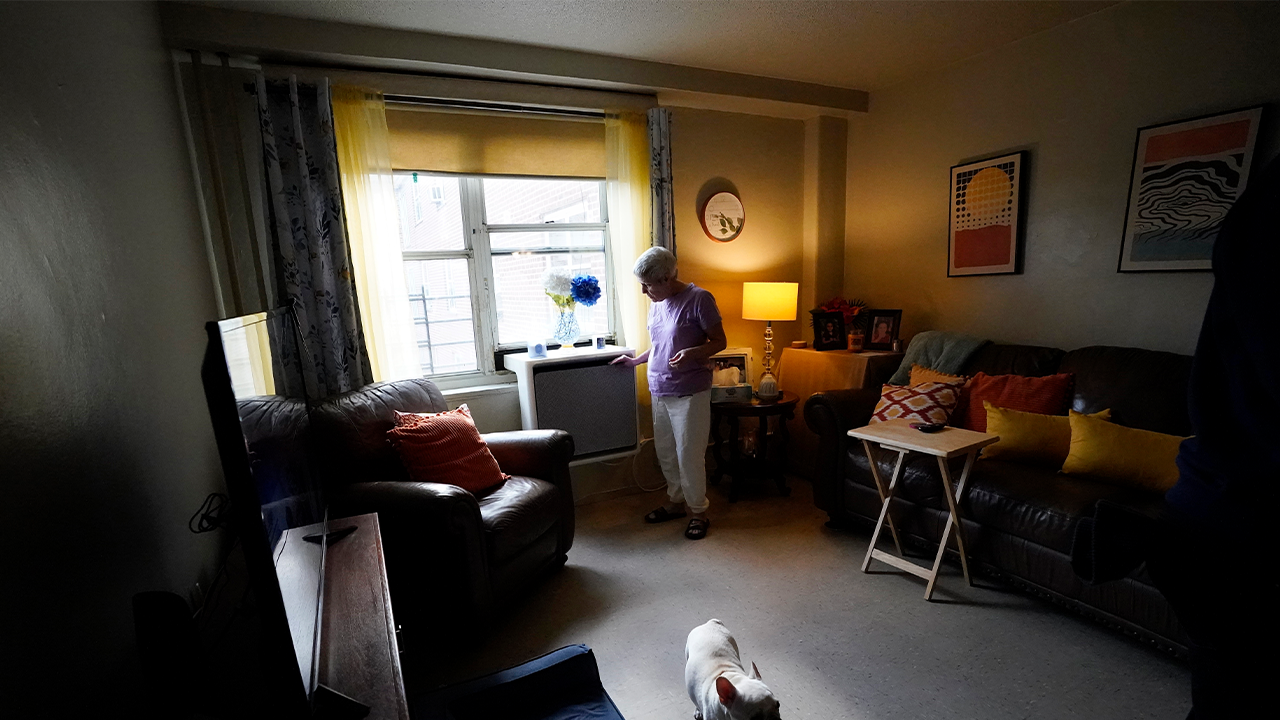
For 27 years, the heat in Regina Fred’s Queens apartment building came from a noisy steam radiator that she couldn’t control and sometimes didn’t come on at all, leaving her shivering. Sometimes, the radiators ran so hot that residents had to keep their windows open in the middle of winter for relief.
That all changed a few months ago, when she got a window-mounted heat pump as part of a pilot project by the New York City Housing Authority aimed at cutting energy costs and lowering emissions. Suddenly, all Fred has to do is touch a dial to bump her temperature up or down, and she found herself enjoying “a very good silence.”
“They did a demonstration for me and I was thrilled,” Fred said. Now, her grown children call the heat pump “the best thing” she has in her apartment, and her neighbors have knocked on her door to check out the unit.
NEW YORK CITY TAKING A SLICE OUT OF ICONIC PIZZA SHOPS WITH NEW GREEN RULE
Heat pumps, a highly efficient technology that has grown in popularity in recent years to rival gas furnaces, have mainly been an option for owners of houses. But new designs are making them practical for apartments, too, which often rely on inefficient centralized steam boilers powered by oil or gas. That represents a promising climate solution for buildings, whose operations account for 26% of global energy-related carbon emissions, according to the International Energy Agency.
The IEA said last year that installing heat pumps in apartment buildings and commercial areas should “be a priority area” to maintain the growth necessary to meet national climate pledges worldwide. The U.S. alone has 23 million apartment units, according to the National Multifamily Housing Council, representing a huge sector of people who could use less energy with heat pumps.
New York law requires buildings to make big cuts in greenhouse gas emissions over the next decades. To comply, NYCHA is targeting heating and cooling, the largest source of emissions for the agency, which houses about 528,000 people across more than 2,400 buildings — or about one in 17 New Yorkers, said Shaan Mavani, the agency’s chief asset and capital management officer.
Centralized steam boilers powered by natural gas or oil typically provide the heat, and they are wasteful — the NYCHA’s climate mitigation roadmap calls steam heat “19th-century technology incompatible with 21st-century needs.” Mavani said between 30% and 80% of heat is lost through old and leaky infrastructure before it reaches apartments. And that doesn’t account for the waste when residents have to open their windows to dissipate excess heat from a system they can’t control.
Queens borough resident Regina Fred touches one of her window-mounted heat pumps. The installation of heat pumps is part of a New York City Housing Authority pilot project, which aims to cut costs and emissions. (AP Photo)
Eric Wilson, a senior research engineer for the Department of Energy’s National Renewable Energy Laboratory, led a team that analyzed heat pump performance in various electric grid scenarios and found even the lowest-efficiency pump would cut greenhouse gas emissions and save on operating costs in every U.S. state. That analysis didn’t include the kind of pump being tested in Queens because it wasn’t yet on the scene, but Wilson said he would expect similar results.
Most heat pumps require ductwork, which isn’t an option for renters in a unit they don’t own. And ductless systems typically require extensive installation that includes wiring, making a hole in a wall and a sizeable external compressor.
Gradient and Midea, the two companies making the units in the pilot project at Woodside House, downsized it all into something that looks a bit like a window air conditioner but with a much lower profile. Exterior and interior halves drape over a sill to leave the window mostly unobscured. Gradient, one of the companies, says its unit installs in 15 minutes and plugs into an ordinary wall outlet.
Wilson said the interior portion of the units “take up more space on the inside than you might be used to” but Fred called it “very beautiful.”
“Look, I even have it for decoration,” she said. Her three window units are usually topped by flowers and decorative candles. In one room on a particularly sunny day, morning light shone on a rose, a jar of rose petals, decorative boxes and a “LOVE” sign atop one of them.
Z Smith, an architect at the firm Eskew Dumez Ripple who isn’t involved in the Queens project, said such retrofitting “is the carbon-smart way to get to better comfort for occupants.” That’s because one of the most effective ways to cut emissions from buildings is to avoid putting up new ones, which result in significant emissions due to all the new concrete, steel and wood.
He called the low-profile heat pumps a “lightweight intervention” because they’re so easy to install.
The NYCHA will evaluate results of the pilot project, with plans to eventually install more than 4,000 heat pumps over two years in the Woodside development if all goes well. The authority expects to save money on operating and maintenance costs with the heat pumps, but is waiting to see for initial results before it projects those savings.
Gradient was founded seven years ago in San Francisco with the ambition to decarbonize buildings with a window unit heat pump that can be easily installed without technicians. Part of their goal was a solution for people just like those at Woodside, CEO Vince Romanin said — people in older multi-family buildings with complaints about their window ACs or aged radiators that don’t have a temperature setting.
“We think that if you’re not building solutions for people who need it most, if you’re not building solutions for people who have insufficient heating (and) cooling today, they’re not really solving climate change,” Romanin said.
Read the full article from Here


The only notable change in the top-seven of the Varsity Maine baseball poll is that Gorham now has eight first-place votes, two more than last week. The order of the seven teams is identical. In fact, the only change in the top-seven over the past three polls is the swap at the top after Gorham’s win over South Portland on May 19.
Furthermore, Gorham, South Portland, Oxford Hills, Cheverus, Bangor, Mt. Ararat and Fryeburg have been ranked in the top seven for four straight weeks, and six of those squads have been among the top seven in every poll this spring.
Meanwhile, Scarborough is ranked for the first time since May 5, and Ellsworth and Thornton swapped spots.
The Varsity Maine baseball poll is based on games played before June 2, 2026. The top 10 teams are voted on by the Varsity Maine staff, with first-place votes in parentheses, followed by total points.
1. Gorham (8) 89
2. South Portland 79
3. Oxford Hills (1) 75
4. Cheverus 55
5. Bangor 42
6. Mt. Ararat 41
7. Fryeburg Academy 30
8. Ellsworth 27
9. Thornton Academy 25
10. Scarborough 12
Also receiving votes: Washington Academy 8, Monmouth Academy 4, Cony 4, Leavitt 2, Falmouth 2.

Local News
Massachusetts lawmakers are considering a measure that would allow cities and towns to temporarily extend bar and restaurant hours during the summer, as the state prepares to host FIFA World Cup matches and celebrations marking the nation’s 250th anniversary.
The legislation (H.5465) filed by state Rep. Carole Fiola, would allow licensed establishments to sell alcohol one hour later than their normal closing time, up to 3 a.m., between June 1 and Aug. 31, 2026. The bill would also allow communities to establish designated public consumption districts where alcohol could be consumed in approved public spaces.
In a press release announcing the bill, Fiola said the summer’s threefold events lineup — the World Cup, Tall Ships, and July 4th — is an economically significant moment that the state should take advantage of.
“We should capitalize on these events that will generate economic benefits for small businesses and the state as a whole. It’s a local opt-in idea worth exploring that’s being done in other states,” Fiola said.
The proposal has received support from Boston Mayor Michelle Wu and most recently Gov. Maura Healey, who submitted written testimony Monday to the Joint Committee on Economic Development and Emerging Technologies urging lawmakers to advance the measure.
“Massachusetts is planning for a once-in-a-generation summer,” Healey wrote, according to the Boston Globe. “In 2026, we will celebrate the 250th anniversary of our nation’s founding, welcome tall ships from around the world to Boston Harbor for Sail Boston, and host seven FIFA World Cup matches in Foxborough, along with watch parties across the Commonwealth.”
The governor argued that the added flexibility could help local economies benefit from an influx of visitors.
“That flexibility can help communities capture more visitor spending, support jobs, keep downtowns active, and strengthen Massachusetts’ image as a dynamic destination ready to host the world and a place our residents, including our young professionals, are proud to call home,” Healey wrote.
She also urged lawmakers to move the legislation forward, saying it will “help Massachusetts meet the full economic and cultural opportunities for the summer ahead.”
In Rhode Island, a similar bill to allow bars and restaurants to remain open until 4 a.m. during the World Cup was signed into law on Friday.
Fiola’s bill remains before the Joint Committee on Economic Development and Emerging Technologies. Any final version would require approval from both the House and Senate before reaching Healey’s desk.

Receive updates on the 2026 FIFA World Cup

Thomas Moulton, the Seacoast entrepreneur, proposed converting a vacant warehouse on Route 4 into a data center to the Nottingham planning board in May, which was first reported by InDepthNH.
In the days leading up to the planning board meeting, a petition online garnered more than 25,000 signatures.
Moulton withdrew his application hours before the meeting last Wednesday, where he was slated to discuss the proposal.
He cited the fierce criticism from local residents, which included a planned protest outside the meeting.
Protestors still gathered outside the meeting on May 27, and dozens of residents spoke out against data centers during the meeting’s public comment section.
Kristen Lamb, who serves on the town’s conservation committee and master plan update subcommittee, said she was concerned about water quality impacts, increased electricity bills and noise pollution. She said Nottingham residents care deeply about protecting the natural landscape.
“We have a history of prioritizing our natural history, our natural resources and water quality” she said.
Numerous studies have found the energy consumption of data centers could place a serious strain on water infrastructure and power grids.
Plus, Lamb argued that building a data center would violate the town’s zoning ordinances.
In the days leading up to last week’s meeting, Lamb spoke out online and wrote letters detailing her concerns to the planning board and Gov. Kelly Ayotte.
Data centers have become an increasingly hot-button issue in state legislatures across the country.
In New Hampshire, Democratic legislators introduced Senate Bill 439 earlier this year, which would have created a statewide definition of data centers and granted local municipalities more authority over regulating them. Sen. Debra Altschiller co-sponsored the bill.
“[Building data centers is] one of the fastest growing and, quite frankly, most disruptive forms of industrial development in the country,” said Altschiller. “It’s something brand new, and we can’t treat the development of AI data centers as if it is just any other kind of manufacturing.”
In a Senate committee in January, Sen. Timothy Lang, a Republican, introduced an amendment that pushed the legislation in the opposite direction.
“Basically, what the amendment does is rewrite the bill,” he said during the committee meeting on Jan. 20. The amended bill would instead limit towns’ ability to regulate data centers, and allow them in commercial and industrial zones.
The amended bill passed the House Committee on Municipal and County Government along party lines on May 5.
However, it died in a bipartisan floor vote in the House, 304-11, meaning there was no real movement in state laws or regulations on data centers this year.
“Municipalities are left with whatever they have in place right now, today,” said Altschiller. “And it’s not a whole lot.”
Democrats in the House also introduced a bill that would prohibit building data centers in the state and create a committee to study their environmental impact. It failed in committee.
Despite Moulton’s withdrawal, Kristen Lamb said he could still reintroduce the proposal in the future or another developer could try a similar plan, so she and other residents are continuing their fight.
“Our town is interested in moving forward with a moratorium or exploring what we can do to make it explicit that data centers or any kind of commercial industry that has that kind of impact on our water, residents income and way of life and wildlife doesn’t get passed,” she said.
The planning board’s workshop meeting will be held at 7 p.m. on June 3 at the town office building.


Delaware is getting its first medical school, with classes set to start in 2028


Police seek public help identifying Georgia State MARTA stabbing suspect


Kilauea sets record for lava fountaining episodes in any 1 eruption

Boise lawyers give advice on how to comply with new bathroom bill


Unincorporated Bensenville residents say ‘nightmare’ rat infestation threatens their health, safety


How Purdue Fans Can Watch Isaiah Hill vs. Luke Ertel in Indiana All-Star Game


Elections live updates: Key races to watch in California, Iowa, Montana and New Jersey primaries


Commentary: Kansas fans stepped up to prevent a Razorback takeover | Whole Hog Sports

