Hawaii
Hawaii Marijuana Legalization Bill One Step Away From Senate Approval


Two legislative committees last week approved a bill to legalize recreational marijuana in Hawaii, leaving the measure one step away from approval in the state Senate. The legislation, Senate Bill 3335, was approved by the Senate Ways and Means Committee and the Senate Commerce and Consumer Protection Committee on Friday. The next step before final approval of the bill in the Hawaii Senate is a floor vote by the full body, which could come as soon as this week, according to a report from online cannabis news source Marijuana Moment.
If passed, the legislation would legalize the use of cannabis by adults 21 and older, who would be permitted to possess up to one ounce of marijuana and up to five grams of cannabis concentrates. The bill also allows for the home cultivation of up to six cannabis plants by adults and creates a new state agency that would be tasked with regulating the commercial production and sale of marijuana and hemp.
A bill to legalize recreational marijuana in Hawaii could be approved by the state Senate this week … [+]
Senate Bill 3335 and a companion measure in the House of Representatives were introduced in the Hawaii legislature by Democratic lawmakers in January. The bills are based on a recreational marijuana legalization proposal offered by Attorney General Anne Lopez last year.
Committees Approve Amendments To Bill
Before voting to approve the measure on Friday, the two Senate committees held a joint hearing to consider several amendments to the legislation. One amendment approved by the panels made a slight change to the name of the new regulatory agency, which would be called the Hawaii Hemp and Cannabis Authority to indicate its oversight of both marijuana and hemp.
Another amendment adopted by the committees eliminates the bill’s funding levels “to reflect the ongoing discussion going on at the legislature right now,” according to Democratic Sen. Jarrett Keohokalole, the sponsor of the measure in the Senate and the chair of the Commerce Committee.
The committees also approved an amendment that allows those with past felony marijuana convictions to apply for licenses and employment in the regulated cannabis industry, provided at least 10 years have passed since the end of their incarceration, probation or supervised release. Another change clarifies that the possession and sale of marijuana paraphernalia is also legal under Hawaii state law.
Democratic Sen. Herbert “Tim” Richards, a Commerce and Consumer Protection Committee member, voted to support the bill with reservations.
“I think we’re really close,” Richards said at the joint hearing. “I’m going to be supporting with reservations, just because I think we still got a little bit we need to do, but I think we’re close.”
The bill would legalize recreational marijuana in Hawaii and allow adults to grow up to six weed … [+]
Republican Sen. Kurt Fevella said he does not support the bill “because we have no parameters, really, on how this is gonna be.”
“You guys all know I support hemp,” he added, “but with this cannabis pleasuring thing, I cannot support the bills.”
Democratic Sen. Sharon Moriwaki, a member of the Ways and Means committee, voiced concerns that the state’s medical marijuana program lacks proper procedures, according to a report from Big Island Now.
“Having this move to a pleasure cannabis gives me concern,” Moriwaki said.
Panels Hear From Groups On Both Sides Of Weed Legalization
The committees heard from groups that support cannabis legislation, although they called for changes to the bill. The ACLU of Hawaii issued a statement noting its support for legalizing recreational marijuana but said that “this draft falls short of the robust social equity and reparative justice reforms required to address the harms and collateral consequences of cannabis arrest and conviction records that last a lifetime.”
“Notably, these harms have disparately impacted Native Hawaiians,” the civil liberties advocacy group added. “Native Hawaiians do not use drugs at drastically different rates from people of other races or ethnicities, but Native Hawaiians go to prison for drug offenses more often than people of other races or ethnicities.”
Karen O’Keefe, director of state policies for the cannabis legalization advocacy group Marijuana Policy Project (MPP), said that the current draft of the bill “takes an overly punitive approach and fails to include a sufficient commitment to equity.”
“Alarmingly,” O’Keefe testified, “the bill could result in more people being ensnared in the criminal justice system for cannabis instead of less.”
The committees also heard from state agencies opposed to legalizing recreational cannabis in Hawaii. The state Department of Law Enforcement said in written testimony that it has “serious concerns” about the legislation, citing a controversial report from Colorado claiming that fatal traffic collisions that could be linked to marijuana “nearly doubled between 2013 to 2020.”
“If cannabis were to be legalized in an adult use system for Hawaii, then it is highly probable that the rate of fatal car crashes and roadway deaths in Hawaii would very likely increase, especially amongst young drivers in Hawaii,” the department wrote.
The state Department of Education expressed “strong concerns” with the legalization bill and “the potential impacts it could have,” noting that research has shown that cannabis use might impair brain development in young people. The department also cited a study that found legalizing marijuana led to an increase in youth cannabis use.
“Therefore, if Hawaii legalizes adult recreational cannabis use, it must also invest in prevention and education initiatives,” Superintendent Keith T. Hayashi said in written testimony.
The legislation gained the approval of two different Senate committees last month. The next step for the bill is a floor vote on the legislation by the full Senate. The legislation is subject to a March 7 deadline to cross over to the House of Representatives, suggesting the Senate floor vote is likely to occur this week.



The honor of introducing former President Barack Obama at the grand opening of his new presidential library in Chicago Thursday went to Dr. Kaiwipunikauikawēkiu Punihei Lipe of Hawaii.
Hawaii News Now reports that Lipe participated in the inaugural cohort of the Asia-Pacific Leaders Program in 2019 and is currently the principal at Kamehameha Schools Kapālama.
“Where I come from, to introduce someone means we have pilina, a connection. If this man walked into my home, my children would call him uncle because we are both keiki o ka ʻāina, children of Hawaii,” she said in her remarks.
She told those in attendance that the former president and herself are both “children of Hawaii.” Obama lived on the island and attended Punahou School and lived in Hawaii for eight years until his graduation from high school.
Lipe said being children of Hawaii carries with it a “sacred responsibility to care for those who we may never meet.”
She made reference to the resilient Hawaiian shrub, the Like a’ali’i.
“The a’ali’i thrives by being deeply rooted, resilient through storm and drought, and fiercely responsive. That is what ‘yes, we can’ means to my indigenous heart. It demands that we remain unshakably rooted in truth, resilient through trial, and so responsive that just as this plant yields its leaves for medicine, its blooms for beauty, and its timber for protection, we become the healing, the vibrance, and the shelter needed by our communities and by grandmother earth.”
Our Summer Membership Drive is underway. Make a recurring monthly donation of at least $10/month or a donation of any amount and receive an invite for a live Q&A with actor Chris Pang of the new Hulu series, The Season. Help us get to our goal of $10,000 and 10 new monthly recurring members. We’ve raised $2605 so far, 26% of our goal with 10 days to go and need 9 more recurring monthly members. Please donate here.
AsAmNews is published by the non-profit Asian American Media Inc and supported by our readers along with the Robert Wood Johnson Foundation, AARP, The Henri and Tomoye Takahashi Charitable Foundation, The Asian American Foundation & Koo and Patricia Yuen of the Yuen Foundation.
Be sure to take advantage of our free subscription and follow us on Instagram, Bluesky, Facebook, X, Tiktok and YouTube.


HONOLULU (HawaiiNewsNow) – It’s shaping up to be a slower-than-usual summer for Hawaii’s tourism industry, but business leaders hope events that market the islands’ unique local food and products can turn that around.
The state expects total visitor arrivals to grow only about 2 percent this year. Numbers slid half a percent in April from the previous year, with the largest market, West Coast tourists, falling nearly 5 percent. The statewide hotel occupancy rate averaged 76.4 percent.
Economists blame higher airfares, rising inflation, fewer international visitors and uncertainty following the March kona low storms.
State-supported events like the Hawaii Lodging & Tourism Association’s (HLTA) Hawaii Hotel and Restaurant Show and DBEDT’s Hawaii Made Conference aim to boost tourism by promoting products you can only find in Hawaii.
“We’re going to continue to struggle, but we can’t stop promoting. We can’t stop advocating,” said HLTA President/CEO Mufi Hannemann. “If you can travel during these times, you’re going to come and have a wonderful experience in Hawaii whether you’re just coming for sun and surf or you’re coming here to immerse in our culture or to do business, this is the place to come.”
And those who do come are spending more.
At the Hotel and Restaurant Show this week, local food manufacturers hoped to secure more buyers in the hospitality industry.
Many rely on business and leisure visitors trying their products while in Hawaii and taking them back home where they promote it.
“The traceability that you want to know where your food is coming from,” said June Rees, general manager of Kauai Shrimp, which has 40 ponds off the coast of Kekaha. You’ll find their shrimp on many menus across the islands.
“There are a lot of people that heard about us but never tried, so this show gives us exposure to the new restaurant or chef that have heard about the name but never really tried the product.”
But fewer tourists mean less sales and slower business growth and investment.
Jina Wye is the founder of Okonokai, which makes snacks from native seaweed grown off the Kona coast on Hawaii Island.
“It’s like a superfood that everyone should be eating everyday,” she said. “There’s a lot of just missing infrastructure for manufacturing, but that’s something that we’re working on. It’s actually why I’m part of this whole like DBEDT pavilion because the state is really working hard to develop more infrastructure.”
For the family behind Aloha Star Coffee Farm, getting their award-winning premium kona coffee into airports, hotels and restaurants is key.
“Getting the opportunity to find the market niche that we need,” said Karina Rodriguez, co-owner of Aloha Star Coffee. “We are small, that sometimes we don’t have all the resources for marketing and, and going to the biggest stores, and we are working on that.”
Food entrepreneurs will get another chance to promote their products at DBEDT’s Hawaii Made Conference this Tuesday at the Sheraton Waikiki. Click here to register and for more information.
The 16th Hawaii Food & Wine Festival is another event that promotes local chefs and restaurants while promoting tourism. It spans three weekends from Oct. 16 to Nov. 8 across three islands. Find information here.
Copyright 2026 Hawaii News Now. All rights reserved.
-

 Sports7 minutes ago
World Cup Red Cards: 2026 Has More Red Cards Than Each Of Last 2 World Cups
-

 Technology10 minutes ago
China’s brain chip breakthrough raises big questions
-
 Business15 minutes ago
Ranch lovers can soon travel with a TSA-friendly kit of the popular American dressing
-
 Entertainment22 minutes ago
At the Fonda, Jane Remover’s violent yearning heralds a new kind of stardom
-
 Lifestyle25 minutes ago
Beer, with a twist? SoCal dads find solidarity through an unexpected activity
-
 Politics30 minutes ago
Billionaire tax proposal faces hurdles as it moves closer to November ballot
-
 Science37 minutes ago
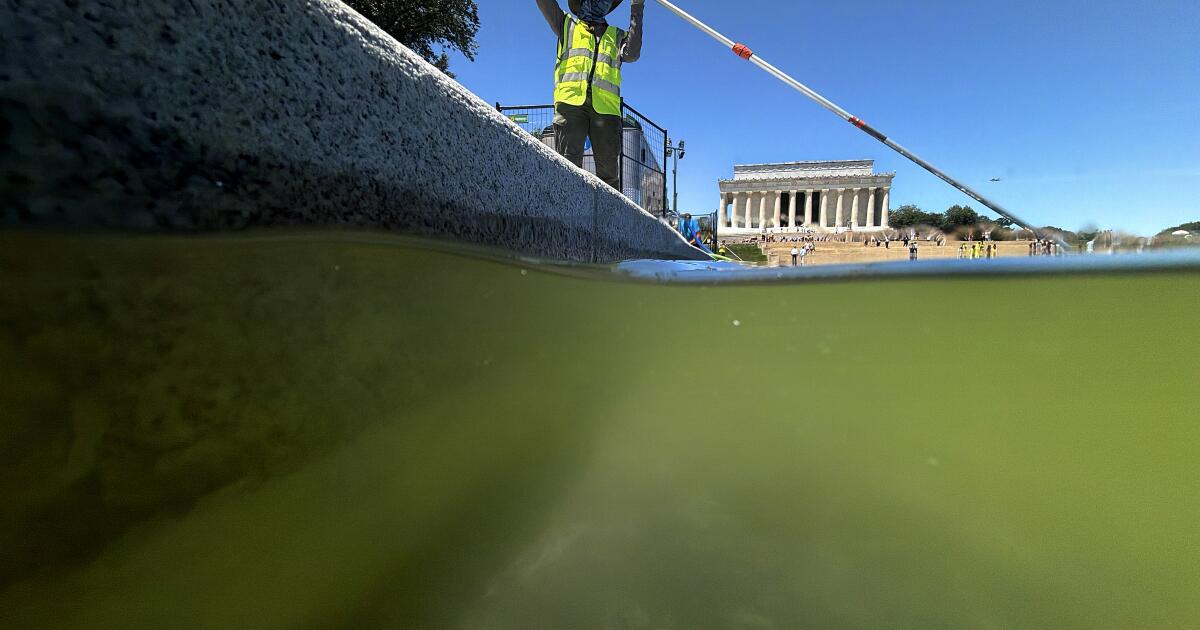
Here’s why the Lincoln Memorial Reflecting Pool went green so fast
-
 Sports40 minutes ago
Shohei Ohtani out of Dodgers’ lineup vs. Orioles for birth of his second child

