San Francisco, CA
How All Americans Are Paying for San Francisco’s Pork-Barrel Spending


Washington is once again facing a potential shutdown. Funding for the federal government will run out in early March unless the House and Senate can bridge their differences and pass spending legislation.
At the same time, the city of San Francisco seems to have few problems doling out huge amounts to well-connected activist groups and hard-left ideologues.
While those two realities might seem disconnected, there are important links between them.
Disagreements over federal spending focus on how to divide taxpayer dollars between national defense, veterans’ benefits, and the bureaucracies that operate a nearly endless array of social and economic programs.
While spending bills crafted by House Republicans would impose common-sense cuts to many wasteful and unnecessary programs, the Senate’s bills are loaded with budget gimmicks and pork-barrel projects.
>>> Scranton Joe and the Temple of Doom Spending
The federal government isn’t the only source of political pork. Many states and localities also play fast and loose with public resources.
A recent series of stories from San Francisco have highlighted the wealthy city’s severe mismanagement.
- On Feb. 3, the San Francisco Chronicle revealed that an elementary school paid $250,000 to a group called Woke Kindergarten. This group’s “educational” materials are not only predictably biased on issues such as race and genders, but also completely inappropriate for toddlers.
- On Feb. 8, the city celebrated that they had lowered the cost of a public bathroom from $1.7 million to $725,000, when a more reasonable fee would be a fraction of that amount.
- On Feb. 9, the website Pirate Wires released an expose on San Francisco’s $100 million-per-year web of bureaucrats and left-wing nonprofit groups that focus on political crusades such as gender ideology, “racial equity” and identity-based cash handouts.
- It would be one thing if these were purely paid for by residents of the high-wealth city. However, San Francisco benefits from the more than $1.2 trillion in transfers that the federal government gives to state and local governments every year.
For example, the Chronicle story notes that the payment to Woke Kindergarten came from federal education funds. This is far from an anomaly: The federal Department of Education has overseen surging growth for bureaucrats but stagnant test scores for the nation’s children.
Other federal programs for localities are similarly captured by ideologues.
The Highway Trust Fund now pays for frivolities such as hiking trails and bike lanes, and the Biden administration has added inappropriate carve-outs for “environmental justice” and “diversity, equity and inclusion” to infrastructure projects.
Tens of billions of federal dollars per year for social services, welfare and “community development” provide means for local politicians to dole out favors while trapping poor neighborhoods in cycles of dependency.
>>> The Senate’s Security Supplemental Budget Bill: Key Provisions
The Biden administration has gone out of its way to exacerbate this problem, illegally extending a “COVID” program that is little more than a slush fund for state and local governments.
Freebies from Washington make space for mischief in local budgets. Without Uncle Sam’s payola, cities would either have to raise taxes (which is already driving waves of people out of California) or focus their spending on real responsibilities.
As members of Congress convene to discuss the federal budget, they would be wise to prioritize spending bills on core priorities such as the military while streamlining less-necessary parts of the federal behemoth.
Trimming or eliminating the multitude of government-to-government transfer programs would provide much-needed savings, make it easier to reach agreement on funding levels, and reduce the amount of nonsense in places like San Francisco that is subsidized by taxpayers from across the country.


A jury in San Francisco returned to a packed courtroom Thursday morning to tell a judge that it was deadlocked on two counts in the case against seven pro-Palestinian protesters who shut down traffic on the Golden Gate Bridge in 2024 to denounce U.S. aid to Israel in the Israel-Hamas war.
The jury indicated that it could likely reach a decision on one of the deadlocked counts, but the other it could not. San Francisco Superior Court Judge Teresa Caffese asked the jury to resume deliberations on one of the two deadlocked counts.
“Why don’t I send you back, and then we’ll go from there,” Caffese said.
Six of the protesters who chained themselves together on vehicles on the bridge and a protester who was designated to communicate with authorities are each facing eight to nine charges of felony conspiracy and false imprisonment.
The seven defendants sat in the courtroom with anticipation for a verdict, wearing keffiyehs around their necks. Dozens of their supporters packed the courtroom to the brim.
The jury reached unanimous decisions on the rest of the counts. It did not indicate which two counts it was deadlocked on.
Supporters of the seven protesters said that a verdict on the rest of the counts is expected to be read out sometime Thursday.
San Francisco, CA
Discovery Bay driver arrested for San Francisco fatal vehicle collision | Contra Costa Herald

Killed pedestrian, struck 3 more people
By San Francisco Police Department
On May 25, 2026, at approximately 12:13 am, San Francisco Police officers responded to the area of 16th and Mission Streets regarding a vehicle collision.
Officers were advised that a collision occurred between a vehicle and a pedestrian.
Officers arrived on scene and located a pedestrian victim being treated by paramedics for life threatening injuries. Paramedics transported the victim to a local hospital.
Despite lifesaving efforts of medical staff, the victim was later declared deceased at the hospital.
A preliminary investigation revealed that a vehicle collided with a pedestrian and struck three additional victims.
The three victims were medically assessed on scene for non-life-threatening injuries.
Through the course of the investigation, officers located the suspect vehicle and detained the occupant of the vehicle.
The Traffic Collision Investigations Unit (TCIU) responded to scene and conducted their investigation.
Through the course of the investigation, TCIU investigators developed probable cause to arrest the driver identified as 57-year-old Samuel Powell of Discovery Bay on June 30, 2026.
Powell was arrested and charged for vehicular Manslaughter 192(c)(2) PC and the driver’s responsibility to exercise due care for the safety of any pedestrian within the roadway 21955(b)(3) CVC.
Although an arrest has been made, this remains an open and active investigation. Anyone with information is asked to contact the SFPD at 415-575-4444 or text a tip to TIP411 and begin the message with SFPD.

Gov. Gavin Newsom has signed a law designating May 17 as Bruce Lee Day, honoring the legacy of the San Francisco-born actor and martial arts icon.
According to Asm. Matt Haney, who authored the proposal, the annual day of recognition honors Lee’s impact on film, culture, and Chinese American history, and makes him the first Chinese American commemorated with a day in California.
“To be the first Chinese American recognized this way is a testament to my father’s enduring legacy and the countless lives he continues to touch,” said Shannon Lee, founder and CEO of the Bruce Lee Foundation and Lee’s daughter.
Lee was born in San Francisco in 1940, while his parents were travelling for an international opera tour, but returned to Hong Kong soon after. May 17 was chosen to mark the day Lee left Hong Kong and returned to San Francisco at age 18, a pivotal moment that helped launch his acting and martial arts teaching career.
An international star who transformed martial arts cinema and introduced global audiences to Asian-led storytelling, Lee’s philosophy of adaptability, discipline and self-expression has made him a cultural icon who continues to influence athletes, artists and educators around the world. His films challenged Asian stereotypes that were prevalent in American media at the time, and launched a “kung fu craze” in the 1970’s.
“Bruce Lee represents the very best of California: innovation, diversity, determination, and the courage to challenge convention. Born in San Francisco, he transformed martial arts, redefined Hollywood, and inspired millions around the world to pursue their potential,” Haney said in a statement. “At a time when Asian Americans were too often absent from or stereotyped on screen, Bruce Lee helped generations see themselves represented with strength and dignity.”
According to Haney’s office, the state will encourage voluntary commemorative events across California, including school lessons, cultural exhibits and public events highlighting Lee’s contributions and history.
“Beyond the silver screen, Bruce Lee was a beacon for inclusiveness and tolerance and we feel strongly that his legacy needs to be remembered not only as the world famous martial artist and movie star but as an advocate of bridging diverse communities in the pursuit of equal representation and excellence,” said Justin Hoover, the creative director of Chinese Historical Society of America.
The first Bruce Lee Day will take place on May 17, 2027.
-
 Lifestyle8 minutes ago
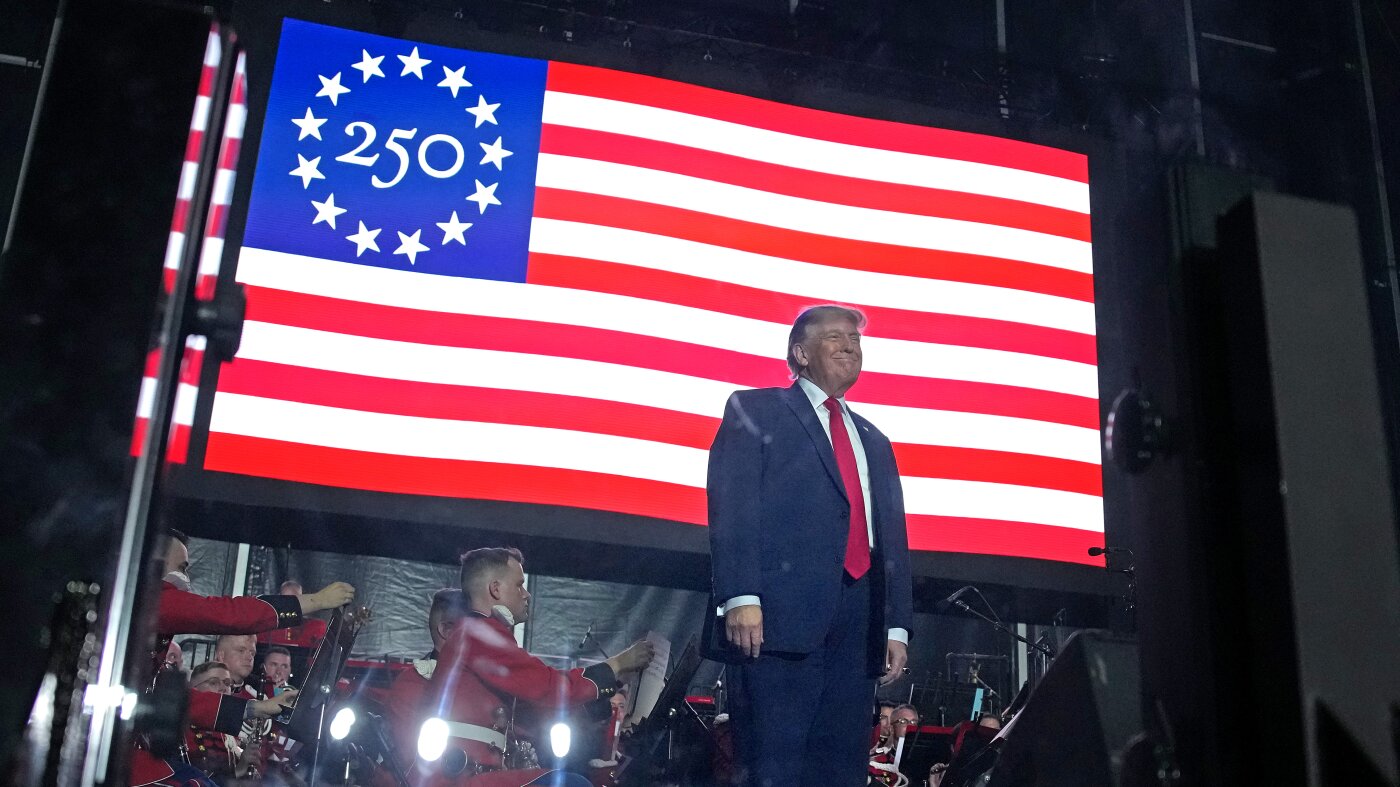
House Democrats accuse Trump of ‘hijacking’ America’s 250th birthday for his own gain
-

 Technology20 minutes ago
Tesla driver faces manslaughter charges over Texas crash that killed a woman inside her home
-

 World23 minutes ago
Six Kurdish fighters killed in IRGC ambush as clashes spread across western Iran
-

 Politics28 minutes ago
Sanctuary county refused 615 ICE transfer requests, turned over just 11 illegal immigrants, records show
-

 Health35 minutes ago
Mystery parasite leaves Americans battling ‘explosive’ illness as CDC investigates
-

 Sports38 minutes ago
2026 World Cup Round Of 16 Odds: Who’s Favored To Advance?
-

 Technology48 minutes ago
Fox News AI Newsletter: American manufacturer says AI is creating jobs, not replacing them
-
Business53 minutes ago
First recorded Tesla Semi crash kills two people in Nevada


