Hawaii
Ole Miss Takes Game One of Doubleheader 5-2 Over Hawaii – The Rebel Walk


HONOLULU — Ole Miss took the first doubleheader game 5-2 over the Hawaii Rainbow Warriors Saturday.
Ole Miss’ (2-0) bats were hot as they came to the plate against Hawaii with extra hits through the first four innings.
Rebel designed hitter Bo Gatlin delivered a three-run home run to center to give Ole Miss a 3-0 advantage over Hawaii in the second.
On the mound for the Rebels, southpaw Gunnar Dennis had a hit-by-pitch in the first and allowed a walk in the second inning. During the walk to the Rainbow Warriors, Kyson Donahue came in to score on a base knock by Stone Miyao. Hawaii cut the Rebels’ lead to 3-1.
The Rebels’ third baseman Andrew Fischer belted the second home run of the game for Ole Miss with two outs to get the run back and move to 4-1.
Hawaii answered in the bottom of the third with a run by Dallas Duarte who got aboard via a walk.
In the fourth, Ethan Ledge delivered a double to open the frame and came in on a ground out to third off the bat of Judd Utermark. Gatlin got his second hit of the day in the fourth with a double. Ole Miss went up 5-2 over Hawaii.
Gatlin finished the game going 2-for-2 with a three-run home run, a double, a run scored and three RBI.
Dennis worked 4.0 complete innings and allowed just two runs on four hits with three walks and a strikeout to pick up the win.
Coach Mike Bianco brought Wes Mendes out of the bullpen in the fifth. The true freshman Mendes tossed the final three frames for the Red and Blue by not allowing a run with a walk and four strikeouts.
Hawaii’s starter left-hander Randy Abshier worked four innings and surrendered five runs on four hits with two walks and a strikeout. In the fifth, the ‘Bows brought T Dyball to the mound who tossed the final three frames.
The Rebel pitchers struck out five Hawaii sluggers.
Next Up
Game two of the doubleheader will begin at approximately 7:55 p.m.
Adam Brown
Adam Brown joins The Rebel Walk as the Managing Editor after being on the Ole Miss beat as a Sports Editor for over 11 years. He is a lifelong Oxford resident. Brown graduated from the University of Mississippi with a bachelor’s degree in journalism.
Prior to The Rebel Walk, Brown was the sports editor of HottyToddy.com covering every Ole Miss sport and local high school sports in the community.
Related



The honor of introducing former President Barack Obama at the grand opening of his new presidential library in Chicago Thursday went to Dr. Kaiwipunikauikawēkiu Punihei Lipe of Hawaii.
Hawaii News Now reports that Lipe participated in the inaugural cohort of the Asia-Pacific Leaders Program in 2019 and is currently the principal at Kamehameha Schools Kapālama.
“Where I come from, to introduce someone means we have pilina, a connection. If this man walked into my home, my children would call him uncle because we are both keiki o ka ʻāina, children of Hawaii,” she said in her remarks.
She told those in attendance that the former president and herself are both “children of Hawaii.” Obama lived on the island and attended Punahou School and lived in Hawaii for eight years until his graduation from high school.
Lipe said being children of Hawaii carries with it a “sacred responsibility to care for those who we may never meet.”
She made reference to the resilient Hawaiian shrub, the Like a’ali’i.
“The a’ali’i thrives by being deeply rooted, resilient through storm and drought, and fiercely responsive. That is what ‘yes, we can’ means to my indigenous heart. It demands that we remain unshakably rooted in truth, resilient through trial, and so responsive that just as this plant yields its leaves for medicine, its blooms for beauty, and its timber for protection, we become the healing, the vibrance, and the shelter needed by our communities and by grandmother earth.”
Our Summer Membership Drive is underway. Make a recurring monthly donation of at least $10/month or a donation of any amount and receive an invite for a live Q&A with actor Chris Pang of the new Hulu series, The Season. Help us get to our goal of $10,000 and 10 new monthly recurring members. We’ve raised $2605 so far, 26% of our goal with 10 days to go and need 9 more recurring monthly members. Please donate here.
AsAmNews is published by the non-profit Asian American Media Inc and supported by our readers along with the Robert Wood Johnson Foundation, AARP, The Henri and Tomoye Takahashi Charitable Foundation, The Asian American Foundation & Koo and Patricia Yuen of the Yuen Foundation.
Be sure to take advantage of our free subscription and follow us on Instagram, Bluesky, Facebook, X, Tiktok and YouTube.


HONOLULU (HawaiiNewsNow) – It’s shaping up to be a slower-than-usual summer for Hawaii’s tourism industry, but business leaders hope events that market the islands’ unique local food and products can turn that around.
The state expects total visitor arrivals to grow only about 2 percent this year. Numbers slid half a percent in April from the previous year, with the largest market, West Coast tourists, falling nearly 5 percent. The statewide hotel occupancy rate averaged 76.4 percent.
Economists blame higher airfares, rising inflation, fewer international visitors and uncertainty following the March kona low storms.
State-supported events like the Hawaii Lodging & Tourism Association’s (HLTA) Hawaii Hotel and Restaurant Show and DBEDT’s Hawaii Made Conference aim to boost tourism by promoting products you can only find in Hawaii.
“We’re going to continue to struggle, but we can’t stop promoting. We can’t stop advocating,” said HLTA President/CEO Mufi Hannemann. “If you can travel during these times, you’re going to come and have a wonderful experience in Hawaii whether you’re just coming for sun and surf or you’re coming here to immerse in our culture or to do business, this is the place to come.”
And those who do come are spending more.
At the Hotel and Restaurant Show this week, local food manufacturers hoped to secure more buyers in the hospitality industry.
Many rely on business and leisure visitors trying their products while in Hawaii and taking them back home where they promote it.
“The traceability that you want to know where your food is coming from,” said June Rees, general manager of Kauai Shrimp, which has 40 ponds off the coast of Kekaha. You’ll find their shrimp on many menus across the islands.
“There are a lot of people that heard about us but never tried, so this show gives us exposure to the new restaurant or chef that have heard about the name but never really tried the product.”
But fewer tourists mean less sales and slower business growth and investment.
Jina Wye is the founder of Okonokai, which makes snacks from native seaweed grown off the Kona coast on Hawaii Island.
“It’s like a superfood that everyone should be eating everyday,” she said. “There’s a lot of just missing infrastructure for manufacturing, but that’s something that we’re working on. It’s actually why I’m part of this whole like DBEDT pavilion because the state is really working hard to develop more infrastructure.”
For the family behind Aloha Star Coffee Farm, getting their award-winning premium kona coffee into airports, hotels and restaurants is key.
“Getting the opportunity to find the market niche that we need,” said Karina Rodriguez, co-owner of Aloha Star Coffee. “We are small, that sometimes we don’t have all the resources for marketing and, and going to the biggest stores, and we are working on that.”
Food entrepreneurs will get another chance to promote their products at DBEDT’s Hawaii Made Conference this Tuesday at the Sheraton Waikiki. Click here to register and for more information.
The 16th Hawaii Food & Wine Festival is another event that promotes local chefs and restaurants while promoting tourism. It spans three weekends from Oct. 16 to Nov. 8 across three islands. Find information here.
Copyright 2026 Hawaii News Now. All rights reserved.
-

 Sports2 seconds ago
World Cup Red Cards: 2026 Has More Red Cards Than Each Of Last 2 World Cups
-

 Technology3 minutes ago
China’s brain chip breakthrough raises big questions
-
 Business8 minutes ago
Ranch lovers can soon travel with a TSA-friendly kit of the popular American dressing
-
 Entertainment15 minutes ago
At the Fonda, Jane Remover’s violent yearning heralds a new kind of stardom
-
 Lifestyle18 minutes ago
Beer, with a twist? SoCal dads find solidarity through an unexpected activity
-
 Politics23 minutes ago
Billionaire tax proposal faces hurdles as it moves closer to November ballot
-
 Science30 minutes ago
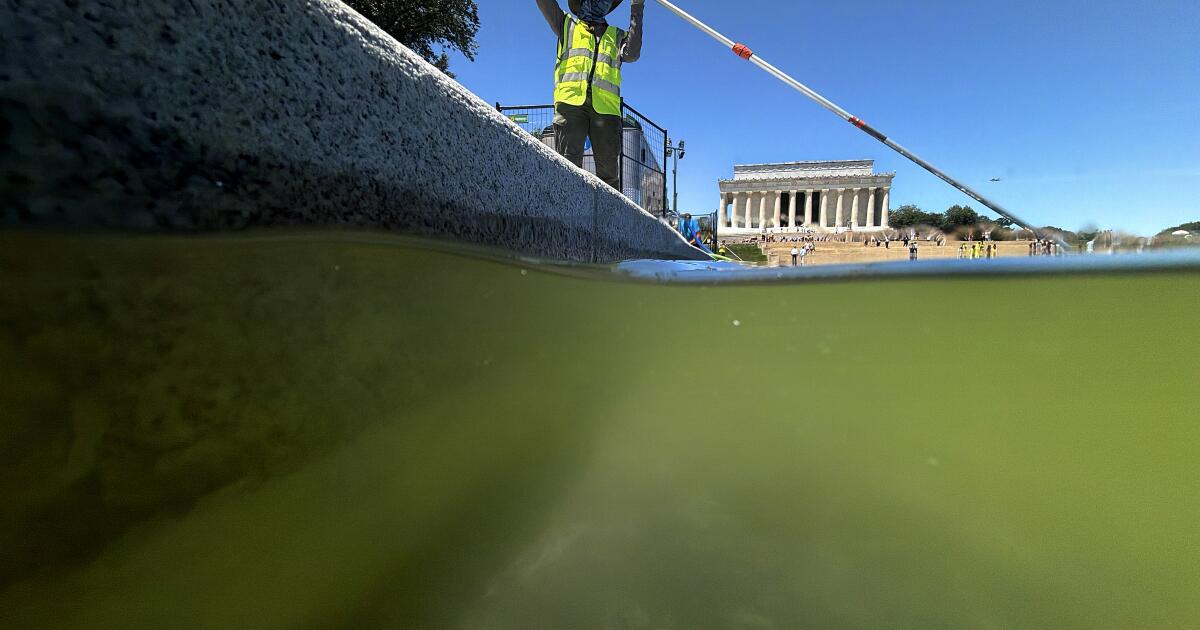
Here’s why the Lincoln Memorial Reflecting Pool went green so fast
-
 Sports33 minutes ago
Shohei Ohtani out of Dodgers’ lineup vs. Orioles for birth of his second child

