Fitness
Redefining Cardiovascular Fitness: The Power of Gentle Exercise


In a world where the word ‘exercise’ often conjures images of grueling, sweat-drenched sessions, a new perspective is emerging, championing the power of gentler, more sustainable approaches to physical fitness. At the heart of this movement is the undervalued hero of health: cardiovascular exercise. Not just any form, but those that emphasize consistency and moderation over intensity and exhaustion. Recent research, including a noteworthy study published in JAMA Network Open, sheds light on how activities like tai chi, traditionally known for their calming effects, can also pack a significant punch in bolstering heart health.
The Tai Chi Transformation
Perhaps the most striking evidence comes from a study that pitted tai chi, an ancient Chinese martial art known for its slow movements and deep breathing, against the more conventional aerobic exercise. The findings were clear: after twelve months, participants engaging in tai chi exhibited a more substantial decrease in blood pressure than their aerobic-exercising counterparts. Specifically, the tai chi group saw an average systolic blood pressure reduction of 7.01 mmHg, compared to a 4.61 mmHg decrease in the aerobic group. This revelation suggests a promising avenue for cardiovascular health improvement, not just for the general populace, but intriguingly, for elite athletes as well.
Embracing a Balanced Approach
The benefits of cardiovascular exercise extend far beyond the realms of heart health. Incorporating a mix of aerobic, strength training, and flexibility exercises into one’s routine can also enhance orthopaedic health, blood circulation, and overall well-being. The key, however, lies in the intensity. The prevailing wisdom, underscored by the latest research and expert opinions, advocates for a balanced regimen that includes both low and high-intensity cardiovascular exercises. This approach not only aids in weight loss and stress reduction but also ensures that the exercise is sustainable and enjoyable, making it easier to maintain a healthy lifestyle over the long term.
The Role of Community and Environment
While personal choices and routines play a critical role in promoting heart health, the significance of community programs and green spaces cannot be overstated. Community initiatives aimed at enhancing heart health through organized activities and educational efforts provide invaluable support for individuals at every fitness level. Similarly, the presence of green spaces and nature trails encourages outdoor exercise, offering both a scenic backdrop and the health benefits associated with fresh air and natural surroundings. Coupled with a heart-healthy diet, these elements form a comprehensive approach to preventing heart disease and fostering an environment where physical and mental well-being can flourish.
In conclusion, the evolving narrative around cardiovascular exercise invites us to reconsider our approach to physical fitness. With evidence pointing to the benefits of incorporating gentle, moderate-intensity exercises like tai chi into our routines, the message is clear: effective exercise doesn’t always have to leave you breathless. Instead, itâs about finding the right balance that supports heart health, enhances overall well-being, and ultimately, stands the test of time. As we move forward, embracing these insights can lead us to a healthier, more balanced future, where exercise is not only about the intensity but the consistency and joy it brings to our lives.


10
Fitness Point gym has state of the art machines to help in health exercises.
KIGALI – There are 10,080 minutes in a week. Health experts recommend that adults spend at least 150 minutes of moderate-intensity physical activity each week in order to build a healthy body.
For those who prefer structured workouts, three one-hour gym sessions amount to just 180 minutes, less than two percent of the time available over seven days.
It is a surprisingly small investment for something associated with better heart health, stronger muscles, improved mental wellbeing and reduced risk of many chronic diseases.
That simple idea found an unlikely ambassador recently when Rwanda’s Minister of Health, Dr. Sabin Nsanzimana, reflected on a birthday gift he had given himself.
“Healthy habits are the best gifts we can give ourselves,” he wrote after completing a demanding hike to the summit of Karisimbi volcano.
Many people may admire the endurance behind the journey but perhaps the most powerful part is the reminder that good health is rarely built through one extraordinary achievement. It is built through habits repeated week after week.
The Growing Urban Philosophy
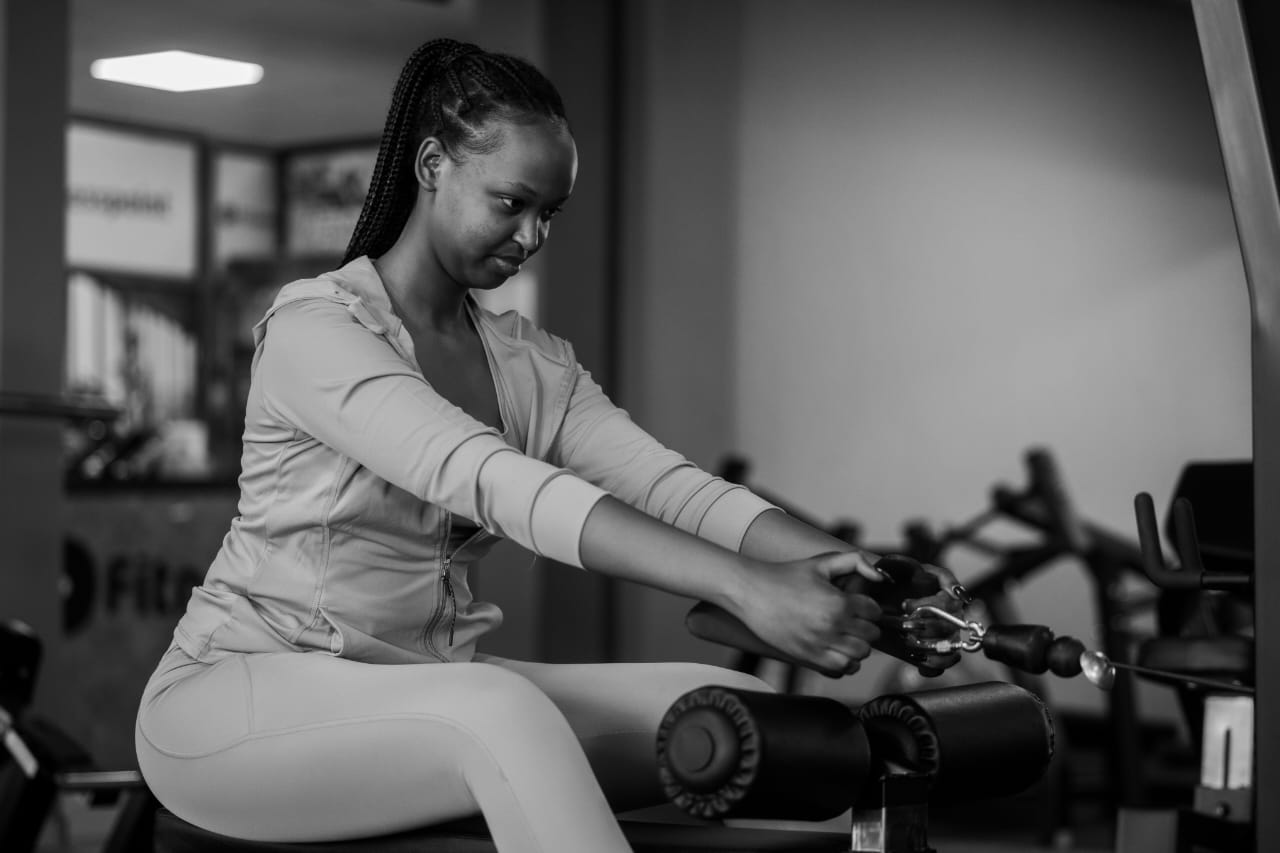
A lady working out at a Fitness Point gym located in Gacuriro.
Every evening across Kigali, people filter through the doors at various Fitness Point’s branches carrying laptops, gym bags and the fatigue of another workday to quietly bring that philosophy to life in a different setting.
In Remera, Gacuriro and Kimihurura, some arrive before sunrise, squeezing in a session before the office. Others come long after business hours, determined to honour a promise they made to themselves despite packed schedules.
They are not training to conquer volcanoes or prepare for competitions. Most are simply trying to become healthier than they were yesterday.
As work becomes increasingly desk-based and daily routines leave little room for movement, the challenge is not understanding that exercise is important. It is finding a way to make it part of ordinary life.
For many, that begins with putting just three appointments on the calendar each week.
Consistency Better Than Intensity

Jean Baptiste Muganza, a Kigali-based physiotherapist and frequent guest at Fitness point, says one of the biggest misconceptions he encounters even in his work is that meaningful health improvements require extreme effort.
“People often believe they have to exercise every day or spend several hours in the gym before they can see results. In reality, consistency matters much more than intensity,” he says.
A structured routine done regularly, he says, delivers far greater benefits than occasional bursts of very demanding exercise. And the benefits extend well beyond appearance.
“We see improvements in cardiovascular health, muscle strength, posture, flexibility and energy levels. Regular exercise also plays an important role in managing stress, improving sleep quality and reducing the physical effects of spending long hours sitting,” he explains.
Ironically, he says, the hardest exercise often happens before anyone touches a treadmill or lifts a weight.
“The biggest challenge isn’t completing the workout. It’s building the habit. Once exercise becomes part of your weekly routine, it stops feeling like an obligation and becomes part of your lifestyle,” Muganza says.
Leading by Example

Rwanda’s Minister of Health, Dr. Sabin Nsanzimana recently took a hike to the top of Karisimbi volcano as a birthday gift to himself.
That change is becoming increasingly visible at Fitness Point, where trainers say members are arriving with goals that seem less visible but perhaps more valuable than just chasing dramatic body transformations.
Many are seeking something lower stress, better mobility, freedom from persistent back pain, improved fitness and enough energy to keep pace with demanding jobs and family life.
The gym itself has gradually evolved into more than a room filled with equipment. Before work, it offers a fresh start. After work, it becomes a place where the pressures of the day give way to movement.
Between those moments, friendships are formed, routines are strengthened and small victories accumulate, one workout at a time.
That is perhaps why Minister Nsanzimana’s message resonated with so many people. Healthy habits are gifts not because they require extraordinary effort, but because they reward ordinary consistency.
A birthday hike or a workout at the gym may inspire thousands, but the habit that made it possible was almost certainly built long before that day.
For most people, good health may begin in a neighborhood gym, during an evening workout after work, or in the simple decision to dedicate less than two percent of an entire week to taking care of the one body they have.
Sometimes, the smallest investment of time turns out to be the one with the greatest returns.

Visited 25 times, 5 visit(s) today

Fitness, like anything else, is partial to trends, and at the moment, exercise is portrayed in extremes. “You’ve got to do HIIT training. You’ve got to run marathons. You’ve got to lift heavy.” The actual truth is much less snappy and attention-grabbing: fitness should be balanced and well-rounded. Slow and intentional is better than intense and sloppy.
There’s one functional exercise which is particularly good at challenging us in the ways we often forget, and most of us have never heard of it: the Turkish get-up.
But what is the Turkish get-up, and why is it so good for you?
What is functional movement?
Functional movement is any exercise which mimics and builds on the way we move in everyday life. Rather than aiming for aesthetic results or personal bests, the goal of functional exercise is to feel a little better all the time, in every movement you do, whether that be taking the stairs, lifting heavy boxes, or, if you’re a mum like me, bending down to pick a child up off the floor.
Functional movement incorporates multiple muscle groups, or the entire body, to build strength in a way you’ll actually use, multiple times a day, without even really thinking about it – the best type of exercise. But functional movements aren’t all about building muscle – they also crucially improve coordination, joint stability, shoulder strength, balance, hip mobility, and, perhaps most importantly, core stability and strength.
Over on Strong Like Mum, functional exercise is the name of the game. If you or someone you know is postnatal and ready to start rebuilding core strength, we’ve just released week three of the Strong Like Mum core challenge – all you need is 15 minutes, for a stronger core in just 6 weeks.
Start from week one to start building the vital foundations needed to rehabilitate a strong core. Join the Strong Like Mum core challenge:
What is the Turkish get-up?
See the step-by-step guide below for how to do a Turkish get-up.
The Turkish get-up is an incredibly beneficial, multi-step, multi-joint, full-body exercise targeting every major muscle, which has a simple goal: get from lying down on the floor to standing up, while holding a weight in one hand.
The whole movement is about being balanced, steady, and controlled. It takes an incredible amount of strength to move with intention, rather than trying to go as fast or hard as your body can take. High-impact exercise can be great, but slow and controlled movements can challenge your body in loads of ways, too.
In April of this year, strongman Mike Aidala broke the Guinness World Record for the heaviest Turkish get-up with a whopping 118.6kg
Record breaker
It’s ideal for hitting all the areas we often forget while we’re pushing for a heavier weight or racing to break a personal best. It’s about slow control, brain function, focus, and coordination.
The Turkish get-up is also really easy to replicate if you have children, as it seems more like a fun mobility challenge than an exercise routine. Maybe you could call it a teddy bear get-up: rather than holding a weight, they’ve got to balance their teddy bear in their hand.
How to do a Turkish get-up
Here’s a rundown on how to do a Turkish get-up.

Why is the Turkish get-up so good?
There’s a growing interest in longevity and healthy ageing at the moment. People are starting to think about the long game and what’s going to help create strong foundations for future exercise, in the immediate short-term and into older age.
This is where Strong Like Mum comes in. If you’re postnatal and want to be able to do high-intensity exercise, lift heavy weights, and run marathons, that’s great! But in order to get there, we need to start in the right way. We need to build those strong foundations in order to have longevity with our health. If you want to be able to get the maximum benefit out of this exercise, you’re going to have to do it with the right technique, and that’s where the six-week core program will really help.
For another great full-body workout, check out this video from Strong Like Mum:
If you do this exercise wrong, it can actually cause you all sorts of issues, like back pain or shoulder strain. You have to do it right, and doing it right comes with laying all the foundations that we learn over on Strong Like Mum.
For more evidence-based postnatal recovery advice, pelvic floor education and realistic fitness guidance for women navigating motherhood and midlife, subscribe to Strong Like Mum on YouTube.
Fitness
Business News: Stock and Share Market News, Economy and Finance News, Sensex, Nifty, Global Market, NSE, BSE Live IPO News – Moneycontrol.com

Moneycontrol Pro Panorama | Glitter fades
In this edition of Moneycontrol Pro Panorama: India’s payment ecosystem must prioritise trust alongside scale, family-run companies face complex succession beyond conventional myths, Pakistan’s budget underscores military dominance over national economy, and more
-

 Pittsburg, PA4 minutes ago
Pittsburgh area’s low jobless rate beats state, U.S. rates
-

 Augusta, GA11 minutes ago
Salvation Army of Augusta collects heat relief supplies
-

 Washington, D.C14 minutes ago
Washington Spirit Announces Midseason Roster Update
-
 Cleveland, OH19 minutes ago
No idling: Why it’s against the law in Cleveland
-

 Austin, TX26 minutes ago
Home Automation Austin Brings Personalized, Full-Service Home Automation to Homeowners in Austin
-

 Alabama29 minutes ago
Former Alabama Inmate Arrested After Allegedly Flying Drone with Contraband Toward Prison
-

 Alaska34 minutes ago
As war stalls, Putin concedes he never cut a deal with Trump in Alaska
-

 Arizona41 minutes ago
Flags are at half-staff today in Arizona. Here’s who is being honored

