Lifestyle
'Like it or not, we live in Oppenheimer's world,' says director Christopher Nolan


TONYA MOSLEY, HOST:
This is FRESH AIR. I’m Tonya Mosley. Today we begin our countdown to the Oscars with our very own “Oppenheimer” “Barbie” double feature. Let’s start with “Oppenheimer,” which is nominated for 13 Academy Awards, including best picture, director, actor, supporting actor and actress, adapted screenplay, original score and more. The film is also nominated for a Grammy, which takes place this Sunday for best score or soundtrack.
“Oppenheimer” is about J. Robert Oppenheimer, the man known as the father of the atom bomb. He was a theoretical physicist and directed Los Alamos, the secret project in New Mexico where researchers created, designed and tested the first atomic bomb, which was intended to end World War II. By the time it was tested, Germany had surrendered but Japan had not. In 1945, the U.S. dropped atomic bombs on the Japanese cities of Hiroshima and Nagasaki. That ended the war, but it’s estimated that as many as 200,000 people were killed. After the war, Oppenheimer became an advocate of arms control and opposed military plans for massive strategic bombing with nuclear weapons, which he considered genocidal. He also opposed the creation of the even deadlier hydrogen bomb.
In 1954, during the height of the anti-communist era, Oppenheimer was accused of being a risk to national security because of his alleged ties to the Communist Party. He protested at a hearing which resulted in him being stripped of his security clearance. Nearly 70 years later, in December of 2022, Energy Secretary Jennifer Granholm revoked that decision. Terry interviewed “Oppenheimer” writer and director Christopher Nolan last August. Nolan is also known for his World War II film “Dunkirk,” as well as “Tenet,” the “Batman” trilogy, “Inception,” “Insomnia” and “Memento.”
Let’s start with a clip from “Oppenheimer” speaking with Leslie Groves, the general who headed the Manhattan Project, which Los Alamos was part of. Groves asks Oppenheimer about the possibility that the atom bomb test could set off a chain reaction that would set fire to the atmosphere and destroy Earth, a possibility he’d heard one of the top nuclear physicist Enrico Fermi refer to. Oppenheimer is played by Cillian Murphy and Groves by Matt Damon. Groves speaks first.
(SOUNDBITE OF FILM, “OPPENHEIMER”)
MATT DAMON: (As Leslie Groves) What did Fermi mean by atmospheric ignition?
CILLIAN MURPHY: (As J. Robert Oppenheimer) Well, he had a moment where it looked like the chain reaction from an atomic device might never stop setting fire to the atmosphere.
DAMON: (As Leslie Groves) And why’s Fermi still taking side bets on it?
MURPHY: (As J. Robert Oppenheimer) Call it gallows humor.
DAMON: (As Leslie Groves) Are we saying there’s a chance that when we push that button, we destroy the world?
MURPHY: (As J. Robert Oppenheimer) Nothing in our research for over three years supports that conclusion. Except it’s the most remote possibility.
DAMON: (As Leslie Groves) How remote?
MURPHY: (As J. Robert Oppenheimer) Chances are near zero.
DAMON: (As Leslie Groves) Near zero.
MURPHY: (As J. Robert Oppenheimer) What do you want from theory alone?
DAMON: (As Leslie Groves) Zero would be nice.
(SOUNDBITE OF ARCHIVED NPR BROADCAST)
TERRY GROSS: OK. That’s a scene from “Oppenheimer,” and my guest is the writer and director of the film, Christopher Nolan.
Christopher Nolan, welcome back to FRESH AIR. It’s a pleasure to have you back on the show.
CHRISTOPHER NOLAN: Thank you.
GROSS: That’s such a frightening idea. And I know that the scientists were really convinced that there wasn’t going to be this atmospheric ignition where the whole atmosphere would catch on fire and destroy Earth. But you’re not – I guess you never really know, based on theoretical physics, what’s going to happen when you blow up an atom bomb. So what was it like for you to think about that as you were making the movie?
NOLAN: I think for me, that knowledge that – leading up to the Trinity test, the leading scientists led by Oppenheimer, they could not completely eliminate the possibility of this chain reaction. That was one of the things that really got me interested in Oppenheimer’s story and making a film from it, because it’s simply the most high-stakes, dramatic situation that you could conceive of. It beats anything in fiction. I’d actually put a reference to it in my previous film, “Tenet,” in dialogue. I used it as analogy for the science fiction situation at the heart of that film. But we referred to that moment.
And then after finishing that film, it was actually one of the stars of “Tenet,” Rob Pattinson, he gave me a book of Oppenheimer’s speeches – post-World War II speeches in which you see him trying to reckon with, and you’re reading about the great minds of the time trying to reckon with the consequences of this thing that they’ve unleashed on the world. But that initial notion, that fact that I learned of that they couldn’t, using theory alone, completely eliminate the possibility of global destruction based on triggering the first atomic test, I just wanted to be in that room. I wanted to take the audience into that room for the moment where they would push that button.
GROSS: So much work went into making the first atom bomb, and so many theoretical physicists were involved, all the calculations, and then you have the reality of it exploding. So the bomb worked. All their work paid off. It was a success. And in the film, all the scientists are gathered and they’re applauding. That’s before it was actually used for real. Knowing what you know now, how did it feel to watch their enthusiasm, their applause, to film that?
NOLAN: It felt very exciting. I felt lost in the excitement of it. And that was really the idea. I mean, at the heart of the film, there’s a pivot, and it’s really the pivot between the successful Trinity test and then the bombings of Hiroshima and Nagasaki, the actual use of the weapon. And so, for me, the focus of the film, it needed to be this build towards the most incredible excitement and tension around that test, whether or not they could pull off this extraordinary feat that they had been drawn into trying to accomplish, based on this desperate race against the Nazis, to be the first power to harness control or power of atomic weapons. And, you know, the Germans had split the atom. The Nazis had the best physicists or some of the best physicists in the world at their disposal, and they were trying as hard as they could to make the first atomic bomb. And so Oppenheimer and his fellow scientists, who were called upon by their country, they had no choice.
And there’s this moment, of course, where they’re pushing for years, spending billions of dollars. They’ve built this whole community out in the middle of nowhere devoted to this one thing of making this chain reaction happen, making this atomic blast work. And it all boils down to that moment of the Trinity test. And they pull it off, and there’s such joy and excitement around that. And I wanted the audience to be caught up in that. I wanted to be caught up in that. But then, you know, you come to film the scenes where we’re looking from Oppenheimer’s point of view. We’re experiencing the news of the bombings coming through, unbelievably awful and changed the world forever. Whether we like it or not, we live in Oppenheimer’s world, and we always will.
GROSS: What’s your approach to biopics? Like, what liberties to take and what to be faithful to?
NOLAN: Well, in a funny sort of way, my approach is to not even acknowledge biopic as a genre. In other words, if something works, like “Lawrence For Arabia,” for example, you don’t think of it as a biopic. You think of it as a great adventure story, even though obviously it’s telling the story of somebody’s life – or “Citizen Kane” or, you know, of these great films – I mean, obviously, there’s fiction.
But for me, I had the benefit of this extraordinary book, “American Prometheus,” that was written – you know, Martin Sherwin, who first started writing it, he spent 25 years researching Oppenheimer’s story and speaking to everybody who knew him and, you know, all the rest. So by the time he and Kai Bird finished, they put the book out, it won the Pulitzer Prize, you know, I had this extraordinary sort of Bible to work from. And so for me, it was really a process of saying – OK, what’s the exciting story that develops, the cinematic story that develops from a reading of it, from several readings of it? – and then started to develop a structure for how I might be able to put the audience into Oppenheimer’s head.
GROSS: When you’re not working, do you live in your head a lot? And does your head become a kind of dark place (laughter) where negative thoughts consume you?
NOLAN: (Laughter) No. I mean, I certainly live in my head a lot. It’s how I work. You know, I think “Oppenheimer,” of all the films I’ve worked on, it’s the one that I actually find the most disturbing and the most under my skin. And I was quite glad to be finished making it, to be quite frank, and it’s because I try to approach it from his point of view and try to find genuine positivity in his story, in his relationships, in the things that he was able to achieve and the ways in which he was able to defend himself. Otherwise, his friends would stand up for him and all the rest.
But there is no getting around the undeniable darkness of his situation, his story and how it has affected the world. And, you know, movies are a sort of collective dream. There’s a sense in which “Oppenheimer” is a collective nightmare. And there’s something about telling that and getting it out in the world that stops it being, you know, my own personal thing. That helps.
GROSS: Well, let me reintroduce you here. If you’re just joining us, my guest is Christopher Nolan, and he wrote and directed the new film “Oppenheimer.” He also made the films “Dunkirk,” “Tenet,” the Batman trilogy, “Inception,” “Insomnia” and “Memento.” We’ll be right back after a short break. This is FRESH AIR.
(SOUNDBITE OF LUDWIG GORANSSON’S “CAN YOU HEAR THE MUSIC”)
GROSS: This is FRESH AIR. Let’s get back to my interview with Christopher Nolan. He wrote and directed the new film “Oppenheimer,” about the man who was called the father of the atom bomb. He also made the films “Dunkirk,” “Tenet,” the Batman trilogy, “Inception,” “Insomnia” and “Memento.”
So I want to ask you about dreams. You know, you edit some of your films out of chronological sequence, and I think dreams are that way, too. Like, dreams often don’t make any sense at all. You have to kind of look for the meaning within them and interpret them. But they don’t make chronological sense, you just kind of hop from one scene to another that may or may not be related. Do you think that your dream life has influenced your editing life at all?
NOLAN: (Laughter).
GROSS: And one of your – I mean, “Inception” is literally about dreams. It’s about, like, stealing dreams and implanting information in someone’s mind through dreams, like, tapping into other people’s dreams.
NOLAN: Well, it’s also about what you just described, it’s about the time scale of dreams. You know, “Inception” is very much about how you can have a much longer – a feeling of a much longer period of your life in a very short space of time in a dream. So, yeah, that film in particular really drilled down on my relationship with my dream life and the relationship between dreams and reality. But I think cinema in general for me is very influenced by its relationship with dreams. There is a very real sense in which movies are sort of shared dream worlds or shared kind of dream consciousness. They have an interesting effect on the brain.
You know, when you see a film, it’s often quite – it’s quite interesting to talk to people who’ve seen a film about the time span of the film they saw, not the literal time they were sitting there in the cinema, but what time slice it represents of the characters’ lives, for example. And that’s a very complicated aspect of how movies get into our brains and how we look at them and how we sort of judge them.
GROSS: So in “Inception,” your movie about dreams, Leonardo DiCaprio says, we never remember the beginning of a dream. Is that true? I mean, it’s a question I’ve never asked myself.
NOLAN: (Laughter).
GROSS: I don’t know if I remember the beginning of my dreams because I’m lucky if I remember my dreams, and when I do, it’s usually I remember the mood. I remember a few frames of the dream.
NOLAN: (Laughter).
GROSS: I don’t really remember the chronology very well and I have no idea where it started. So what made you think of that?
NOLAN: I wrote “Inception,” you know, very much from my own impression of the way I dream and sort of dream rules, and I sort of trusted that there’d be enough people in the audience that roughly corresponded with the way that I dream that it wouldn’t be, you know, overly controversial. I remember many years ago seeing a film, I think it was – it must be – I think it was George Burns, I think it was “Oh, God!” There’s a moment where somebody says, well, you know – they say, am I dreaming? And they say, well, is it in color, you know? They say, yeah, and it’s like, OK, well, you know it’s not a dream because you only dream in black-and-white. And I remember as a kid thinking, well, I don’t dream in black-and-white. That’s weird.
But this is the danger. You know, when you write about memory – you know, when I was doing “Memento,” for example – you know, it is a very personal thing and everybody’s brain is a little different. The way we process the world is a little different. I know that I, as an audience member, I respond to a consistent rule set, if you like. So as long as the film is telling me up front that, OK, this is how we see the world, this is the world of the film you’re watching, as long as they’re sort of true to that in the telling of the story, then I’m OK with it.
GROSS: You know, that whole question of, like, oh, we only dream in black-and-white, people used to ask each other that – do you dream in black-and-white or in color? And do you think that was because our only understanding in that time of what imagery looked like in representation outside of paintings was film and TV, which were in black-and-white?
NOLAN: I think that’s…
GROSS: And photographs.
NOLAN: Yeah. No, I think you’ve hit the nail on the head, actually. And I think it relates to the earlier answer of the relationship between, you know, our view of dreams and our view of motion pictures.
GROSS: Yeah.
NOLAN: The way in which you remember movies is very similar to the way in which you remember dreams. And every now and again, you see a film that taps that in a way. You know, I think “Memento,” for a lot of people, sort of bled off the page, if you like, or off the strip of film running through the projector and built a bigger world in people’s minds. I think the films of David Lynch have always done that incredibly well over the years. They have a dream logic that quite often use – I remember seeing “Lost Highway,” for example, and not really understanding the film at all. And then a couple of weeks later, remembering the film the way I would remember one of my own dreams, and that suddenly felt like a sort of remarkable feat that Lynch had achieved in terms of mapping a dream into the space of a motion picture, and vice versa.
GROSS: Seen on an IMAX, and a lot of people will not have the opportunity of seeing it that way. But I think some people are puzzled, like, why shoot a movie that’s largely people talking to each other and people thinking and people being anguished over the possibilities of the bomb? Why shoot that in IMAX, which is usually reserved for films that have incredible landscapes or that have incredible, fantastical cinematography?
NOLAN: Well, I’ve used IMAX for years, and going into “Oppenheimer,” talking to Hoyte, my DP, we knew that it would give us, with its high resolution, its sort of extraordinary analog color, sharpness, all of these things, the big screens that you projected on, we knew it would give us the landscapes of New Mexico, that it would give us the Trinity test, which we felt had to be a showstopper. But we actually got really excited about the idea of the human face, you know, how can it help us jump into Oppenheimer’s head? The story is told subjectively. I even wrote the script in the first person. You know, I this, I that. We were looking for the visual equivalent of that. And so taking those high resolution IMAX cameras and, you know, really just trying to be there for the intimate moments of the story in a way that we felt we hadn’t really seen people do before with that format, that was, you know, a source of particular excitement for us.
GROSS: Does it pain you to think that probably a lot of people will end up watching “Oppenheimer” on their phones or on little tablets?
NOLAN: No, not at all. I actually, you know, I’m one of the first generations of filmmakers who grew up with home video. So, you know, my family got its first VHS player when I was about 11 years old. And so I’ve sort of come of age in a world of film where more people are always going to see your film in the home, that’s always been the case. But the thing about the way film distribution works is if you make a film for the biggest possible screen and you put it out there in the biggest possible way, firstly, the technical quality of the image carries through to all the subsequent versions of the film that you then master.
GROSS: I’m interested in your relationship to technology. I mean, you’re using state-of-the-art technology, you know, 70 millimeter for IMAX. At the same time, I’ve read that you don’t have real, like, tech cellphone. I think you have, like, a flip phone, maybe. And I think there’s other, like, tech things like email, maybe, that you don’t use. And so it strikes me as kind of strange that you’d use such, like, state-of-the-art, you know, cinematography, but, you know, reject things like a cellphone. At the same time, I know that there’s – like, CGI. You don’t like to use CGI ’cause it looks fake to you. So, like, where do you draw the line with technology?
NOLAN: Technology is whatever the tools are available to us. So I shoot my films on celluloid film, preferably IMAX celluloid film, because it’s the best analogy for the way the eye sees the world, so it gives you the highest possible quality. For me, it’s about using the best tool for the job. So, for example, you know, sometimes I get asked whether I still, you know, edit on film. And I’ve never edited on a film. I’ve always edited it on the computer ’cause it’s the only practical way to do it. But then when we finish the creative process of editing, we cut the film up, we cut the negative up, we glue it together, we print from there, and that’s the finishing process. So for me, you know, the approach to technology is always about how can it help you? How can it help you do something better?
And I’ve always liked not having a smartphone in my pocket because it just sort of means when you get those pockets of time, you know, when you turn up early for a meeting, you’re waiting for somebody or whatever, you spend a bit more time thinking and just, you know, I suppose using your imagination, in a way. And for me, with the amount of work that I try to do and figuring out what the next project is or advancing different things in my mind, having those pockets of time is actually pretty valuable. I’ve also got a terribly addictive personality, and I think if I had a smartphone, I’d spend the whole time, you know, just on it and, you know, absorbed in it the way I see a lot of people absorbed in it. So it’s something I never started doing. And now it feels a bit of a superpower that I don’t have one. So I’m going to try and maintain my allegiance to the dumb phone or the flip phone.
GROSS: Thank you so much for coming back to our show.
NOLAN: Sure. Thank you for having me.
MOSLEY: Christopher Nolan wrote and directed the film “Oppenheimer,” which is nominated for 13 Oscars and a Grammy for the score. The Grammys take place on Sunday. After we take a short break, my interview with Mark Ronson, the co-executive producer of the “Barbie” score and soundtrack. I’m Tonya Mosley, and this is FRESH AIR.
(SOUNDBITE OF LUDWIG GORANSSON’S “OPPENHEIMER”)
Copyright © 2024 NPR. All rights reserved. Visit our website terms of use and permissions pages at www.npr.org for further information.
NPR transcripts are created on a rush deadline by an NPR contractor. This text may not be in its final form and may be updated or revised in the future. Accuracy and availability may vary. The authoritative record of NPR’s programming is the audio record.



Sydney (Ayo Edebiri) and Carmy (Jeremy Allen White).
FX
hide caption
toggle caption
FX
There has always been a metaphorical parallel between The Bear, the television show, and The Bear, the fictional restaurant on the television show. Even as Carmy (Jeremy Allen White) and Sydney (Ayo Edebiri) transformed the Italian beef joint into the fancy restaurant of their dreams and wished for a Michelin star, there were undoubtedly locals who thought, “This is great and all, and I’m sure the food is good, but … I liked the beef sandwiches.” There’s still a window at The Bear to get them, but the focus is certainly elsewhere.
When it started, The Bear was mostly about the work that took place in the kitchen. The stresses of too many orders, territoriality from Richie (Ebon Moss-Bachrach), the arrival of Sydney, and the tightly wound but undeniably talented Carmy, making everybody both extremely stressed and significantly better. Over time, it shifted and grew, putting together beloved departure episodes like “Fishes” in Season 2, which introduced a boatload of guest stars for a flashback story of a disastrous family dinner before Mikey (Jon Bernthal) died. It spent time with Sydney’s family, it explored the way Tina (Liza Colón-Zayas) and Mikey originally met, it followed Marcus (Lionel Boyce) to Copenhagen, and it went with Richie to work for Andrea (Olivia Colman). All these episodes were excellent. And there was still a kitchen. But the focus seemed to be elsewhere.

At times, the show seemed to have disappeared up its own nose, to the point where you weren’t watching the show The Bear as much as you were watching the phenomenon The Bear. There were too many real-life chef cameos, until it seemed like those chefs were checking a box on a list of “things all the cool kids do.” There were too many other cameos, culminating in a rare miss from the reliably charismatic John Cena. The show placed a lot of narrative weight on Carmy’s love interest, Claire (Molly Gordon) — weight that the underwritten character couldn’t support. But even if every experiment and every diversion had worked, viewers couldn’t be blamed for missing the close focus on the kitchen and the camaraderie — for thinking, “This is all really special, but I do miss the beef sandwiches.”
The fifth and final season dispenses with the departure episodes, and it mostly dispenses with cameos. It all takes place on one day, just after Carmy tells Richie and Sydney that he wants to step back from the restaurant and give it to them and Sugar (Abby Elliott) to run, and it mostly takes place right there at The Bear. Now that the clock set by Jimmy (Oliver Platt) has run out, his money has run out as well, and a series of cascading disasters puts Sydney, Carmy and Richie behind the 8-ball from very early in the day, not least because of the tension hanging over all three of them as they prepare to tell the staff about Carmy’s decision to leave.

Tina (Liza Colón-Zayas).
FX
hide caption
toggle caption
FX
We spend this day mostly with the people we know best: our three leads, along with Sugar, Tina, Marcus, and the rest of the staff — including Luca (Will Poulter), who has stayed around to keep working with Marcus. Jimmy is running around with Computer (Brian Koppelman) and a young apprentice of his named Cheese (Elsie Fisher of Eighth Grade), trying to figure out what to do about his finances since it is Jimmy, and not just the restaurant, who’s out of money.
This day takes a while to get cooking, so to speak. The first three episodes of the season are slow, the first two in particular. It’s pouring rain outside, the lighting is dim, and the score maintains the same contemplative melancholy for a long, long time. For about two and a half episodes, it feels like one extended, low-energy scene.
But after that, there’s a shift in tone as the staff looks to get through service, and through seven episodes (FX did not make the finale available in advance for critics), the rest of the season is terrific. What you see is the core story of The Bear, which is people trying to serve food and overcome problems, but through the lens of everything that has happened over the show’s run: Carmy’s retreat from his obsessiveness, Richie’s expansive (and inspiring) discovery of his gift for hospitality; Sydney’s stepping forward from second-in-command to leader; Tina’s complex relationship with the restaurant and her grief over Mikey; Sugar and Carmy’s relationship with Donna (Jamie Lee Curtis); the arrival of Marcus as a high-end pastry chef.
The question the show asks over the last four episodes is: Given all those digressions and flashbacks, given all those visits with families and others, given everything we know about where all these people have been and what they’ve experienced, how does a high-pressure service — of the same kind we used to see in that first season — look now? How do they behave differently, and how does their behavior read differently? How are they the same people we have always known, but at a different juncture, in a different context? How do their wins mean more to them, and to the audience?
On the one hand, making a season this way, there are fewer surprising grace notes, like “Napkins,” the Tina/Mikey flashback episode in Season 3, or “Worms,” the episode in Season 4 where Sydney hung out with her cousin (Danielle Deadwyler) and her cousin’s kid. The Bear feels less daring and more conventional.
But oh, when they have victories under pressure? Victories, large or small? It is immensely, richly satisfying. There’s also more comedy other than just the goofy Faks family than we’ve had in a few seasons; Richie is perhaps the MVP of the season, and that’s partly because of how often he gets to be really funny. Ayo Edebiri continues to be the show’s best reactor, showing Syd eternally a little bit surprised (dismayed?) that she’s chosen to throw in her lot with these people.
There are a couple of questions yet to answer in the finale, both little plot items and broader character resolutions. Over these seven episodes, though, there is much to cheer.


Lifestyle
John Cena wanted to step away from the WWE ring before he became ‘too slow for the show’ : Wild Card with Rachel Martin

A note from Wild Card host Rachel Martin: First a confession: I have never watched a WWE match in its entirety. Don’t get me wrong, I appreciate the athleticism and the performance, it’s just not my thing. But there is something about John Cena I’ve never been able to shake.
Yes, he is a wrestling legend, but he has built a career as an entertainer that transcends the ring. The first time I saw him lead a cast was the 2019 family movie “Playing with Fire” and his rapport with kids in that film didn’t seem like acting at all. The man contains multitudes!
He co-stars with Eric Andre in his newest film, “Little Brother.”
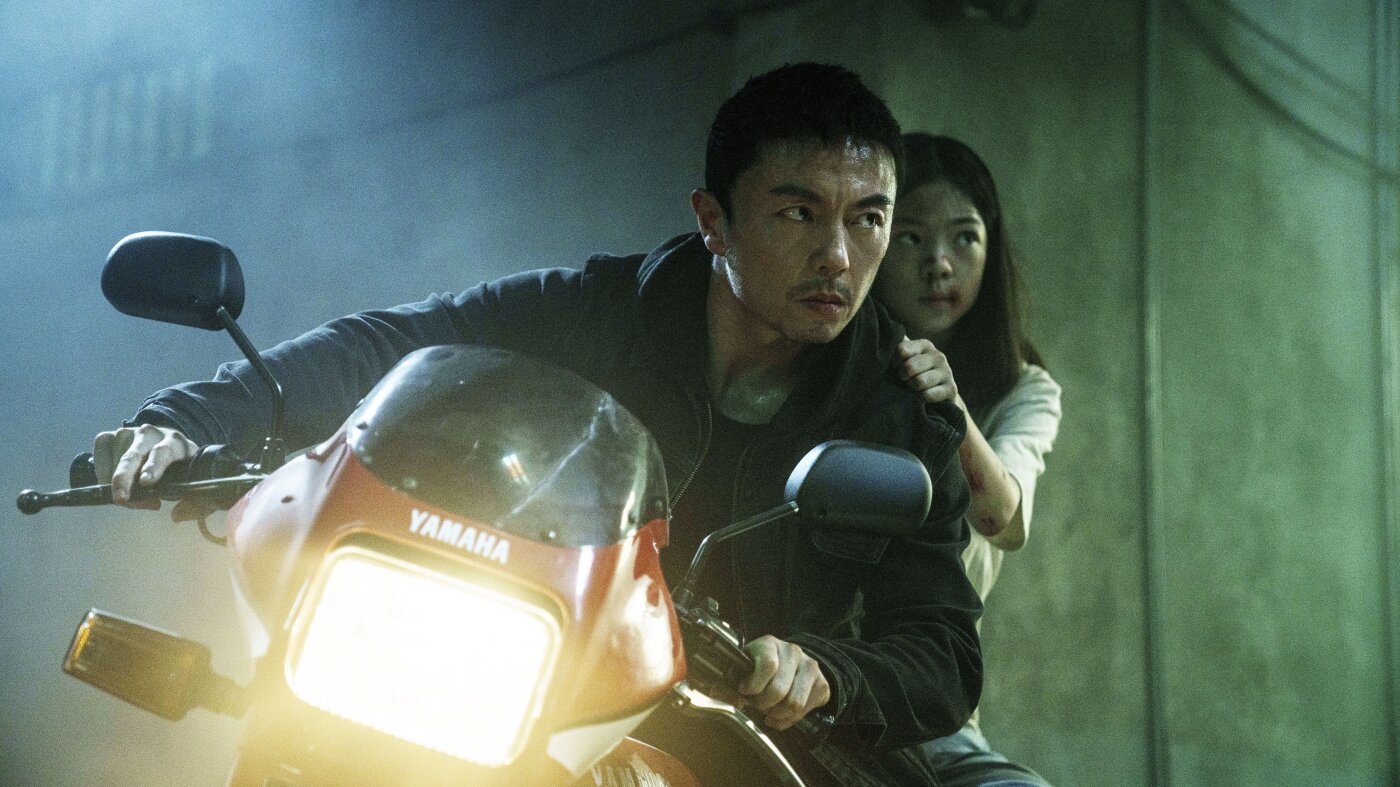
Xie Miao and Yang Enyou in The Furious.
Norachai Kajchapanont/Lionsgate
hide caption
toggle caption
Norachai Kajchapanont/Lionsgate
There have been some fantastic movies released this year, and we know you can’t see them all. So we’re recommending four recent movies we missed that you should add to your watchlist: The Furious, Tuner, She’s The He, and Heresy.
If you need a few more fun film recommendations, check out these episodes:
Fun movies you may have missed
Our favorite movies on Tubi
We debate the best movies to watch on an airplane
Connect with Pop Culture Happy Hour:
Letterboxd / Facebook
Our weekly newsletter
Support Pop Culture Happy Hour+
-

 World4 minutes ago
Copernicus lead warns extreme heat measures needed or deaths to ensue
-

 News29 minutes ago
“It’s blood money”: Family of exonerated man in Texas yogurt shop murders speaks out after settlement
-

 Los Angeles, Ca2 hours ago
Woman ambushed, violently attacked by robber in downtown Long Beach
-

 Detroit, MI2 hours ago
Where to watch Houston Astros vs Detroit Tigers: TV channel, start time, streaming for June 26
-
San Francisco, CA2 hours ago
I own a Turkish Restaurant in San Francisco. Turkey’s World Cup match here has changed my business.
-

 Dallas, TX2 hours ago
Australia advances at World Cup, how to buy Australia soccer tickets
-

 Miami, FL3 hours ago
2 detained after police pursuit ends with bailout, neighborhood search in NW Miami-Dade – WSVN 7News | Miami News, Weather, Sports | Fort Lauderdale
-

 Boston, MA3 hours ago
Delta flight returns to Logan after smoke scare in cockpit – Boston News, Weather, Sports | WHDH 7News

