Entertainment
Appreciation: The dazzling range and mischievous humanity of Tom Wilkinson


At the risk of reducing an extraordinarily versatile actor to just one sweet spot, it must be noted that Tom Wilkinson had a particular genius for playing the gruff authority figure with a wry twist — a hidden streak of zany rebellion. Again and again, this marvelous English performer, who died on Saturday at the age of 75, located the comedy as well as the gravity in a world-weary visage. That handsome but haggard Everyman frown, which proved so dramatically commanding in films like “In the Bedroom” (2001) and “Michael Clayton” (2007), so often concealed a twinkle of irony, a spark of invigorating mischief.
In “Shakespeare in Love” (1998), he’s a menacing Elizabethan-era moneylender who gets caught up in all the let’s-put-on-a-show fervor; eventually he discovers, to his and our delight, an unexpected talent for stage acting. (Wilkinson is so good here, he actually makes you believe he wasn’t a theater veteran.) And it’s no wonder he was so perfectly cast as the mad but mild-mannered doctor in “Eternal Sunshine of the Spotless Mind” (2004), the one who devises a ridiculously elaborate procedure that erases painful memories. (“Can it cause brain damage?” a wary patient asks, to which Wilkinson replies, with perfect deadpan drollery: “Well, technically, it is brain damage.”)
His flair for the understated and absurd found a perfect, emblematic image in Tony Gilroy’s superb conspiracy thriller “Michael Clayton,” in which Wilkinson plays Arthur Edens, a high-powered corporate attorney who’s gone dangerously off-message (and off-meds). A shot of Edens walking down an alley, carrying a dozen-plus baguettes under his arm, was reposted en masse Saturday after news of the actor’s death spread on social media.
In the context of the movie, the scene is both hilarious and troubling: Here’s a man carb-loading his way to mental oblivion. But it’s also just one aspect of one of Wilkinson’s very best performances, one that turned “I am Shiva, the god of death!” into a movie line for the ages and earned him the second of two Oscar nominations. Edens grabs you from the movie’s opening scenes with a furious, electrifying monologue, a rant against the corporate powers he has until recently served. Wilkinson isn’t even visible onscreen in these moments, but with his voice alone — high, cold, dripping with bitter rage — he has you fully in his grip. Edens has discovered his conscience at precisely the same moment he’s lost his grip on reality, and we hear a strange commingling of triumph and defeat.
Of such dynamic shifts and extremes, Wilkinson’s career was made. He could veer from affable to prickly, from nebbishy to charismatic. He was game to don an Italian accent to play the Gotham City mobster Carmine Falcone in “Batman Begins” (2005), though he was more at home as a London crime boss in Guy Ritchie’s “Rocknrolla,” threatening his enemies with death by crayfish. He had a funny, flamboyant streak, whether falling to a villain’s proper death in “Rush Hour” or engaging in some slow-motion fisticuffs with Paul Giamatti in Gilroy’s romantic-comedy thriller “Duplicity.” (That movie was an inspired reunion for the two actors after their HBO miniseries “John Adams,” which earned Wilkinson an Emmy and a Golden Globe for his supporting turn as Benjamin Franklin.)
Wilkinson was peerless at doing patrician eloquence: a sneering businessman in “The Ghost and the Darkness,” a haughty scientific mind in “The Governess.” And he brought a crafty mix of decency and pragmatism to the role of President Lyndon B. Johnson in Ava DuVernay’s civil rights drama “Selma” (2014), a shrewd characterization that drew criticism from those who’d expected not a depiction of Johnson so much as a deification.
But Wilkinson was equally persuasive as a working-class grumbler, which is what made him such a terrific secret weapon in the hit 1997 comedy “The Full Monty.” His character, Gerald, is a scowling former steelworker who, after some initial reluctance, throws himself into his friends’ amateur-strip-show shenanigans with undisguised gusto. To this day, I can’t hear Donna Summer’s “Hot Stuff” without flashing back on the giddy sight of Wilkinson standing in a job-center line, discreetly shaking, thrusting and finally twirling his way to the front of the queue. Hidden beneath that rumpled overcoat and red sweater vest, his performance joyously proclaims, is the soul of a natural-born dancer.
Although Wilkinson had already registered in movies like “In the Name of the Father” (1993), “Priest” (1994) and “Sense and Sensibility” (1995), “The Full Monty” earned him a British Academy Film Award for supporting actor and catapulted him to greater attention from audiences and filmmakers outside the U.K. Four years later, he received his first Oscar nomination for his career-crowning performance in Todd Field’s searing drama “In the Bedroom.” In that movie, Wilkinson and Sissy Spacek give titanic performances as Tom and Ruth Fowler, a middle-aged New England couple grieving, and seeking justice for, their murdered son. Tom is the more easygoing, reasonable-minded spouse, the one who clings in vain to normalcy even after the unthinkable has happened. Spacek has the showier role as the seething, vengeful Ruth, a lobster fisherman’s Lady Macbeth.
The scene of Spacek smashing a plate to the floor became a representative image of the movie and, a bit unfairly, an oft-imitated bit of shorthand for Oscar-clip histrionics. To watch that scene again in its entirety, and with its dramatic context fully restored, is to appreciate how contrapuntally synced Spacek and Wilkinson are, how precisely they capture the entrenched rhythms of a long-married couple. And it’s Wilkinson’s groundedness, his slow-cracking composure, that gives Spacek the emotional ballast she needs; without him, her fury couldn’t erupt or resonate with such spectacular force.
I wish more lead roles of that stature had awaited Wilkinson after “In the Bedroom.” Even so, a single performance this good never fully exhausts its riches, even after multiple viewings. So much of the acting he does in Field’s film is subtle to the point of subterranean: There’s the quiet pleading in his expression as he asks a district attorney for help, the defeated stoop of his shoulders as he prepares to give his wife the worst news of their lives. For those of us who loved this actor’s work, there was a particular poignancy to see words fail him for once, this actor of Shakespearean grandiloquence, tamping down his natural gift for language to express a deeper, more sorrowful truth.


Often when the word of mouth begins to spread and hype the newest “best movie ever”, the viewer has to take these opinions with a mound of salt. But as the week two financial gate for Obsession jumped over twice as high as its debut, people started paying attention. With a Youtuber at the helm and the critics lauding this romantic horror film as the second coming, it was time for this particular reviewer to see what the hype was all about.
Obsession is written and directed by Curry Barker (Milk & Serial 2024). It stars Inde Navarrette (Superman & Lois TV Series 2021) as Nikki and Michael Johnston (9-1-1 TV Series 2026) as Bear. Bear is in love with Nikki, but he lacks the gumption to ask her out. On a whim, the bashful Bear buys a “One Wish Willow”, a magical totem that, when broken, allows the bearer one granted wish. Bear wishes for Nikki to love him, but this love comes at the ultimate cost.
The acting is the first thing that the audience will become obsessed with in Obsession. Navarrette is poised for a breakout year and would fit very well as a new-age “final girl” in the horror genre. Johnston is no slouch either, as he brings a lot of layers to Bear, but Navarrette is the one that’ll haunt your dreams for weeks. The actors told the stories on their faces, and Navarrette’s sudden screams make for the most natural jump-scares in ages.
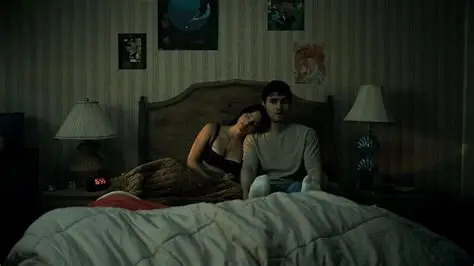
Obsession also thrives in its technical prowess. The quiet sound design and still characters make the movie a genuinely unsettling experience. The usage of rewinding shots gives Nikki a chilling economy of movement, while speeding up shots creates sudden peril and makes scenes instantly uncomfortable. The viewer never gets a chance to truly catch their breath, but the stakes continue to grow with every scene.
It’s very easy to see why Obsession has audiences buzzing. It’s the kind of movie that’s going to hold a spot at the top of lists at year’s end, but if the chance arises to see it in a large theater, the experience will be even more rewarding.
Entertainment
Review: Alicia Keys’ glorious music fuels blazing ‘Hell’s Kitchen’ at the Hollywood Pantages

“Hell’s Kitchen,” the Alicia Keys musical that has landed at the Hollywood Pantages Theatre in a blaze of rousing sound, deploys the R&B star’s glorious treasure trove of work in the service of a semi-autobiographical version of her coming-of-age story in the Manhattan neighborhood that gives the show its title.
The Hell’s Kitchen of Alicia Keys’ story, set in the 1990s, isn’t the gang-ridden Hell’s Kitchen of West Side Story, set in the 1950s. Keys grew up in Manhattan Plaza, a federally subsidized residential complex that provides affordable housing for artists. But for a teenager in rebellion from her watchful mother, the vibrant, music-filled street life comes with its share of dangers.
Kennedy Caughell as Jersey and Maya Drake as Ali in the North American Tour of Alicia Keys’ “Hell’s Kitchen” at the Hollywood Pantages Theatre.
(Marc J. Franklin)
Ali (Maya Drake, who’s making her professional debut in this North American tour production) is a 17-year-old ready to break out of the cage her mother, Jersey (Kennedy Caughell), has placed her in. Jersey, a single mom, isn’t a tyrant. She just doesn’t want to see her daughter make the same mistakes that she did, namely get pregnant at a young age before she’s had a chance to realize her own dreams.
The book by playwright Kristoffer Diaz (“The Elaborate Entrance of Chad Deity”) is structured around a loving but combustible mother-daughter relationship amid the creative ferment of New York. This artistic neverland is crystallized in the apartment building that has music pouring out of every floor when Ali rides the elevator.

Maya Drake as Ali and the company of the North American Tour of Alicia Keys’ “Hell’s Kitchen” at the Hollywood Pantages Theatre.
(Marc J. Franklin)
The story isn’t the strong suit of “Hell’s Kitchen,” which is powered by Alicia Keys’ versatile catalog, which has been supplemented with original material. The hits — “You Don’t Know My Name,” “Girl on Fire,” “Fallin’,” “If I Ain’t Got You,” “Like You’ll Never See Me Again,” “No One” and “Empire State of Mind,” among them — reverberate inside the Pantages with a thrilling exuberance.
What’s most impressive, however, is the way these tracks have been arranged both musically and dramatically. Jukebox musicals are notorious for shoe-horning in beloved songs without regard for storytelling integrity. “Mamma Mia!,” which crammed in as many ABBA hits as possible, hardly even bothered to find pretext for their inclusion. The lucrative example paved the way for more than two decades of musical theater shamelessness.

The company of the North American Tour of Alicia Keys’ “Hell’s Kitchen” at the Hollywood Pantages Theatre.
(Marc J. Franklin)
“Hell’s Kitchen,” directed by Michael Greif, takes a more dignified approach, raiding Keys’ greatest hits in a way that doesn’t cause dramatic offense and better yet, adds a layer of surprise to music that is so well known.
The songs are allocated in unexpected ways. Numbers that you might think belong to Ali are divided among the company. Jersey is first in line, and Caughell makes the most of her opportunities. But sharing in the bounty are Davis (Desmond Sean Ellington), Ali’s mostly absent and chronically unreliable father; Knuck (Jonavery Worrell), Ali’s forbidden love interest; or Miss Liza Jane (Roz White), a pianist who lives in the building and becomes Ali’s formidable mentor.
There are other characters who offer luminous assistance, but these are the principals in a musical tale built around Ali’s central relationships. Keys’ origin story is more dynamic on an atmospheric than dramatic level. A mother having difficulty with her boy-crazy teenage daughter isn’t exactly breaking any ground, and Diaz avoids venturing into more turbulent territory. Ali’s divided identity, stemming in part from an all-too-present white mother and all-too-missing Black father, sets up issues that are touched on but never deeply engaged.

Desmond Sean Ellington as Davis and Kennedy Caughell as Jersey and the company of the North American Tour of Alicia Keys’ “Hell’s Kitchen” at the Hollywood Pantages Theatre.
(Marc J. Franklin)
Miss Liza Jane spots Ali’s musical gift right away and fills her with a sense of pride and responsibility in her Black heritage. But her character’s role is somewhat earnestly compartmentalized. Knuck recognizes that Ali’s fascination with him stems in part from the way she sees him, much as her mother does, as a “thug.” But their tentative affair is secondary to the complex bond between Ali and Jersey, whose troubled connection with Davis helps Ali understand why her mother is so paranoid about her romantic choices.
But these concerns fall away when the performers start singing. Drake has a beautiful voice, but her Ali is slighter than that of Maleah Joi Moon, who won a Tony for her Broadway debut performance. I didn’t mind that Davis sings “Fallin’,” as Ellington has a voice of luscious thunder. Worrell’s Knuck more than holds his own with his duets with Ali. (In fact, I was more taken by his velvety interpretation of “Like You’ll Never See Me Again” than Ali’s more straightforwardly pretty version.) White’s Miss Liza Jane takes the Pantages audience to church in her numbers. And when Caughell magnificently directs “No One” to Ali, I can’t imagine there’s a dry eye in the house.

Desmond Sean Ellington as Davis and Maya Drake as Ali in the North American Tour of Alicia Keys’ “Hell’s Kitchen” at the Hollywood Pantages Theatre.
(Marc J. Franklin)
This tour production isn’t crisp in all areas. The dancing isn’t always smooth, the costumes struck me as a road show idea of New York cool, and the acting didn’t do much to compensate for some of the book’s less subtle moments.
But the energy of the production is infectious. “Hell’s Kitchen,” a New York story of a wunderkind discovering her gift, helped me get over my allergy to the jukebox genre. The soaring quality of the orchestra and the delectable company of voices pay exhilarating homage to a singular artist, who seems right at home at the Pantages.
‘Hell’s Kitchen’
Where: Hollywood Pantages Theatre, 6233 Hollywood Blvd., Los Angeles
When: 7:30 p.m. Tuesdays-Thursdays, 8 p.m. Fridays, 2 and 8 p.m. Saturdays, 1 and 6:30 p.m. Sundays. (Check for exceptions.) Ends June 21
Tickets: Start at $57
Contact: BroadwayInHollywood.com or Ticketmaster.com
Running time: 2 hours, 35 minutes

Starring: Marshall Williams, Richard Harmon and Alex Essoe
Directed by: James Kondelik
Rated: NR
Running Time: 108 minutes
Our Score: 1.5 out of 5 Stars
Survival horror is the ultimate guilty pleasure because you can amplify any life-or-death situation into the paranormal, horrific, thrilling, or cruelly dramatic extremes it finds itself in. So why doesn’t “Pitfall” come close to tickling “The Ritual,” “The Blair Witch Project,” or “Wolf Creek” vibes?
Woods and grief feel like a ritualistic trope at this point as “Pitfall” opens on Scott (Marshall Williams) and Ashley (Alex Essoe) mourning the death of their parents. For reasons that may or may not be revealed later, they join three friends on an ominous trip that quickly introduces the titular pitfall, a massive trap designed to kill prey.
The movie constantly battles convention with unpredictability. The problem is that at more than 100 minutes long, there’s plenty of time to sit around and wonder where the story is heading. If “Pitfall” moved with the frantic pace of a Tuesday afternoon soap opera on meth, maybe I’d be swept up in the chaos. Instead, I found myself waiting for reveals that felt more eye-rolling than shocking.
I really wanted to like “Pitfall” because of how invested it is in physical violence, emotional trauma, and psychological brutality. Unfortunately, the movie never convinced me it knew what to do with those ideas. By the time it arrives at its revelations and ultimate purpose, “Pitfall” feels less like a title and more like a review.
-

 Indianapolis, IN3 minutes ago
IndyCar driver Felix Rosenqvist had the busiest week after winning the Indianapolis 500
-

 Pittsburg, PA6 minutes ago
Dirt bike rider killed in collision with bus in Homewood
-

 Augusta, GA11 minutes ago
Volunteers come together to clean up Augusta neighborhood
-

 Washington, D.C18 minutes ago
Texas man indicted in shooting near Washington Monument that left bystander hurt
-

 Cleveland, OH21 minutes ago
3 Options For the Cavaliers to Replace GM Mike Gansey
-

 Austin, TX26 minutes ago
One dead, victim unidentified after APD responds to deceased person call in South Austin
-

 Alabama33 minutes ago
Live Game, Weather Updates: Tuscaloosa Baseball Regional, No. 7 Alabama vs. USC Upstate
-

 Alaska36 minutes ago
Wayne and Wanda: I’m ready to break up with Alaska but facing resistance from everyone

