World
Trump says Greenland ‘essential’ for security: Could he take it by force?


President Donald Trump has said the United States needs Greenland for its “national security” after naming Louisiana Governor Jeff Landry as special envoy to the Danish Arctic island, prompting protests from Copenhagen.
“We need Greenland for national security, not for minerals,” Trump told reporters at his Mar-a-Lago residence in Florida on Monday, adding that Landry would “lead the charge”.
list of 3 itemsend of listRecommended Stories
Landry said he would make the Arctic territory “a part of the US”.
The comments drew sharp rebukes from Danish Prime Minister Mette Frederiksen and Greenland’s prime minister, Jens-Frederik Nielsen.
“You cannot annex another country … Not even with an argument about international security,” they said in a joint statement. “Greenland belongs to the Greenlanders and the US shall not take over Greenland,” they added.
Since Trump returned to the White House in January, he has commented on several occasions about his desire for the mineral-rich island, a demand Denmark and many other European nations have steadfastly rejected.
So, what does Trump sending an envoy mean for Greenland, and could he succeed in acquiring it?
Why is Trump saying Greenland is ‘essential’ to US national security?
The US president insisted that the resource-rich island is “essential” for security reasons, rather than for its mineral resources.
“If you take a look at Greenland, you look up and down the coast, you have Russian and Chinese ships all over the place,” he said on Monday, while adding that the US has “many sites for minerals and oil”.
Trump’s interest in Greenland is not new.
During his first term as US president from 2017 to 2021, he mooted the idea of buying the island from Denmark. Trump then postponed a 2019 visit to the Nordic country after Danish PM Frederiksen slammed the idea.
He has refused to rule out the use of military force to seize control, noting in March that the US would “go as far as we have to”.
Geographically part of North America, Greenland’s capital, Nuuk, lies about 2,900km (1,800 miles) from New York – closer than it is to Copenhagen, Denmark’s capital, which is situated roughly 3,500km (2,174 miles) to the east.
The semi-autonomous territory has a population of 57,000 people.
Why has Trump sent an ‘envoy’ to Greenland – what does that signify?
On Sunday, the US president appointed Louisiana Governor Landry as special envoy to Greenland, prompting anger from Copenhagen, which summoned the US ambassador to explain the decision.
Following the announcement, Landry said it would be an honour to serve in a role meant to “make Greenland a part of the US”, further amplifying Denmark’s concerns about the White House’s intentions.
Taking to his social media platform Truth Social, Trump said Landry is aware “how essential Greenland is” for US national security.
Marc Jacobsen, a professor at the Royal Danish Defence College in Denmark, said while Trump is “clearly serious” about his interest in Greenland, it is unlikely he would try to take it by force.
“But we certainly see attempts to gain influence through other channels such as strategic investments and pushing narratives that portray Denmark as a bad partner,” Jacobsen told Al Jazeera.
“The appointment of Jeff Landry as special envoy and Tom Dans as the leader of the US Arctic Research Commission should be seen as new elements in this strategy,” he added.
How have Greenlanders responded to this latest move?
Lokke Rasmussen, the foreign minister of Denmark, said Trump’s appointment of Landry confirmed continued US interest in Greenland.
“However, we insist that everyone – including the US – must show respect for the territorial integrity of the Kingdom of Denmark,” he told the AFP news agency.
On Monday, Greenland’s Prime Minister Nielsen said Greenland is friendly towards Washington and that “they know there is no obstacle to the United States increasing security in the Arctic on Greenlandic territory if they wish to do so.
“But going from that to pressuring to take over a country that is populated and has its own sovereignty is not acceptable,” Nielsen told the daily Sermitsiaq.
People in Greenland broadly favour increased independence from Denmark – but not the transfer of sovereignty to the US.
In 2009, Denmark granted Greenland extensive self-governing powers, including the right to pursue independence from Denmark via a referendum.
In August, Denmark summoned the US charge d’affaires after at least three officials linked to former President Trump were spotted in Greenland’s capital, Nuuk, gauging local sentiment on strengthening ties with the US.
In March, US Vice President JD Vance and his wife, Usha Vance, were accompanied by White House National Security Advisor Mike Waltz and US Secretary of Energy Chris Wright on a tour of the US’s Pituffik Space Base in northwestern Greenland “to receive a briefing on Arctic security issues and meet with US service members”, according to a statement released by Vance’s office.
However, Greenland’s acting head of government, Mute Egede, wrote in an online post at the time that Greenland had not in fact extended any invitation for an official or private visit.
In response to Landry’s announcement, European Union Commission President Ursula von der Leyen and European Council President Antonio Costa said Arctic security was and will remain a “key priority” for the EU, “one in which we seek to work with allies and partners”.
“Territorial integrity and sovereignty are fundamental principles of international law. These principles are essential not only for the European Union, but for nations around the world,” they said on X.
On Tuesday, French President Emmanuel Macron reiterated France’s backing for the sovereignty and territorial integrity of both Denmark and Greenland.
He said Greenland “belongs to its people” and Denmark “serves as its guarantor”.
Why is Greenland strategic for the US?
Trump has repeatedly emphasised that the Arctic’s strategic geography – particularly Greenland’s position between North America and Europe – is key to US defence and global security interests.
Its location, offering the shortest route from North America to Europe, would give Washington leverage for its military and its ballistic missile early-warning system.
The US is also interested in placing radars in the waters that connect Greenland, Iceland and the United Kingdom. These waters are a gateway for Russian and Chinese ships, which the US wants to track.
The island also hosts the Pituffik Space Base, a major US military installation used for surveillance and missile warning operations.
What mineral resources does Greenland have?
Trump has denied that its mineral wealth is the real reason he is so interested in Greenland. However, it is rich in mineral resources critical for the production of modern technologies, including rare-earth elements for electronics and clean energy, as well as uranium, zinc and other base metals.
It also holds potential oil and gas deposits, though their extraction is restricted. Surveys indicate that Greenland contains a substantial share of the critical raw materials identified by the EU.

Which other countries are scrambling for positions in the Arctic and why?
Several countries have become increasingly active in the Arctic in recent years.
Climate change and a rapidly melting ice sheet are the main reasons the Arctic has become a geopolitical hotspot.
The Arctic is heating at a rate four times faster than the global average, increasing its accessibility for maritime trade routes and resource exploration – including by non-Arctic countries as well as those with an Arctic presence.
China has deployed vessels capable of serving both military surveillance and research functions in the region. The purposes are to collect data and secure access to resources and shipping lanes, which are emerging as a result of melting ice.
Last year, Canada unveiled a 37-page security policy detailing plans to enhance its military and diplomatic presence in the Arctic, citing threats posed by increasing Russian and Chinese activity.
In recent years, Russia has expanded its naval presence, deploying missile systems and ramping up weapons testing in the Arctic.
Russian President Vladimir Putin has also noted Trump’s interest in the region.
During an address at the International Arctic Forum in the Russian city of Murmansk, the largest city within the Arctic circle, earlier this year, Putin said he believed Trump was serious about taking Greenland and that the US would continue its efforts to acquire it.
“It can look surprising only at first glance, and it would be wrong to believe that this is some sort of extravagant talk by the current US administration,” said Putin, adding that he expects the US to continue to “systematically advance its geostrategic, military-political and economic interests in the Arctic”.
Putin also expressed concerns about Russia’s neighbours, Finland and Sweden – both of which have borders inside the Arctic circle – joining NATO, the transatlantic military alliance between North America and Europe. Finland joined NATO in 2023, and Sweden joined in 2024.
“Russia has never threatened anyone in the Arctic, but we will closely follow the developments and mount an appropriate response by increasing our military capability and modernising military infrastructure,” Putin said.
Could the US take Greenland by force?
Jacobsen said if the US were to invade Greenland, it would mean the end of the North Atlantic Treaty Organization (NATO).
Denmark and the US are founding members of NATO, a European and North American military alliance founded in 1949.
“On a personal level for Trump, it would also mean the end of any ambitions for getting a peace prize, which he has strived for so long,” Jacobsen told Al Jazeera.
“All his efforts to end the wars in Ukraine, Israel-Palestine and elsewhere would have no effect to this end.”
Jacobsen added that there are still “reasonable people in the right positions” who would pull the “handbrake on such an unreasonable idea like invading Greenland”.
“I truly don’t believe it will happen,” he added.



World
Anyma Says He’s ‘Truly Devastated and Deeply Sorry’ Following Canceled Coachella Set: ‘I’m Working on a Solution’

Electronic musician Anyma is speaking out after his Coachella set was canceled due to severe weather condititions early Saturday morning.
“I’m heartbroken,” the DJ, whose real name is Matteo Milleri, wrote in a statement shared to his X account Saturday evening. “I don’t have many words other than to say I’m truly devastated and deeply sorry to everyone who showed up to the main stage, and to those watching the livestream at home. Having the opportunity to perform the new ÆDEN show and share all the new music and art means more to me than I can express. It’s incredibly painful, especially after working day and night for the past year, not just me, but my team and the @coachella crew, who poured everything into this.”
The statement continued: “Safety was and always will be our biggest concern. The dangerous winds not only prevented us and Coachella from building our stage, but also made it impossible for my entire live setup and performance to operate safely.”
While he noted there are no other slots available for him to perform during Coachella weekend 1, Milleri wrote that he is “working on a solution to bring you some music at least,” but doesn’t want to “impose on the other artists’ slots.” “Updates soon,” he concluded.
Anyma was set to perform following Sabrina Carpenter’s headlining set on Day 1 of the festival, but the weather made it unfeasible. Attendees were notified at 12:17 a.m. of this “schedule update” with a statement posted online and sent as a push notification via the Coachella app.
“Due to strong wind conditions affecting Anyma’s stage build, he is unable to perform,” the statement read. “Coachella & Anyma have made this decision together with your safety as the priority. Further updates to come.”
Winds had gusted as high as 35-40 mph in Indio during the day Friday, and there were reports of tents being toppled in the campground area at Coachella. Weather reports for the area on Sunday, the closing day of the festival, show winds predicted at 10-20 mph, although the possibility for gusts again exists.
Even if Anyma is shut out of appearing at Coachella this weekend, he is still on the agenda for the same slot during weekend 2, this coming Friday night.
Anyma first gained popularity as one-half of the EDM duo Tale of Us.
World
Pope Leo calls out ‘delusion of omnipotence’ fueling Iran war in vigil for peace at St. Peter’s Basilica

NEWYou can now listen to Fox News articles!
Pope Leo in a Saturday vigil for peace, called out the “delusion of omnipotence” he claimed is fueling war.
“In prayer, our limited human possibilities are joined to the infinite possibilities of God. Thoughts, words and deeds then break the demonic cycle of evil and are placed at the service of the Kingdom of God,” he said in a prayer service at St. Peter’s Basilica.
He continued, “A Kingdom in which there is no sword, no drone, no vengeance, no trivialization of evil, no unjust profit, but only dignity, understanding and forgiveness. It is here that we find a bulwark against that delusion of omnipotence that surrounds us and is becoming increasingly unpredictable and aggressive.”
In posts on X and during the prayer vigil, the pontiff also warned that war “divides” while hope and faith unite humanity.
TRUMP’S LAST-MINUTE DELAY: WHY HE WAS NEVER GOING TO OBLITERATE IRAN IN THE FIRST PLACE
Pope Leo XIV leads a vigil for peace inside St. Peter’s Basilica at the Vatican on Saturday. (Gregorio Borgia/AP Photo)
“Enough of the idolatry of self and money. Enough of the display of power. Enough of war,” he wrote. “True strength is shown in serving life.”
The archbishop of Tehran, Belgian Cardinal Dominique Joseph Mathieu, was among those in the pews.
Leo’s words came on the same day Vice President JD Vance and a U.S. delegation began face-to-face talks with Iran amid an uneasy ceasefire.
MIKE PENCE WARNS JD VANCE TO AVOID OBAMA-STYLE IRAN DEAL AS NUCLEAR TALKS SET TO BEGIN IN PAKISTAN
They were some of the first American pontiff’s strongest words yet after he called President Donald Trump’s threat against Iran on Tuesday “truly unacceptable.”
“Today, as we all know, there has also been this threat against the entire people of Iran, and this is truly unacceptable,” the pope said earlier this week. “There are certainly issues of international law here, but even more so a moral issue for the good of the whole entire population.”
Pope Leo XIV speaks to the media on the U.S.–Israeli conflict with Iran, as he leaves the papal residence to head back to the Vatican, April 7, in Castel Gandolfo, Italy. (Guglielmo Mangiapane/Reuters)
Trump had written on Truth Social “A whole civilization will die tonight, never to be brought back again. I don’t want that to happen, but it probably will… God Bless the Great People of Iran!”
Hours later, the president announced a two-week ceasefire subject to Iran agreeing to “the COMPLETE, IMMEDIATE, and SAFE OPENING of the Strait of Hormuz,” the president wrote in another post.
As the high-stakes talks began on Saturday in Islamabad, Trump told reporters outside the White House: “We win regardless of what happens. Maybe they make a deal, maybe they don’t.”
Islamabad hosted peace talks between Iran and the U.S. on Saturday. (Farooq Naeem/AFP via Getty Images)
For more than a month, the pope limited his remarks to muted appeals for peace, but in his Easter blessing last Sunday, he urged “those with weapons lay them down. Let those who have the power to unleash wars choose peace.”
CLICK HERE TO DOWNLOAD THE FOX NEWS APP
Leo also invoked what he said were the final words that Pope Francis issued to the world from the same balcony one year ago, during which the late pontiff warned of a “globalization of indifference.”
“What a great thirst for death, for killing we witness each day in the many conflicts raging in different parts of the world,” Leo said, quoting Francis.
Fox News’ Jasmine Baehr and The Associated Press contributed to this report.

Published on
Pope Leo XIV did not hold back on Saturday as he denounced the “delusion of omnipotence” that is powering the US-Israel war on Iran and urges political leaders to stop and engage in peace processes. All while, the US and Iran entered peace negotiations in Pakistan.
ADVERTISEMENT
ADVERTISEMENT
During an evening prayer in St. Peter’s Basilica Pope Leo XIV did not mention the US nor did he mention US President Donald Trump, however, his tone and message appeared directed at US officials and Trump, who have bragged of their military superiority and justified the war using religion.
“Enough of the idolatry of self and money!” Leo said. “Enough of the display of power! Enough of war!”
The US Military Religious Freedom Foundation (MRFF) announced on 3 March 2026 that it had received more than 200 complaints from military personnel from various branches of the armed forces – including the Marines, Air Force and Space Force – accusing their commanders of using extremist Christian rhetoric to justify war against Iran.
Among those in the basilica was the archbishop of Tehran, Dominique Joseph Mathieu. The United States was represented by Laura Hochla, the deputy chief of mission, the US Embassy said.
US-born Pope Leo XIV had initially been reluctant about openly criticising the war, however, he stepped up his criticism starting on Palm Sunday. Earlier this week, he condemned Trump’s threats to annihilate Iranian civilisation calling them “truly unacceptable” and pushed for dialogue to be prioritised.
On Saturday, the pontiff called for all people of good will to pray for peace and demand an end to war from their political leaders.
Praying for peace, Pope Leo XIV said, was a way to “break the demonic cycle of evil” to build instead the Kingdom of God where there are no swords, drones or “unjust profit.”
“It is here that we find a bulwark against that delusion of omnipotence that surrounds us and is becoming increasingly unpredictable and aggressive,” he said. “Even the holy Name of God, the God of life, is being dragged into discourses of death.”
Leaders have used religion to defend their actions in the war. US officials, especially Defence Secretary Pete Hegseth, have spoken about their Christian faith and described the United States as a Christian nation fighting its enemies.
Leo has said that God does not support any war, especially wars where bombs are dropped.
The Vatican is especially worried about Israel’s war with Hezbollah which is spreading into Lebanon, where Christian communities in the south are already suffering.

Steelers Latest DK Metcalf Trade Projection is Bold to Say the Least

Week Ahead in Washington: April 12

Washington Wizards vs Cleveland Cavaliers Live Stream: How to Watch NBA

Austin weather: Flash flood warnings issued for parts of Central Texas

Deputies: Alabama teen arrested for threatening to kill student in Walton County

Florida High School Football Rankings: Top 25 teams – Oct. 21

How old is Bo Nix? What to know about Oregon quarterback ahead of 2024 NFL Draft

Cleary's 21 help Le Moyne down Central Connecticut State 69-64 in OT

99th annual Pony Swim held in Virginia

Indiana Members Credit Union announced as new anchor tenant at Bottleworks District

Carney casts himself as NATO defender amid Trump beef, despite Canada missing key benchmark for decades

‘Enough of war!’ says Pope Leo XIV who grows increasingly frustrated
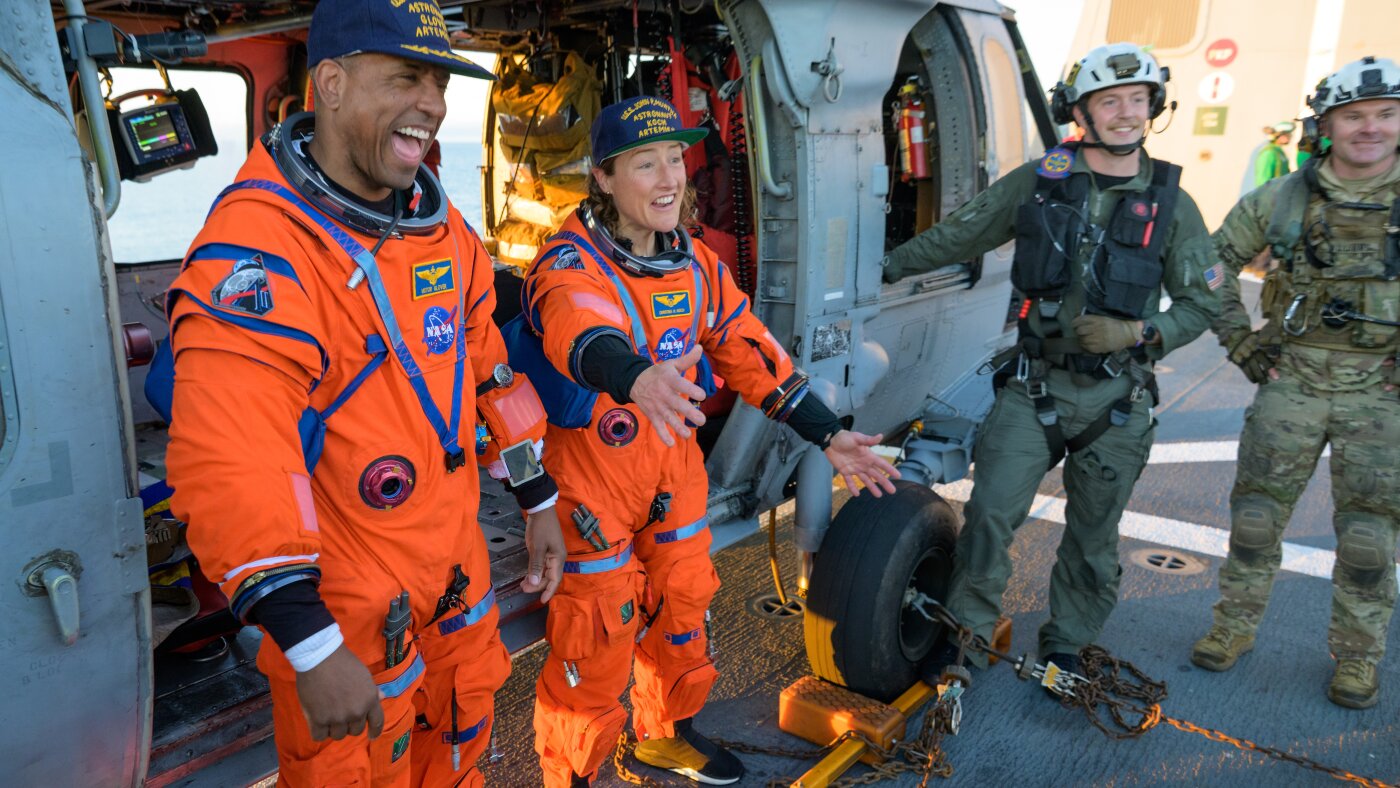
Artemis II splashdown captures nationwide attention

Video: Police Fatally Shoot Man After Stabbings at Grand Central Subway Station

Trump blasts Spanberger ahead of Virginia meetings, says state faces tax base exodus like New York, California
-

 Atlanta, GA1 week ago
1 teenage girl killed, another injured in shooting at Piedmont Park, police say
-

 Georgia5 days ago
Georgia House Special Runoff Election 2026 Live Results
-

 Pennsylvania6 days ago
Parents charged after toddler injured by wolf at Pennsylvania zoo
-

 Arkansas2 days ago
Arkansas TV meteorologist Melinda Mayo retires after nearly four decades on air
-
 Milwaukee, WI6 days ago
Potawatomi Casino Hotel evacuated after fire breaks out in rooftop HVAC system
-

 Indianapolis, IN1 week ago
Fighting Illini begin Final Four preparations in Indianapolis
-

 Technology1 week ago
Anthropic essentially bans OpenClaw from Claude by making subscribers pay extra
-

 Austin, TX5 days ago
ABC Kite Fest Returns to Austin for Annual Celebration – Austin Today