World
Pope makes surprise appearance during Mass in St. Peter's Square


Pope Francis made a surprise appearance in Se. Peter’s Aquare on Sunday morning during a special Jubilee Mass for the sick.
The pontiff, who was rolled into the square on a wheelchair, was making his first public appearance at the Vatican since being released from hospital two weeks earlier.
As he made his way to the altar at the square, he waved at the crowd. “Good Sunday to everyone” said, the pope. “Thank you from the bottom of my heart.”
The pope’s voice sounded louder and stronger than when he spoke outside Gemelli hospital on 23 March, the day of his release. He had been battlig life-threatening pneumonia during a five-week stay there.
In an Angelus Sunday prayer written by the pope himself and read out by Archbishop Rino Fisichella, the pontiff said: “I pray for doctors, nurses and health workers, who are not always able to work in adequate conditions and are sometimes even victims of aggression.”
“Their mission is not easy, and must be supported and respected. I hope that the necessary resources will be invested in treatment and research, so that health care systems will be inclusive and attentive to the poor and the most fragile.”
He also thanked the inmates of Rebibbia women’s prison, who had sent him a card wishing him a quick recovery. “I pray for them and for their families,” he wrote, before wishing for peace in places affected by war, as well as more aid for Myanmar and Haiti.



World
Trump proven right on Iran’s long-range missile capability as regime targets US-UK base, experts say

Iran fires missiles toward US-UK military base
Fox News senior correspondent Mike Tobin reports on Iran launching missiles toward a joint U.S.-U.K. military base, while Netanyahu advisor Caroline Glick provides analysis on ‘Fox News Live.’
NEWYou can now listen to Fox News articles!
The Islamic Republic of Iran significantly escalated its war effort against the U.S. with its launch of two intermediate-range ballistic missiles on Friday toward Diego Garcia, a key U.S.-U.K. military base in the Indian Ocean.
The targeting of Diego Garcia, roughly 2,500 miles from Iran, means Tehran’s missile capabilities appear to have exceeded previously acknowledged limits.
In the period leading up to Operation Epic Fury Feb. 28, Iran Foreign Minister Abbas Araghchi claimed, “We intentionally kept the range of our missiles below 2,000 kilometers so we don’t have that capability. And we don’t want to do that because we do not have hostility against the United States people and all Europeans.”
TRUMP VOWS TO HIT IRAN ‘VERY HARD’ AFTER OBLITERATING NEARLY ’90 PERCENT’ OF REGIME MISSILES
Map from the Foundation for Defense of Democracies showing Iran’s missile ranges. (The Foundation for Defense of Democracies)
On Saturday, Israel Defense Forces Chief of Staff Lt. Gen. Eyal Zamir said, “Just yesterday, Iran launched a two-stage intercontinental ballistic missile with a range of 4,000 kilometers [2,500 miles] toward an American target on the island of Diego Garcia. These missiles were not intended to hit Israel. Their range reaches the capitals of Europe — Berlin, Paris and Rome are all within direct threat range.”
IDF spokesman Nadav Shoshani blasted the alleged Iranian deception on X, writing, “Just 3 days before the war, the Iranian regime said they don’t obtain long-range missiles. Today, their lies were exposed once again, when missiles were fired 4000km away from Iran. They hoped to lie their way into becoming a force that can terrorize the world. We didn’t buy it.”
Jason Brodsky, the policy director of United Against Nuclear Iran (UANI), told Fox News Digital, “The Trump administration, in citing Iran’s missile threat as a rationale for Operation Epic Fury, was therefore justified in its decision to undertake military action as Iran has consistently refused to negotiate over its missile program.
“It also shows how dangerous it is to solely rely on Iranian nuclear weapons fatwas and the supreme leader’s public rhetoric in formulating U.S. policy. As long as Iran retains the technical capability beyond public pronouncements, it is a threat.”
BEFORE-AND-AFTER SATELLITE IMAGERY OFFERS A RARE LOOK AT DAMAGE INSIDE IRAN
A banner depicting Iran’s former Supreme Leader Ayatollah Ali Khamenei is placed next to a ballistic missile in Baharestan Square in Tehran, Iran, Sept. 26, 2024, on the sideline of an exhibition marking the 44th anniversary of the start of Iran-Iraq war. (Hossein Beris /Middle East Images/AFP via Getty Images)
“I think it’s a message that the IRGC is in charge in Iran after Supreme Leader Ali Khamenei’s death,” Brodsky said. “When Khamenei was alive, he limited the range of Iran’s missile program to 2,000 kilometers. Khamenei recounted in 2018 how he had rejected overtures from IRGC commanders seeking to increase the range to as much as 5,000 kilometers.
“But now that he has died, those voices in the IRGC seeking to increase the range are likely driving the agenda. The launch of the missiles was likely meant as a signal of the IRGC’s capabilities to threaten U.S. allies beyond the Middle East. For example, this threatens Europe.”
The two long-range Iranian missiles did not hit the base, but the attempted attack marked a significant expansion of Iran’s reach beyond the Middle East and toward a major U.S. strategic hub. One missile reportedly failed in flight, while a U.S. warship launched an SM-3 interceptor at the other, officials said. It was not immediately clear whether the interception was successful. The remote base is a critical launch point for U.S. bombers, nuclear submarines and other strategic assets.
Ilan Berman, vice president of the American Foreign Policy Council in Washington, D.C., told Fox News Digital, “The launch hammers home the president’s point about Iran being an imminent threat. It’s easy for casual observers to ignore, but the increasing maturity of Iran’s strategic programs, plural, has been exponentially expanding the threat that the Islamic Republic poses beyond the Middle East.
“That is what Epic Fury is seeking to address. The administration believes, absolutely correctly in my view, that these types of capabilities cannot be left in the hands of a radical, predatory regime.
HEZBOLLAH, IRAN UNLEASH COORDINATED CLUSTER BOMB STRIKES ON ISRAEL IN MAJOR ESCALATION
Israeli air defense systems are activated to intercept Iranian missiles over the Israeli city of Tel Aviv amid a fresh barrage of Iranian rockets June 16, 2025. (Menahem Kahanna/AFP via Getty Images)
“Despite its public denials, it’s been clear that the Iranian regime has been working on expanding the range of its ballistic missile capabilities for years. The launch toward Diego Garcia confirms that it has made real progress toward that goal and is already able to put targets in the same range as Central and Eastern Europe at risk. Moreover, it’s clear that the regime is seeking still greater capabilities and that, if left intact, Iran’s ballistic missiles would attain intercontinental range soon.”
Berman, the author of “Iran’s Deadly Ambition: The Islamic Republic’s Quest for Global Power,” added, “The parallel development Iran has been carrying out on its space program is significant. The booster used to put payloads into orbit can be married onto a medium-range missile to create intercontinental range capabilities. Before the war, we were seeing a clear convergence of the regime’s strategic programs: its ballistic missile work, its space capabilities and its nuclear program.”
A U.S. B-2 Spirit bomber, part of the 509th Bomb Wing at Whiteman Air Force Base in Missouri, stops for refueling at the U.S. military base on Diego Garcia in October 2001 after an airstrike mission over Afghanistan in support of Operation Enduring Freedom. (U.S. Department of Defense/Senior Airman Rebeca M. Luquin)
He warned about the serious Iranian threat to continental Europe.
“Europe is absolutely at risk as the recent launch makes clear,” Berman said. “I wouldn’t say that a failure to recognize this to date has been due to a grand deception by Tehran, though. It is more attributable to willful blindness on the part of European elites about the extent of the threat that the Iranian regime poses as well as undue faith in diplomacy and arms control in containing it.”
On Saturday, the United Kingdom condemned the attack.
“Iran’s reckless attacks, lashing out across the region and holding hostage the Strait of Hormuz, are a threat to British interests and British allies,” the U.K. Ministry of Defense said in a statement. “RAF jets and other U.K. military assets are continuing to defend our people and personnel in the region.
CLICK HERE TO DOWNLOAD THE FOX NEWS APP
“This government has given permission to the U.S. to use British bases for specific and limited defensive operations.”
Fox News Digital’s Greg Norman and Jasmine Baehr contributed to this report.

Published on
French President Emmanuel Macron urged Commission President Ursula von der Leyen to step up enforcement of EU digital regulations to combat foreign election interference ahead of key elections in 2026 and 2027, according to a letter dated March 16 and seen by Euronews.
ADVERTISEMENT

ADVERTISEMENT
The call comes as concerns grow in France about potential election meddling before next year’s presidential race. French security services have identified several interference cases —including from Russia— during the ongoing municipal campaign, with the second round set for Sunday.
“In a geopolitical context marked by a multiplication of hostile stances against the European model and its democratic values, it is crucial that the Union, and with it each Member State, prepare to ensure the integrity of civic discourse and electoral processes, the fairness of elections, and optimal protection against interference operations and information manipulation,” Macron wrote.
Eleven EU countries head to the polls in 2026, with further key elections in 2027 in France, Italy and Poland, where Eurosceptic parties are polling strongly.
Call for rapid EU action
Macron urged von der Leyen to update guidelines originally introduced ahead of the 2024 European elections, pressing platforms such as Meta’s Facebook and Instagram’s X and Tik Tok to strengthen their efforts under the EU’s landmark content moderation framework, the Digital Services Act (DSA).
“It’s not about overhauling the DSA, it’s about ensuring it is fully enforced regarding the obligations placed on platforms—namely, assessing and mitigating systemic risks that could disrupt electoral processes,” a French official said.
The letter specifically calls for curbing the virality driven by algorithms, labelling content generated or modified by artificial intelligence, removing fake accounts and respecting transparency obligations for political advertising included in the DSA.
“The Commission must be able, on the basis of reports it receives, to take all the measures allowed under the Digital Services Act (DSA), from injunctions and safeguard measures to sanctions,” the same official said.
Under the DSA, online platforms face fines of up to 6% of global annual revenue.
Probes have already been opened these last years into suspected interference, including against Meta ahead of the 2024 European Parliament vote and against TikTok over its handling of election-related risks during Romania’s November 2024 presidential election.
In Romania, concerns over TikTok’s role in the first-round win of ultranationalist and pro-Russian Călin Georgescu led in 2024 to the annulment of the vote after declassified intelligence documents indicated he may have benefited from coordinated accounts and algorithmic amplification on the platform.
According to Emmanuel Macron, Brussels and EU capitals must be “able to build a genuine complementary strike force, capable of rapid action,” to prevent such foreign interferences.

WASHINGTON (AP) — Robert S. Mueller III, the FBI director who transformed the nation’s premier law enforcement agency into a terrorism-fighting force after the Sept. 11, 2001, attacks and who later became special counsel in charge of investigating ties between Russia and Donald Trump’s presidential campaign, has died. He was 81.
“With deep sadness, we are sharing the news that Bob passed away” on Friday night, his family said in a statement Saturday. “His family asks that their privacy be respected.”
At the FBI, Mueller set about almost immediately overhauling the bureau’s mission to meet the law enforcement needs of the 21st century, beginning his 12-year tenure just one week before the Sept. 11 attacks and serving across presidents of both political parties. He was nominated by Republican President George W. Bush.
The cataclysmic event instantaneously switched the bureau’s top priority from solving domestic crime to preventing terrorism, a shift that imposed an almost impossibly difficult standard on Mueller and the rest of the federal government: preventing 99 out of 100 terrorist plots wasn’t good enough.
Later, he was special counsel in the Justice Department’s investigation into whether the Trump campaign illegally coordinated with Russia to sway the outcome of the 2016 presidential race. Mueller was a patrician Princeton graduate and Vietnam veteran who walked away from a lucrative midcareer job to stay in public service, and his old-school, buttoned-down style made him an anachronism during a social media-saturated era.
Trump posted on social media after the announcement of Mueller’s death: “Robert Mueller just died. Good, I’m glad he’s dead.” The Republican president added, “He can no longer hurt innocent people!”
The FBI did not immediately respond to a request seeking comment. The FBI Agents Association cited Mueller’s “commitment to public service and to the FBI’s mission.“
A second act as an investigator of a sitting president
The second-longest-serving director in FBI history, behind only J. Edgar Hoover, Mueller held the job until 2013 after agreeing to Democratic President Barack Obama’s request to stay on even after his 10-year term was up.
After several years in private practice, Mueller was asked by Deputy Attorney General Rod Rosenstein to return to public service as special counsel in the Trump-Russia inquiry.
Mueller’s stern visage and taciturn demeanor matched the seriousness of the mission, as his team spent nearly two years quietly conducting one of the most consequential, yet divisive, investigations in Justice Department history. He held no news conferences and made no public appearances during the investigation, remaining quiet despite attacks from Trump and his supporters and creating an aura of mystery around his work.
All told, Mueller brought criminal charges against six of the president’s associates, including his campaign chairman and first national security adviser.
His 448-page report released in April 2019 identified substantial contacts between the Trump campaign and Russia but did not allege a criminal conspiracy. Mueller laid out damaging details about Trump’s efforts to seize control of the investigation, and even shut it down, though he declined to decide whether Trump had broken the law, in part because of department policy barring the indictment of a sitting president.
But, in perhaps the most memorable language of the report, Mueller pointedly noted: “If we had confidence after a thorough investigation of the facts that the president clearly did not commit obstruction of justice, we would so state. Based on the facts and the applicable legal standards, we are unable to reach that judgment.”
The nebulous conclusion did not deliver the knockout punch to the administration that some Trump opponents had hoped for, nor did it trigger a sustained push by House Democrats to impeach the president — though he was later tried and acquitted on separate allegations related to Ukraine.
The outcome also left room for Attorney General William Barr to insert his own views. He and his team made their own determination that Trump did not obstruct justice, and he and Mueller privately tangled over a four-page summary letter from Barr that Mueller felt did not adequately capture his report’s damaging conclusion.
Mueller deflated Democrats during a highly anticipated congressional hearing on his report when he offered terse, one-word answers and appeared uncertain in his testimony. Frequently, he seemed to waver on details of his investigation. It was hardly the commanding performance many had expected from Mueller, who had a towering reputation in Washington.
Over the next months, Barr made clear his own disagreements with the foundations of the Russia investigation, moving to dismiss a false-statements prosecution that Mueller had brought against former national security adviser Michael Flynn, even though that investigation ended in a guilty plea.
Mueller’s tenure as special counsel was the capstone of a career spent in government.
FBI transformed into a national security agency
His time as FBI director was defined by the Sept. 11 attacks and its aftermath, as an FBI granted broad new surveillance and national security powers scrambled to confront an ascendant al-Qaida and interrupt plots and take terrorists off the street before they could act.
It was a new model of policing for an FBI that had long been accustomed to investigating crimes that had already occurred.
When he became FBI director, “I had expected to focus on areas familiar to me as a prosecutor: drug cases, white-collar criminal cases and violent crime,” Mueller told a group of lawyers in October 2012.
Instead, “we had to focus on long-term, strategic change. We had to enhance our intelligence capabilities and upgrade our technology. We had to build upon strong partnerships and forge new friendships, both here at home and abroad.”
In response, the FBI shifted 2,000 of the total 5,000 agents in the bureau’s criminal programs to national security.
In hindsight, the transformation was a success. At the time, there were problems, and Mueller said as much. In a speech near the end of his tenure, Mueller recalled “those days when we were under attack by the media and being clobbered by Congress; when the attorney general was not at all happy with me.”
Among the issues: The Justice Department’s inspector general found that the FBI circumvented the law to obtain thousands of phone call records for terrorism investigations.
Mueller decided that the FBI would not take part in abusive interrogation techniques of suspected terrorists, but the policy was not effectively communicated down the line for nearly two years. In an effort to move the FBI into a paperless environment, the bureau spent over $600 million on two computer systems — one that was 2½ years overdue and a predecessor that was only partially completed and had to be scrapped after consultants declared it obsolete and riddled with problems.
For the nation’s top law enforcement agency, it was a rocky trip through rough terrain.
But there were many successes as well, including thwarted terror plots and headline-making criminal cases like the one against fraudster Bernie Madoff. The Republican also cultivated an apolitical reputation on the job, nearly quitting in a clash with the Bush administration over a surveillance program that he and his successor, James Comey, considered unlawful.
He famously stood alongside Comey, then deputy attorney general, during a dramatic 2004 hospital standoff over federal wiretapping rules. The two men planted themselves at the bedside of the ailing Attorney General John Ashcroft to block Bush administration officials from making an end run to get Ashcroft’s permission to reauthorize a secret no-warrant wiretapping program.
In an extraordinary vote of confidence, Congress, at the Obama administration’s request, approved a two-year extension for Mueller to remain at his post.
A Marine who served in Vietnam before becoming a prosecutor
Mueller was born in New York City and grew up in a well-to-do suburb of Philadelphia.
He received a bachelor’s degree from Princeton and a master’s degree in international relations from New York University. He then joined the Marines, serving for three years as an officer during the Vietnam War. He led a rifle platoon and was awarded a Bronze Star, Purple Heart and two Navy Commendation Medals. Following his military service, Mueller earned a law degree from the University of Virginia.
Mueller became a federal prosecutor and relished the work of handling criminal cases. He rose quickly through the ranks in U.S. attorneys’ offices in San Francisco and Boston from 1976 to 1988. Later, as head of the Justice Department’s criminal division in Washington, he oversaw a range of high-profile prosecutions that chalked up victories against targets as varied as Panamanian dictator Manuel Noriega and New York crime boss John Gotti.
In a mid-career switch that shocked colleagues, Mueller threw over a job at a prestigious Boston law firm to join the homicide division of the U.S. attorney’s office in the nation’s capital. There, he immersed himself as a senior litigator in a bulging caseload of unsolved drug-related murders in a city rife with violence.
Mueller was driven by a career-long passion for the painstaking work of building successful criminal cases. Even as head of the FBI, he would dig into the details of investigations, some of them major cases but others less so, sometimes surprising agents who suddenly found themselves on the phone with the director.
“The management books will tell you that as the head of an organization, you should focus on the vision,” Mueller once said. But “for me there were and are today those areas where one needs to be substantially personally involved,” especially in regard to “the terrorist threat and the need to know and understand that threat to its roots.”
Two terrorist attacks occurred toward the end of Mueller’s watch: the Boston Marathon bombing and the Fort Hood shootings in Texas. Both weighed heavily on him, he acknowledged in an interview two weeks before his departure.
“You sit down with victims’ families, you see the pain they go through and you always wonder whether there isn’t something more” that could have been done, he said.
___ Associated Press writer Nicholas Riccardi in Denver contributed to this report.
Video: Former F.B.I. Director Robert Mueller Dies at 81

Martial arts star Chuck Norris dies at 86

Halide co-founder is suing former partner Sebastiaan de With for taking source code to Apple

Trump proven right on Iran’s long-range missile capability as regime targets US-UK base, experts say

Trump gives Iran 48-hour ultimatum to reopen Strait of Hormuz or face strikes on power plants

Florida High School Football Rankings: Top 25 teams – Oct. 21

How old is Bo Nix? What to know about Oregon quarterback ahead of 2024 NFL Draft

Cleary's 21 help Le Moyne down Central Connecticut State 69-64 in OT

99th annual Pony Swim held in Virginia

Indiana Members Credit Union announced as new anchor tenant at Bottleworks District
Trump gives Iran 48-hour ultimatum to reopen Strait of Hormuz or face strikes on power plants

Macron pushes tougher EU digital action ahead of key votes
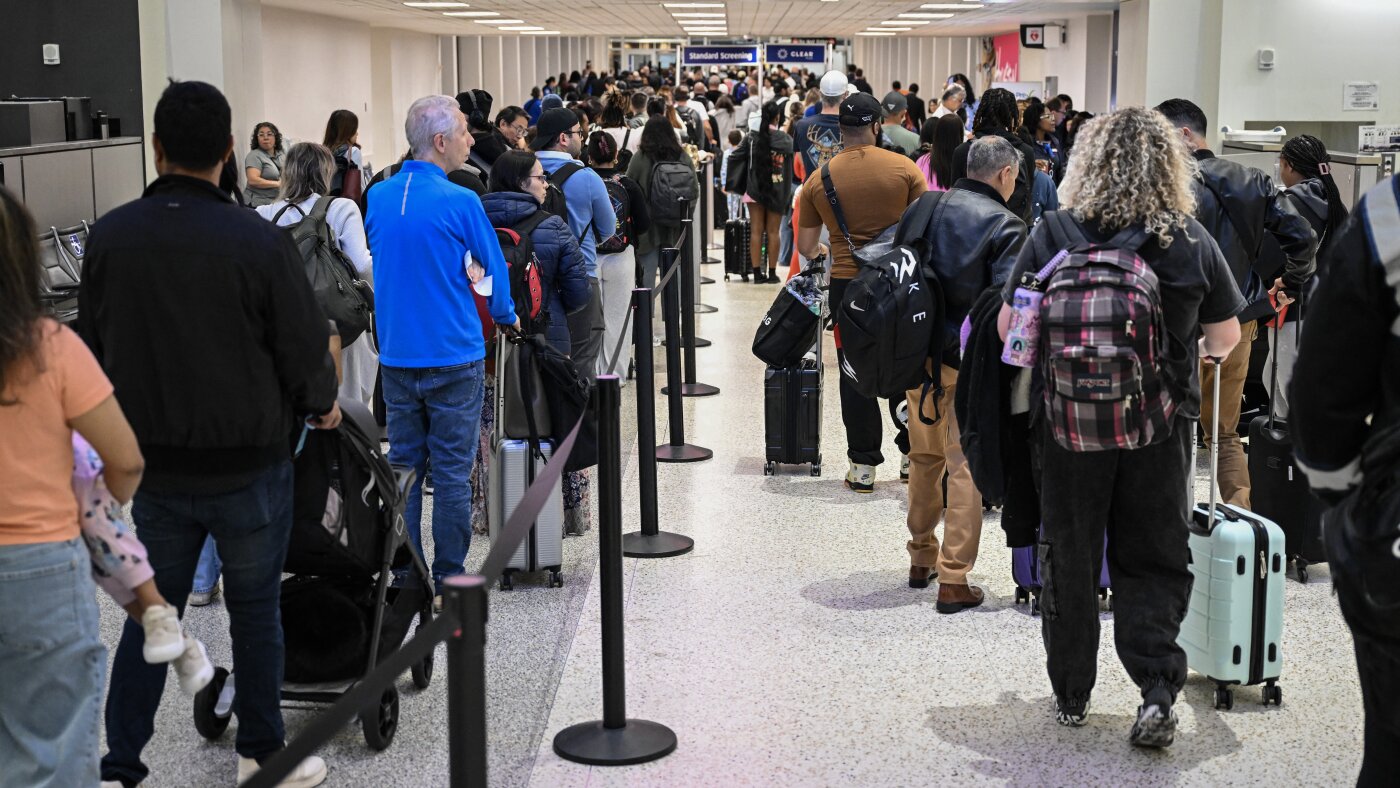
Airport security lines are long. Here’s what to know if you’re flying

Schumer gambit fails as DHS shutdown hits 36 days and airport lines grow

Iranian ballistic missile explodes near Israeli nuclear plant
-

 Detroit, MI3 days ago
Drummer Brian Pastoria, longtime Detroit music advocate, dies at 68
-

 Oklahoma1 week ago
Family rallies around Oklahoma father after head-on crash
-

 Nebraska1 week ago
Wildfire forces immediate evacuation order for Farnam residents
-

 Georgia6 days ago
How ICE plans for a detention warehouse pushed a Georgia town to fight back | CNN Politics
-

 Alaska7 days ago
Police looking for man considered ‘armed and dangerous’
-
 Science1 week ago
Federal EPA moves to roll back recent limits on ethylene oxide, a carcinogen
-

 Minnesota1 week ago
Many with Minnesota ties make Forbes list of world’s richest people
-
 Science1 week ago
H5N1 bird flu spreads to sea otters and sea lions along San Mateo coast, wildlife experts say