World
London court to decide whether WikiLeaks founder Assange is extradited to the US


LONDON (AP) — WikiLeaks founder Julian Assange faces a hearing Monday in the High Court in London that could end with him being sent to the U.S. to face espionage charges, or provide him another chance to appeal his extradition.
The outcome will depend on how much weight judges give to assurances U.S. officials have provided that Assange’s rights won’t be trampled if he goes on trial.
In March, two judges rejected the bulk of Assange’s arguments but said he could take his case to the Court of Appeal unless the U.S. guaranteed he would not face the death penalty if extradited and would have the same free speech protections as a U.S. citizen.
The court said that if Assange, who is an Australian citizen, couldn’t rely on the First Amendment then it was arguable his extradition would be incompatible with the European Convention on Human Rights, which also provides free speech and press protections.
The U.S. has provided those reassurances, though Assange’s legal team and supporters argue they are not good enough to rely on to send him to the U.S. federal court system.
The U.S., for example, said Assange could seek to rely on the rights and protections of the First Amendment but that a decision on that would ultimately be up to a judge. In the past, the U.S. said it would argue at trial that he was not entitled to the constitutional protection because he’s not a U.S. citizen.
“The U.S. has limited itself to blatant weasel words claiming that Julian can ‘seek to raise’ the First Amendment if extradited,” his wife, Stella Assange, said. “The diplomatic note does nothing to relieve our family’s extreme distress about his future — his grim expectation of spending the rest of his life in isolation in U.S. prison for publishing award-winning journalism.”
Assange, 52, has been indicted on 17 espionage charges and one charge of computer misuse over his website’s publication of a trove of classified U.S. documents almost 15 years ago. American prosecutors allege that Assange encouraged and helped U.S. Army intelligence analyst Chelsea Manning steal diplomatic cables and military files that WikiLeaks published.
His lawyers say he could face up to 175 years in prison if convicted, though American authorities have said any sentence would likely be much shorter.
Assange’s family and supporters say his physical and mental health have suffered during more than a decade of legal battles, including taking refuge in the Ecuadorian Embassy in London from 2012 until 2019. He has spent the last five years in a British high-security prison.
Assange’s lawyers argued in February that he was a journalist who exposed U.S. military wrongdoing in Iraq and Afghanistan. Sending him to the U.S., they said, would expose him to a politically motivated prosecution and risk a “flagrant denial of justice.”
The U.S. government said his actions went way beyond those of a journalist gathering information and put lives at risk in his bid to solicit, steal and indiscriminately publish classified government documents.
If Assange prevails Monday, it would set the stage for an appeal process likely to extend what has already been a long legal saga.
If the court accepts the word of the U.S., it would mark the end of Assange’s legal challenges in the U.K., though it’s unclear what would immediately follow.
His legal team is prepared to ask the European Court of Human Rights to intervene. But his supporters fear Assange could possibly be transferred before the court in Strasbourg, France, could halt his removal.
The court could also postpone issuing a decision.
If he loses in court, he still may have another shot at freedom.
President Joe Biden said last month that he was considering a request from Australia to drop the case and let Assange return to his home country.
Officials provided no other details but Stella Assange said it was “a good sign” and Australian Prime Minister Anthony Albanese said the comment was encouraging.



Celebrating his seizure of Crimea in 2014, President Vladimir V. Putin later called the peninsula an “unsinkable aircraft carrier,” hailing Russia’s return there as a symbol of revanchist ambition.
Now the Ukrainian military is hammering Crimea with swarming drone attacks, seeking to transform it from a Russian-occupied fortress into a nightmare for the Kremlin to manage.
All of this has shaken life in Crimea to the greatest extent since Russia illegally annexed the peninsula in 2014. It has also caused some Russian forces along the southern front to shift into defensive operations, according to Kostiantyn Mashovets, a Ukrainian military analyst.
Overnight Wednesday into Thursday, Russia bombarded Kyiv, Ukraine’s capital, killing at least 30, according to Ukrainian emergency services, in a deadly show of force after weeks of Ukrainian attacks.
Moscow has spent years fortifying Crimea, tripling its troop presence, deploying advanced air defenses and coastal batteries, and studding the land with missile launch systems. Fighter jets and bombers packed airfields, new vessels joined the Black Sea Fleet, and the $3.7 billion Kerch Strait Bridge gave Russia direct access to Crimea.
None of that could change geography.
Crimea juts out into the sea, leaving it initially vulnerable to Ukraine’s maritime drones. In the first years of the war, Ukraine targeted Russia’s naval headquarters in Sevastopol, drove its warships from Crimean ports and turned the peninsula’s waters into a hunting ground.
Its efforts to strike at Crimea, though, were limited by the weapons Ukraine had at the time. Now Ukrainian officials say their ever-evolving arsenal can inflict more pain, potentially enough, they hope, to bring Moscow back to the negotiating table.
“There’s no place to hide in Crimea,” said Lt. Gen. Ben Hodges, a retired commanding general of U.S. Army Europe. “The Ukrainians have the ability to touch every single place where there’s an air defense weapon or a logistics hub or an airfield or headquarters.”
Swarming Russia’s Air Defenses
The current Ukrainian campaign on Crimea at the outset targeted Russia’s air defense network.
In June alone, Ukraine claimed to target 31 air defense systems and radars, the most frequent military targets for its drone strikes.
The biggest success of these strikes, according to Ukraine, was what it called the destruction of the $100 million Neva-B radar system, an asset capable of tracking targets up to 370 miles away. A drone video posted by the Ukrainian military showed the attack on June 25. The New York Times could not independently verify if it was damaged, but military analysts said it appears it is not operational.
The attacks have exposed significant vulnerabilities in Russia’s defenses, which were originally built for traditional missiles and aircraft, not fleets of drones.
Pounding Roads and Bridges
With air defenses weakened, Ukraine then went after supply lines.
After strikes on ships and the halt of ferry operations, Russia now depends solely on narrow land and bridge corridors. Ukrainian forces are trying to cut them off.
The attacks on bridges have created a cat-and-mouse dynamic, with Russia rushing to repair the damage and Ukraine striking again.
Ukraine damaged one such bridge, the Chonhar Bridge connecting Crimea to Ukraine’s southern Kherson region, on June 7. Russia quickly set up a temporary pontoon bridge; days later, Ukrainian drones struck the temporary bridge.
Over the past two weeks, Russia appears to have built a causeway, which could be harder for drones to take out, alongside the damaged bridge. Construction vehicles could be seen working on the causeway in images taken by Vantor, a satellite imaging company.
Along with bridges and railways, Ukrainian drones targeted cargo trucks, fuel tankers and trains throughout the month. The burning husks of large trucks transporting fuel and derailed train cars were filmed and photographed by civilians and Ukrainian military drones, highlighting supply chain disruptions.
Ukrainian military units posted numerous videos in June touting their strikes across Crimea. These clips, showing first-person views from drones striking military and logistical sites, have become a pillar of Ukraine’s wartime propaganda efforts to illustrate battlefield successes against Russia. The Times collected these videos, verified their locations and cross-referenced the strike locations with satellite imagery. The Times could not verify the full extent of the damage to Ukraine’s claimed targets.
Kateryna Stepanenko, an analyst at the Institute for the Study of War, said Russian forces were increasingly trying to counteract Ukrainian drone strikes by patrolling critical southern routes with drones and interceptor units.
“But they need more mobile air defense to blunt the impact of Ukrainian strikes,” she said.
Ukrainian commanders expect Russian troops to adapt, but said they would shift their tactics in turn.
“Adaptation can take days, weeks or months, but we consistently find new ways to strike in any direction, at any depth, with whatever assets we have,” said Artem Bielienkov, the chief of staff of Ukraine’s 412th Unmanned Systems Brigade.
Knocking Out the Grid
Strikes on fuel facilities and the energy grid have caused widespread blackouts in Crimea, leading the local authorities to declare a state of emergency. Gas stations have run out of fuel, and thousands of people have fled the peninsula since Ukraine’s latest strikes began.
Throughout June, The Times verified Ukrainian strikes on oil and gas storage facilities, compression stations and power plants.
One of the Ukrainian attacks targeted an oil terminal at a port in the city of Kerch, creating smoke that could be seen miles away.
On the same day, Ukraine hit an oil storage facility at the port of Kavkaz on the other side of the Kerch strait, striking a blow to Russia’s ability to transport oil between Crimea and Russia.
Another Ukrainian drone video from June 19 shows a strike on a gas storage facility near Dozorne.
Though the attacks have pushed some Russian forces into a defensive posture, Mr. Mashovets, the military analyst, cautioned that it could take weeks or months to degrade Russia’s combat capabilities to the point where they might be forced to pull back from positions in southern Ukraine.
“To achieve the final objective, this blockade must be intensified,” he said. “This situation must be maintained for a sufficiently long period of time.”
Nevertheless, Crimea’s faltering grid “exposed the peninsula’s systemic vulnerability,” said Hennadii Riabtsev, a Ukrainian energy analyst. “The occupiers’ attempts to fix the damage to key facilities — like the Tavria and Balaklava thermal power plants, major substations and fuel terminals — are running into complex technical and logistical problems,” he said.
The Ukrainian attacks have had a compounding effect, Mr. Riabtsev said, threatening to turn the peninsula into “a giant logistical mousetrap.”

NEWYou can now listen to Fox News articles!
Leah Stewart, an Australian mother and teacher who lost an arm after a shark attack at Sydney’s Coogee Beach, has been reading messages from supporters around the world during sleepless nights as she continues her long recovery, her family said.
“We’ve been sharing some of the beautiful messages we’ve received with Leah and she’s loved them, finding inspiration from the care and love you’ve all shared,” her brother, Joshua Stewart, wrote in a GoFundMe update on Sunday.
“Leah has had some challenging days but has found real strength from your kindness and support,” he added.
Leah Stewart has struggled with sleep in her recovery and has leaned on the wave of support from family, friends and strangers.
AUTHORITIES IDENTIFY WOMAN KILLED IN ALLIGATOR ATTACK WHILE SWIMMING WITH FRIENDS IN CENTRAL FLORIDA
“Since the incident Leah has had difficulty sleeping, and on those nights she’s been reading back through your messages, not only from her family and community in Australia and her whānau in New Zealand, but also from people all across the world,” he wrote, using the Maori word for family. “They’ve given her real comfort and strength.”
Stewart, mother to a 1-year-old daughter and passionate teacher, was attacked June 13 while on a morning swim close to shore and within the flags at Coogee Beach, according to her family. She suffered life-threatening injuries, including multiple bites across her arms and legs, lacerations, fractures and extreme blood loss.
She was placed on life support, put under a medically induced coma and underwent multiple surgeries in the days after the attack. Her treatment required the amputation of one arm, and the family said more surgeries were scheduled as doctors worked to save her life and stabilize her condition.
Stewart, who woke up from her 10-day coma after doctors reduced her sedation, told her mother and partner, Fernando, “I love you.” Her brother said at the time that her first thoughts were with her young daughter, August.
SHARK ATTACK SURVIVOR WAKES FROM 10-DAY COMA AND SHARES FIRST WORDS WITH FAMILY AT HER HOSPITAL BEDSIDE
“Leah has a long road ahead,” Joshua Stewart wrote after she briefly woke, calling the moment a hopeful first step in her recovery.
Joshua Stewart said the family wanted to apologize for delays in responding to supporters, explaining they have had issues with the GoFundMe messaging system.
“Leah is beyond overwhelmed at the amazing support she has received and that her story has resonated with so many people,” he wrote. “Thank you!”
The fundraiser was launched to help Stewart, her partner and their young daughter through what her family described as a heartbreaking situation. The money will support her recovery, prosthetics, rehabilitation, ongoing care and the major adjustments she will need as she works toward returning to life as a mother.
CLICK HERE TO DOWNLOAD THE FOX NEWS APP
Her family also thanked the lifesavers, first responders, helicopter crew and medical team at St. Vincent’s Hospital who helped care for Stewart after the attack.
“As a family we are shocked and devastated that this could happen to our beloved partner, daughter and mother who is so full of life and energy,” Joshua Stewart wrote.

Tens of thousands of people gathered in Tirana on Saturday, protesting for the 35th consecutive day against plans to build a tourist resort linked to the Trump family.
ADVERTISEMENT

ADVERTISEMENT
It is thought to have been the largest demonstration since the protests began in late May against the construction of a luxury hotel connected to Ivanka Trump, daughter of US President Donald Trump, and her husband Jared Kushner, who advises and negotiates on behalf of the president, in the protected area of Zvërnec, in southwestern Albania.
What started as an environmental protest has now turned into a major anti‑government revolution. Protesters accuse the government of corruption and are calling for the resignation of Prime Minister Edi Rama, who approved the Kushner-Trump project.
“What began as the ‘pink flamingo revolution’ has turned into widespread public discontent,” protester Alketa Ademi told the French news agency AFP. “The lack of transparency, the arrogance – enough! The prime minister has to go,” she added.
Many protesters carried giant pink flamingos as they marched towards the country’s parliament building on the main boulevard of the Albanian capital Tirana.
One group was carrying a large concrete cake, a double reference both to Prime Minister Edi Rama’s birthday – who turned 62 on Saturday – and to plans to pour concrete over protected ecosystems.
Protesters also set up a bust of Edi Rama and then toppled it with the help of a rope, in an action reminiscent of the iconic overthrow in 1991 of the statue of communist dictator Enver Hoxha, which marked the end of his rule.
‘Albania is not for sale’
On Saturday evening, a large group of protesters broke away from the main march and headed towards the police station where 19 detained protesters are being held after their arrest during Thursday’s march near the parliament building.
Demonstrators smashed the windows of the police precinct, and were met with a violent response from security forces who reportedly deployed tear gas and water cannons to disperse the crowds.
“Release the kids,” the protesters shouted.
Some carried banners reading “Albania is not for sale” and “Repeal the law on protected areas”, referring to the legislation that enabled the government to fast‑track procedures for building tourist resorts.
The violent incidents contrast with the generally peaceful nature of the gatherings that have been held since the start of the movement, drawing thousands of citizens from all over the country.
Last week, large groups of demonstrators gathered outside the parliament, trying to block lawmakers from accessing the building.
Hundreds of protesters broke through the police-installed security cordon, and officers pushed them back, sparking clashes and leading to dozens of arrests.
Police used tear gas and water cannons to disperse those crowds as well, according to eyewitnesses, while some protesters threw eggs, stones and other objects at the security forces.
Officials later announced that 15 police officers were injured and 25 protesters were detained in those clashes.
The Albanian Helsinki Committee (AHC), a human rights organisation, expressed on Saturday “its concern at the escalation of the situation”.
“Individual acts of violence cannot justify the disproportionate use of force,” it said, condemning the use of tear gas without warning, batons and beatings by law enforcement officers against protesters and calling for a swift, independent investigation.
The movement has been dubbed the ‘Pink Flamingo Revolution’, a reference to the migratory birds that pass through the protected area where the tourist complex is planned.
Protesters argue that the luxury hotel complex, whose cost is estimated at $4.6 billion (€4.02 billion) and which is to be built in a protected area on the Adriatic Sea, threatens the fragile ecosystem of the neighbouring lagoon.
Investors, for their part, aim to turn the uninhabited island of Sazan, a former military base from the communist era, into a high‑end tourist destination. The project has been strongly opposed since it was first announced back in 2024.
The latest wave of protests erupted after barbed‑wire fencing and excavators appeared on nearby beaches in late May, indicating to the public that their concerns are being overlooked and that the development will proceed against their will.
-
 News17 minutes ago
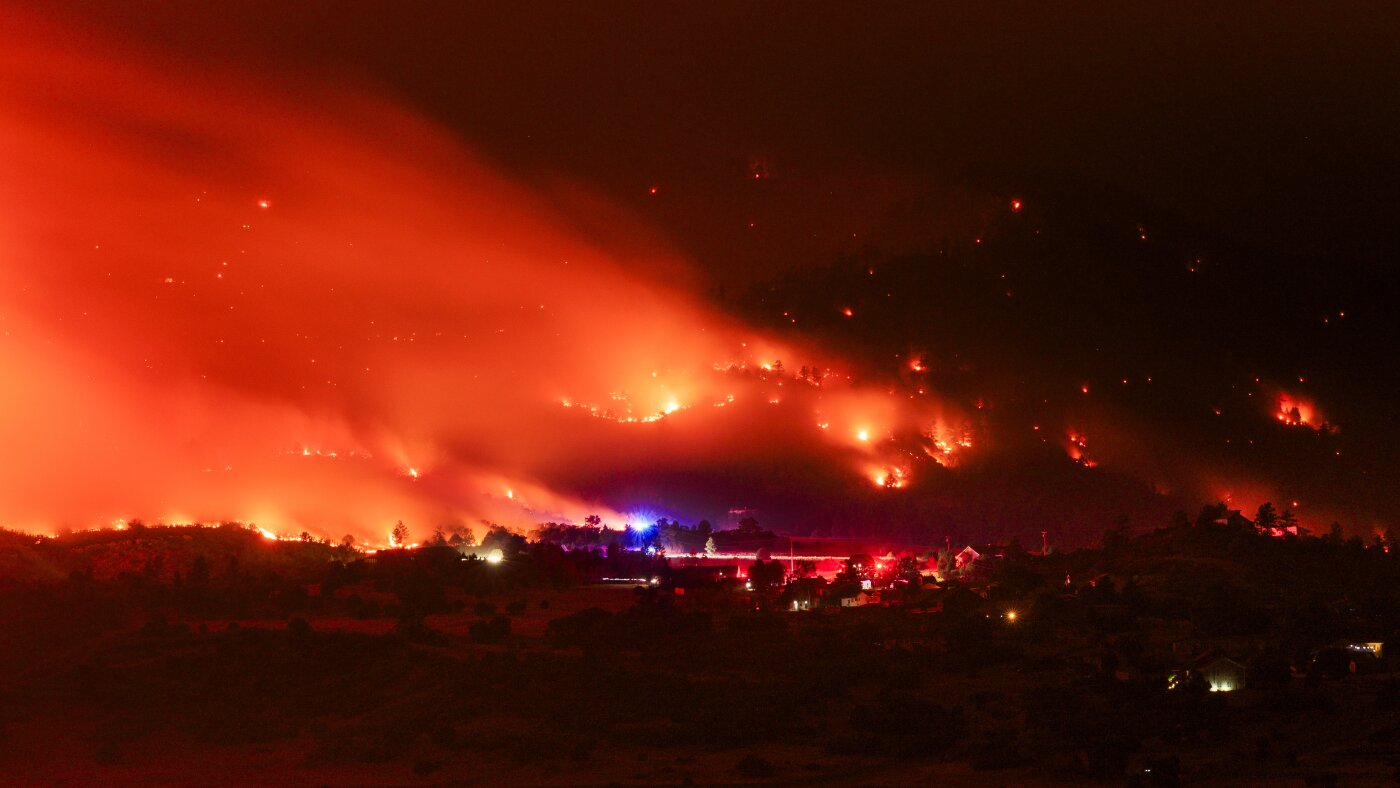
Thunderstorms, heat and wind will hamper efforts to contain Colorado wildfires
-

 New York2 hours ago
10-Minute Challenge: The Ceiling at Grand Central
-

 Los Angeles, Ca2 hours ago
1 killed, multiple people injured in Tarzana 4-car crash
-

 Detroit, MI2 hours ago
Power outage forces flaring at Marathon’s Detroit refinery; portion of Schaefer Road closed
-

 San Francisco, CA2 hours ago
San Francisco’s fireworks show ends in hours of gridlock involving Waymo cars
-

 Dallas, TX2 hours ago
FIFA Fan Fest in Dallas paused due to lighting in the area Sunday evening
-

 Miami, FL2 hours ago
Venezuelan Independence Day: Aid efforts continue after devastating earthquake
-

 Boston, MA2 hours ago
Timeline: Looking back on Jaylen Brown’s Celtics career – The Boston Globe

