World
Georgia ex-President Mikheil Saakashvili handed second prison sentence


Saakashvili was found guilty of illegal border crossing and given a second prison sentence of four and a half years on Monday, in addition to his existing sentence on charges of abuse of power and embezzlement.
A Georgian court sentenced former President Mikheil Saakashvili to another prison term on Monday, extending his imprisonment time to 12 and a half years.
Saakashvili, who served as Georgia’s president from 2004-2013, had previously been sentenced on charges of abuse of power and embezzlement that he and his defence have rejected as politically motivated.
Judge Badri Kochlamazashvili sentenced the 57-year-old ex-president to an extra four years and six months on charges of illegal border crossing, adding time to his existing sentence.
Speaking by videoconference, Saakashvili dismissed the verdict as an “absolutely illegal, unjust sentencing of me for crimes I have not committed.”
“They want to annihilate me in prison,” he said. “But no matter what, I will fight till the end,” he vowed.
According to his lawyer, Beka Basilaia, Monday’s verdict “again showed that Saakashvili is a political prisoner.”
Saakashvili, a controversial reformist
Saakashvili is also accused of repressing demonstrators who claimed that his fervour had turned into dictatorship.
The former president, who led the country in a more pro-Western direction, led the so-called Rose Revolution protests in 2003 that drove his predecessor out of office and enacted a series of ambitious reforms tackling official corruption.
In 2008, he oversaw a brief but intense war with Russia that ended with the humiliating loss of the remaining Georgian bases in two separatist territories.
His reign was brought to an end in the 2012 election when the then newly formed Georgian Dream Party defeated Saakashvili’s United National Movement party.
Saakashvili left for Ukraine in 2013 and became a citizen. From 2015 to 2016, he governed the southern Odesa region.
However, he was swiftly detained when he returned to Georgia in October 2021 in an attempt to strengthen opposition forces before the national municipal elections.
Georgian Dream accused of influencing verdict
Saakashvili’s lawyer on Monday accused the ruling Georgian Dream of influencing the latest extension of the ex-Georgian leader’s prison term.
“As long as Georgian Dream remains in power, the judiciary is a farce and will make whatever decision it is instructed to,” Basilaia said.
Since 2012, when Saakashvili was ousted from office, the Georgian Dream Party has remained in power and itself has recently been facing criticisms and popular protests on allegations of a crackdown on democratic freedoms.
 ADVERTISEMENT
The party is also accused of steering the country away from the path toward European Union membership and back into Russia’s sphere of influence.
After going on multiple hunger strikes, Saakashvili is currently being treated at the Vivamedi facility, where he is being monitored for a number of chronic illnesses, according to the clinic.



WASHINGTON (AP) — Robert S. Mueller III, the FBI director who transformed the nation’s premier law enforcement agency into a terrorism-fighting force after the Sept. 11, 2001, attacks and who later became special counsel in charge of investigating ties between Russia and Donald Trump’s presidential campaign, has died. He was 81.
“With deep sadness, we are sharing the news that Bob passed away” on Friday night, his family said in a statement Saturday. “His family asks that their privacy be respected.”
At the FBI, Mueller set about almost immediately overhauling the bureau’s mission to meet the law enforcement needs of the 21st century, beginning his 12-year tenure just one week before the Sept. 11 attacks and serving across presidents of both political parties. He was nominated by Republican President George W. Bush.
The cataclysmic event instantaneously switched the bureau’s top priority from solving domestic crime to preventing terrorism, a shift that imposed an almost impossibly difficult standard on Mueller and the rest of the federal government: preventing 99 out of 100 terrorist plots wasn’t good enough.
Later, he was special counsel in the Justice Department’s investigation into whether the Trump campaign illegally coordinated with Russia to sway the outcome of the 2016 presidential race. Mueller was a patrician Princeton graduate and Vietnam veteran who walked away from a lucrative midcareer job to stay in public service, and his old-school, buttoned-down style made him an anachronism during a social media-saturated era.
Trump posted on social media after the announcement of Mueller’s death: “Robert Mueller just died. Good, I’m glad he’s dead.” The Republican president added, “He can no longer hurt innocent people!”
The FBI did not immediately respond to a request seeking comment. The FBI Agents Association cited Mueller’s “commitment to public service and to the FBI’s mission.“
A second act as an investigator of a sitting president
The second-longest-serving director in FBI history, behind only J. Edgar Hoover, Mueller held the job until 2013 after agreeing to Democratic President Barack Obama’s request to stay on even after his 10-year term was up.
After several years in private practice, Mueller was asked by Deputy Attorney General Rod Rosenstein to return to public service as special counsel in the Trump-Russia inquiry.
Mueller’s stern visage and taciturn demeanor matched the seriousness of the mission, as his team spent nearly two years quietly conducting one of the most consequential, yet divisive, investigations in Justice Department history. He held no news conferences and made no public appearances during the investigation, remaining quiet despite attacks from Trump and his supporters and creating an aura of mystery around his work.
All told, Mueller brought criminal charges against six of the president’s associates, including his campaign chairman and first national security adviser.
His 448-page report released in April 2019 identified substantial contacts between the Trump campaign and Russia but did not allege a criminal conspiracy. Mueller laid out damaging details about Trump’s efforts to seize control of the investigation, and even shut it down, though he declined to decide whether Trump had broken the law, in part because of department policy barring the indictment of a sitting president.
But, in perhaps the most memorable language of the report, Mueller pointedly noted: “If we had confidence after a thorough investigation of the facts that the president clearly did not commit obstruction of justice, we would so state. Based on the facts and the applicable legal standards, we are unable to reach that judgment.”
The nebulous conclusion did not deliver the knockout punch to the administration that some Trump opponents had hoped for, nor did it trigger a sustained push by House Democrats to impeach the president — though he was later tried and acquitted on separate allegations related to Ukraine.
The outcome also left room for Attorney General William Barr to insert his own views. He and his team made their own determination that Trump did not obstruct justice, and he and Mueller privately tangled over a four-page summary letter from Barr that Mueller felt did not adequately capture his report’s damaging conclusion.
Mueller deflated Democrats during a highly anticipated congressional hearing on his report when he offered terse, one-word answers and appeared uncertain in his testimony. Frequently, he seemed to waver on details of his investigation. It was hardly the commanding performance many had expected from Mueller, who had a towering reputation in Washington.
Over the next months, Barr made clear his own disagreements with the foundations of the Russia investigation, moving to dismiss a false-statements prosecution that Mueller had brought against former national security adviser Michael Flynn, even though that investigation ended in a guilty plea.
Mueller’s tenure as special counsel was the capstone of a career spent in government.
FBI transformed into a national security agency
His time as FBI director was defined by the Sept. 11 attacks and its aftermath, as an FBI granted broad new surveillance and national security powers scrambled to confront an ascendant al-Qaida and interrupt plots and take terrorists off the street before they could act.
It was a new model of policing for an FBI that had long been accustomed to investigating crimes that had already occurred.
When he became FBI director, “I had expected to focus on areas familiar to me as a prosecutor: drug cases, white-collar criminal cases and violent crime,” Mueller told a group of lawyers in October 2012.
Instead, “we had to focus on long-term, strategic change. We had to enhance our intelligence capabilities and upgrade our technology. We had to build upon strong partnerships and forge new friendships, both here at home and abroad.”
In response, the FBI shifted 2,000 of the total 5,000 agents in the bureau’s criminal programs to national security.
In hindsight, the transformation was a success. At the time, there were problems, and Mueller said as much. In a speech near the end of his tenure, Mueller recalled “those days when we were under attack by the media and being clobbered by Congress; when the attorney general was not at all happy with me.”
Among the issues: The Justice Department’s inspector general found that the FBI circumvented the law to obtain thousands of phone call records for terrorism investigations.
Mueller decided that the FBI would not take part in abusive interrogation techniques of suspected terrorists, but the policy was not effectively communicated down the line for nearly two years. In an effort to move the FBI into a paperless environment, the bureau spent over $600 million on two computer systems — one that was 2½ years overdue and a predecessor that was only partially completed and had to be scrapped after consultants declared it obsolete and riddled with problems.
For the nation’s top law enforcement agency, it was a rocky trip through rough terrain.
But there were many successes as well, including thwarted terror plots and headline-making criminal cases like the one against fraudster Bernie Madoff. The Republican also cultivated an apolitical reputation on the job, nearly quitting in a clash with the Bush administration over a surveillance program that he and his successor, James Comey, considered unlawful.
He famously stood alongside Comey, then deputy attorney general, during a dramatic 2004 hospital standoff over federal wiretapping rules. The two men planted themselves at the bedside of the ailing Attorney General John Ashcroft to block Bush administration officials from making an end run to get Ashcroft’s permission to reauthorize a secret no-warrant wiretapping program.
In an extraordinary vote of confidence, Congress, at the Obama administration’s request, approved a two-year extension for Mueller to remain at his post.
A Marine who served in Vietnam before becoming a prosecutor
Mueller was born in New York City and grew up in a well-to-do suburb of Philadelphia.
He received a bachelor’s degree from Princeton and a master’s degree in international relations from New York University. He then joined the Marines, serving for three years as an officer during the Vietnam War. He led a rifle platoon and was awarded a Bronze Star, Purple Heart and two Navy Commendation Medals. Following his military service, Mueller earned a law degree from the University of Virginia.
Mueller became a federal prosecutor and relished the work of handling criminal cases. He rose quickly through the ranks in U.S. attorneys’ offices in San Francisco and Boston from 1976 to 1988. Later, as head of the Justice Department’s criminal division in Washington, he oversaw a range of high-profile prosecutions that chalked up victories against targets as varied as Panamanian dictator Manuel Noriega and New York crime boss John Gotti.
In a mid-career switch that shocked colleagues, Mueller threw over a job at a prestigious Boston law firm to join the homicide division of the U.S. attorney’s office in the nation’s capital. There, he immersed himself as a senior litigator in a bulging caseload of unsolved drug-related murders in a city rife with violence.
Mueller was driven by a career-long passion for the painstaking work of building successful criminal cases. Even as head of the FBI, he would dig into the details of investigations, some of them major cases but others less so, sometimes surprising agents who suddenly found themselves on the phone with the director.
“The management books will tell you that as the head of an organization, you should focus on the vision,” Mueller once said. But “for me there were and are today those areas where one needs to be substantially personally involved,” especially in regard to “the terrorist threat and the need to know and understand that threat to its roots.”
Two terrorist attacks occurred toward the end of Mueller’s watch: the Boston Marathon bombing and the Fort Hood shootings in Texas. Both weighed heavily on him, he acknowledged in an interview two weeks before his departure.
“You sit down with victims’ families, you see the pain they go through and you always wonder whether there isn’t something more” that could have been done, he said.
___ Associated Press writer Nicholas Riccardi in Denver contributed to this report.
World
Iranian man, Romanian woman charged after allegedly trying to enter UK nuclear missile base, officials say

NEWYou can now listen to Fox News articles!
An Iranian man and a Romanian woman have now been charged after allegedly unsuccessfully attempting to enter a nuclear missile base in Scotland this week, Police Scotland announced Saturday.
The agency said around 5 p.m. on Thursday, “we were made aware of two people attempting to enter HM Naval Base Clyde.”
“A 34-year-old Iranian man and a 31-year-old Romanian woman have been arrested and charged in connection with the incident. They are due to appear at Dumbarton Sheriff Court on Monday, March 23,” Police Scotland said. “Enquiries are ongoing.”
Fox News Digital has reached out to Police Scotland for further comment.
IRANIAN MAN, SECOND PERSON ARRESTED AFTER ALLEGEDLY TRYING TO ENTER UK NUCLEAR MISSILE BASE
HMS Artful, an Astute-class nuclear-powered fleet submarine, is shown at His Majesty’s Naval Base Clyde on March 4, 2025. ((Jeff J Mitchell/Getty Images)
Citing the Times, the Telegraph newspaper reported that the suspects were turned away from the base because they lacked the correct passes and were later arrested nearby for allegedly “acting suspiciously in the vicinity.”
HM Naval Base Clyde — commonly known as Faslane — is considered the primary base for the United Kingdom’s missile fleet.
The Royal Navy says the base is home “to the core of the Submarine Service, including the nation’s nuclear deterrent, and the new generation of hunter-killer submarines.”
TRUMP WARNS OF IRANIAN ‘SLEEPER CELLS’ AS CANADA ACCUSED OF HARBORING REGIME OPERATIVES
A general view of His Majesty’s Naval Base Clyde on March 4, 2025 in Faslane, Scotland. (Jeff J Mitchell/Getty Images)
The U.K. Parliament says the Royal Navy currently operates a fleet of nine submarines, with the entire fleet based at HM Naval Base Clyde.
“Five of those are conventionally-armed nuclear-powered attack submarines of the Astute class. A further four are ballistic missiles submarines (SSBN) of the Vanguard class that comprise the UK’s submarine-based nuclear deterrent,” it added.
HMS Artful, an Astute-class nuclear-powered fleet submarine, is shown at His Majesty’s Naval Base Clyde on March 4, 2025 in Faslane, Scotland. (Jeff J Mitchell/Getty Images)
CLICK HERE TO DOWNLOAD THE FOX NEWS APP
A Royal Navy spokesperson said in a statement to Fox News Digital on Friday, “Police Scotland have arrested two people who unsuccessfully attempted to enter HM Naval Base Clyde on Thursday 19 March. As the matter is subject to an ongoing investigation, we will not comment further.”

United States President Donald Trump has threatened to deploy federal immigration agents to the country’s airports to “do Security like no one has ever seen”.
“I look forward to moving ICE in on Monday, and have already told them to, ‘GET READY,’” Trump wrote in a series of posts on Saturday. “NO MORE WAITING, NO MORE GAMES!”
list of 3 itemsend of listRecommended Stories
Trump’s warnings on Saturday arrived on the five-week mark of a partial government shutdown that affects the Department of Homeland Security.
Congress missed a February 14 deadline to fund the sprawling department, which includes agencies dedicated to border security, anti-terrorism operations, immigration services and emergency management.
As a result, nearly 50,000 employees at the Transportation Security Administration (TSA) have been working for weeks without pay.
That has prompted some airport security agents to call in sick or quit the TSA entirely. The result has been long lines and delays at some of the country’s airports.
In his first post on Truth Social, Trump blamed Democrats for the impasse and threatened to use Immigration and Customs Enforcement (ICE) agents to conduct airport security instead.
“If the Radical Left Democrats don’t immediately sign an agreement to let our Country, in particular, our Airports, be FREE and SAFE again, I will move our brilliant and patriotic ICE Agents to the Airports where they will do Security like no one has ever seen before,” Trump wrote.
He then added that he would task the ICE agents with “the immediate arrest of all Illegal Immigrants who have come into our Country, with heavy emphasis on those from Somalia“.
Since taking office for a second term, Trump has led a violent crackdown on immigration, legal and otherwise.
Somalis and Somali Americans have been a particular target of the Republican president’s ire. In early December, for instance, he called them “garbage” and said they “contribute nothing”.
“I don’t want them in our country. I’ll be honest with you,” Trump said at the time. “Their country is no good for a reason. Their country stinks. And we don’t want them in our country.”
The Republican leader revisited that sentiment in Saturday’s social media post, once again accusing Somalis of having “totally destroyed” what he called “the once Great State of Minnesota”.
Minnesota has the largest Somali American community in the US, and it is also the home state of one of Trump’s most prominent critics, Representative Ilhan Omar, who came to the US as a child refugee from Somalia.
The Midwestern state was recently the subject of a deadly immigration operation that killed two US citizens, Renee Good and Alex Pretti, in shootings by agents.
That violence is at the heart of the stalemate over the Department of Homeland Security, which oversees ICE and Customs and Border Protection (CBP), the two agencies involved in the recent deaths.
Democrats have called for the Homeland Security Department to reform its immigration enforcement practices, including by implementing rules to require agents to clearly identify themselves, stop racial profiling and seek judicial warrants before entering homes.
Republicans, however, have called those demands non-starters. They have also rejected Democratic proposals to vote on funding for the TSA separately from funding for ICE and other immigration agencies.
To force Democrats to vote for Homeland Security funding, Trump has threatened not to sign any legislation that Congress passes. He has also repeatedly accused Democrats of preventing airport security agents from getting paid.
As of March 17, the TSA has reported that 366 security officers have quit their jobs.
Absences have also spiked: The TSA noted that the highest rate came at Houston Hobby International Airport on March 14, when the callout rate was 55 percent.
Industry analysts warn that the absences put increased strain on the remaining security officers, who might be more tired and less alert to threats.
It is unclear, however, how ICE agents would improve current conditions at the airport, given that they do not have the same training as TSA agents. Critics also pointed to the risk of militarised actions in civilian spaces like airports, where families and the elderly are present.
“I look forward to seeing ICE in action at our Airports,” Trump wrote in one of his posts.
In another, he doubled down on his criticism against Democrats, calling them “vicious and uncaring”.
“What they have done to the Department of Homeland Security, our fantastic TSA Officers, and, most importantly, the great people of our Country, is an absolute disgrace,” he wrote.
“If the Democrats do not allow for Just and Proper Security at our Airports, and elsewhere throughout our Country, ICE will do the job far better than ever done before!”

NFL draft profile 2026: D’Angelo Ponds (Cornerback, Indiana)

Iowa Wrestling Results From Day Three Of NCAA Wrestling Championships – FloWrestling

Kansas City, Kansas, women’s leadership panel focuses on building future leaders

No. 2 RB in Louisiana Announces Top 6 Schools

Maine should not be the last state to provide victims with real-time alerts | Opinion

Florida High School Football Rankings: Top 25 teams – Oct. 21

How old is Bo Nix? What to know about Oregon quarterback ahead of 2024 NFL Draft

Cleary's 21 help Le Moyne down Central Connecticut State 69-64 in OT

99th annual Pony Swim held in Virginia

Indiana Members Credit Union announced as new anchor tenant at Bottleworks District

Schumer gambit fails as DHS shutdown hits 36 days and airport lines grow

Trump threatens to deploy ICE to airports amid Homeland Security shutdown

Alabama student reportedly fell to his death in Barcelona waters by accident

Read the Ruling in The Times’s Lawsuit Against the Pentagon

NYC Mayor Mamdani’s wife glorified terrorists in online posts, criticized US military: report
-

 Detroit, MI3 days ago
Drummer Brian Pastoria, longtime Detroit music advocate, dies at 68
-

 Oklahoma1 week ago
Family rallies around Oklahoma father after head-on crash
-

 Nebraska1 week ago
Wildfire forces immediate evacuation order for Farnam residents
-

 Georgia6 days ago
How ICE plans for a detention warehouse pushed a Georgia town to fight back | CNN Politics
-

 Alaska6 days ago
Police looking for man considered ‘armed and dangerous’
-
 Southwest1 week ago
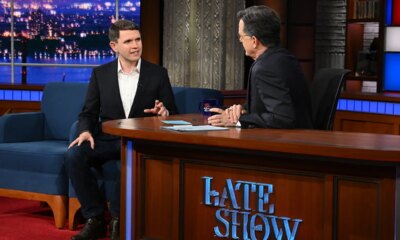
Talarico reportedly knew Colbert interview wouldn’t air on TV before he left to film it
-

 Minnesota1 week ago
Many with Minnesota ties make Forbes list of world’s richest people
-
 Science1 week ago
Federal EPA moves to roll back recent limits on ethylene oxide, a carcinogen