World
Fight for control of Yemen's banks between rebels, government threatens to further wreck economy


SANAA, Yemen (AP) — Yemen’s Houthi rebels and its internationally recognized government are locked in a fight for control of the country’s banks that experts warn is threatening to further wreck an economy already crippled by nearly a decade of war.
The rivalry over the banks is throwing Yemen’s financial system into deeper turmoil. Already, the Houthis who control the north and center of the country and the government running the south use different currency notes with different exchange rates. They also run rival central banks.
The escalating money divide is eroding the value of Yemen’s currency, the riyal, which had driven up prices for clothing and meat before the Islamic holiday of Eid al-Adha started on Sunday.
For weeks, Yemenis in Houthi-controlled areas have been unable to pull their money out of bank savings accounts, reportedly because the Houthi-run central bank, based in the capital, Sanaa, has stopped providing liquidity to commercial and government banks. Protests have broken out in front of some banks, dispersed by security forces.
Yemen has been torn by civil war ever since the Iranian-backed Houthi rebels took over Sanaa and much of Yemen’s north and center in 2015. The Saudi-backed internationally recognized government and its nominal ally the Southern Transitional Council, a group supported by the United Arab Emirates, govern the south and much of the east, centered in the southern port city of Aden.
Yemen was already the Arab world’s poorest country before the war began. Punitive actions by each side against the other’s banks over the past week now threaten to undermine merchants’ ability to import food and basic commodities and to disrupt the transfer of remittances from Yemenis abroad, on which many families depend, said Edem Wosornu, director of operations and advocacy for the U.N. humanitarian coordination office known as OCHA.
“All these factors will likely deepen poverty, worsen food insecurity and malnutrition, and increase reliance on humanitarian assistance,” she told a U.N. Security Council briefing on Thursday. The dispute could escalate to the point that banks in Houthi-run areas are barred completely from international financial transactions, which she said would have “catastrophic ramifications.”
The internationally recognized government moved the central bank to Aden in 2016, and since then began issuing new banknotes to replace worn-out riyals. Houthi authorities, which set up their own central bank in Sanaa, banned the use of the new money in areas under their control.
In March, the Houthi-controlled central bank announced it was rolling out its own new 100-riyal coins. The international community and Yemen’s recognized government denounced the move, saying the Houthis were trying to set up their own financial system and warning it will deepen Yemen’s economic divide.
Adding to the confusion, the bills have different exchange rates — riyals issued in Sanaa go for about 530 to the dollar, while those from Aden are around 1,800 to the dollar.
In response, the Aden-based central bank gave banks 60 days to relocate their headquarters to the southern city and stop operating under Houthi policies, or else risk facing sanctions related to money laundering and anti-terrorism laws.
The central bank was “forced to make these decisions, especially after the Houthi group issued their own currency and took unilateral steps towards complete independence from the internationally recognized Central Bank in Aden,” said Mustafa Nasr, an economic expert and head of the Studies and Economic Media Center SEMC.
No banks met the deadline — either because they needed more time or because they feared Houthi sanctions if they moved, Nasr said.
When the deadline ran out last week, the central bank in Aden banned dealing with six banks headquartered in Sanaa, meaning currency exchange offices, money transfer agencies and banks in the south could no longer work with them.
In retaliation, the Houthi-run central bank in Sanaa banned all dealings with 13 banks headquartered in Aden. That means people in Houthi-controlled areas can’t deposit or withdraw funds through those banks or receive wire transfers made through them.
Even as the fight for control is going on, both sides are facing a cash crunch. The Houthi government has few sources of foreign currency and its new coins aren’t recognized outside its territory.
In January, the United States designated the Houthis as a global terror group in response to the rebels’ attacks on shipping in the Red Sea and Arabian Sea. The Houthis say the attacks are in retaliation for the Israel-Hamas war in the Gaza Strip. Because of the U.S. decision, banks around the world might be concerned and reluctant to continue any financial dealings with banks that have headquarters under Houthi control, said Youssef Saeed, a University of Aden economic professor.
The economy in Aden isn’t significantly better. The government’s revenues have been hit hard ever since Houthi attacks on oil ports in late 2022 forced a halt in oil exports, the main earner of foreign currency.
Since March, depositors in Houthi-run areas have been unable to pull money out of their accounts. The central bank in Sanaa hasn’t announced any formal restrictions, but several economists told The Associated Press that it has informally stopped releasing funds that individual banks have put in its coffers — in part because of a lack of liquidity.
At one bank that saw protests by depositors last month, the International Bank of Yemen, a note hung in the lobby said, “In coordination with the Central Bank, withdrawals from old accounts have been suspended until further notice.”
Um Ahmed, a 65-year-old woman who was among those protesting outside the bank, said that she was trying to withdraw money to help her son buy a motor scooter for work, but the bank refused.
“I served this country as a teacher for 35 years and saved every penny and deposited my money at the bank, but they took it all,” she said. “This money belongs to my husband and me and our children.”
___
Fatma Khaled reported from Cairo.



Published on •Updated
Belgium’s three regions announced on Friday that they would introduce a road tax next year that foreign drivers transiting the country would also have to pay.
ADVERTISEMENT

ADVERTISEMENT
The country does not currently charge drivers to use its highways and the issue of introducing some form of payment has been debated for years.
“Everyone who uses our roads must contribute fairly to their maintenance,” said the transport minister for the southern Wallonia region, François Desquesnes.
Starting on 1 May 2027 drivers will need to register their vehicle and pay the road tax, with day passes available for drivers driving across the country.
An annual pass for a zero-emission car will cost €90 and up to €125 for higher polluting vehicles.
Road cameras that catch cars that haven’t paid for a pass will incur a fine of €70.
In Belgium, the individual regions are responsible for maintaining roads and motorways.
Currently, drivers can use almost all highways toll-free but the possibility of an introducing a charge has been under discussion for several years.
The revenue would be used for the operation and maintenance of the road network.
The proposed toll still needs final approval from the regions and European authorities.
According to the chairman of the liberal-conservative MR party, the government intends to offset the new toll by lowering other taxes for Belgians.
Additional sources • AFP

World
With US unleashing attacks, Iranian official threatens that the Islamic Republic will deliver a ‘hard slap’

NEWYou can now listen to Fox News articles!
An Iranian official warned that the Islamic Republic will deliver a “hard slap” while another blatantly threatened the U.S. that “if you strike, you’ll get hit,” according to automatic translations from the two men’s Persian-language posts on X.
Ebrahim Rezaei, whose profile on the social media platform indicates that he is a representative in Iran’s Parliament and the spokesperson for the National Security and Foreign Policy Commission, wrote in a post on X, “The martyred Khamenei taught us not to fear America and showed that ‘falsehood will perish.’ Await the hard slap from the Iranians.”
The speaker of Iran’s Parliament, Mohammad Bagher Ghalibaf, warned, “America still hasn’t learned that bullying and breaking promises are no longer cost-free. Let me put it plainly: if you strike, you’ll get hit. Don’t flail around pointlessly, or you’ll sink even deeper: the Strait of Hormuz will only open with ‘Iranian arrangements,’ not American threats.”
Both of the men issued their posts on Wednesday after U.S. Central Command (CENTCOM) announced more strikes against Iran.
“At the direction of the Commander in Chief, U.S. Central Command forces have started conducting additional strikes against Iran to further degrade their ability to threaten freedom of navigation in the Strait of Hormuz. The United States is holding Iran accountable for recent unjustified aggression against commercial shipping and civilian crews freely navigating a vital international waterway,” CENTCOM had noted in a post on X.
TRUMP SAYS IRAN CEASEFIRE DEAL IS ‘OVER’ AFTER NEW ROUND OF STRIKES
People gather at the Imam Khomeini Grand Mosalla for a farewell ceremony for Iran’s late Ayatollah Ali Khamenei on July 4, 2026, in Tehran, Iran. (Majid Saeedi/Getty Images)
The U.S. military later provided more information about the attacks.
“U.S. Central Command (CENTCOM) forces completed an additional round of strikes against Iran, July 8, to further degrade Iran’s ability to attack commercial shipping and innocent civilian mariners in the Strait of Hormuz,” CENTCOM noted on Wednesday night.
“U.S. forces struck approximately 90 Iranian military targets including air defense systems, coastal surveillance assets, missile and drone storage sites, naval capabilities, and military logistics infrastructure along Iran’s coastline. The latest strikes follow successful execution of offensive strikes in Iran the night before,” the announcement noted. “CENTCOM forces hit approximately 80 Iranian military targets July 7, including more than 60 Islamic Revolutionary Guard Corps small boats, to impose heavy costs for Iran violating the ceasefire by attacking three commercial vessels navigating the Strait of Hormuz.”
TRUMP DEMANDS END TO TRADE WITH KEY US ALLY, CALLS IT A ‘WASTED CAUSE’
President Donald Trump indicated on Wednesday that, as far as he was concerned, the U.S.-Iran Memorandum of Understanding ceasefire was “over.”
Kuwait and Bahrain have both reported coming under attack.
The Kuwait Army noted in a Thursday post on X, which was written in Arabic, “The Official Spokesman for the Ministry of Defense, Major General Saud Abdulaziz Al-Otaibi, stated that the armed forces detected, at dawn today, (3) ballistic missiles, (1) cruise missile, and (10) hostile drones within Kuwaiti airspace, which were successfully intercepted and dealt with.”
TRUMP SAYS ‘IRAN LIES AND CHEATS’ AS IRGC EMERGES AS DOMINANT FORCE IN NEGOTIATIONS WITH US
President Donald Trump speaks as he meets with NATO Secretary General Mark Rutte on the sidelines of the NATO summit in Ankara, on July 8, 2026. (SAUL LOEB / AFP via Getty Images)
CLICK HERE TO DOWNLOAD THE FOX NEWS APP
The Bahrain Defense Force noted in a post that was in Arabic, “The General Command clarifies that, with firm resolve and high combat readiness, the Bahrain Defense Force’s air defense systems confronted, intercepted, and destroyed several treacherous Iranian aerial attacks this morning, Thursday, July 9, 2026 CE.”
-
 Entertainment20 seconds ago
Emily Ratajkowski’s viral essay on sex life as a single mom scores her a seven-figure book deal
-

 Lifestyle7 minutes ago
The BoF Podcast | Decoding Paris Haute Couture: Wonder, Restraint and the Call of the Void
-
 Politics10 minutes ago
Trump ousts bipartisan commission in latest effort to reshape elections before midterm
-
 Science15 minutes ago
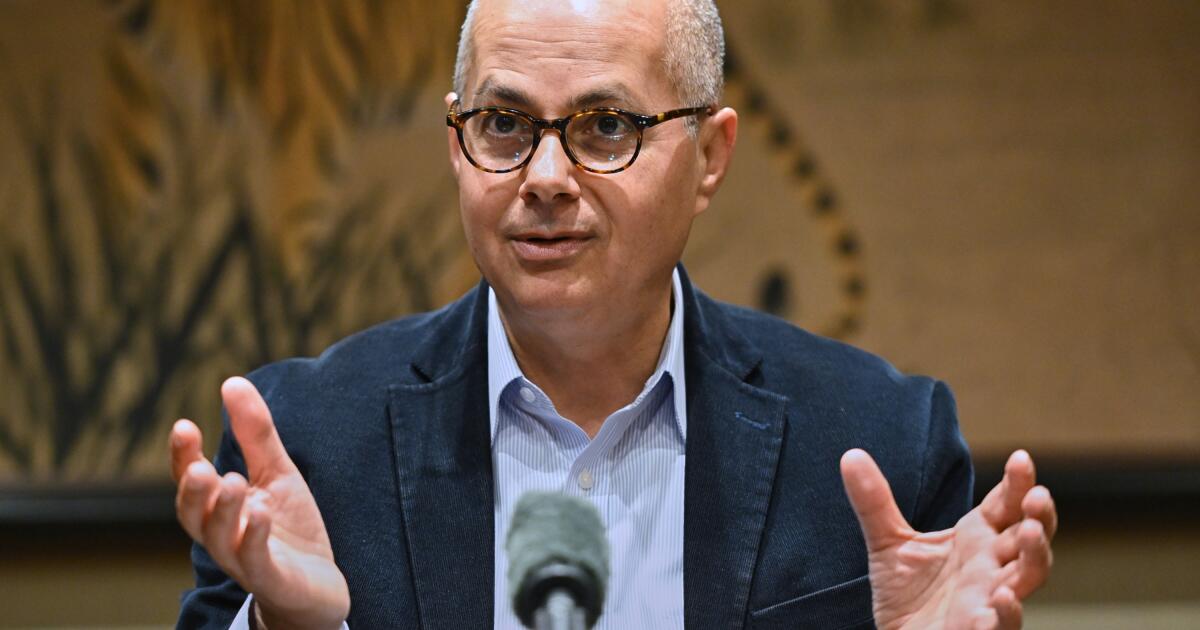
Nobel Prize winner leaving UC Berkeley for new role in China
-
 Sports22 minutes ago
Mikel Merino lifts Spain over Belgium, setting up World Cup showdown with France
-

 World30 minutes ago
Belgium to introduce new road tax in 2027, even for transiting drivers
-
 News55 minutes ago
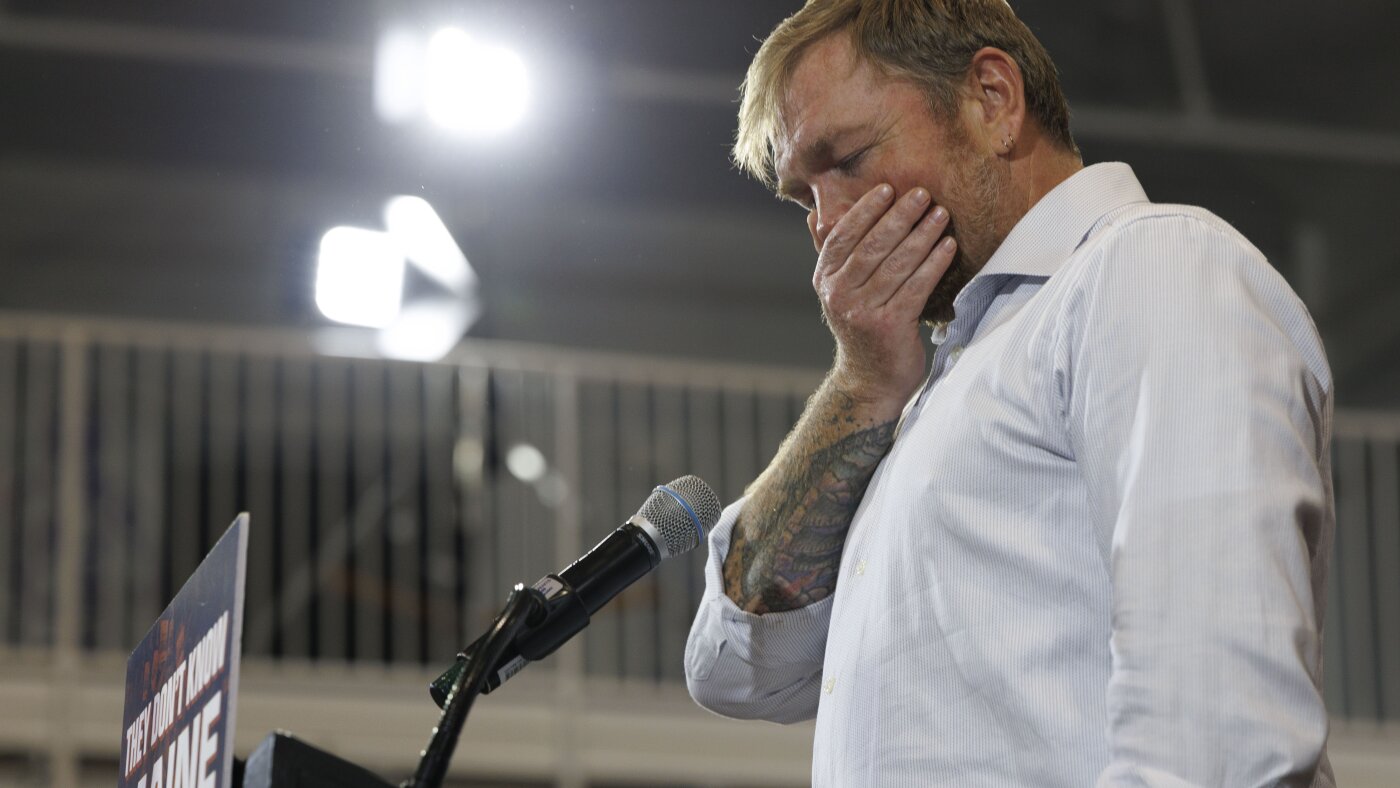
Graham Platner makes it official in Maine, submitting paperwork to leave Senate race
-

 Los Angeles, Ca2 hours ago
Knee irritation forces Shohei Ohtani out of Friday start, All‑Star game

