World
EU sanctions extremist Israeli settlers over violence in the West Bank


The European Union has moved to sanction a handful of Israeli settlers responsible for attacks on Palestinian communities in the West Bank and East Jerusalem, following months of deliberations.
A political agreement on the move emerged among the bloc’s 27 member countries last month, but technical work has delayed its implementation, prompting many countries – such as France and Belgium – to unilaterally impose national sanctions.
Some 490,000 Israelis live in settlements in the Israeli-occupied West Bank, which are considered a breach of international law. Attacks on Palestinians in the occupied territory have surged since the outbreak of the war between Israel and Hamas last October, causing around 460 deaths, according to the Palestinian health ministry.
Four individuals and two entities responsible for settler violence will as of Friday be blacklisted under the EU’s human rights sanctions regime, meaning they will be banned from travelling to the bloc and their financial assets frozen.
The sanctioned entities are Lehava, a far-wing Jewish supremacist organisation, and Hilltop Youth, whose activities were recently halted by the Israeli Defense Forces for multiple incidents of violence and abuses against Palestinian civilians.
Two leading figures of Hilltop Youth, Meir Ettinger and Elisha Yered, are also targeted.
The move comes amid escalating violence in the West Bank, where tensions have deepened since a 14-year-old boy from a settler family was killed last Saturday.
NGO Human Rights Watch says Israeli settlers are displacing Palestinian communities by destroying their homes, and are responsible for assaults, torture and sexual violence against Palestinians.
The EU’s high representative for foreign policy, Josep Borrell, has previously said that settler violence is one of the biggest obstacles to future peace in the region since settlers oppose the two-state solution which would give statehood to Palestinians.
The bloc has also repeatedly censured Benjamin Netanyahu’s government for backing projects aimed at expanding settlements in the West Bank and areas around Jerusalem, and called for such decisions to be reversed.
In January, several members of the Israeli government joined a far-right conference promoting the construction of Jewish settlements in both the Gaza Strip and the West Bank.
The formal approval of the sanctions also comes as the bloc carefully calibrates its stance on the Middle East conflict following a rapid escalation in tensions between Israel and Iran.
Since Iran launched an unprecedented aerial attack on Israeli territory last Saturday, EU leaders have doubled down on their stance of solidarity with Israel but also urged Netanyahu’s cabinet to exercise restraint.
Some capitals, however, want Brussels to toughen its stance on Netanyahu. Spain and Ireland have led calls to review the bloc’s trade deal with Israel – the Association Agreement – to exert pressure on its government to exercise restraint in its Gaza offensive.
On Friday, Belgium’s deputy prime minister Petra De Sutter claimed Belgium would “take the lead” to “re-evaluate” the EU-Israel Association Agreement.
“We call for an EU-wide import duty on products coming from illegal Israeli settlements,” De Sutter said.
A note drafted by the EEAS – the EU’s diplomatic arm – last December urged the EU to “enforce continued, full and effective implementation of existing EU legislation and bilateral arrangements applicable to settlements products.”
Under EU legislation, Israeli products made by settlers should be clearly labelled as such and subject to less preferential customs arrangements, but the rules are not strictly enforced.



Published on
On today’s show:
ADVERTISEMENT

ADVERTISEMENT
Top story: G7 Summit debrief with Méabh Mc Mahon and Maia de la Baume.
Explainer by Jakub Janas: What’s the point of the G7 meeting?
Iran war update with Méabh Mc Mahon and Babak Kamiar.
Interview with Ghassan Salamé, Lebanese Culture Minister.
Interview with Valérie Hayer, Member of the European Parliament (Renew Europe, France).
When and where to watch Europe Today?
You can join Euronews’ chief anchor Méabh Mc Mahon and our EU editor Maria Tadeo live on TV and Euronews’ website and digital platforms every weekday.
Our new format brings you the day’s key events plus crucial analysis of all the stories shaping the EU and beyond. It’s also available as a newsletter and podcast.

The official additionally stated that Iran has reviewed a US 15-point proposal for ending the ongoing war in the Middle East and deemed it “one-sided and unfair,” serving only US and Israeli interests, and lacking “the minimum requirements for success.”
“In brief, the proposal suggests that Iran would relinquish its ability to defend itself in exchange for a vague plan to lift sanctions,” he told Reuters.
No arrangement for negotiations has been established yet, the official continued, adding that Turkey and Pakistan are attempting to “establish common ground between Iran and the United States and reduce differences.”
The proposal, which was conveyed to Iran through Pakistan, “was reviewed in detail on Wednesday night by senior Iranian officials and the representative of Iran’s Supreme Leader,” the official said.
On Wednesday, Iranian regime-tied Press TV cited an Iranian official as stating that Tehran considered the conditions of the proposal excessive and would only agree to end the war at a time of its choosing if its conditions are met.
According to an N12 News report on Tuesday, citing three sources familiar with the details of the potential plan, the US was considering declaring a month-long ceasefire during which negotiations on the agreement would take place.
The 15-point plan reportedly contained terms including the dismantling of all existing Iranian nuclear capabilities, a commitment that Iran will discontinue efforts to obtain nuclear weapons, and a requirement that any already enriched uranium be moved out of Iran.

NEWYou can now listen to Fox News articles!
U.S. security guarantees for Ukraine are being tied to Kyiv ceding the eastern Donbas region to Russia as part of a potential peace deal, Ukrainian President Volodymyr Zelenskyy told Reuters in an interview published Thursday.
“The Americans are prepared to finalize these guarantees at a high level once Ukraine is ready to withdraw from Donbas,” Zelenskyy said, describing a proposal he warned could undermine both Ukraine’s defenses and broader European security.
But a U.S. official, speaking on background, told Fox News Digital the claim is false.
Zelenskyy’s comments point to growing pressure from President Donald Trump to reach a swift end to the war, now in its fourth year following Russia’s 2022 invasion.
ZELENSKYY SAYS PEACE DEAL IS CLOSE AFTER TRUMP MEETING BUT TERRITORY REMAINS STICKING POINT
Zelenskyy suggested the administration’s approach is influenced in part by competing global crises, including the ongoing conflict involving Iran.
U.S. security guarantees for Ukraine are being tied to Kyiv ceding the eastern Donbas region to Russia as part of a potential peace deal, Ukrainian President Volodymyr Zelenskyy said. (Pavlo Bahmut/Ukrinform/NurPhoto via Getty Images)
“The Middle East definitely has an impact on President Trump,” Zelenskyy said. “President Trump, unfortunately, in my opinion, still chooses a strategy of putting more pressure on the Ukrainian side.”
Talks between the United States, Russia and Ukraine have taken place in Abu Dhabi and Geneva in 2026, but key issues remain unresolved, including how Ukraine’s future security would be guaranteed and who would fund its long-term defense.
Zelenskyy warned that abandoning Donbas would hand Russia heavily fortified Ukrainian defensive lines, weakening Kyiv’s position and potentially enabling future aggression.
“I would very much like the American side to understand that the eastern part of our country is part of our security guarantees,” he said.
ZELENSKYY CLAIMS TRUMP SAID US WILL CONSIDER GIVING UKRAINE DECADES OF SECURITY GUARANTEES
Ukrainian President Volodymyr Zelenskyy warned that abandoning Donbas would hand Russia heavily fortified Ukrainian defensive lines. (Joe Raedle/Getty Images)
Russian President Vladimir Putin has long insisted that full control of Donbas is central to Moscow’s war aims. While Russian forces have made gains, analysts cited by Reuters say progress has been slow, and capturing the remaining territory could take significant time and manpower.
Zelenskyy also warned that Moscow is betting Washington will lose interest if negotiations stall.
“Russia is counting on the fact that the United States will not have the strength or patience to bring this to an end,” he said.
Despite tensions over negotiations, Zelenskyy thanked the Trump administration for continuing deliveries of Patriot missile defense systems, which Ukraine relies on to intercept Russian ballistic missiles.
“Deliveries to us were not stopped. I’m very grateful to President Trump, and to his team,” he said, while adding that supplies remain insufficient.
In parallel with the diplomatic push, Zelenskyy signaled a broader strategy to expand Ukraine’s role as a security provider, particularly in the Middle East, where countries are seeking solutions to large-scale drone and missile threats.
UKRAINE PEACE TALKS PRODUCTIVE AS EX-GOVERNMENT OFFICIAL SAYS COUNTRY RETHINKING ‘UNCOMPROMISING’ STANCE
A cemetery worker prepares a burial vault at military cemetery outside of the city of Dnipro, Ukraine, May 25, 2023. (Seth Herald/Anadolu Agency via Getty Images)
“The United States has reached out to us regarding their bases in Middle Eastern countries,” Zelenskyy wrote on X Thursday, adding that Saudi Arabia, Qatar, the United Arab Emirates, Bahrain, Jordan and Kuwait have also approached Ukraine.
He said Ukrainian teams are already on the ground sharing operational experience, particularly in countering mass drone attacks.
“No matter how many Patriots, THAADs, or other air defense systems are in the Middle East, that alone is not enough,” he wrote. “There are modern interceptors designed to counter heavy drone strikes.”
Zelenskyy also indicated Ukraine is exploring defense trade arrangements, offering to sell surplus systems and expertise while seeking access to air defense missiles it currently lacks.
“Funding is the scarcest resource today,” he wrote, noting Ukraine’s defense industry is operating at roughly half capacity and needs additional financing to scale drone production.
CLICK HERE TO DOWNLOAD THE FOX NEWS APP
Ukraine is exploring defense trade arrangements, the country’s president said. (Iryna Rybakova/Press Service of the 93rd Kholodnyi Yar Separate Mechanized Brigade of the Ukrainian Armed Forces/Reuters)
In separate posts tied to an address at a Joint Expeditionary Force summit, Zelenskyy emphasized that Ukraine’s battlefield experience could play a broader role in European and global security.
“We have this experience. … Let’s bring all of this together even more,” he wrote, calling for deeper cooperation with European partners and warning that the continent must build its own capacity to produce air defense systems rather than rely on external suppliers.
Reuters contributed to this story.

FKA twigs sues ex-boyfriend Shia LaBeouf over ‘unlawful’ NDA
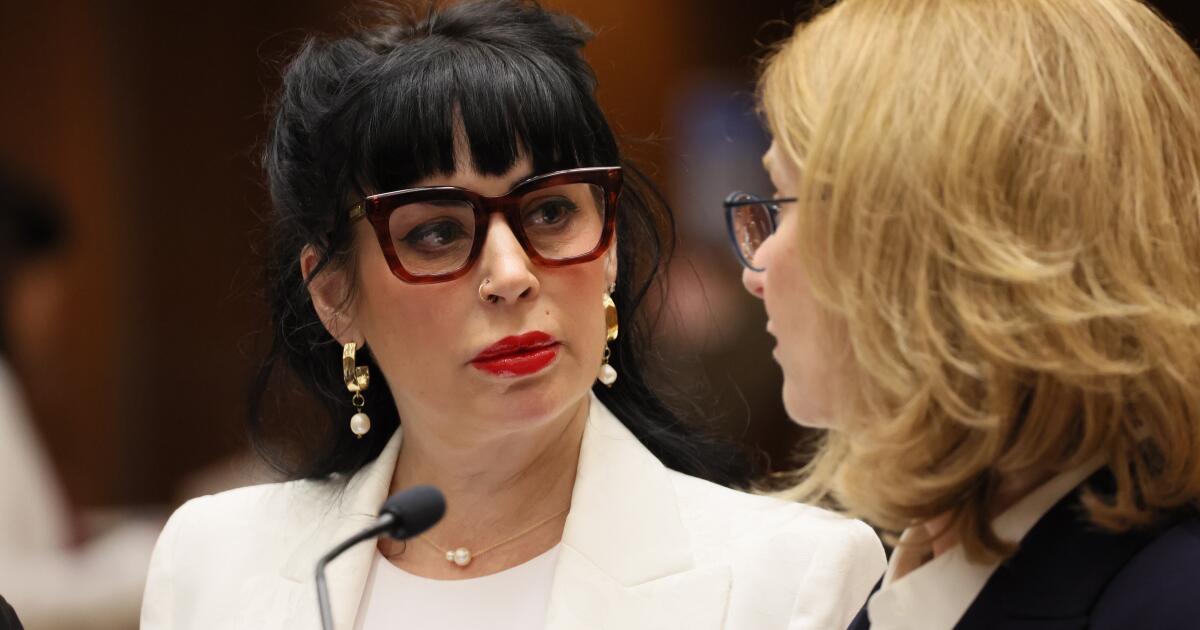
LAPD chief backed cops who shot at author, Weezer bassist’s ex; commission overruled him

What European Luxury Can Learn From American Fashion

Bill Maher on getting the Mark Twain Prize for humor: ‘Like an Emmy, except I win’

Prep sports roundup: Redondo Union takes down No. 1 Mira Costa in boys volleyball

Florida High School Football Rankings: Top 25 teams – Oct. 21

How old is Bo Nix? What to know about Oregon quarterback ahead of 2024 NFL Draft

Cleary's 21 help Le Moyne down Central Connecticut State 69-64 in OT

99th annual Pony Swim held in Virginia

Indiana Members Credit Union announced as new anchor tenant at Bottleworks District

Rubio joins crucial G7 talks as Iran war set to dominate second day

A surprise resignation could open the door for an independent to win a Montana Senate seat

Video: Savannah Guthrie Says She Believes Her Mother Was Taken for Ransom

Stefanik grills University of Michigan leader on lack of audit after string of Chinese national arrests

Photos: More than one million displaced by Israel’s evacuations in Lebanon
-

 Detroit, MI1 week ago
Drummer Brian Pastoria, longtime Detroit music advocate, dies at 68
-

 Science1 week ago
How a Melting Glacier in Antarctica Could Affect Tens of Millions Around the Globe
-

 Movie Reviews1 week ago
‘Youth’ Twitter review: Ken Karunaas impresses audiences; Suraj Venjaramoodu adds charm; music wins praise | – The Times of India
-
 Science1 week ago
I had to man up and get a mammogram
-

 Sports6 days ago
IOC addresses execution of 19-year-old Iranian wrestler Saleh Mohammadi
-

 New Mexico4 days ago
Clovis shooting leaves one dead, four injured
-

 Texas7 days ago
How to buy Houston vs. Texas A&M 2026 March Madness tickets
-

 Tennessee3 days ago
Tennessee Police Investigating Alleged Assault Involving ‘Reacher’ Star Alan Ritchson