Wyoming
University of Wyoming trustees keep President Seidel, form committee to address turmoil – WyoFile


Rising furor over the controversial demotion of a University of Wyoming engineering dean has brought the state’s only public four-year university to a tipping point.
Academic leaders, donors and others decried the demotion as emblematic of a culture of top-down and inscrutable decision making by the UW Board of Trustees and President Ed Seidel.
Twelve college deans signed a letter expressing “deep concern for the trajectory” of the university — citing the dean’s demotion and mounting pressures on academic freedom.
And on Monday, the faculty senate overwhelmingly delivered a vote of no confidence in Seidel, the first such vote in recent memory.
The outrage appeared strong enough to threaten Seidel’s leadership. Professors and deans expressed hope for lasting change to leadership that, according to the faculty senate, has driven the departure of talented academics and made replacing them difficult — ultimately threatening the learning experience for students.
The gravity of the moment was not lost on Seidel, he told the trustees Tuesday morning, reading from a written statement before they entered a closed-door meeting without him.
“How we handle this pivotal moment is important for the future of the institution,” Seidel said, “which is clearly facing a crisis.”
After an hour and a half behind closed doors, the board reemerged and issued its response. They will form a committee to study the issue.
The committee will include two trustees, and most likely one faculty member, one staff member, one student government member, Seidel and the provost, board chairman Kermit Brown said. “That committee will be charged with working on communications and working on ideas to more fully engage shared governance in the university,” he said.
Neither a timeline nor the new committee’s authority were discussed. The trustees are also crafting a “formal statement,” Brown said, “with regard to the current state of affairs and the work of the [new] committee.” That press release will be vetted by the university’s legal department before its release, trustees said.
The trustees had not published the statement by 6 p.m. Tuesday.
The trustees did not raise the prospect of imposing consequences on Seidel for losing the faculty’s trust. His current contract extends through the summer of 2026. Nor did the trustees address the underlying issues that sparked furor following Dean Cameron Wright’s demotion — most notably the allegations lobbed across campus that it was a retaliation for Wright’s opposition to funds being shifted from his budget to that of Seidel’s romantic partner, who heads UW’s new School of Computing.
Faculty senate members considered their vote a risky endeavor. Though many of them are tenured professors, they conducted yesterday’s meeting mostly in a closed session so that senators could feel safe speaking against university leadership. Once the meeting opened to the public, votes on the no-confidence resolution were issued by hand-written paper ballots to avoid any hand raising or spoken votes.
“You are justified in fearing retribution from this administration,” Bob Sprague, a former chair of the faculty senate, wrote in a letter to the body ahead of its Monday vote. But he also urged senators to “speak truth to power and send a clear message to the entire University community that this administration’s conduct is not acceptable.”
The faculty senate ultimately voted 43 to 11 to back a resolution that declared Seidel’s leadership “unacceptable,” though it did not call for him to be removed. Instead, in a final paragraph — referenced by Brown when he announced the new committee — it called for the administration and campus to work together to “reestablish an atmosphere of mutual respect, to rebuild trust and a willingness to work together.”
On Tuesday, faculty members returned to a campus Seidel will remain in charge of for the foreseeable future. During a campus town hall the president hosted yesterday, Seidel rejected any suggestions he would retaliate.
“I am absolutely against any form of retaliatory action,” he said at that event, according to a report in Oil City News. “I’ve been very, very clear about that. And I do not want to ever have any kind of a retaliation against someone for speaking their mind.”

After days of impassioned statements and letters from his critics, Tuesday appeared relatively quiet following the morning board meeting. Ray Fertig, the faculty senate president, did not respond to WyoFile voicemails requesting comment.
Two outspoken former faculty members, and Democratic Laramie lawmaker Karlee Provenza — who has criticized Seidel’s advocacy for the School of Computing and his conciliatory approach to the Legislature’s efforts to meddle with campus — told WyoFile the trustees’ response fell flat.
“They don’t have a really genuine, authentic response to anything is what it feels like,” Provenza said. She hoped faculty and deans would continue to push for change if they wanted something beyond the new committee, she said.
“One choice is ‘aw shucks, I didn’t get what I wanted, I don’t have any power in this situation,’” Provenza said. “But I think the other option is we have to build our power. There are more levers of power for faculty, for deans, and I encourage them to exercise those rights.”
Sprague and former president of the faculty senate, now-retired veterinary professor Donal O’Toole both noted that the committee, as Brown described it, appeared stacked toward the administration and the trustees, with just two faculty representatives and one student on a seven-person body.
“They will put forward probably some very watered down recommendations that ultimately will be ignored,” Sprague said. Ultimately, he feared the episode will lead to “no substantial improvement to the situation on campus,” and the trustees, he said, will “rationalize [faculty] unhappiness in various ways.”
O’Toole agreed that the trustees had opted for a tepid, middle-of-the-road path. “Seidel is a known quantity,” he said, “and [in the wake of criticism] he’s certainly saying all the right things.”
Beginning last week, when the faculty senate leadership expressed dismay in his leadership ahead of the full body’s vote, Seidel has been conciliatory and said he has learned from the uproar. In several statements and in yesterday’s town hall, he promised to renew his commitment to the university’s model of “shared governance,” which, notably, calls for faculty input on the removal of academic officers.
Faculty members say that part of the university’s governing code was firmly ignored when the board demoted Wright. The board demoted Wright even though every department head in his college — with the exception of school of computing head Gabrielle Allen, Seidel’s partner — called on them not to.
Coming back from a no-confidence resolution to a place where the campus is working well together will be very hard to do, O’Toole said.
“On the one hand, I think the faculty senate executive committee thought this had to be done,” he said. “On the other hand, they realized that in the short and medium term it’s going to make dealing with Seidel’s administration pretty frosty … The feeling is ‘we’ve sent the message, let’s hope for the best.’”



by Maggie Mullen, WyoFile
After the Wyoming GOP voted to defy a state law prohibiting the party from backing one Republican over another before the primary election, statewide candidates are split on whether they would accept such an endorsement.
Some told WyoFile they agree with the party’s decision and will seek out an endorsement, while others said they oppose a political party breaking election law. A few said they were taking a wait-and-see approach.
“Jury’s still out on this one for me,” Wyoming State Auditor Kristi Racines said Wednesday.
For years, the Wyoming Republican Party has argued that because it is a private organization, state laws that govern its organizational structure and prohibit it from endorsing or financially backing candidates in opposed primary election races are unconstitutional.
At its convention in Douglas last weekend, the party took things into its own hands, voting to adopt bylaws establishing a process for vetting, endorsing and spending money to support candidates ahead of the primary.
Supporters of the new bylaws point to a U.S. Supreme Court ruling from 1989, which struck down California’s ban on political party endorsements, ruling that the law violated the First Amendment’s guarantees of free speech and association. Opponents, meanwhile, raised concerns at the convention about the bylaws breaking the law, litigation costs and unintended consequences.
The new bylaws are widely expected to spark lawsuits, while the Wyoming Republican Party has said it plans to file its own legal challenge against the state.
In the meantime, the new bylaws lay out a process for evaluating candidates based on “commitment to the Wyoming Republican Party Platform, demonstrated loyalty to the Party’s principles, legal eligibility to hold office, and for incumbents, their voting record.”
The state party will consider candidates running for Wyoming’s state-elected officials — including governor, secretary of state, superintendent of public instruction, treasurer and auditor — as well as congressional candidates. Otherwise, county parties “may vet all other races on their respective County Ballots,” according to the new bylaws.
The state party, as well as each county party, “shall each create and oversee a Candidate Vetting Committee empowered to review and recommend approval or disapproval of candidates based on established criteria,” the bylaw states. “The Committee shall provide candidates an opportunity to respond to concerns prior to issuing a recommendation.”
Candidates
Brent Bien, who is running for governor, told WyoFile the bylaw changes are “a long time coming,” pointing back to the 1989 ruling.
“I think we just got to make sure we get those folks that truly believe on the Republican side of the equation, who truly believe in the platform and what Wyoming stands for,” Bien said. “And I just don’t think there’s been any enforcement mechanism to do that.”
At the convention, Bien was a clear favorite among many attendees who wore his campaign buttons and t-shirts. Still, Bien said he wouldn’t be surprised if he didn’t get the party’s endorsement.
“I didn’t get Trump’s endorsement,” Bien said. “And some of these legislators around the state, you know, they haven’t endorsed me.”
Bien’s take isn’t shared by all the gubernatorial candidates.
“Contested primaries should be decided by voters,” Gillette Sen. Eric Barlow wrote in a statement. “The role of the state party is to unite Republicans around shared values and help grow the party, not decide elections before voters have had their say.”
“Under current law, the state party should not choose sides in Republican primaries, and I will not ask them to start now,” he wrote. “My job,” running for governor, “is to earn the trust of Wyoming voters directly.”
At the convention, supporters of the bylaws said the party had tried to get the Legislature to change state statute. Barlow directly pushed back on that argument.

“As a legislator for the past 14 years, this issue has never come before us,” Barlow said. “If it had, it would have ensured all Wyomingites could weigh in and decisions would have been made openly and transparently — not in the courts and not a few months before an election.”
Secretary of State Chuck Gray, who is running for U.S. House, told WyoFile he supports the new bylaws.
“I will participate in the Party’s vetting process and will seek their support because I’m the only candidate in this race with a proven record of standing up for conservative principles — even when it wasn’t popular with the media and the insiders,” he wrote in a statement.
As secretary of state, Gray is Wyoming’s chief election officer and oversees statewide election administration. Asked if he wanted to comment in his official capacity on the Wyoming Republican Party’s decision to defy state law, Gray did not respond by publishing time.
U.S. House candidate David Giralt took a more cautious approach when asked for his opinion on the new bylaws.
“I trust Wyoming Republicans to make good decisions for our party, and I’ll let the process play out,” Giralt said. “I’m focused on getting in front of as many Wyoming voters as possible and making the case for why I’m the right person to represent this state in Congress.”
Kevin Christensen, another U.S. House candidate, said he wanted to see how fair, transparent and consistent the process played out before weighing in.
“The Wyoming people are the ones that make the determination in the primary, not the party,” he said. “That being said, if this is about supporting candidates and determining who is really a Republican and who’s just putting an ‘R’ next to their name, that seems like that would be consistent with being the Republican Party.”
Jillian Balow, yet another candidate for U.S. House and former superintendent of public instruction, said she “would be honored to accept an endorsement and money from the state party only if it is in accordance with Wyoming and federal law.”
“The contingency of our party at the convention knew the changes they made defied state law and they curtailed delegate discussion to pass new by-laws anyway,” Balow wrote in a statement. “Some delegates were appalled, some were gleeful, and many were silent, because they were silenced. This is not the way Wyoming does business.”
U.S. House candidate Reid Rasner also pushed back on the new bylaws.
“As a pro-Trump conservative, I always expected the political establishment to try and stop our campaign,” he wrote in a statement. “But, after making over 200 stops across our communities, one thing is clear: people are tired of the political games.”

Sheridan Republican Rep. Tom Kelly, who is running for superintendent, said while he opposes “the idea of parties having the power to disallow anyone from running under their banner,” he thinks “parties should be able to express publicly which people they would like to represent them.”
Though he’s not actively seeking endorsements, Kelly said he would accept support from the state party.
“Financial backing? Absolutely,” Kelly said. “Contrary to a popular false narrative, I have no wealthy D.C. donors bankrolling me.”
And if the party endorsed one of his opponents, Kelly said he would tell them, “Congrats. I should have done a better job presenting myself.”
WyoFile reached out to other statewide Republican candidates, including those running for governor, secretary of state, superintendent, U.S. House and U.S. Senate. They did not respond by publishing time.
This article was originally published by WyoFile and is republished here with permission. WyoFile is an independent nonprofit news organization focused on Wyoming people, places and policy.
Related

When the University of Wyoming’s 25,000-seat football stadium is exceeds the population of all but four cities in the state.
Jamie Schwaberow/Getty Images
hide caption
toggle caption
Jamie Schwaberow/Getty Images
At the anti-abortion March for Life rally in D.C. last year, Vice President J.D. Vance had a clear message.
“So let me say very simply, I want more babies in the United States of America,” Vance said to a cheering crowd.
As birth rates fall in the U.S., prominent conservatives such as Vance are encouraging Americans to have more children. They say that’s crucial to maintaining the nation’s workforce, so there will be enough caregivers for an aging population.
Now, those arguments are being cited to pass new state-level restrictions on abortion, including in Wyoming, which recently passed a law to outlaw abortions once there’s a “detectable fetal heartbeat.”

According to the American College of Obstetricians and Gynecologists, it is “clinically inaccurate” to describe what can be heard via an ultrasound during very early pregnancy as a heartbeat. Cardiac cells in an embryo may exhibit electrical activity that is detectable, but there are no cardiac valves that could generate the sound that people know as a heartbeat.
The Wyoming law — which has now been temporarily blocked in court — prohibits abortions after cardiac activity can be detected, which is generally around the sixth week of pregnancy.
“We’re sending a message that children are important and that they’re the future,” said Republican state lawmaker and former nurse Evie Brennan.
“Without an up and coming population that grows up here that wants to stay here, then we just become a stagnant or an aging slash dying state,” she added.
Suzanne Bell, a demographer at John Hopkins Bloomberg School of Public Health, said Wyoming’s tactic is unlikely to substantially grow its population.
“Imposing a ban on abortion is not going to transform the trajectory of a state’s fertility pattern,” Bell said.
She added that abortion bans can lead to a short-term population bump. Wyoming’s neighbor, Idaho, saw one after it instituted one of America’s strictest abortion bans in 2023.
“What that works out to in absolute terms is about 240 excess births,” Bell said.
But at the same time, researchers found Idaho was hemorrhaging healthcare workers. It now has 35% fewer OB-GYNs than before their law went into effect.
In Wyoming, population loss has been an issue for decades. Giving a tour to prospective students at the University of Wyoming in Laramie, Claire Lane said there’s not a lot of industry here.
“ I feel like a lot of students don’t see a ton of opportunities maybe necessarily in their fields to work here in Wyoming,” said Lane, a college senior with purple-tipped hair.
She said she plans to stick around for graduate school in speech language pathology, but she’ll probably leave the state to find work.
“We do have a super small population, so a lot of students know that they might need to go somewhere else to find a job,” Lane said.
A 2024 Harvard Kennedy School working paper said by the time Wyomingites reach their thirties, nearly two thirds have left — one of the highest rates in the country. It said a lot of young people are leaving for cities, of which Wyoming has few.
“With bigger areas, there comes more unique people and more creative people,” said Aidan Freeman, a second-year music student at the University of Wyoming.
Sitting in the student union building, Freeman said he and his partner hope to move to Fort Collins, Colorado soon.
“Wyoming is very traditionalist in some ways,” Freeman said. “It is kind of a bubble.”
Researchers from Harvard recommended Wyoming invest in its rural areas, making them more economically diverse and investing in a supply of housing for young people.
Brennan said she knows the partial abortion ban, which she helped pass, is not the complete answer to growing Wyoming’s population. She said the pro-life movement also needs to start focusing on more long-term solutions.
“We have to send the message that not only are you important in utero, but you’re also important on day one when you’re born, like outside of utero,” Brennan said. “And I don’t know that the legislature has had good, robust conversations on what that looks like.”

Wyoming Republic state Sen. Evie Brennan
Dreaming Hollow Photography/Dreaming Hollow Photography
hide caption
toggle caption
Dreaming Hollow Photography/Dreaming Hollow Photography
Brennan said she hopes the legislature will evaluate the effects of the six-week abortion ban, but that depends on whether courts let it stand.
Pro-abortion rights groups challenged it soon after it passed. On April 24, a federal district court judge temporarily blocked the law, while litigation continues. That means abortion is once again legal in the state after six weeks.
Proceedings will continue at the district court level, and the judge will weigh in on the constitutionality of the law. That decision could then be appealed to the Wyoming Supreme Court. Earlier this year, that court struck down two more sweeping abortion bans in the state.
Wyoming
Statewide candidates split on Wyoming GOP’s plans to defy state law and make endorsements – WyoFile

After the Wyoming GOP voted to defy a state law prohibiting the party from backing one Republican over another before the primary election, statewide candidates are split on whether they would accept such an endorsement.
Some told WyoFile they agree with the party’s decision and will seek out an endorsement, while others said they oppose a political party breaking election law. A few said they were taking a wait-and-see approach.
“Jury’s still out on this one for me,” Wyoming State Auditor Kristi Racines said Wednesday.
For years, the Wyoming Republican Party has argued that because it is a private organization, state laws that govern its organizational structure and prohibit it from endorsing or financially backing candidates in opposed primary election races are unconstitutional.
At its convention in Douglas last weekend, the party took things into its own hands, voting to adopt bylaws establishing a process for vetting, endorsing and spending money to support candidates ahead of the primary.
Supporters of the new bylaws point to a U.S. Supreme Court ruling from 1989, which struck down California’s ban on political party endorsements, ruling that the law violated the First Amendment’s guarantees of free speech and association. Opponents, meanwhile, raised concerns at the convention about the bylaws breaking the law, litigation costs and unintended consequences.
The new bylaws are widely expected to spark lawsuits, while the Wyoming Republican Party has said it plans to file its own legal challenge against the state.
In the meantime, the new bylaws lay out a process for evaluating candidates based on “commitment to the Wyoming Republican Party Platform, demonstrated loyalty to the Party’s principles, legal eligibility to hold office, and for incumbents, their voting record.”
The state party will consider candidates running for Wyoming’s state-elected officials — including governor, secretary of state, superintendent of public instruction, treasurer and auditor — as well as congressional candidates. Otherwise, county parties “may vet all other races on their respective County Ballots,” according to the new bylaws.
The state party, as well as each county party, “shall each create and oversee a Candidate Vetting Committee empowered to review and recommend approval or disapproval of candidates based on established criteria,” the bylaw states. “The Committee shall provide candidates an opportunity to respond to concerns prior to issuing a recommendation.”
Candidates
Brent Bien, who is running for governor, told WyoFile the bylaw changes are “a long time coming,” pointing back to the 1989 ruling.
“I think we just got to make sure we get those folks that truly believe on the Republican side of the equation, who truly believe in the platform and what Wyoming stands for,” Bien said. “And I just don’t think there’s been any enforcement mechanism to do that.”
At the convention, Bien was a clear favorite among many attendees who wore his campaign buttons and t-shirts. Still, Bien said he wouldn’t be surprised if he didn’t get the party’s endorsement.
“I didn’t get Trump’s endorsement,” Bien said. “And some of these legislators around the state, you know, they haven’t endorsed me.”
Bien’s take isn’t shared by all the gubernatorial candidates.
“Contested primaries should be decided by voters,” Gillette Sen. Eric Barlow wrote in a statement. “The role of the state party is to unite Republicans around shared values and help grow the party, not decide elections before voters have had their say.”
“Under current law, the state party should not choose sides in Republican primaries, and I will not ask them to start now,” he wrote. “My job,” running for governor, “is to earn the trust of Wyoming voters directly.”
At the convention, supporters of the bylaws said the party had tried to get the Legislature to change state statute. Barlow directly pushed back on that argument.

“As a legislator for the past 14 years, this issue has never come before us,” Barlow said. “If it had, it would have ensured all Wyomingites could weigh in and decisions would have been made openly and transparently — not in the courts and not a few months before an election.”
Secretary of State Chuck Gray, who is running for U.S. House, told WyoFile he supports the new bylaws.
“I will participate in the Party’s vetting process and will seek their support because I’m the only candidate in this race with a proven record of standing up for conservative principles — even when it wasn’t popular with the media and the insiders,” he wrote in a statement.
As secretary of state, Gray is Wyoming’s chief election officer and oversees statewide election administration. Asked if he wanted to comment in his official capacity on the Wyoming Republican Party’s decision to defy state law, Gray did not respond by publishing time.
U.S. House candidate David Giralt took a more cautious approach when asked for his opinion on the new bylaws.
“I trust Wyoming Republicans to make good decisions for our party, and I’ll let the process play out,” Giralt said. “I’m focused on getting in front of as many Wyoming voters as possible and making the case for why I’m the right person to represent this state in Congress.”
Kevin Christensen, another U.S. House candidate, said he wanted to see how fair, transparent and consistent the process played out before weighing in.
“The Wyoming people are the ones that make the determination in the primary, not the party,” he said. “That being said, if this is about supporting candidates and determining who is really a Republican and who’s just putting an ‘R’ next to their name, that seems like that would be consistent with being the Republican Party.”
Jillian Balow, yet another candidate for U.S. House and former superintendent of public instruction, said she “would be honored to accept an endorsement and money from the state party only if it is in accordance with Wyoming and federal law.”
“The contingency of our party at the convention knew the changes they made defied state law and they curtailed delegate discussion to pass new by-laws anyway,” Balow wrote in a statement. “Some delegates were appalled, some were gleeful, and many were silent, because they were silenced. This is not the way Wyoming does business.”
U.S. House candidate Reid Rasner also pushed back on the new bylaws.
“As a pro-Trump conservative, I always expected the political establishment to try and stop our campaign,” he wrote in a statement. “But, after making over 200 stops across our communities, one thing is clear: people are tired of the political games.”
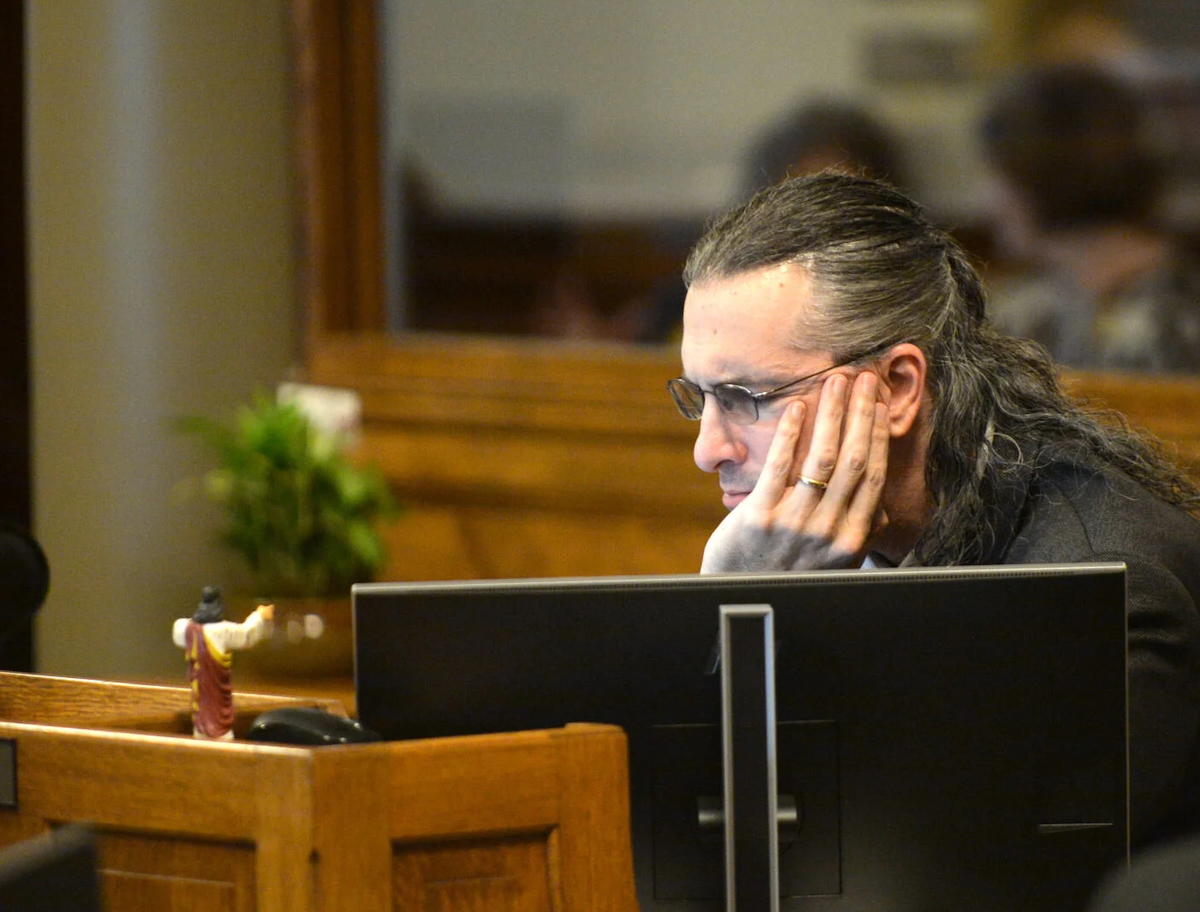
Sheridan Republican Rep. Tom Kelly, who is running for superintendent, said while he opposes “the idea of parties having the power to disallow anyone from running under their banner,” he thinks “parties should be able to express publicly which people they would like to represent them.”
Though he’s not actively seeking endorsements, Kelly said he would accept support from the state party.
“Financial backing? Absolutely,” Kelly said. “Contrary to a popular false narrative, I have no wealthy D.C. donors bankrolling me.”
And if the party endorsed one of his opponents, Kelly said he would tell them, “Congrats. I should have done a better job presenting myself.”
WyoFile reached out to other statewide Republican candidates, including those running for governor, secretary of state, superintendent, U.S. House and U.S. Senate. They did not respond by publishing time.
Update: This story has been updated to include comments from Reid Rasner.
-

 Maryland4 minutes ago
Maryland lawmakers demand accountability over Towson closure
-

 Michigan10 minutes ago
Show your Holland, Michigan pride with tulip themed gear from the Holland Sentinel
-

 Massachusetts16 minutes ago
Child dies after tree falls on playground in Massachusetts
-

 Minnesota22 minutes ago
Man, 19, faces charges in stolen car crash that injured Minnesota state trooper
-

 Mississippi28 minutes ago
Mississippi State baseball vs Nicholls score, live updates, start time, TV channel
-

 Missouri34 minutes ago
Mizzou linebacker arrested, accused of fleeing traffic stop on Broadway
-

 Montana40 minutes ago
Montana State Prison Expansion Advances as State Officials Tour New Housing Unit – Correctional News
-
Nebraska46 minutes ago
Nebraska rewards men’s basketball assistants for its best season in history with contract extensions

