Washington
What Washington Can Do About India-Pakistan Escalation


Welcome back to Foreign Policy’s Situation Report, where we’re still processing the news that U.S. President Donald Trump has removed National Security Advisor Mike Waltz from his post and moved him over to become Trump’s nominee to serve as the U.S. ambassador to the United Nations. Read more on that here.
Meanwhile, here’s what’s on tap for the day: Washington’s options to manage an India-Pakistan military crisis, U.N. fears about a dwindling two-state solution in the Middle East, and Russia’s foot-dragging on a Ukraine peace deal.
Under Pressure
Tensions between India and Pakistan remain on a knife edge in the wake of a terrorist attack in Indian-administered Kashmir that killed 26 civilians last week. New Delhi has accused Islamabad of backing the militants who carried out the attack and vowed to retaliate militarily. (Islamabad has denied involvement.) Pakistan’s information minister cited “credible intelligence” on Wednesday indicating that an Indian attack would take place within 24 to 36 hours.
One big question right now is what role Washington might play as a key partner to both countries.
Whither Washington? The United States, like most other countries, has a keen interest in ensuring that the saber-rattling between the two nuclear-armed South Asian countries does not escalate into an all-out war. But Washington may have more levers than most to curb such an escalation.
The messaging thus far from the Trump administration has been mixed; U.S. Secretary of State Marco Rubio spoke to both Pakistani Prime Minister Shehbaz Sharif and Indian Foreign Minister S. Jaishankar on Wednesday, urging both to “de-escalate tensions” and “maintain peace and security” in the region. Trump, however, had said in the wake of the attack that both countries would “get it figured out one way or the other.”
The U.S.-India relationship, particularly in the area of defense, has deepened in recent years and flourished under the Biden administration, with deals for the joint production of fighter jet engines and the sale of U.S. drones to India signed during Modi’s 2022 visit to Washington.
But Washington’s military relationship with Islamabad dates back much further, with U.S.-made F-16 fighter jets and weapons making up the backbone of Pakistan’s arsenal—though U.S. concerns about Pakistani support for terrorism have caused more than a few hiccups in the past.
Leverage. The Trump administration reportedly exempted a $397 million package for Pakistan’s F-16s from its massive foreign aid cuts earlier this year, which allegedly included a monitoring program to ensure that the jets were used for counterterrorism and not against India. It is not clear the extent to which that is official policy, and Pakistan’s use of the jet against India in 2019 did not yield any real consequences from the previous Trump administration.
The Pentagon declined to comment to SitRep on details about the monitoring of Pakistan’s F-16s. The State Department did not offer a comment.
Trump had denied Pakistan F-16 upgrades during his first administration, citing the terrorism concerns, but the Biden administration reversed course in 2022 and signed a deal worth up to $450 million. But U.S. officials have previously expressed displeasure at the jets being used against India, and doing so again could jeopardize future upgrade and sustainment packages.
Lindsey Ford, who served as the deputy assistant secretary of defense for South and Southeast Asia and the senior director for South Asia on the National Security Council under the Biden administration, told SitRep that other levers Washington could use to pressure Islamabad include adding Pakistan back to the Financial Action Task Force’s “gray list”—which heightens scrutiny of countries accused of money laundering or terror financing and impacts their ability to attract foreign investment—or removing it from the U.S. International Military Education and Training Program, which Pakistan is the largest beneficiary of.
Right to self-defense. India, meanwhile, may benefit from a bit more latitude in Washington in its response—albeit with limits.
“I think we have to acknowledge that India has a right to defend itself, and it will expect the same acknowledgment of that fact as the United States and other partners gave to Israel when Israel was attacked,” Ford said. “Of course, if you’re looking at the Israel analogy, there will also be a strong concern among partner nations [about] what the response looks like.”
A former U.S. official, speaking on condition of anonymity to speak candidly about intergovernmental discussions, summarized the likely U.S. message to India thus: “Yes, we’re here to help you, let us know how we can be useful, but let’s also not go down a path that blows this thing up in a way that becomes a long-term drag on everything that we’re trying to achieve in the Indo-Pacific.”
Let’s Get Personnel
Republican Sen. David Perdue of Georgia was confirmed on Tuesday as the new U.S. ambassador to China. Perdue will assume the role amid historic tensions between China and the United States on issues ranging from trade and tariffs to Taiwan. Ahead of the confirmation vote, Senate Foreign Relations Chair Jim Risch emphasized the contentious state of affairs between the two countries and the challenges that Perdue will face as a result. “Sen. Perdue, you have a heavy work cut out for you,” Risch said.
On the Button
What should be high on your radar, if it isn’t already.
Can a two-state solution be saved? U.N. chief António Guterres on Tuesday called for countries to “take irreversible action towards implementing a two-state solution” to the Israel-Palestine conflict “before it is too late.” Guterres’s comments came ahead of a U.N. conference in June that will focus on a two-state solution, which France and Saudi Arabia are set to co-host. French President Emmanuel Macron recently signaled that France could soon move to recognize a Palestinian state, possibly at the June conference.
It’s widely agreed that a two-state solution is virtually impossible as things stand, with the war in Gaza ongoing and the current Israeli government opposed to Palestinian statehood.
The second Trump administration has also broken from decades of U.S. policy by not backing a two-state solution. Trump’s push for the United States to take over Gaza is fundamentally at odds with this goal. The U.S. ambassador to Israel, Mike Huckabee, also has a long record of opposing a two-state solution.
Along these lines, Guterres warned on Tuesday that “the promise of a two-state solution is at risk of dwindling to the point of disappearance.”
Moscow tells Trump to slow down. As Trump continues to push for a rapid end to the Russia-Ukraine war, Moscow is effectively telling the White House to pump the brakes.
The Kremlin said on Wednesday that Russian President Vladimir Putin is open to a peace deal but added that it’s not going to happen as quickly as Trump wants because the conflict is too complicated.
There are reasons to be skeptical that Putin genuinely desires an end to the war, despite Russia unilaterally announcing a three-day cease-fire for early May. Russia continues to pummel Ukraine with devastating strikes and reject Kyiv’s calls for an unconditional cease-fire.
Trump appears to be growing impatient with Russia as the fighting rages on, recently stating that Putin might be “tapping” him along and raising the possibility of new economic penalties on Russia. The Trump administration has also signaled that it could soon abandon its efforts to achieve a peace deal if there’s not more progress ASAP.
That said, the United States and Ukraine signed a minerals deal on Wednesday, which is seen as a positive sign in Kyiv in terms of shoring up future support from Washington. The agreement, which Trump pushed for as a way to recoup the billions in assistance that Washington has given to Kyiv, grants Washington preferential access to Ukraine’s mineral resources and establishes a joint investment fund for the country’s reconstruction. Future U.S. military assistance to Ukraine will be treated as a contribution to the fund.
Though the deal does not contain explicit security guarantees, it links Trump to Ukraine’s future, opens the door for further U.S. assistance, and comes with tougher rhetoric toward Moscow from the White House after months of rocky relations between the new administration and Kyiv. U.S. Treasury Secretary Scott Bessent said the agreement sends a clear signal to Russia that the Trump administration is “committed to a peace process centered on a free, sovereign, and prosperous Ukraine.”
The U.K. joins in on U.S. bombing of Houthis. The U.K. military launched airstrikes against Houthi targets in Yemen on Tuesday as part of a joint operation with the United States. This marked the first time that British forces have conducted strikes against the Iran-backed group since Trump returned to the White House.
The Houthis have been targeting merchant vessels in the Red Sea since the Israel-Hamas war began in late 2023, prompting a military response from Washington and its allies that the Trump administration dramatically escalated last month.
Meanwhile, there are growing questions over the effectiveness of the intensive bombing campaign that the Trump administration launched in March, which has cost a pretty penny. Lawmakers in Washington have also raised concerns about civilian casualties.
Snapshot
A drone view of detainees forming the letters “SOS” with their bodies in the courtyard at the Bluebonnet Detention Facility, where Venezuelans at the center of a U.S. Supreme Court ruling are held, in Anson, Texas, on April 28. Paul Ratje/Reuters
Put On Your Radar
Saturday, May 3: Australia is set to hold federal elections.
Singapore is poised to hold early parliamentary elections.
Sunday, May 4: Romanians are set to head to the polls in the first round of a presidential election rerun.
By the Numbers
52: The percentage of Americans who agree with the statement that “President Trump is a dangerous dictator whose power should be limited before he destroys American democracy,” according to a new survey from the nonpartisan Public Religion Research Institute. On the other hand, 44 percent agree with the statement that “President Trump is a strong leader who should be given the power he needs to restore America’s greatness.”
Quote of the Week
“I’m not afraid of you.”
— Mohsen Mahdawi in a message to Trump after his release from detention in Vermont on Wednesday. Mahdawi, a Columbia University student and pro-Palestinian activist, was detained during his U.S. citizenship interview on April 14 as part of a Trump administration crackdown on immigration and support for Palestine on college campuses.
This Week’s Most Read
Whiskey Tango Foxtrot
We hope you’re having a better week than the U.S. Navy crew that accidentally let a roughly $67 million fighter jet fall off the edge of the USS Harry Truman aircraft carrier and into the Red Sea. The FA/18E Super Hornet and a tractor towing it both fell overboard and sank after the crew “lost control of the aircraft,” the Navy said in a statement, adding that the service members moved out of the way in time and only one sailor sustained minor injuries.



Game Notes
Quick Hits
1) Evgeni Malkin has 82 points (27G-55A) in 67 career games against the Capitals. It’s the third-most points he’s scored against any one team.
2) Defenseman Sam Girard has five points (5A) and is plus-7 in his last seven games. Only three players have a better plus/minus than him (+7) since Mar. 30.
3) Since March 22, no player in the league has more goals than Rickard Rakell (10).
4) Elmer Soderblom has seven points (3G-4A) over his last eight games. He has nine points (4G-5A) in 18 games with Pittsburgh after recording three points (2G-1A) over 39 games with Detroit this year.
5) Egor Chinakhov has 21 points (8G-14A) over his last 19 games and has picked up 36 points (18G-18A) in 42 games since joining the Penguins. Since his Penguins debut on Jan. 1, only Rickard Rakell (20) has more goals than him on the team.

The Justice Department (DOJ) is asking a federal judge in Virginia to allow it to conduct its own search of a Washington Post reporter’s seized electronic devices, rather than have the court do the review.
Federal prosecutors urged U.S. District Judge Anthony J. Trenga in a March 31 court filing to overturn a lower court ruling that prohibited the DOJ from using a “filter team” to search reporter Hannah Natanson’s phone and laptop as part of an FBI investigation into a government contractor accused of leaking classified material.
Magistrate Judge William Porter ordered in February that the government could not “open, access, review, or otherwise examine” any of Natanson’s “seized data,” instead authorizing an independent judicial review.
“Given the documented reporting on government leak investigations and the government’s well-chronicled efforts to stop them, allowing the government’s filter team to search a reporter’s work product—most of which consists of unrelated information from confidential sources—is the equivalent of leaving the government’s fox in charge of the Washington Post’s henhouse,” Porter wrote.
Federal prosecutors have pushed back, arguing that Porter’s order infringes on the separation of powers by shifting an executive branch function into a judicial one.
They also asserted that it could compromise the neutrality courts are meant to maintain in overseeing search warrants and related proceedings.
“That principle is even more important here because the search authorized by this warrant involves the identification and seizure of classified national defense information, a responsibility the law entrusts to the Executive’s expertise,” federal prosecutors wrote.
The case stems from an FBI search of Natanson’s home in January, in which agents took two laptops, a cellphone and a Garmin watch belonging to the journalist, who had been reporting on the Trump administration’s effort to trim government spending and cuts to the federal workforce.
The search was conducted in connection with a government system administrator in Maryland, who is now behind bars, according to the DOJ.
Attorneys for the Post have contended that the warrant and subsequent search were an example of federal overreach and violated First Amendment press protections.
“The government should not receive permission to rummage through a reporter’s professional universe,” Simon Latcovich said during a Thursday hearing, according to The Post.
The newspaper reported that Trenga, appointed by former President George W. Bush, said he would “get a decision shortly” but seemed skeptical that Porter’s ruling would hamper the DOJ’s ability to build its case against the contractor.
Copyright 2026 Nexstar Media Inc. All rights reserved. This material may not be published, broadcast, rewritten, or redistributed.


Obama surprises veterans on honor flight to DC for Veterans Day
Former President Barack Obama greets veterans arriving in DC, thanking them and gifting Presidential Challenge coins.
A critically acclaimed musical about Barack Obama is coming to Washington DC for the first time, with tickets still available for its limited run.
After making its world premiere in Los Angeles in 2024, “44: The Musical” had stops in Chicago, Philadelphia and New York City.
Now it’s coming to DC for a 25-show run at the Shakespeare Theatre Company’s Klein Theatre just a few blocks away from Obama’s former home at the White House.
Here’s what to know about the musical and how you can get tickets.
What is ’44: The Musical’ about?
Told through the “hazy recollection” of Obama’s vice president, Joe Biden, the musical features original songs that capture key moments of Barack Obama’s presidency with satire, humor and a dose of political nostalgia.
“’44: The Musical’ is the story of Obama you won’t read about in history books… because history books are now banned in most states,” Shakespeare Theatre says on its website. “But also because ’44’ is the story of Obama as Joe Biden kinda sorta remembers it.”
The musical features 24 songs through a wide range of genres, including R&B, gospel and pop, along with “a live-band driven score (that captures) the music, momentum and communal spirit that defined a generation.”
Characters in “44: The Musical” include Obama and Biden, Sarah Palin, Michelle Obama, Mitch McConnell and Ted Cruz.
Runtime for the musical, written and directed by former Obama campaign staffer Eli Bauman, is two hours and 15 minutes.
When is ’44: The Musical’ coming to Washington DC?
“44: The Musical” begins its limited run at The Shakespeare Theatre on April 18.
There will be 25 shows, with the last two coming on May 10.
How can you get tickets to the Obama musical in DC?
You can purchase tickets for “44: The Musical” at ShakespeareTheatre.org.
As of April 10, all 25 shows had seating availability.
“The people of D.C. deserve an infusion of joy right now,” Bauman said in a press release. “With all the heaviness going on in our country, ’44’ is here to provide a fun night out — where a room full of strangers can laugh and reminisce about a time when the country felt full of hope, and when the biggest presidential scandal was wearing a tan suit.”

More patients demand ‘unvaccinated’ blood, doctors warn of growing health risks

ESPN star calls for 2017 Masters winner to have his lifetime exemption removed after meltdown

Smart travel safety tips before your next trip
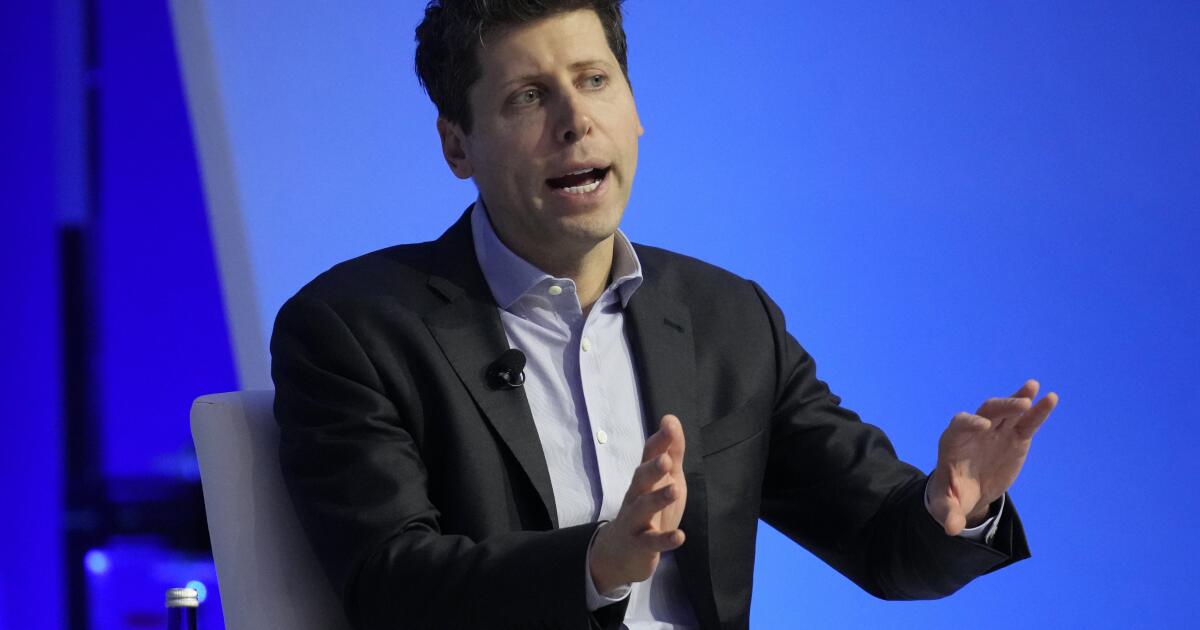
OpenAI CEO Sam Altman addresses Molotov cocktail attack on his home and AI backlash

Everything to know about David Geffen Galleries as a new LACMA emerges

Florida High School Football Rankings: Top 25 teams – Oct. 21

How old is Bo Nix? What to know about Oregon quarterback ahead of 2024 NFL Draft

Cleary's 21 help Le Moyne down Central Connecticut State 69-64 in OT

99th annual Pony Swim held in Virginia

Indiana Members Credit Union announced as new anchor tenant at Bottleworks District
Newsletter: Cautious optimism in Brussels as Orbán ousted in landslide Hungarian opposition win

More than a quarter of private colleges are at risk of closing, a new projection shows

NYC mayor cites $180K racial wealth gap to justify taxes, police cuts

Abuse allegations against lead Democrat shake race for California governor

Fellow Democrats urge Swalwell to quit California governor’s race and resign from Congress
-

 Atlanta, GA1 week ago
1 teenage girl killed, another injured in shooting at Piedmont Park, police say
-

 Georgia6 days ago
Georgia House Special Runoff Election 2026 Live Results
-

 Arkansas3 days ago
Arkansas TV meteorologist Melinda Mayo retires after nearly four decades on air
-

 Pennsylvania6 days ago
Parents charged after toddler injured by wolf at Pennsylvania zoo
-
 Milwaukee, WI7 days ago
Potawatomi Casino Hotel evacuated after fire breaks out in rooftop HVAC system
-

 Technology1 week ago
Anthropic essentially bans OpenClaw from Claude by making subscribers pay extra
-

 Austin, TX5 days ago
ABC Kite Fest Returns to Austin for Annual Celebration – Austin Today
-

 Detroit, MI1 week ago
Puppy rescued after getting stuck on chimney in Detroit