Politics
Commentary: From ‘election integrity’ to voter suppression: America’s long, slow slide


Today we’re taking a tour through the mythical Land of Election Fraud, where President Trump has built a palace of lies, imprisoning both truth and democracy.
I put it in fairy tale terms because the idea that American elections are corrupt should hold about as much credence as a magical beanstalk growing into the sky. Countless lawsuits and investigations have found no proof of these false claims.
But here we are — not only do many Americans erroneously believe that Trump won the 2020 election, but the chief water-carriers of that lie are now in powerful government positions.
Last week, the U.S. Department of Justice announced that it will send monitors to Los Angeles and other locations in California and New Jersey for next week’s balloting. Those who study voting and democracies warn that this could be a test run for how far Trump could go in attempting to impose his will on the 2026 midterms and perhaps the 2028 presidential election.
If you think that it is harmless coincidence that he’s stacked election deniers in key posts, or that once again California is the center of his attack on democratic norms, I have beans you may be interested in buying.
“The sending of the observers to the special election could very well be, and probably likely is, a precursor or practice run for 2026,” Mindy Romero told me. She’s an assistant professor and the founder of the Center for Inclusive Democracy at USC’s Sol Price School of Public Policy.
Like others I spoke with, Romero sees a larger context to the poll monitors that has the potential to end with voter suppression.
“The Trump administration is laying a foundation, and they’re being very open about it, very clear about it,” Romero said. “They are saying that they are anticipating there to be fraud and for the election to be rigged.”
Trump put it even more clearly in a social media post on Sunday.
“I hope the DOJ pursues this with as much ‘gusto’ as befitting the biggest SCANDAL in American history!,” he wrote. “If not, it will happen again, including the upcoming Midterms. … Watch how totally dishonest the California Prop Vote is!”
To understand where all this may be headed involves digging back into Golden State history. The conspiracy underpinning election fraud claims has deep roots in California’s Proposition 187 — the anti-immigrant measure that was passed by voters in 1994 but squashed by the courts.
The far right never got over the defeat. Anti-immigrant sentiment morphed into conspiracy theory, specifically that undocumented folks were voting in huge numbers, at the behest of Democrats.
This absolutely loony bit of racist paranoia spawned an “election integrity” movement that cloaked itself as patriotism and fairness, but at heart remained doused in fear-of-brown.
Calfornia Atty. Gen. Rob Bonta said Monday he sees that Proposition 187 “playbook” at work today with “a targeting, unfortunately, of immigrants … because it creates fear in the eyes of some, in the minds of some, and it helps the Republican Party, MAGA and the Trump administration achieve their goals.”
Trump’s Immigration and Customs Enforcement raids are just the flip side of the coin to his election fraud claims — both at heart a part of the white Christian nationalism that his administration is now openly embracing.
Let me just say here that all Americans want fair elections and many average folks involved in election integrity efforts simply want to ensure our one-person, one-vote system stays honest — regardless of race or anything else. No hate on them at all. It’s the funders and organizers of many voter witch-hunt efforts that draw my ire, because they exploit that reasonable wish for fairness for their own dark agenda.
And that agenda increasingly appears to be the end of free and fair elections, while maintaining the appearance of them — the classic authoritarian way of ruling with the seeming consent of the people. Remember, Russia still holds elections.
“To have real control, you want to rule with a velvet glove,” Romero said. “That velvet glove can come off, and the people know it can come off,” but mostly, you want them to comply because it feels like “just what has to be.”
So how exactly would we get from poll monitors, a reasonable and established norm, to something as dire as an election that is rigged, or that is so chaotic the average person doesn’t know the truth?
It starts with introducing doubt into the system, which Trump has done. To be fair, with Proposition 50, the Election Rigging Response Act, Democrats now fear rigged elections, too.
But Gowri Ramachandran, the director of elections and security in the Brennan Center for Justice’s Elections and Government Program, told me her “biggest fear” is that those election deniers whom Trump elevated to official roles “now have the platform of the federal government.”
For that reason, “information about elections [that] comes out of the federal government right now, I think everyone’s going to have to take it with a really big grain of salt,” she said.
So we come out of the California 2025 special election unable to trust the federal government’s take on it, with one year until the midterm elections that will determine whether or not Trump’s power remains unfettered.
Maybe everything turns out fine, but there’s a string of other maybes where it doesn’t.
Let’s say Trump tries to declare an end to mail-in ballots and early voting, both of which increase turnout for lower-income folks who don’t have time to line up. Trump tried that earlier this year, though courts blocked it.
What does the 2026 election look like if you have to line up in person to vote if you want to be sure it counts, with ICE potentially around the block rounding up citizens and noncitizens alike? And the government requiring that you have multiple forms of identification, all with matching names (take that, married women), and even military “guarding” the polls?
Kind of intimidating, huh?
But let’s say the election happens anyway. And let’s say Republicans lose enough congressional seats to put Democrats in control of the House. But let’s say the federal government claims there is so much fraud, it has to be investigated before any results can be considered official.
Private groups sue on both sides. Half the country believes Trump, half the country believes the secretaries of state, like California’s Shirley Weber, charged with managing the results.
In that chaos, the newly elected Democratic representatives head to Washington, D.C., to get to work, only to have House Speaker Mike Johnson (R-La.) refuse to swear them in — no differently than he is currently doing with elected Arizona Rep. Adelita Grijalva, who has promised to vote to release the Epstein files if Johnson ever does his job.
Romero calls that scenario “not even … that big of a stretch.”
Congress comes to a halt, not enough members sworn in to function, which is just fine by Trump.
And voila! The vote is suppressed by confusion, chaos and the velvet glove, because of course it’s reasonable to want to know the truth before we move forward.
So monitor away. Watch the polls and watch the watchers, and protect the vote.
But don’t buy the beans.

Politics
Warren tells Trump to ‘sign the damn bill’ as bipartisan housing package remains stalled in Washington

NEWYou can now listen to Fox News articles!
Sen. Elizabeth Warren, D-Mass., lashed out at President Donald Trump during a recent local television interview, labeling him a “man-child” throwing a “tantrum” over his refusal to sign a sweeping bipartisan housing package.
Appearing on WCVB’s “On the Record,” the left-wing senator did not hold back her frustration over the stalled legislation, delivering a blunt message to the president: “Sign the damn bill.”
“If he cared about the American people, he’d have already signed the damn thing,” Warren said during the interview, arguing that Trump “does not care about the economic survival of America’s working families.”
FILE – The Senate previously advanced the massive housing package geared toward lowering the costs of homes and supercharging the housing supply. Sen. Elizabeth Warren, D-Mass., pitched it as legislation to prevent America from becoming a “nation of renters.” (Jemal Countess/Getty Images for Protect Borrowers ; Anna Moneymaker/Getty Images)
TRUMP-BACKED HOUSING BILL CLEARS HOUSE AFTER GOP DEFIES SENATE PRESSURE CAMPAIGN
The 21st Century ROAD to Housing Act is an expansive bipartisan package that she said contains nearly 50 provisions designed to address the nationwide housing emergency.
Warren noted that decades of under-building have driven prices up, leaving the U.S. in need of millions of new units.
The primary focus of the bill is to lower the costs of construction and make it easier to build new homes.
FILE – President Donald Trump previously said lawmakers must first approve the SAVE America Act before he moves forward with the housing package. (Yuri Gripas/Abaca/Bloomberg)
BIPARTISAN HOUSING PUSH ADVANCES, BUT TRUMP-BACKED INVESTOR BAN FACES RESISTANCE
The bill, which was co-sponsored by Sen. Tim Scott, R-S.C., also includes a secondary focus aimed at blocking corporate consolidation of the housing market.
Warren explained that the legislation is designed to keep private equity firms from buying up local neighborhoods and turning America “into a nation of renters.”
According to Warren, the legislation had widespread support from both sides of the aisle before it was stalled.
TRUMP VOWS BLOCK ON SIGNING NEW LAWS UNTIL SAVE AMERICA ACT PASSES SENATE
She claimed the bill was “handed to the president on a silver platter” and that lawmakers from both parties were eagerly taking credit for the legislation.
“Republicans were all going online, saying, ‘well, I helped write that bill. This bill is terrific,’” Warren said. “So everybody’s out there saying, ‘my bill, I helped make this happen,’ right up until the man-child has a tantrum and announces he will not be signing it.”
FILE – Sen. Elizabeth Warren called President Donald Trump a “man-child” during the interview, describing his refusal to sign the bill as a “tantrum.” (Chip Somodevilla/Getty Images)
CLICK HERE TO DOWNLOAD THE FOX NEWS APP
Critics of the legislation claim it does not allocate fresh federal funding, directly address rising costs of homeownership, or go far enough to address permitting issues.
The president previously canceled a scheduled signing event, insisting lawmakers must first approve the unrelated SAVE America Act, a voting-focused measure, before he moves forward.
The White House did not immediately respond to Fox News Digital’s request for comment.
Fox News Digital’s Alex Miller contributed to this report.
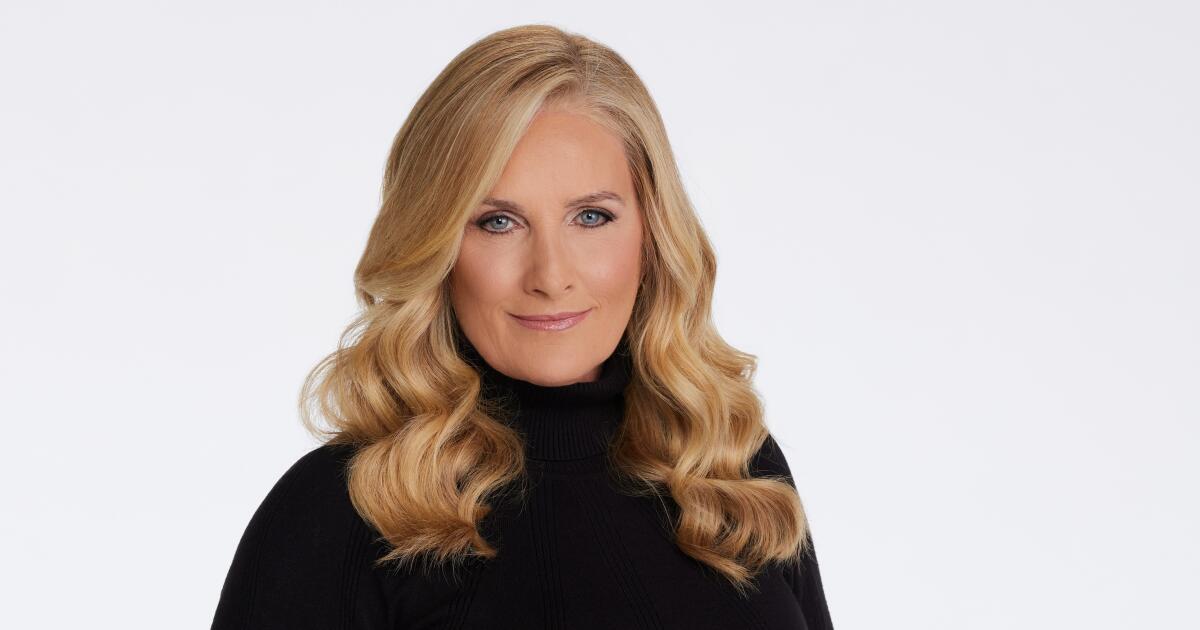
Veteran MS NOW anchor Alex Witt is leaving the news network, which is moving away from live evening programming on weekends.
The new weekend programming strategy announced Friday is a cost-saving measure that will give parent company Versant more resources for a new direct-to-consumer streaming offering that makes MS NOW available to consumers without a pay-TV subscription. The company is also looking to expand its live event business.
According to a memo from MS NOW President Rebecca Kutler, “The Weekend: Primetime,” a live discussion program launched last year, will have its final airing Saturday.
One of the program’s co-hosts, Antonia Hylton, will take over Witt’s midday shifts later this year. Hylton’s co-hosts Ayman Mohyeldin, Catherine Rampell and Elise Jordan will remain with MS NOW and continue to appear on other programs.
Kutler said job losses from the moves are minimal and encouraged staffers who lose their current roles to apply for 40 current job openings at the company with more on the way. MS NOW has been staffing up its news operation since separating from NBC News last year.
MS NOW changed its name from MSNBC in November. The network, along with other Comcast-owned cable channels, were spun off into Versant in January.
Weekends have long been a ratings weak spot for MS NOW, which while a distant second to Fox News, has seen audience growth in 2026 and remains ahead of CNN. The network has started to rely on podcasts such as “Pod Save America,” from Crooked Media, to fill some hours. The episodes have performed strongly enough for MS NOW to try similar deals with outside podcast producers.
“Throughout the summer, we will expand our taped strategy and announce new content partnerships,” Kutler said in her memo.
With the changes, MS NOW will still have 20 hours of live programming each weekend and will be staffed to handle breaking news.
Witt joined the network formerly known as MSNBC in 1999, long before it began its strong tilt toward progressive political commentary. Over the years, Witt’s weekend newscast became one of the few programs on the network that delivered straight news without opinion.
Kutler called Witt “a beloved longtime member of our MS NOW family” and “a continued, trusted, and steady presence for our audiences.”
While Witt works through the summer, Hylton will anchor the 11 a.m. weekday time period, which will eventually be handled by former NBC News White House correspondent Peter Alexander.
Politics
McCarthy says Trump will use ‘everything he can’ to force Senate action on SAVE America Act

NEWYou can now listen to Fox News articles!
As infighting over the SAVE America Act throws congressional Republicans into disarray, President Donald Trump’s bid to get the stalled election bill across the finish line gained one notable ally.
Former House Speaker Kevin McCarthy, R-Calif., told Fox News Digital that he supports the election integrity measure and indicated that Trump should continue to use every available tool to pressure the Senate to pass it.
“He’s going to try everything he can to make sure he passes that through,” McCarthy said in a brief interview outside the U.S. Capitol.
The ex-speaker’s comments came after Trump abruptly called off a signing ceremony Wednesday for a bipartisan housing bill to pressure the Republican-controlled Senate to act on the SAVE America Act.
President Donald Trump boards Air Force One as he departs Reading Regional Airport in Reading, Pa., on June 23, 2026. (Evelyn Hockstein/Reuters)
IRATE REPUBLICANS ACCUSE TRUMP OF HANDING DEMOCRATS A WIN AFTER BLOWING UP HOUSING PACKAGE
The move surprised Republican lawmakers, some of whom were praising the bill’s passage at a press conference when Trump’s Truth Social post broke.
But Trump has repeatedly cast the election measure — requiring proof of citizenship to vote in federal elections and voter identification requirements — as his top legislative priority.
The legislation’s momentum, however, has slowed in the upper chamber, where Republican leadership insists the votes aren’t there amid widespread Democratic opposition. Senate Republicans have also been unwilling to eliminate the legislative filibuster, which requires a 60-vote threshold to pass the legislation.
Former Speaker of the House Kevin McCarthy speaks during a ceremony honoring President Ronald Reagan on the 115th anniversary of his birthday at the Ronald Reagan Presidential Library in Simi Valley, Calif., on Feb. 6, 2026. (Hans Gutknecht/MediaNews Group)
TRUMP CALLS MAIL IN VOTING CORRUPT AS SENATE BEGINS DEBATE ON SAVE ACT REQUIRING VOTER ID
Amid the SAVE standoff, a group of conservative lawmakers effectively shut down the House floor in an effort to force Senate action on the election bill.
But the Senate recessed Wednesday for two weeks over the July 4 holiday, leaving the measure in limbo until lawmakers return.
The conservative-led blockade sparked fierce backlash, with several members inside the GOP conference telling Fox News Digital the move risked torpedoing their own legislative agenda.
Meanwhile, the House has also yet to pass a version of the legislation incorporating several of the president’s priorities, including a mail-in voting crackdown and provisions banning men from competing in women’s sports and child sex change procedures.
Trump has not indicated whether he will sign the 21st Century ROAD to Housing Act, despite the likely existence of a veto-proof majority.
House Speaker Mike Johnson, R-La., told reporters Thursday that the housing bill had been transmitted to the White House for Trump’s signature following a meeting with the president.
Speaker of the House Mike Johnson, R-La., talks with reporters in the U.S. Capitol on June 10, 2026. (Tom Williams/CQ-Roll Call, Inc via Getty Images)
CLICK HERE TO DOWNLOAD THE FOX NEWS APP
Trump now has 10 days to sign the package or veto it. If he does nothing, the legislation automatically becomes law at the end of the 10-day period.
-

 Tennessee58 seconds ago
Flood watch in effect for Middle Tennessee: 2-3″ of rain expected Saturday
-

 Texas6 minutes ago
Texas state school board approves mandated reading list including Bible passages
-

 Utah13 minutes ago
Utah, Salt Lake County awarded grants for community cleanup
-

 Vermont16 minutes ago
West Rutland man dies in hit-and-run, police seek vehicle
-

 Virginia21 minutes ago
Vandals smash windows of nearly 3 dozen cars in Arlington Mill
-

 Washington28 minutes ago
The Washington Capitals Select Oliver Suvanto | Washington Capitals
-
 Wisconsin31 minutes ago
From bodybuilding to business: Wisconsin entrepreneur builds success with Bulk Butter
-

 West Virginia36 minutes ago
West Virginia First Foundation advances key initiatives at second quarterly board meeting

