Washington
Washington’s second-biggest city, Spokane, bans crypto ATMs


Spokane, the second-largest city in the US state of Washington, has banned crypto ATMs to fight rising scam activity targeting the city’s residents.
Spokane City Council said on Monday that it became the first city in Washington to ban cryptocurrency ATMs following a unanimous vote.
The measure was proposed by Council member Paul Dillon, who helped to put forward the ban, said that crypto ATMs “have become a preferred tool for scammers looking to defraud unsuspecting victims,” and the ban would “protect vulnerable Spokane residents from scams involving virtual currency kiosks.”
Dillon told local newspaper The Spokesman-Review that the measure “will ban future ones, as well as remove existing kiosks. We see a lot located in poor neighborhoods, convenience stores, grocery stores.”
According to the ordinance, the city of Spokane has seen a “significant increase in scams arising from the use of cryptocurrency kiosks, and there has been a steady increase in victims losing thousands of dollars.”
The edict added that it provides a tool “to protect consumers from those individuals who rely primarily on virtual currency to defraud others.”
Monitoring the impact
Crypto ATM operators have 60 days to remove dozens of kiosks citywide or face civil infractions and business license revocation.
On Tuesday, the Spokane City Council said it will track progress and report on whether the ordinance has a measurable impact on the frequency of reported crimes involving crypto kiosks.
Hotbed for scammers
Police detective Tim Schwering reportedly told the council that he’s seen a number of cases where money fed into these kiosks “will end up in places like China, North Korea, Russia.”
Australia rolls out new crypto ATM rules as feds flag rising scams
He said criminals impersonate law enforcement or tax officials, telling victims to buy crypto at the ATMs to protect their money or avoid jail time.
“They’re scamming people, saying that they need to move their money into cryptocurrency in order to protect it,” Schwering said, according to The Spokesman-Review. “By the time the money is into the cryptocurrency, it’s already too late.”
Crypto kiosk scams surge
The FBI reported in April that there were almost 11,000 complaints and over $246 million in losses associated with crypto ATM scams in 2024, a 31% increase from 2023.
Scammers have also been targeting the elderly, with two-thirds of the victims of crypto kiosk fraud and scams being over 60, it noted.

Magazine: Arthur Hayes doesn’t care when his Bitcoin predictions are totally wrong



WEST PALM BEACH, Fla. (AP) — The Washington Nationals released right-handed pitcher Drew Smith on Saturday.
Smith, 32, had signed a minor league deal with an invitation to major league camp after missing the entire 2025 season to recover from Tommy John surgery. He went 1-1 with a 3.06 ERA and two saves in 19 relief appearances with the New York Mets in 2024.
Smith has gone 12-13 with a 3.48 ERA and five saves in 191 career games, all with the Mets.
___
AP MLB: https://apnews.com/hub/mlb
Washington
Love Actually? Washington’s current relationship with Britain is more like Contempt Actually | Timothy Garton Ash

“A friend who bullies us is no longer a friend. And since bullies only respond to strength, from now onward, I will be prepared to be much stronger. And the president should be prepared for that.” Thus spoke Hugh Grant, playing the British prime minister confronting the US president in a famous scene in the romcom Love Actually. Real-life British prime minister Keir Starmer has attempted to stand up ever so slightly to the current bully in the White House over the latest US war in the Middle East. Despite the British government’s right-royal efforts to flatter Donald Trump ever since he was elected US president, his response to Starmer’s little attempt has been a torrent of contempt. So the reality is not Love Actually. It’s Contempt Actually.
Asked about the British government’s subtle distinction between defensive strikes in the Gulf, which it now supports, and offensive ones, which it doesn’t, Maga ideologue Steve Bannon tells the New Statesman’s Freddie Hayward: “That’s diplomatic bullshit. Fuck you. You’re either an ally or you’re not. Fuck you. The special relationship is over.” Ah, the “special relationship”! It must be 40 years since I first heard former West German chancellor Helmut Schmidt say: “The special relationship is so special only one side knows it exists.”
An American critic of Trump recently asked me the obvious follow-up question: “Why does your government keep grovelling?” More fundamentally, we must ask why so much of official Britain, and especially its security establishment, keeps clinging for dear life to the United States, behaving for all the world like someone stuck in an abusive personal relationship.
To be fair, a lot of other European leaders have spent much of the past year sacrificing their dignity as they suck up to Trump, condoning his trashing of everything that liberal Europe has stood for since 1945. Mark Rutte, the secretary general of Nato, would beat Starmer to win Private Eye’s premier satirical medal, the OBN (Order of the Brown Nose). The reasons for this sycophancy are obvious: Europe’s dependence on the US for supporting Ukraine, for our own security in Nato and, to a significant degree, for our prosperity. But there’s a particular, rather pathetic desperation about the way the British cling to Uncle Sam.
The explanation? History, of course. The US founding fathers grew up thinking of themselves as Englishmen. From 1776 to 1917, when the US entered the first world war, this was, as the historian Robert Saunders nicely puts it, not so much a special as a peculiar relationship. The US defined itself historically against Britain, but there was a mutual fascination. Following the brief but important military alliance in 1917-18, and the subsequent peacemaking in Paris, the US withdrew from Europe.
A special relationship really did exist between 1941, when Winston Churchill managed – with a little help from the Japanese bombing of Pearl Harbor – to bring the US into the war against Adolf Hitler, and 1956, when the US humiliatingly stopped Britain and France from retaking the Suez canal. The UK and the US were not equals, but this was still a real power partnership, jointly shaping Europe, if not the world.
France and Britain drew sharply contrasting conclusions from their humiliation over Suez. France, under president Charles de Gaulle, built its own independent nuclear deterrent and had already identified the goal that the current French president, Emmanuel Macron, calls European strategic autonomy. Britain, after a brief period of angry alienation from Washington, doubled down on prioritising its relationship with the US. If we could no longer be a great power ourselves, we would be “Athens to America’s Rome”.
Unlike France, Britain built a nuclear deterrent that was and remains technologically dependent on the US, and always put Nato before European construction. In many ways, the British-American relationship did get closer: in intelligence and military cooperation, in academia and media, in finance and the economy (today the UK is the top destination of US direct investment, just ahead of the Netherlands). But at the same time, Britain’s political influence in Washington was steadily diminishing. It clung to it all the more.
The late British Labour politician Robin Cook reported in his memoirs how, in a crucial cabinet debate in the run-up to the Iraq war, then prime minister Tony Blair said: “I tell you that we must steer close to America. If we don’t, we will lose our influence to shape what they do.” But how much influence was there really?
Today, Blair’s former chief of staff Jonathan Powell sits at Starmer’s right hand in 10 Downing Street, trying to do the same with the Trumpians. “We have those relationships so we can have those difficult conversations,” says an anonymous Whitehall source. But the conversations are not difficult for Washington. They are for London, because it has so little clout left.
This trend has been exacerbated by two other developments. The first is the decline of Britain’s armed forces. American soldiers who spent years fighting alongside the British now tell me, with something more like pity than contempt: “You barely have an army any more.” In the current conflict, France got a naval ship to Cyprus before Britain did, although it was a British military base on Cyprus that was attacked by Iran. This weakness, too, finds its echo in popular culture. In the latest season of the Netflix political soap The Diplomat, the saturnine US vice-president (brilliantly played by Rufus Sewell) riffs off the children’s book The Little Engine That Could to describe Britain as “the little island that couldn’t”. Ouch.
The second is Brexit. It’s just blindingly obvious that the UK is less important to the US than it used to be because it’s no longer part of a larger bloc. In Blair’s time, for all the long-term waning of influence, Britain still had two relatively strong legs: the transatlantic one and, as a member of the EU, the European one. In 2016, in what we can today see even more clearly was an act of monumental stupidity, Britain chose to cut off its own European leg. Now Trump is cutting the American one.
Here’s the other reason for Britain’s peculiar, rather pathetic desperation. Unlike France or Germany, it doesn’t have another leg to stand on.
For anyone who loves this country, it’s painful to see how it has reduced itself to being an object of contempt – or at best, pity. Fortunately, there is a path back to self-respect and being respected. While keeping the best possible relations with the US, Britain can set a strategic course towards being a core part of a stronger Europe. This means helping to build up European defence, especially through the Europeanisation of Nato, and it means – as London’s mayor, Sadiq Khan, has just usefully suggested – rejoining the EU. How this could be done, in a timeframe of five to 10 years, and whether it will be possible politically, on both sides of the Channel, are subjects for further columns. Watch this space.

Online gambler made $400,000 betting on Maduro removal
A Polymarket user turned a $33,000 bet into over $400,000, wagering that Venezuela’s President Nicolás Maduro would be ousted before the month’s end.
Prediction betting market platform Polymarket is opening a “Situation Room” pop-up bar in the nation’s capital that will be “dedicated to monitoring the situation.”
The company announced its latest business endeavor in an X post on Wednesday, March 18.
“Imagine a sports bar… but just for situation monitoring — live X feeds, flight radar, Bloomberg terminals, and Polymarket screens,” the company’s statement said.
The bar opens to the public in Washington, DC, on Friday, March 20, and will operate until Sunday, March 22. The Situation Room will open on 8 p.m. on March 20 and at 11 a.m. on March 21-22, according to Polymarket. The company did not specify how long the bar will remain open; however, Proper 21 K Street, where the pop-up is taking place, closes at 12 a.m. ET Monday-Sunday, according to its website.
Last month, Polymarket opened a free supermarket in New York City to promote free markets. Polymarket donated $1 million to Food Bank For NYC as part of its endeavor.
“Free groceries. Free markets. Built for the people who power New York,” the company said in an announcement.
What is Polymarket?
Polymarket allows users to bet on the outcomes of real-world events, everything from who will win the Academy Award for best actress to when the United States will confirm the existence of aliens.
Top trending bets on the platform on Friday, March 20, included whether the United States would invade Cuba in 2026 and who the 2028 Republican presidential nominee would be, among others.
Betting platform under scrutiny over ‘Situation Room’ name, more
Polymarket has come under intense scrutiny since its launch in 2020. In January, the Nevada Gaming Control Board filed a civil enforcement action against the company. In the complaint, the Board asked the court for a declaration and injunction to stop Polymarket from offering unlicensed wagering in violation of Nevada law.
However, Nevada isn’t the only entity trying to take the platform to court. Brett Bruen, the chief executive of the Global Situation Room, a public affairs agency, called the company out on X for allegedly using the organization’s trademarked name.
“We have @GlobalSitRoom & related terms trademarked (checks notes) …for tracking situations around the globe,” Bruen wrote. “Flattered, really – it’s a great name. But, no, you can’t use it. Yes, my lawyers will be in touch.”
Global Situation Room also sent a cease and desist letter to Polymarket, alleging that the company’s use of the “Situation Room” name gives a false impression that Global Situation Room is “somehow connected or associated with Polymarket’s services,” CNBC reported, citing a letter from the public relations agency.
“Indeed, there are obvious overlaps in the uses of GLOBAL SITUATION ROOM and THE SITUATION ROOM such as both marks include ‘SITUATION ROOM’ and allow consumers to monitor and act on global affairs,” the letter, written by Shane Delsman, an attorney at Milwaukee, Wisconsin-based law firm Godfrey & Kahn, reads. “In fact, the marks are so similar, Global Situation Room has already witnessed actual confusion in the form of press requests to comment on the opening of the new THE SITUATION ROOM bar.”
USA TODAY reached out to Polymarket for comment on March 20.
Michelle Del Rey is a trending news reporter at USA TODAY. Reach her at mdelrey@usatoday.com

ASML: The Foundational Tech Firm vs. Cryptocurrency Market Volatility – News and Statistics – IndexBox

The CFO who turned Adobe’s finance department into an AI lab | Fortune

Psychology says people who stay fit after 60 without formal exercise aren’t lucky – they practice 10 daily habits that turn their entire life into low-grade movement their body interprets as purpose, not obligation

Quiz: Guess the Disney Movie From the One-Star Review That Roasted It

‘Hamnet’ Spoofed in ‘SNL U.K.’ Sketch in Which Shakespeare Returns From London With Ketamine, ‘Team Anne Boleyn’ Tote and ‘C—y Little Earring’

Florida High School Football Rankings: Top 25 teams – Oct. 21

How old is Bo Nix? What to know about Oregon quarterback ahead of 2024 NFL Draft

Cleary's 21 help Le Moyne down Central Connecticut State 69-64 in OT

99th annual Pony Swim held in Virginia

Indiana Members Credit Union announced as new anchor tenant at Bottleworks District

Video: Former F.B.I. Director Robert Mueller Dies at 81

Trump gives Iran 48-hour ultimatum to reopen Strait of Hormuz or face strikes on power plants

Macron pushes tougher EU digital action ahead of key votes
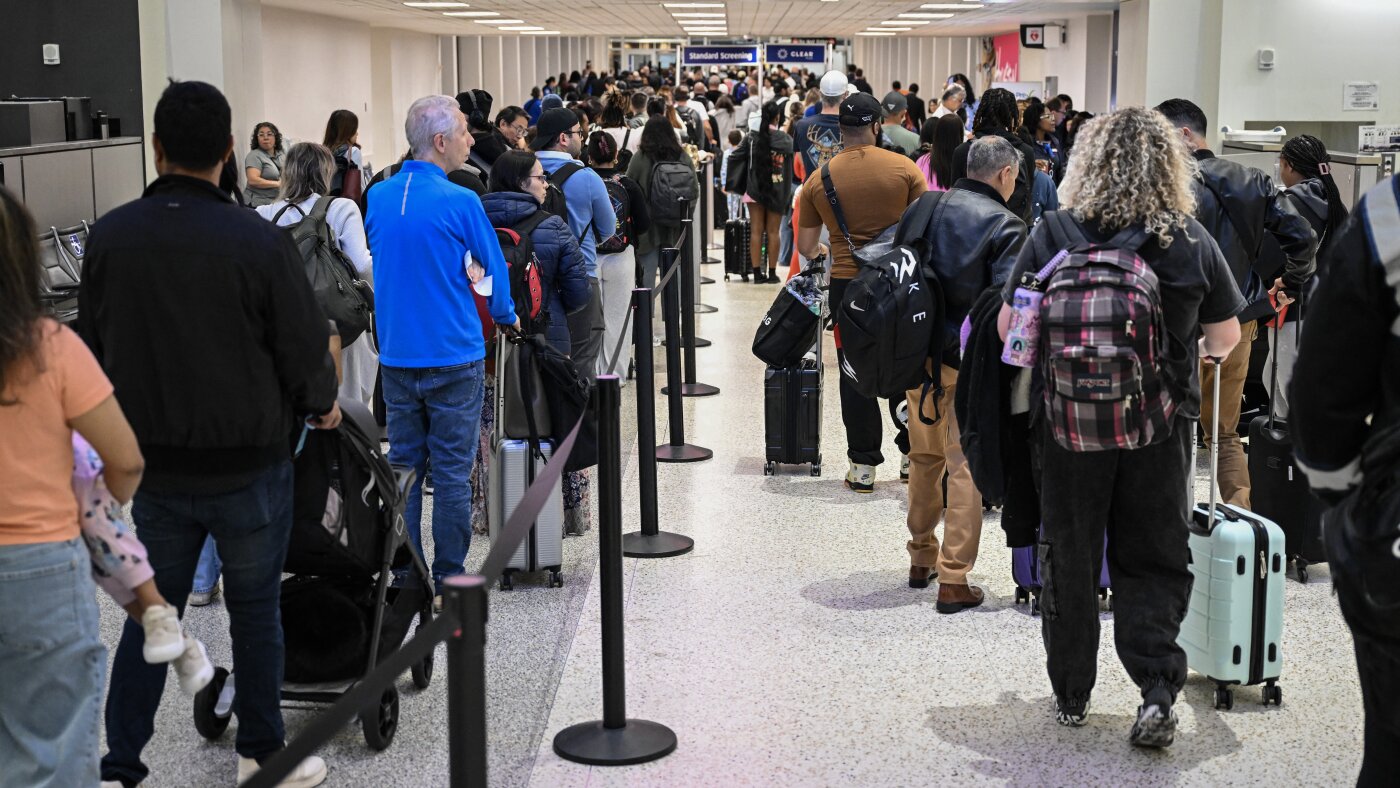
Airport security lines are long. Here’s what to know if you’re flying

Schumer gambit fails as DHS shutdown hits 36 days and airport lines grow
-

 Detroit, MI3 days ago
Drummer Brian Pastoria, longtime Detroit music advocate, dies at 68
-

 Oklahoma1 week ago
Family rallies around Oklahoma father after head-on crash
-

 Nebraska1 week ago
Wildfire forces immediate evacuation order for Farnam residents
-

 Georgia6 days ago
How ICE plans for a detention warehouse pushed a Georgia town to fight back | CNN Politics
-

 Alaska7 days ago
Police looking for man considered ‘armed and dangerous’
-
 Science1 week ago
Federal EPA moves to roll back recent limits on ethylene oxide, a carcinogen
-

 Minnesota1 week ago
Many with Minnesota ties make Forbes list of world’s richest people
-
 Science1 week ago
H5N1 bird flu spreads to sea otters and sea lions along San Mateo coast, wildlife experts say