House Minority Leader Hakeem Jeffries and Senate Majority Leader Charles E. Schumer, in separate private meetings with President Biden last week, told him that his continued candidacy imperils the Democratic Party’s ability to control either chamber of Congress next year.
Washington
Jeffries, Schumer privately warned Biden he could imperil Democrats


In a separate one-on-one conversation, a person close to Biden told the president directly that he should end his candidacy, saying that was the only way to preserve his legacy and save the country from another Trump term, the person said. Biden responded that he adamantly disagreed with that opinion and that he is the best candidate to defeat Donald Trump. The person spoke on the condition of anonymity to describe a private conversation.
The Democratic leaders released short statements after the meetings, acknowledging only that they occurred but saying little or nothing about the substance. The Biden campaign and the White House also have not provided public summaries of the meetings.
White House spokesman Andrew Bates said Biden told Schumer and Jeffries in their private meetings that he would remain at the top of the ticket. “The President told both leaders he is the nominee of the party, he plans to win, and looks forward to working with both of them to pass his 100 days agenda to help working families,” Bates said in a statement.
Rep. Adam Schiff (Calif.), the Democratic nominee for U.S. Senate in California and a close ally of former House speaker Nancy Pelosi (D-Calif.), on Wednesday became the latest and most prominent House member to call on Biden to leave the race. Adding to the president’s challenges, he was diagnosed with covid-19 on Wednesday, forcing him to curtail his campaign schedule.
Even before last month’s presidential debate, in which Biden repeatedly stumbled, Democrats’ internal polls showed his support trailing his 2020 levels by significant margins in key districts, according to people familiar with the data. Biden’s team had long hoped that the debate would boost those numbers, but it has not worked out that way.
“Democratic House polls have not shown any change in congressional candidate standing since the debate,” said one person familiar with the data, who was not authorized to speak publicly.
In the Senate, Democrats have a 51-49 majority, but Sen. Joe Manchin III, a longtime Democrat who recently switched to independent, is not seeking reelection, meaning the GOP will almost certainly recapture his seat. Even if Democrats win all the other contested seats, the result would be a 50-50 split — meaning the Senate would be controlled by whichever party wins the White House, because the vice president casts the tiebreaking vote in the chamber.
That has deeply worried many Senate Democrats, given that Biden is trailing Trump in numerous battleground state polls in which Democratic Senate candidates continue to lead — a sentiment Schumer expressed to Biden in their meeting. “Leader Schumer conveyed the views of his caucus,” said an aide to the senator who spoke on the condition of anonymity to discuss the private meeting.
In private meetings with larger groups of lawmakers, Biden has disputed the notion that he is losing to Trump or that he would hurt other Democrats and has cited polls as a defense, although he has not specified which ones prove his point, according to two of the people briefed on the matter.
The private warnings from Jeffries and Schumer are a striking message from the party’s leaders and reflect the dire outlook among many Democrats after Biden’s debate performance. Nearly two dozen members of Congress have publicly called on Biden to exit the race, and many more elected officials privately share that sentiment.
Pelosi and former president Barack Obama, who have spoken out about the state of the race in recent days, have expressed concern privately about the president’s path forward, according to people familiar with their conversations who spoke on the condition of anonymity because the talks were private. Obama spoke with Biden after his debate performance, offering his support as a sounding board and private counselor for his former vice president.
Biden has in recent days launched an energetic, sometimes combative, effort to hear out the concerns of fellow Democrats, meeting virtually with five groups of House lawmakers. He has also spoken privately with party leaders, including Pelosi and Rep. James E. Clyburn (S.C.).
Biden had a phone conversation on Friday with Rep. Suzan DelBene (D-Wash.), chair of the Democratic Congressional Campaign Committee, which coordinates the party’s House races, according to a person familiar with the call who spoke on the condition of anonymity because the conversation was private. A DCCC spokesman declined to comment.
Although their path to retaining their Senate majority has seemed shaky for some time, Democrats had seen a clear path to win back the House, which Republicans now control 220-213. With Trump leading Biden in the polls, Democrats fear that a failure to retake the House would give Trump and the far-right faction of the Republican Party a free hand to remake Washington.
The day after his meeting with Biden, Jeffries sent a letter to his Democratic House colleagues to inform them of his conversation, noting that he had requested the meeting.
“In my conversation with President Biden, I directly expressed the full breadth of insight, heartfelt perspectives and conclusions about the path forward that the Caucus has shared in our recent time together,” Jeffries wrote, referring to the full caucus of House Democrats.
After his meeting Saturday, Schumer said in a statement, “I sat with President Biden this afternoon in Delaware; we had a good meeting.”
In recent days, Democratic lawmakers and even top strategists working on Biden’s reelection effort have grown increasingly concerned that the president is not getting a full picture of the state of the race. In particular, they worry that he has not met with his campaign’s pollsters and, instead, has relied largely on the advice of a dwindling circle of longtime aides.
The back-and-forth is playing out alongside a related dispute over whether to proceed with a virtual roll call that would formally nominate Biden several weeks before the Democratic National Convention on Aug. 19-22. Some Democrats say that is a necessary move to ensure that Republicans cannot challenge Biden’s nomination as coming too late; others complain that it is a ploy to cement his nomination before the delegates gather.
On Wednesday, the co-chairs of the convention’s rules committee issued a letter saying that the virtual roll call would take place, but they promised it would not be rushed and would not occur before Aug. 1. The announcement came after some Democratic lawmakers had started protesting the process and urging the party to abandon it.
Paul Kane, Marianna Sotomayor and Leigh Ann Caldwell contributed to this report.



US President Donald Trump wanted to mark the US’s 250th birthday with a renovated Lincoln Memorial Reflecting Pool on the National Mall.
The makeover, including a new coat of “American Flag blue,” cost taxpayers $16 million (€14.1 million).
But the water is covered in green algae. The blue paint is already peeling. Trump has blamed vandals, while his critics question the project’s transparency and cost.
DW’s Brent Goff and Washington correspondent Janelle Dumalaon unpack the whole fiasco.

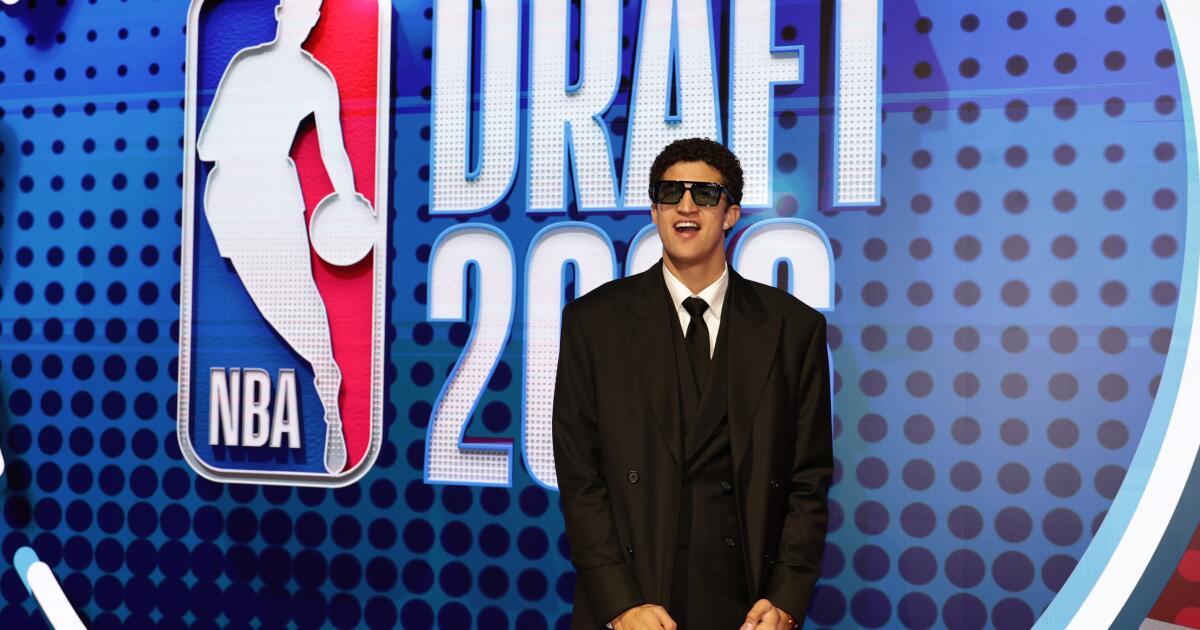
Former BYU basketball star AJ Dybantsa fulfilled his dream of going No. 1 overall in the 2026 NBA draft.
The Washington Wizards selected Dybantsa with the first pick.
Immediately after the pick, reactions poured in on social media about the Wizards drafting Dybantsa.
Social media reactions to the Washington Wizards selecting BYU star AJ Dybantsa
The Washington Wizards make it official, selecting BYU wing AJ Dybantsa with the No. 1️⃣ pick in the 2026 @NBA Draft. 🥳🎉
How does Dybantsa fit with the Wizards?#NBA #NBADraft #GoCougs pic.twitter.com/IqgikGpxbJ
— KSL Sports (@kslsports) June 24, 2026
WELCOME TO THE DYSTRICT🧙♂️ #ForTheDistrict | @AJ_Dybantsa pic.twitter.com/ACZhphmTnq
— Washington Wizards (@WashWizards) June 24, 2026
NO. 1 OVERALL 🔒
AJ Dybantsa 🤝 @WashWizards
📺 2026 #NBADraft on ESPN/ABC pic.twitter.com/WO7RxMqQyK
— Big 12 Conference (@Big12Conference) June 24, 2026
BYU star AJ Dybantsa goes No. 1 to the Washington Wizards.
First former BYU basketball player to be selected No. 1 overall.
He was the best player in his class since he was 14. This was a moment he had been chasing for years, and he got better along the way. pic.twitter.com/ugT9ITd2NP
— Mitch Harper (@Mitch_Harper) June 24, 2026
OFFICIALLY OFFICIAL 😈 #ForTheDistrict | @AJ_Dybantsa pic.twitter.com/YaOyAI48Ji
— Washington Wizards (@WashWizards) June 24, 2026
WITH THE FIRST PICK IN THE 2026 NBA DRAFT
THE WASHINGTON WIZARDS SELECT
ANICET DYBANTSA JR. ‼️ pic.twitter.com/po8oTm6B9T
— NBA (@NBA) June 24, 2026
With the 1st pick of the NBA Draft the @WashWizards select AJ Dybantsa!
The 2026 NBA Draft is LIVE on ABC & ESPN. pic.twitter.com/ONGDMv9WZ7
— NBA (@NBA) June 24, 2026
Yer a Wizard, AJ 🌟
AJ Dybantsa is heading to the District at No. 1 🔥 pic.twitter.com/42atCNr441
— ESPN (@espn) June 24, 2026
AJ Dybantsa is headed to Washington with the #1 overall pick in the NBA Draft 🚨 @AJ_Dybantsa pic.twitter.com/HnFsgcqMgX
— SLAM HS Hoops (@SLAM_HS) June 24, 2026
NUMBER ONE. pic.twitter.com/XJDFzK8dpK
— BYU Men’s Basketball (@BYUMBB) June 24, 2026
AJ Dybantsa is headed to @WashWizards with the first pick in the @NBA Draft 🚨 pic.twitter.com/IhNM2AjxLy
— Sports (@Sports) June 24, 2026
Picture perfect moment for AJ Dybantsa 📷 pic.twitter.com/rN8zbJr3cB
— NBA on ESPN (@ESPNNBA) June 24, 2026
AJ DYBANTSA GOES NO. 1 🧙♂️🔥
AD. Trae. AJ.
It’s up in Washington. pic.twitter.com/F1rAmF1Qb4
— Bleacher Report (@BleacherReport) June 24, 2026
FIRST LOOK AJ Dybantsa as a wizard pic.twitter.com/3kwGDX31cl
— PFT Commenter (@PFTCommenter) June 24, 2026
“Dybantsa, high volume player, high usage player.” 💪@KevinOConnor reacts to AJ Dybantsa being drafted No. 1 overall to D.C. 🔥 pic.twitter.com/OZWDO0DKBJ
— Yahoo Sports (@YahooSports) June 24, 2026
With the 1st pick of the NBA Draft the @WashWizards select AJ Dybantsa (@AJ_Dybantsa)!
The 2026 NBA Draft is LIVE on ABC & ESPN.
— NBA Draft (@NBADraft) June 24, 2026
The #WashingtonWizards selected AJ Dybantsa at No. 1 this year, continuing to stack up their roster with talent. He will play alongside Trae Young and Anthony Davis, and form a three-headed monster.
Will he take home the 2027 Rookie of the Year award? Or will Darryn Peterson,… pic.twitter.com/EP1eJJJxPw
— The Big Lead (@TheBigLead) June 24, 2026
Washington D.C.’s reaction to AJ Dybantsa being taken first overall by the @WashWizards. #dcsports #ajdybantsa #wizards #nba pic.twitter.com/Dst5qW8tHr
— 106.7 The Fan (@1067theFan) June 24, 2026
AJ Dybantsa led ALL of college basketball in scoring last season 🔥
Wizards got a bucket. pic.twitter.com/XYSWaBtLfj
— B/R Hoops (@brhoops) June 24, 2026
🚨 THE NO. 1 PICK IS IN 🚨
AJ Dybantsa joins NBA royalty at the top of the draft 🤩#NBAonPrimeVideoPH pic.twitter.com/R3oRZ9DEgr
— NBA on Prime Video Philippines (@NBAPrimeVideoPH) June 24, 2026
WIZARDS TAKE AJ DYBANTSA #1 OVERALL 🚨 pic.twitter.com/NceGfeVcq6
— Chalkboard (@ChalkboardHQ) June 24, 2026
AJ Dybantsa goes No. 1 overall to the Wizards👀
During his freshman season at BYU:
25.5 PPG
6.8 RPGpic.twitter.com/N6UHFgnXOK— RotoWire (@RotoWire) June 24, 2026
AJ IS A WIZARD 🪄
Dybantsa is the 1st player to lead the NCAA in scoring and go 1st in the NBA Draft since 1994. pic.twitter.com/SEpYf7Ausp
— ESPN Insights (@ESPNInsights) June 24, 2026
With the 1st Pick of the 2026 NBA Draft…. AJ DYBANTSA is heading to Washington 👏👏#Big12MBB | @BYUMBB pic.twitter.com/zNjaL98hoS
— Big 12 Studios (@big12studios) June 24, 2026
AJ DYBANTSA IS A WIZARD AND THEY’RE GOING WILD IN WASHINGTON D.C. 🎉🎉 pic.twitter.com/rmVqL0rWuy
— SleeperWizards (@SleeperWizards) June 24, 2026
A walk to remember for AJ Dybantsa.
He’s a Wizard. pic.twitter.com/if8cCn8GIp
— Jackson Payne (@jackson5payne) June 24, 2026
#HOFSeries Alum AJ Dybantsa. 🤝 #NBADraft | #HoophallU pic.twitter.com/C19N6j4vCR
— Hall of Fame Series (@hofseries) June 24, 2026
AJ Dybantsa at BYU:
25.5 PPG
6.8 RPG
1.1 SPG
51.0 FG%What will he average as a rookie? pic.twitter.com/jv5ujz6AHz
— StatMuse (@statmuse) June 24, 2026
John Wall 🤝 AJ Dybantsa
Dybantsa is the latest No. 1 pick to head to the Wizards 👏 pic.twitter.com/cFCLPn4cmN
— Yahoo Sports (@YahooSports) June 24, 2026
AJ Dybantsa (BYU) A 2026 Wooden Award All American and Top 5 Finalist from BYU, AJ Dybantsa’s talent and dedication have made him one of the game’s brightest stars. Congratulations on being selected No. 1 overall by the Washington Wizards and taking the next step in your… pic.twitter.com/1ZlAaGJdxU
— John R. Wooden Award (@WoodenAward) June 24, 2026
Congratulations to AJ Dybantsa on being selected No. 1 overall by the @WashWizards in the @NBADraft 🏀
Dybantsa was a finalist for our 2026 Jersey Mike’s Naismith Men’s College POY. @jerseymikes | @BYUMBB | @AJ_Dybantsa pic.twitter.com/hzAQSOiHzc
— Naismith Awards (@NaismithTrophy) June 24, 2026
Oakland Soldiers alum AJ Dybantsa has been selected with the No. 1 overall pick in the 2026 NBA Draft 🏀@Soldiers_Salute ➡️ @NBADraft #NBADraft #EYBL @AJ_Dybantsa pic.twitter.com/lJWT0D4Fps
— The Circuit (@TheCircuit) June 24, 2026
AJ DYBANTSA TO THE WASHINGTON WIZARDS AHHHHHHHH 🚨🚨🚨🚨🚨 pic.twitter.com/Z8pinO7KGQ
— Overtime (@overtime) June 24, 2026
Congrats to AJ Dybantsa who was just selected #1 overall by the Washington Wizards! pic.twitter.com/fCMAu3uhwN
— Grind Session (@thegrindsession) June 24, 2026
1. Washington Wizards: AJ Dybantsa, BYU#2026NBADraft pic.twitter.com/62Y1tcdu9T
— RealGM (@RealGM) June 24, 2026
THE WASHINGTON WIZARDS SELECT AJ DYBANTSA WITH THE NO. 1 PICK IN THE 2026 NBA DRAFT 🪄🔥
The BYU star is heading to the District 👏 pic.twitter.com/cvcIHS0W34
— Yahoo Sports (@YahooSports) June 24, 2026
AJ Dybantsa is headed to DC 🤩
BYU’s superstar freshman goes first overall in the 2026 #NBADraft 🔥 pic.twitter.com/OGgFv0Lm1K
— NCAA March Madness (@MarchMadnessMBB) June 24, 2026
Mitch Harper is a BYU Insider for KSL and hosts the Cougar Tracks Podcast daily on KSL Sports YouTube and KSL NewsRadio (SUBSCRIBE). Harper also co-hosts Cougar Sports Saturday (12–3 p.m.) on KSL NewsRadio.
Follow Mitch’s coverage of BYU athletics in the Big 12 Conference on X (formerly Twitter) and Instagram: @Mitch_Harper.
Want more coverage of BYU sports? Take us with you wherever you go.
Download the new and improved KSL Sports app from Utah’s sports leader. Allows you to stream live radio and video, keeping you up to date on all your favorite teams.

ASHBURN, Va. – The Washington Commanders have released their 2026 Training Camp schedule, with eleven open practices between August 1 and August 19, including five open to all fans and six reserved for season ticket members.
For the fifth straight year, training camp will take place at the team’s football operations headquarters in Ashburn, Virginia.
Open practices for all fans are scheduled for August 1, August 7, August 8, August 18 and August 19.
Season ticket member practices will be held August 3, 4, 5, 10, 11 and 12.
All sessions begin at 8:30 a.m., with gates opening at 7:30 a.m.
Fans can claim free tickets beginning June 23 at 10 a.m. General admission fans may request up to six tickets and one parking pass for a single day of camp. Season ticket members can claim tickets for two member‑exclusive days in addition to one general admission day. All parking will be on site at the BigBear.ai Performance Center and requires a parking pass.
The team plans several themed events throughout camp, including Back Together Weekend on August 1, Military Appreciation Day on August 7 and Kids Day on August 8. Local youth football and community groups will also be hosted throughout the summer.
For more information visit the Washington Commanders online.
The Source: Information in this article comes from the Washington Commanders.
-
 Sports11 minutes ago
‘Super blessed’: Karim López makes NBA history as first Mexican-born first-round draft pick
-

 World19 minutes ago
Will the UK rejoin the European Union? MEPs debate Brexit on The Ring
-
News44 minutes ago
Federal judge bars Trump from implementing proof of citizenship requirement to vote
-

 Los Angeles, Ca2 hours ago
Clue may identify SUV in Long Beach hit-and-run that left woman injured
-

 Detroit, MI2 hours ago
Ilitch Companies creates gaming platform, expands beyond Detroit
-

 San Francisco, CA3 hours ago
First of its kind queer museum in San Francisco Chinatown amplifies Chinese LGBTQ artists
-

 Dallas, TX3 hours ago
These children were sold for sex. Then the system failed them again
-

 Miami, FL3 hours ago
Hard Rock Cafe lets Downtown Miami lease lapse after 30-plus years

