President Biden’s top aides awoke after debate night with a plan to contain the damage: A raucous North Carolina crowd, a message of resilience, a demonstration of vibrancy.
Washington
Biden thought he had it under control. Then it got worse.


It was a comeback tale, based on the notion of a single bad night. “When you get knocked down, you get back up!” Biden declared, nailing the lines off a teleprompter, at full volume, to cheers. His next campaign ad was set.
But the crisis that may yet topple his candidacy would only get worse.
The speech showcased the promised candidate, but also reinforced the inconsistency. Donors, strategists, elected leaders and even some of his own advisers privately said they no longer knew what they thought they knew about Biden. Polls show that he is losing to Donald Trump, a man who almost never led polling averages until this cycle. The president needed a referendum on his predecessor. But suddenly the race was about Biden. Could he really do the job?
Rather than take those concerns head-on, Biden followed the speech and rally by retreating from public view — a series of private fundraisers awkwardly using his teleprompter, a retreat with his family to take pictures with photographer Annie Leibovitz, short scripted addresses at the White House — just 32 minutes of combined public comments over five days, none of it off the cuff.
Sentiment on Capitol Hill soured, donors organized against him and some public polls showed significant erosion. Independent Democratic strategists circulated plans to build up Vice President Harris. His own advisers and staff began to speak out, alarmed by what one called the “deafening silence.” Then began the drip-drip of elected and former leaders asking him to step aside.
By midweek, nothing had been contained — a classic snowball effect. Each new effort only highlighted how much more he needed to do. Belatedly, Biden declared confidence in himself, dismissed the polls, vowed to do more.
“I would have been more aggressive if I was them,” said Al Sharpton, an ally who has been telling others to stick with Biden. “They needed to have him out earlier, to show there was nothing. The White House seemed surprised at the reaction. They should have fired right back. You don’t give your enemies the chance to set your narrative. They let their enemies set the narrative.”
This story, about one of the most consequential weeks of modern presidential politics, is based on interviews with more than three dozen aides, advisers, lawmakers, governors and other Biden allies, most of whom spoke on the condition of anonymity to describe private conversations. Together they paint a picture of the Biden team’s failure over the past nine days to contain a crisis that is tarnishing his legacy and threatens his presidency.
“This Democratic circular firing squad will continue, but it will also end,” said Dmitri Mehlhorn, a donor adviser to LinkedIn co-founder Reid Hoffman who has been working furiously to rally support for Biden’s continued candidacy. “The question is: Does it end in a couple weeks, which is manageable, or does it end in a couple months, which will be a disaster. It’s a self-inflicted wound, and the question is: Do we keep shooting ourselves?”
Joe Biden showed up late to the biggest test of his 54-year career. He told aides he didn’t need the CNN studio tour to show him the camera angles and lights. He had done debates for decades. They insisted anyway.
The motorcade was set to depart the Atlanta Hyatt Regency at 8 p.m., with reporters frantically rushed from dinner into vans. But Biden didn’t leave until 27 minutes later, arriving at the studio with less than 30 minutes to spare. He never learned where to look on the split screen when his opponent spoke.
About 50 million Americans watched him lose his train of thought at times. Democrats watched him miss easy openings to attack Trump, while landing some others. When Trump was speaking, he sometimes looked confused. His voice was quiet and raspy.
Biden said later he was tired from international travel 11 days earlier. Aides took responsibility for the pale makeup. He had a cold. He had prepared with too much detail. He wasn’t really sure.
One top Biden supporter, who screamed at his television during the event, saw something else. This was a version of the private, frail Biden who had shown up before in small meet-and-greets and mansion fundraisers. “When you are talking to him, it feels like you are talking to grandpa because of his age,” the person said. “He is clear, but he is grandpa clear.”
For years, top supporters had been wary of his candidacy, but they respected him too much to intervene. They were proud of his accomplishments. Incumbents tend to be reelected. Biden beat Trump before. They pushed aside the obvious.
None of it was a state secret. Biden, 81, had been losing his train of thought in public for years as president. His voice, once bombastic, meandered to mumble. The “fingertip politician” energy of the Barack Obama years had gone stiff and wooden. It was getting worse.
But Biden and his top aides had made these supporters a deal, sometimes explicitly. He would show up, they promised, for a few big moments to put the doubters to rest — at the State of the Union, the debates, his nominating convention, some major campaign rallies.
Biden was so confident, he called for a June debate quoting Clint Eastwood — “Make my day, pal,” he told Trump. His campaign started selling cans of water called “Dark Brandon’s Secret Sauce.” The tough talk concealed a remarkably brittle blueprint for, in the words of his campaign, saving American democracy, slowing global warming and preventing World War III.
The mayor of Atlanta, the chairman of the Democratic Party and top Democratic donors gathered at Cooks and Soldiers, a restaurant a few miles from the CNN studios, to watch the debate. They could see right away what was happening. “Sadness” was how one person described the gathering.
After the debate, Trump was thinking about going to the spin room, but decided against it because Biden did so poorly. “No one was more shocked at Biden’s performance than Donald Trump,” said one adviser, ready to twist the knife. Afterward, Trump told aides that he couldn’t even look at Biden.
Something had been unlocked, the unspoken spoken. Everything was now under a microscope. At a $100 million East Hampton mansion two days later, Biden described a French cemetery at Normandy as Italian. Donors were stunned he spoke so briefly — about six minutes — and left without taking questions.
In New Jersey, at the governor’s private villa overlooking the Navesink River, he spoke so softly that a crowd of 50 craned their heads to hear him speak from a teleprompter. Over dinner that night, participants reported a detailed discussion of policy, though Biden was hard to hear and sometimes struggled to complete his thoughts.
At least 16 senior White House and campaign officials prepped him for the debate over six days at Camp David, the presidential retreat in Maryland. When he returned Sunday to see his family and take photographs, he and his wife were unstaffed as usual, save a single top aide for each.
Some had gone to second homes, some back to Delaware or to see their own families. This was a team that had seen a crisis like this before. They thought they had a handle on it, with memos calling for calm and internal polling showing little change after the debate. The ad featuring the North Carolina rally was cut and debuted on MSNBC’s “Morning Joe.”
But inside, new cracks appeared. Someone began talking to reporters about how the president had been ill-served by some of his top aides in debate prep, prompting Biden to make calls of reassurance to staff. There were whispers about family dissent, which members of the family denied. It was a distraction at a crucial time.
“That was un-Biden behavior,” said a top adviser later in the week. “That is generally not the way this operation has handled these things.”
It took days for the team to realize how bad the damage was inside the party. Biden spoke fine from a teleprompter Monday, when he denounced the Supreme Court’s ruling on presidential immunity. This was not a polling crisis. It was a political one. The calls were literally coming from inside the House.
“Monday is the day this turned — this has turned,” said one Democratic member of Congress. “Everyone lost confidence by Monday. I started hearing from donors, members, everyone on Monday. It was only getting worse.”
It took until Tuesday afternoon for Biden to start contacting Democratic leaders. The only outreach some rank-and-file members received was a Wednesday polling update from Hillary Beard, the Biden campaign’s House members director. She wrote that any drop in the polls was “a moment in time, not a reshaping of the race.” Campaign volunteer sign-ups had jumped threefold. Ninety-five percent of recent donations came in under $200.
“The talking points suck, totally suck,” the member added. “They did a terrible job after the debate. Terrible.”
Former House speaker Nancy Pelosi (D-Calif.), the best vote counter of her generation, knew right away. “I think it’s a legitimate question to say, ‘Is this an episode or is this a condition?’” she said Tuesday, opening the floodgates. Rep. James E. Clyburn (D-S.C.) called for Biden to do town halls. Sen. Sheldon Whitehouse (D-R.I.) said people need to know that Biden and his team “are being candid with us.”
A Wednesday meeting with Democratic governors, demanded by the governors themselves, surfaced more concern. All still publicly supported him, some effusively. But the governors of Maine and New Mexico said their states could be competitive in the presidential race. Colorado Gov. Jared Polis told Biden that people had come to him with a message: Tell Biden to drop out.
Vice President Harris, once an afterthought and a punchline in the party, was enjoying a swell of support, as most party leaders concluded she was the only viable alternative — the only candidate who could claim incumbency and spend the money Biden raised.
In the governor’s meeting she found her voice, demanding everyone get behind Biden. “This is about our f—ing democracy,” she declared, a prosecutor once again.
There is no disagreement among allies about what Biden should do next to stay in the race.
“To me this is just very straightforward. There is a very simple path to this. You just have to go out and do it. If you can’t do it, that is a different thing,” said Stuart Stevens, the lead consultant for Mitt Romney’s 2012 White House bid, who now supports Biden and wants him to stay in the race. “You do town halls and interviews, you do a 72-hour blitz and midnight rally that leaves reporters calling their parents and editors to say, ‘I can’t do this anymore.’”
But that sort of endurance was never part of the Biden campaign plan. He doesn’t talk or walk like before. He needs more sleep, new shoes, a shorter staircase on Air Force One. In his first press interview since the debate, with a radio station Wednesday in Pennsylvania, his bungled words — nothing new, folks — now circulated like evidence.
Boasting about choosing the first Black vice president, he said “the first Black woman to serve with a Black president.” He tried to describe himself as the first Catholic to win statewide in Delaware. “I’m the first president to get elected statewide in the state of Delaware,” he said instead.
Inside the White House and the campaign, the rank-and-file tried to keep their heads down. They know how to work hard, with the discipline of a corporate consulting firm. One person described it as a “hold-the-line and throw punches” culture, proud to have overcome party skeptics many times before. But dismay crept out. Had they been misled by the senior staff about his fitness? Campaign pollsters didn’t attend the senior staff meetings with the president. Was anyone giving it to him straight?
A rally Friday in Madison, Wis., showed that the North Carolina speech was no aberration. He could still thunder at a teleprompter. But when he sat for a 22-minute interview with skeptical ABC News anchor George Stephanopoulos, the difference reappeared. Biden has a credible claim to being in command, still making the decisions that matter, understanding the stakes. He has run the country through a time of historic tumult. But he is not the candidate who was part of winning presidential elections three times before.
Talking about how he prepared for the debate, he trailed off again, just like he did before Trump. He said, “I get quoted. The New York Times had me down, at 10 points before the debate, nine now, or whatever the hell it is. The fact of the matter is, what I looked at is, that he also lied 28 times.” (The Times poll showed Trump’s national lead growing from six to nine points among registered voters after the debate.)
At one point, Stephanopoulos asked if he had watched the debate afterward. The president paused and then said, “I don’t think I did. No.”
Billionaire donors, for all their swagger, don’t get to order a president around. But a cruel conventional wisdom is setting in. “I’d estimate that for every 10 people who think he should exit, one thinks he should stay,” said one donor adviser. The Biden campaign counters that this week was the best grass-roots fundraising start of any month during this campaign.
The campaign, meanwhile, has not been able to answer the central question of their detractors. What is the empirical case for Biden winning when 7 in 10 voters don’t think he is up for the job and Trump is sitting on hundreds of millions of dollars to make him look worse than he is? How do you stage a referendum on Trump when another Democrat calls for Biden to drop out every day?
“President Biden is taking his popular vision to move this country forward to the American people and the voters who will decide this election,” Biden campaign spokesman Kevin Munoz said in a statement. “Trump is barely campaigning, and every day whether he’s golfing or getting in fights with himself online, he’s forced to defend his toxic, losing Project 2025 agenda. Our view is that it is the contrast and binary choice that will matter and determine victory this November.”
The House returns to Washington on Monday, and Sen. Mark R. Warner (D-Va.) is looking to rally fellow senators to call for a change. Multiple people publicly vouching for Biden, at the behest of the White House and campaign, privately say there’s no path.
His family is still with him. The race is still single digits. And Biden remains hopeful. As he likes to say, America can do anything if its people work together — “There’s not a single thing we can’t do.”
But in private, people around him have detected some shift. He admits the danger now, can sound more somber at times.
One person who spoke to him over the Fourth of July holiday said, “I think he is focused on recovering, but I personally think he’s still in the denial phase of grief.”
Ashley Parker contributed to this report.



Washington
!$+∇√$[+[!LIVESTREAMs!]+] Washington Capitals vs Vegas Golden Knights Live Free Streams On Tv Channel 2026-03-29
![!$+∇√$[+[!LIVESTREAMs!]+] Washington Capitals vs Vegas Golden Knights Live Free Streams On Tv Channel 2026-03-29](https://i2.wp.com/encrypted-tbn0.gstatic.com/images?q=tbn%3AANd9GcReQZPBURuIIuh0fPF6YTAqOY-y1_BeWJWzPA&s&ssl=1 "!$+∇√$[+[!LIVESTREAMs!]+] Washington Capitals vs Vegas Golden Knights Live Free Streams On Tv Channel 2026-03-29")
Washington Capitals vs Vegas Golden Knights
HERE’S (*WAY TO WATCH*) Washington Capitals VS Vegas Golden Knights Free LIVE 2026-03-29 Rose Bowl Parade 2026 live: Rose Bowl Parade 2026 look to seize control of thrilling Rose Bowl Parade 2026. Every team in the Rose Bowl Parade 2026 has two wins apiece as we go into the final two game weeks. Rose Bowl Parade 2026 will host Rose Bowl Parade 2026 at Live NHL mAtch Durban’s Kings Park Stadium with the Rose Bowl Parade 2026 a single point ahead of Rose Bowl Parade 2026 in the standings and just one behind leaders Rose Bowl Parade 2026.

Anger over a proposed immigration detention center in Williamsport and a gradual reduction in public participation at county commissioner meetings are cited as possible reasons for a surge in Democratic, and younger, candidates in Washington County.

BISMARCK — About 60 North Dakota Army National Guard Soldiers will be sent to help the District of Columbia National Guard under a joint task force starting in April.
Most soldiers are from the 131st Military Police Battalion, which is headquartered in Bismarck, according to a release.
The support will be given as part of the effort that began on Aug. 11, when several states activated members of their National Guard to support local and federal law enforcement in Washington under the President Donald Trump’s
executive order 14333,
which declared a crime emergency in the nation’s capital.
The support is a federal mission under the command of the D.C. National Guard, which supports civilian agencies and local law enforcement to reduce crime and minimize property damage.
“Safeguarding the citizens, federal workers and elected leaders in our nation’s capital is a matter of national security, and we appreciate these Soldiers volunteering for this important mission,” said North Dakota Gov. Kelly Armstrong in a release. “We know they will represent our state with the skill and professionalism that military leaders everywhere have come to expect from the North Dakota National Guard.”
The battalion is expected to be in Washington for about three months.
Our newsroom occasionally reports stories under a byline of “staff.” Often, the “staff” byline is used when rewriting basic news briefs that originate from official sources, such as a city press release about a road closure, and which require little or no reporting. At times, this byline is used when a news story includes numerous authors or when the story is formed by aggregating previously reported news from various sources. If outside sources are used, it is noted within the story.
Crypto5 minutes ago
Is Crypto Legal in Norway? EY Explains the Regulations

Finance11 minutes ago
Car finance saga: Millions of motorists to find out how they will be compensated

Fitness17 minutes ago
Does Medicare Help Pay for Gym Memberships?
Movie Reviews29 minutes ago
Movie reviews reveal 2026’s best Certified Fresh films are arriving in March – Art Threat

World41 minutes ago
Electric bikes can be fast and dangerous. Here’s how to stay safe

Florida1 year ago
Florida High School Football Rankings: Top 25 teams – Oct. 21

Oregon2 years ago
How old is Bo Nix? What to know about Oregon quarterback ahead of 2024 NFL Draft

Connecticut2 years ago
Cleary's 21 help Le Moyne down Central Connecticut State 69-64 in OT

Virginia2 years ago
99th annual Pony Swim held in Virginia

Indiana2 years ago
Indiana Members Credit Union announced as new anchor tenant at Bottleworks District

Politics2 hours ago
JD Vance says he was ‘obsessed’ with UFOs, believes aliens are actually ‘demons’
World3 hours ago
The EU's recipe for trade deals : easy on beef, tough on wine
News3 hours ago
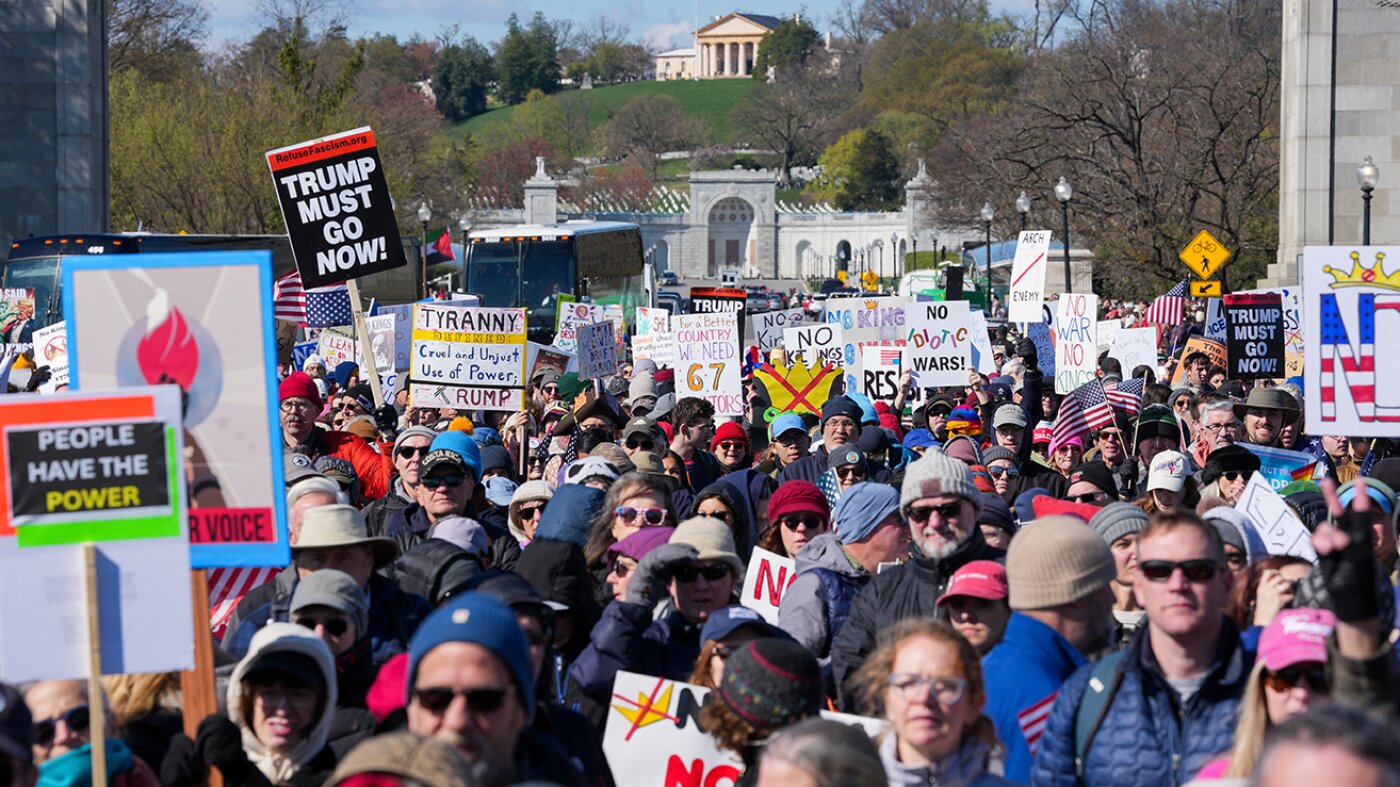
Photos: ‘No Kings’ protests across the country

Politics14 hours ago
Jeffries declines to break with indicted Democrat after ethics panel’s guilty verdict

World15 hours ago
Hundreds of thousands march through London in stand against the far right
-

 Sports1 week ago
IOC addresses execution of 19-year-old Iranian wrestler Saleh Mohammadi
-

 New Mexico6 days ago
Clovis shooting leaves one dead, four injured
-

 Tennessee6 days ago
Tennessee Police Investigating Alleged Assault Involving ‘Reacher’ Star Alan Ritchson
-

 Technology7 days ago
YouTube job scam text: How to spot it fast
-

 Minneapolis, MN3 days ago
Boy who shielded classmate during school shooting receives Medal of Honor
-

 Science1 week ago
Record Heat Meets a Major Snow Drought Across the West
-

 Texas1 week ago
How to buy Houston vs. Texas A&M 2026 March Madness tickets
-

 Politics1 week ago
Schumer gambit fails as DHS shutdown hits 36 days and airport lines grow