Good morning, and happy Monday. Today’s newsletter topper is brought to you by Lenny Bernstein, an intrepid journalist who uncovered errors in the nation’s organ transplant system that prompted reforms. Lenny retired in December after 23 years at The Washington Post. Not a subscriber? Sign up here.
Washington
Analysis | U.S. to tighten organ donation rules


U.S. to tighten rules on donated transplant organs
The U.S. government is moving to tighten a regulation for the collection of human pancreases for research after a Senate committee and others complained the rule was being exploited by groups that also procure kidneys, hearts, livers and other organs for transplant.
A rule issued in 2020 requires the nation’s 56 nonprofit organ procurement organizations (OPOs) to meet certain collection benchmarks to retain government certification to operate. Pancreases, which contain “islet cells” that produce insulin and are most often valuable for diabetes research, count toward the total needed to reach those thresholds.
Some of the groups began collecting large numbers of pancreases after the regulation was issued, eliciting “concern” from the Centers for Medicare and Medicare Services in a Jan. 18 memo that the spike in procurements may not reflect “a meaningful increase in pancreata being actually used for islet cell research.”
Officials with several OPOs have said the increased collection of pancreases reflects a rising demand for them by researchers. One noted that pancreases are not collected from every deceased donor, which the official maintains would be a clear indication of an attempt to inflate total organ procurement statistics.
But in March 2023, the Senate Finance Committee, which has been investigating the troubled U.S. transplant system for years, issued a blunt warning to some of the 56 organizations. In a letter to 10 groups that reported sharp increases in pancreas collection, it questioned whether they were “flagrantly gaming” the system to “falsely inflate their performance.”
- The committee’s letter also cited an email it said was sent by one organ procurement employee to another. “Savvy (or cynical?) OPOs ought to start a pancreas for research program immediately,” the message said.
In its memo, CMS warned the procurement organizations that the organs can be counted only if they are used for legitimate purposes. The agency said it would update regulations regarding islet cell research and planned to develop approaches to “validate” organ procurement organization reports of how pancreases were used.
Each organ procurement organization holds a government-guaranteed monopoly over a swath of territory where it collects organs, mainly kidneys, from deceased donors. The groups arrange the transfer of organs to hospitals for implantation into patients and to centers that conduct research on organs unsuitable for therapeutic use.
Some have long done a poor job of collecting enough organs, according to academic research, a House subcommittee and other outside reviews of the U.S. transplant system. Though the number of transplants is rising, more than 100,000 people remain on the national waiting list for organs — most seeking kidneys — and some die every day.
But CMS has never revoked any organ procurement group’s right to operate.
Under rules that took effect in 2021 to weed out poor performers, the procurement groups must meet certain benchmarks for organ collection or risk losing their contracts. Pancreases for research count toward the total.
In September, researchers who have been critical of the groups’ performance published peer-reviewed data in JAMA Network Open showing that the number of pancreases collected for research rose from 1,258 in 2018 to 4,563 in 2022. They said it is impossible to determine where the organs went or how they were used.
- The article also showed that six of the procurement organizations were among a group most likely to lose their government contracts in 2026, when CMS conducts its first review of their performance under the new rule. Seven more were vulnerable to loss of their contracts.
Micah Davis, chief operations officer of Lifebanc, which collects organs in northeast Ohio, said in an interview that well over 90 percent of the pancreases his organization collected in 2023 were used in research, while a few were used in training. The organization retrieved 169 pancreases in 2023, according to Davis, up from just two in 2021.
- Davis said there was no shortage of legitimate medical researchers who have accepted the organs. “It was easy to find them,” he said. “They were enthusiastic to participate.”
But Sen. Ron Wyden (D-Ore.), chairman of the Senate Finance Committee, said in a statement in January that “I’ve been investigating this issue with my colleagues and have seen the evidence of inflated metrics firsthand.”
You can read Lenny’s full report here.
Georgia sues to extend timeline for narrow Medicaid expansion
Georgia is suing CMS in a bid to recover “stolen implementation time” from its new health program for low-income adults, which is set to expire next year under the current agreement, Jill Nolin reports for the Georgia Recorder.
The state filed a federal complaint on Friday asking the court to move the end date for Georgia Pathways to Sept. 30, 2028, citing the Biden administration’s unsuccessful attempt to challenge the program’s work requirement.
A closer look: Republican Gov. Brian Kemp’s plan to partially extend Medicaid first received sign-off from the Trump administration three weeks before the 2020 election. But Democrats have fiercely opposed work rules, and the Biden administration revoked Georgia’s approval for such a mandate in 2021.
The move led to a legal showdown, where a district judge ultimately sided with the state. The program officially launched in July, two years after its original start date. As of mid-December, about 2,300 people had enrolled. About 345,000 are thought to be eligible for the Medicaid program, according to the state’s estimate.
Senators take aim at 340B reform
A bipartisan group of senators has drafted proposals aimed at resolving controversial disputes in the federal government’s drug discount program, according to documents obtained by Stat’s Rachel Cohrs.
Among other 340B targets, the new framework would:
- Allow providers, including community health centers and hospitals, to contract with external pharmacies to deliver discounted medications to patients.
- Establish clear criteria for which subsidiaries can qualify for discounts through the program.
- Require providers to report more information about how they use their savings and how many patients received discounted drugs.
The draft legislation comes from Senate Minority Whip John Thune (S.D.) and fellow Republican Sens. Jerry Moran (Kan.) and Shelley Moore Capito (W.Va.). Across the aisle, they are joined by Democratic Sens. Debbie Stabenow (Mich.), Tammy Baldwin (Wis.) and Ben Cardin (Md.).
- A federal judge approved McKinsey & Co.’s proposal to pay $230 million to settle claims that the company’s consulting work fueled an opioid crisis that led municipal governments to divert public resources toward emergency responses, Joyce E. Cutler reports for Bloomberg Law.
- Juul launched an aggressive campaign in 2018 aimed at securing the public support of civil rights organizations and Black leaders for its e-cigarettes, as the company sought to bolster its beleaguered public image, Stat’s Nicholas Florko reports, citing documents made public last week.
- Independent advisers to the Food and Drug Administration called for greater diversity in pulse oximeter clinical trials on Friday, saying the agency’s proposal to increase the minimum number of participants probably wouldn’t be enough to ensure the devices produce accurate results for all skin tones, CNN’s Jacqueline Howard reports.
- Congress may make insulin pumps and other medical devices more accessible to the blind, Stat’s Lizzy Lawrence reports.
📅 Welcome back! The House and Senate are both in session this week. Here’s what we’re watching:
On tap today: The House Rules Committee will meet to consider legislation that would ban the use of quality-adjusted life years in all federal health insurance programs.
On Tuesday: The House Budget Committee will mark up a bill that would change how the Congressional Budget Office evaluates the costs and savings of preventive health-care policies. The House Ways and Means Committee will examine chronic drug shortages in the United States. A House Energy and Commerce subcommittee will scrutinize the FDA’s foreign drug inspection program.
Meanwhile, at the agencies, independent advisers to the FDA will discuss and make recommendations on medical device supply chain resiliency and shortage issues.
On Thursday: The CEOs of Merck, Johnson & Johnson and Bristol Myers Squibb will testify before the Senate Health, Education, Labor and Pensions Committee on prescription drug prices. The Senate Finance Committee will examine artificial intelligence in health care.
And at The Post, Dan Diamond will speak with New York City Health Commissioner Ashwin Vasan about winter respiratory viruses, lessons from the pandemic and youth mental health.
Texas Medical Board under pressure to define emergency exception to abortion ban (By Olivia Goldhill | Stat)
Providence officials approve overdose prevention center (By Anna Betts | The New York Times)
Ozempic, Wegovy strain state budgets in battle against obesity (By Celine Castronuovo | Bloomberg Law)
Thanks for reading! See you tomorrow.

Washington
Review: Our critic cannot tell a lie: ‘Young Washington’ is the dullest of history lessons
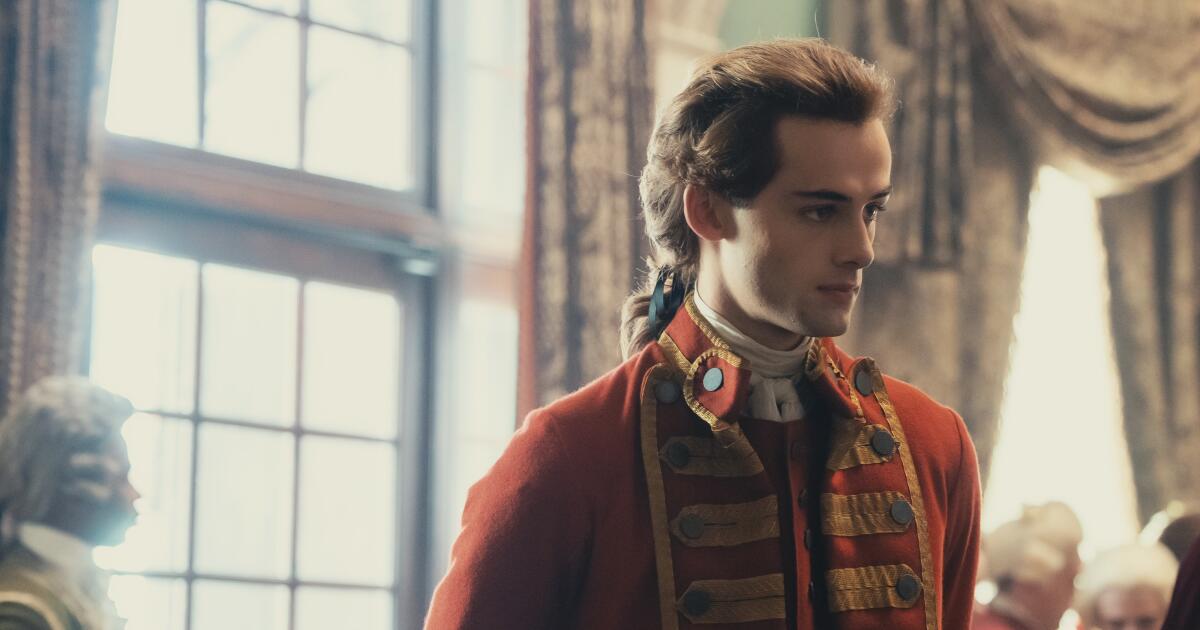
It’s the 250th birthday of the United States of America and how better to celebrate than with a big-screen hagiography of America’s first president, George Washington? “Young Washington” arrives in theaters just in time for the Fourth of July with a chiseled, hot young actor in the lead role and the sheen of a prestige HBO drama, though the result isn’t really big-screen spectacle or appointment television. It feels more like something to be watched on the AV rig in a middle school social studies class. At least there won’t be a quiz at the end.
But there could be, because the plot of “Young Washington” plays out with all the thrill of a textbook chapter. It takes place mostly around 1753-55, at the advent of the French and Indian War. We open in medias res when the 23-year-old Col. Washington (William Franklyn-Miller) lurches from a dysentery-riddled nap directly into battle in the Pennsylvania woods, his battalion on the back foot, surrounded by gore and gunpowder. Another officer describes how dire the situation is while George ponders saving his men and asks, “What could be worth the risk?” Washington steels his gaze and we cut to black. You can almost hear the eagles scream, guitars riff and engines rev.
“Young Washington” is produced and distributed by Angel Studios, the faith-based movie studio that churns out films based on true stories that either feature freak accidents, strange illnesses or, more recently, unique stories from the past in which faith in God is a factor. Apparently, our nation’s founding also falls under this umbrella.
The film is directed by Jon Erwin, one of the in-house Angel Studios mainstays, who also helmed “Jesus Revolution,” “I Still Believe” and “I Can Only Imagine.” Erwin gives the whole project a kind of gritty, visceral approach — very “Game of Thrones” in red coats. It’s violent, muddy, the contrast is high and too many drone shots soar over the forest treetops.
Though it opens with a bang, this 1755 battle framing device gives way to the George origin story, starting with his father’s death 12 years earlier, when the 11-year-old George is bereft that he’ll have to sacrifice his education in order to become a tenant farmer and provide for his family including his mother, Mary (Mary-Louise Parker, doing a bizarre accent).
His older half-brother Lawrence (John Foss) takes him under his wing and teaches him, and the young George grows into a smart, bright, ambitious young man, whose dreams of becoming a British officer are dashed because he doesn’t have formal education, a fortuitous marriage or his own land. But he’s bootstrapped himself into intelligence and with savvy networking and know-how, he becomes indispensable to the British, volunteering as a major to survey land and negotiate treaties with the Native tribes and French army. It’s all a bunch of politicking and petty disputes until it escalates into all-out war thanks to an ill-advised ambush.
Sir Ben Kingsley, Kelsey Grammar (who starred in “Jesus Revolution”) and Andy Serkis play the British officers who begrudgingly, at times, believe in George and his capabilities, though a lot of the film is about a young man getting rebuffed by snobbish British officers.
He’s the kind of character who always makes the noble choice, does and says what’s right, and sees everyone as equals (including enslaved African men and Native American allies). He inspires his brother and others that the world can change and takes inspiration from his mother, who encourages him to continue his path and do it as God’s servant.
Unfortunately, this doesn’t make for a character that’s in any way complex or interesting at all. Franklyn-Miller is certainly pretty, serving as a fine face for this story, but the screenplay (by Erwin, Diederik Hoogstraten and Tom Provost) flattens his character into a basic cookie-cutter hero. Audiences, including the middle school social studies students, deserve better and more nuanced stories about this country and the values it was built upon.
“Young Washington” is propaganda in the form of a history lesson wrapped in a summer blockbuster. If only it were even slightly entertaining — maybe they’ll tackle that in the inevitable sequel.
‘Young Washington’
Rated: PG-13, for sequences of strong war violence and some bloody images
Running time: 2 hours, 5 minutes
Playing: Opens Friday, July 3 in wide release

Mathematicians and statisticians from around the world descended onto Pullman to attend the regional conference of the International Biometric Society (IBS) in early June. Joining leading experts in data science and biometrics were several special guests: high school students from the Kalispel Tribe in northwestern Washington.
The eleven students from Cusick are participants in a collaborative tutoring program between the WSU Department of Mathematics and Statistics and the Camas Learning Center (CLC), an in-school and after-school program managed by the Kalispel Tribe. They were invited to the IBS conference by Regents Professor Jan Dasgupta, department chairperson and the current president of the IBS western North American region. Dasgupta saw an opportunity to share the Pullman academic experience with both leading researchers and the students tutored by her undergraduate students.
“The IBS conference includes an Access and Opportunity workshop focused on engaging local students, and we wanted them to experience WSU and see the possibilities that exist in STEM education and careers,” Dasgupta said.
Undergraduate students from the WSU “Future Teachers of Math” club typically tutor the high schoolers via one-on-one Zoom consultations, supported by CLC staff. The tutoring program has evolved since 2023, but the focus has always remained on student math preparation, for those learning and those teaching the subject. The partnership creates stronger pathways to both higher education and STEM opportunities for students in rural and tribal communities across Washington.
Integrating high school students into the IBS conference proceedings is not a new concept. In 2024, the annual conference’s Access and Opportunity Workshop invited community college students from the Denver area to network with attendees and participate in a data skills seminar. The next year, the workshop invited students from around Whistler, B.C. to the conference proceedings. This year, it was time for the students from Cusick.
Eleven students and four chaperones made the trip from Pend Oreille County to Pullman, where they stayed in Stimson Hall as an on-campus dormitory experience. While the students’ conference activities included hands-on experiences with biostatistics, data science, and biometry analysis, they were also treated to a campus facilities tour. Physics professor Guy Worthy provided a tour of the WSU Planetarium, and Squeak Meisel from the Department of Art led students on a tour of the art facilities and the Jordan Schnitzer Museum of Art at WSU. Other tour locations included the Veterinary Teaching Hospital and the University Recreation Center for some earned relaxation time in the pool.
Cross-discipline researchers also sat down for a panel discussion with the students, discussing their education, career, and life experiences. The speakers included Denise Dillard, director of the Institute for Research and Education to Advance Community Health (IREACH); Mikaela Nishida, PhD scholar in statistics from University of California, Irvine; and Courtney Meehan, Dean of the WSU College of Arts and Sciences.
“One of the most important things we can do as a university is help students see new possibilities for themselves,” said Dean Meehan. “Hosting international conferences like this on our campus creates powerful opportunities for students to interact with researchers and explore potential career paths firsthand. These connections can have a lasting impact long after they leave Pullman.”

NAVASOTA, Texas (KBTX) – For many Texans, the Fourth of July is about fireworks and family cookouts. At Washington-on-the-Brazos State Historic Site, it’s also about standing where Texas’ own independence story began, and marking a milestone in how the Lone Star State became part of the nation it celebrates.
The Texas historic site, set on 293 acres of parkland along the Brazos River, is known as “Where Texas Became Texas.” It is the place where 59 delegates met and signed the Texas Declaration of Independence from Mexico on March 2, 1836, launching what would become the Republic of Texas.
From 1836 to 1846, Texas existed as a separate nation, before the question of annexation came to the forefront. Site staff say Washington-on-the-Brazos offers a “bookended” look at the Republic’s decade-long history because discussions about joining the United States also took place there and were ultimately voted on in the property.
This year’s July 4 programming is designed to connect those chapters of Texas history with the national holiday, including a commemoration tied directly to the Lone Star being added to the American flag.
“This is also the 180th anniversary of when Texas was added to the American flag,” said Chandler Wahrmund, assistant site manager for the Fanthorp Inn State Historic Site, which is part of the broader Republic of Texas Complex.
A historic site with multiple stops
Washington-on-the-Brazos includes several major attractions:
- Visitor Center: The recommended starting point for guests. It features interactive exhibits presenting a timeline of the Texas Revolution and includes the Museum Store, with snacks and Texas-themed items. The Visitor Center is free and is where visitors can gather information and purchase entry tickets for the site’s paid attractions.
- Independence Hall: A replica building that sits on the spot where the Texas Declaration of Independence was signed, allowing visitors to visualize where that pivotal moment unfolded.
- Star of the Republic Museum: A central museum on the grounds focused on the Republic era.
- Barrington Living History Farm: A living-history area that interprets life in the Republic of Texas period through demonstrations and activities.
The historic site is also the core of the Republic of Texas Complex, which includes Fanthorp Inn, a preserved 19th-century stagecoach inn in nearby Anderson.
July 4 events across the grounds
Staff say this year’s July 4 celebration will include activities happening throughout the site, with scheduled programs at key times.
According to site staff, the day includes:
- Flag raising ceremony at 11 a.m.
- Readings of the American Declaration of Independence at 1 p.m. and 3 p.m.
- Star of the Republic Museum cockade-making, creating patriotic lapel decorations
- Barrington Living History Farm games, including trap ball, a precursor to baseball
- Townsite activities at Hatfield’s Exchange, a recreated high-class bar from the period, with lemonade and other period-inspired nonalcoholic drinks for visitors
Wahrmund said the day is a chance to revisit the country’s founding words, and understand why they still matter.
“I love to read the words of Thomas Jefferson on the day, July 4th, to really understand why we exist as a nation,” he said.
Hours and admission
Washington-on-the-Brazos State Historic Site will be open 10 a.m. to 4:30 p.m. on July 4, and admission is free all day.
Copyright 2026 KBTX. All rights reserved.
-

 Los Angeles, Ca1 hour ago
Boy, 17, with autism accused in murder of 4-month-old girl at Claremont daycare
-

 Detroit, MI2 hours ago
Brief rally not enough for Tigers vs Rangers as win streak ends at 3
-

 San Francisco, CA2 hours ago
Crash on freeway in Millbrae leaves driver dead after reportedly overturning multiple times, CHP says
-

 Dallas, TX2 hours ago
Paige Bueckers, Azzi Fudd do the usual in Hartford, win. This time with Dallas Wings
-

 Miami, FL2 hours ago
World Cup-inspired art exhibit transforms Miami’s Wynwood with interactive soccer experience
-

 Boston, MA2 hours ago
Stairlift brings relief to residents stuck in building with broken elevator
-

 Denver, CO2 hours ago
Free agent point guard Tyus Jones re-signs with the Denver Nuggets – Denver Stiffs
-

 Seattle, WA2 hours ago
Husky Recruit To Move From Seattle to Florida For High School Ball

