West
Voters across the country decide on state ballot measures

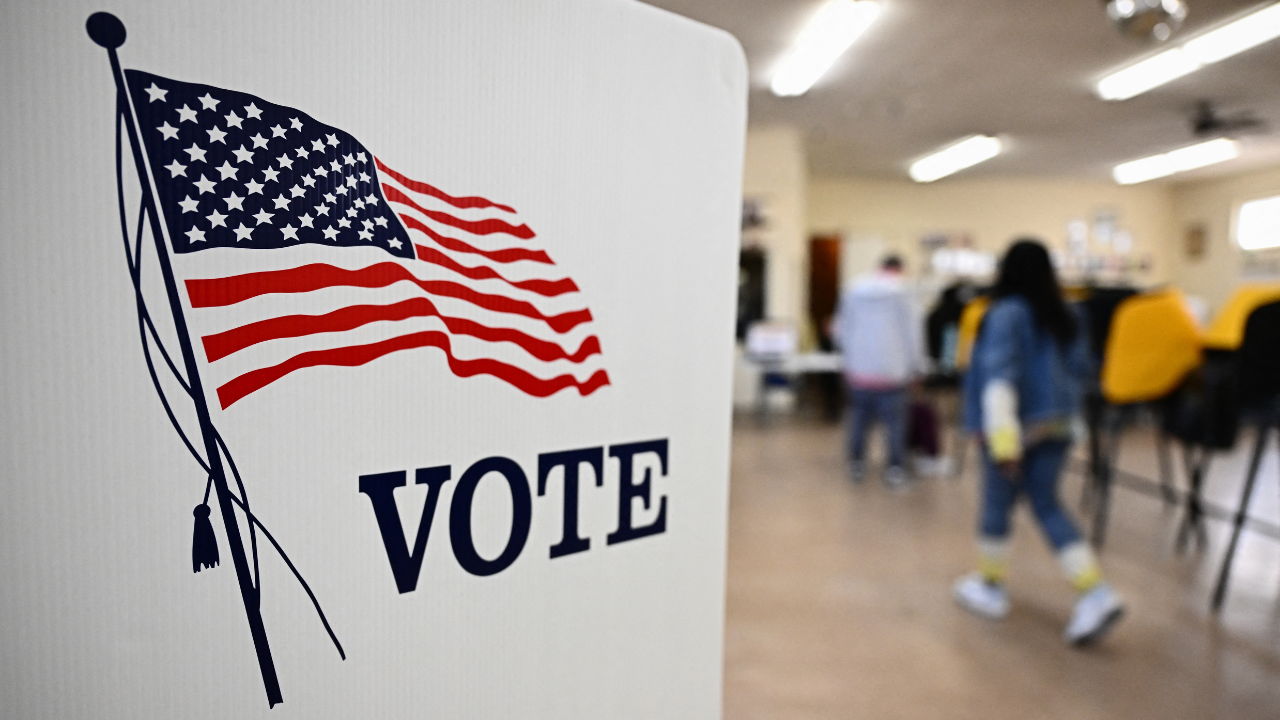
While many states voted on abortion measures and immigration initiatives, several blue states passed tougher crime measures.
“You’re allowed to rob a store as long as it’s not more than $950. Has everyone ever heard of that?,” President-elect Donald Trump said at a press conference in Bedminster, New Jersey, in August. “You can rob a store, and you have these thieves going into stores with calculators, calculating how much it is.”
While convicted shoplifters have faced charges, California voters thought the penalties were not enough. Proposition 36 now makes shoplifting a felony for repeat offenders.
CALIFORNIA REPUBLICAN CONGRESSMAN CONCEDES COMPETITIVE RACE TO DEMOCRATIC CHALLENGER
According to California crime data, shoplifting had been on the rise. Incidents jumped 27.5% between 2018 and 2023. Proposition 36 also tackles another issue in California – drug addiction. The measure increases penalties for some drug charges, including fentanyl. During the same time period, fentanyl overdose deaths were also up by more than 770%.
A voter casts a ballot during the Super Tuesday primary at a polling station in an American Legion Post in Hawthorne, California, on March 5, 2024. (PATRICK T. FALLON/AFP via Getty Images)
“Prop 36 is a balanced approach to reducing crime to keep our communities safe while holding repeat retail thieves and those trafficking drugs to minors more accountable,” said Elizabeth Graham, CEO of the California Fuels & Convenience Alliance.
The changes in the new measure stem from an initiative passed in 2014, which downgraded some drug offenses and thefts under $950 from felonies to misdemeanors.
“I know we’re all here to say no to Prop 36, but some of us are here to say hell no to Prop 36,” said a speaker at a rally in opposition of Proposition 36.
While the initiative passed with overwhelming support, those against the measure say it will disproportionately imprison poor people and those with substance abuse issues.
“This is not the time to return to our ridiculous failed policy of incarceration,” said another speaker against the initiative.
Longs Peak, part of the Rocky Mountains of Colorado, rises in the background, framed by green trees and the Denver skyline. (Dave Parsons via iStock)
Colorado voters also voted in favor of several crime initiatives. In the aftermath of the pandemic crime rose across the country, including in Colorado. The most recent data shows violent crime is up 23.8% from 2019.
“I am going to make Colorado safe again. We’re going to make you safe. We’re going to do it fast,” President-elect Trump said at a rally in Aurora, focusing on suspected Tren de Aragua crime in the area.
Voters approved an initiative that removed the right to bail in cases of first-degree murder, when the proof is evident, or the presumption is great. Another measure requires criminals convicted of violent crimes, to serve more of their sentences, before being eligible for parole.
BLUE STATE GOVERNOR SUMMONS LEGISLATURE IN RESPONSE TO TRUMP WIN: ‘READY TO FIGHT’
Voters also approved a fund for police officer recruitment, retention and training and a separate fund to help victims of crime.
“Places like Denver have given away, have diverted $9 million out of law enforcement. Why? Because we need to take care of the euphemistically named newcomers. We have a spending problem. We have a prioritization problem. Crime is going up because of your policies,” Colorado state Rep. Ken DeGraaf said during a hearing on a property tax bill in August.
Colorado voters also denied an effort to end hunting of wild cats like Mountain Lions, Bobcats and Lynx. Most states allow for Bobcat and Mountain Lion hunting, but Lynx are already federally protected. California has passed a state ban on sport hunting Mountain Lions. Florida’s panthers are classified as endangered under federal law.
A mountain lion is pictured in the Rocky Mountains of Colorado. Colorado voters recently rejected a proposal to ban hunting of wild cats, including mountain lions, bobcats and lynx. (Dennis Donohue via iStock)
Florida voters also approved protections for hunters and fishermen. The measure adds language to the state constitution that provides a right to hunt and fish. Proponents say the change guards against efforts to take away those rights. Opponents say the addition is legal overkill.
In Maine, voters decided against changing their state flag. The first official flag, used between 1901 and 1909, gained popularity in recent years. It shows a pine tree and star. But voters decided to keep the blue state seal as its official flag.
There were also several unusual local laws passed. Voters in Miami-Dade county decided to expand public Wi-Fi access. Malheur County, Oregon voted against repealing a mandate that would have ended some discussions over shifting the Idaho-Oregon border. Voters in Illinois also voted on state boundaries. Seven counties voted in favor of exploring whether to secede from the state over differences with Cook County which holds Chicago.
Read the full article from Here


JUNEAU, Alaska (KTUU) – An Alaska drug task force seized roughly $162,000 worth of controlled substances during an operation in Juneau Thursday, according to the Juneau Police Department.
Around 3 p.m. Thursday, investigators with the Southeast Alaska Cities Against Drugs (SEACAD) approached 50-year-old Juneau resident Jermiah Pond in the Nugget Mall parking lot while he was sitting in his car, according to JPD.
A probation search of the car revealed a container holding about 7.3 gross grams of a substance that tested presumptively positive for methamphetamine, as well as about 1.21 gross grams of a substance that tested presumptively positive for fentanyl.
As part of the investigation, investigators executed a search warrant at Pond’s residence, during which they found about 46.63 gross grams of ketamine, 293.56 gross grams of fentanyl, 25.84 gross grams of methamphetamine and 25.5 gross grams of MDMA.
In all, it amounted to just less than a pound of drugs worth $162,500.
Investigators also seized $102,640 in cash and multiple recreational vehicles believed to be associated with the investigation.
Pond was lodged on charges of second-degree misconduct involving a controlled substance, two counts of third-degree misconduct involving a controlled substance, five counts of fourth-degree misconduct involving a substance and an outstanding felony probation warrant.
See a spelling or grammar error? Report it to web@ktuu.com
Copyright 2026 KTUU. All rights reserved.

PHOENIX – Officials with the Arizona Game and Fish Department said unseasonably warm temperatures in the state will increase risks for rattlesnake encounters.
What they’re saying:
In a statement released on Feb. 27, the agency said while rattlesnakes are most active in desert areas from March through October, they “may appear earlier in the year as warming temperatures bring them out of winter hibernation.”
“During the spring, it’s common for rattlesnakes to be out during daylight hours,” read a portion of the statement. “As the days become increasingly hot, rattlesnakes tend to move around more at night.”
What you can do:
Officials said there are things people can do to keep themselves safe, including:
- Step back and let a rattlesnake move away if you see one on a trail
- Be mindful of where you place your feet and hands, because rattlesnakes can easily blend in with their surroundings
- Carry a flashlight at night, especially on warmer nights when rattlesnakes can be most active
- Clean up yard debris and reduce standing water near homes, in order to avoid attracting rattlesnakes
- Stay on marked trails, as rattlesnakes encounters are more likely to occur when a person leaves a marked trail
Game and Fish officials said people should do the following if someone was bitten by a rattlesnake:
- Remain calm
- Reassure the victim
- Call 911 and seek medical attention without delay
- Remove all jewelry and watches from the affected area
- Immobilize the extremity, and keep it below the heart
- Decrease total body activity, as feasible
The Source: Information for this article was gathered from a statement released by the Arizona Department of Game and Fish.

Rob Bonta, California’s attorney general, said his office will investigate a possible merger between Paramount Skydance and Warner Bros Discovery, hours after Netflix backed away from a planned takeover.
“Paramount/Warner Bros is not a done deal,” Bonta said in a post on X. “These two Hollywood titans have not cleared regulatory scrutiny — the California Department of Justice has an open investigation, and we intend to be vigorous in our review.”
Any acquisition of Warner Bros would require approval from regulators in the United States and Europe, including the US justice department’s antitrust division. The deal Paramount struck for Warner is valued at nearly $111bn.
The merger poses a risk for California’s economy. Paramount’s bid is likely to raise concerns about job cuts in the state, which also dogged Netflix’s bid. Paramount sees $6bn in cost “synergies” in the deal, which typically means massive layoffs, reducing the number of suppliers, squeezing existing contractors for better terms after the two companies merge or other reductions.
The chief executive of Paramount, David Ellison, said his company was pleased the Warner Bros board had “unanimously affirmed the superior value of our offer”, which he said delivered “WBD shareholders superior value, certainty and speed to closing”. Ellison is the son of Oracle co-founder Larry Ellison, a close ally of Donald Trump.
On Friday, Warner Bros Discovery reportedly agreed to be acquired by Paramount Skydance. Reuters and Deadline reported that the deal was announced in a global town hall by the company. Paramount and Warner Bros did not immediately confirm the deal to the Guardian.
A merger between the two media giants is also facing backlash from several lawmakers. Senator Elizabeth Warren, a key voice against growing monopolies, echoed Bonta’s concerns after Netflix walked away from the deal on Thursday, and noted that Netflix CEO Ted Sarandos was seen at the White House shortly before the company said it would bow out of the deal.
“A Paramount Skydance-Warner Bros merger is an antitrust disaster threatening higher prices and fewer choices for American families,” Warren said in a statement. “What did Trump officials tell the Netflix CEO today at the White House? A handful of Trump-aligned billionaires are trying to seize control of what you watch and charge you whatever price they want.”
The senator added: “With the cloud of corruption looming over Trump’s Department of Justice, it’ll be up to the American people to speak up and state attorneys general to enforce the law.”
On Friday, Bonta responded to concerns about the merger posted by actor Mark Ruffalo.
“Please let’s circle up all the State AG’s and talk about how this is going to kill completion in the industry and drive down wages, and product quality for consumers,” Ruffalo posted.
“There are lots of agents in Hollywood who can tell you how past mergers and consolidations have hurt their clients and business. There is lots of talent that can tell you the same.”
Bonta reposted the actor’s comments, responding that he is in “conversation with my AG colleagues about Paramount/Warner Bros”.
The California department of justice did not immediately respond to a request for comment from the Guardian.
The Writers Guild of America, the union representing thousands of television and film writers along with other media workers, has said a Paramount takeover of Warner Bros would hurt jobs.
Warner Bros canceled $2bn in content after merging with Discovery in 2022, and Paramount’s recent merger with Skydance led to 1,000 layoffs, the union said in written testimony to the US Senate.

Sheriff’s Office backpedals on controversial facial recognition deal

Soccer Frenzy: Cities, Fans, and What to Know | Futbol HQ

Fan behind Anthony Edwards’ orange bracelet has beaten cancer

New bridge over 96th Street adds to Nickel Plate Trail connections

Pittsburgh International’s T. rex could soon disappear from view

Florida High School Football Rankings: Top 25 teams – Oct. 21

Cleary's 21 help Le Moyne down Central Connecticut State 69-64 in OT

How old is Bo Nix? What to know about Oregon quarterback ahead of 2024 NFL Draft

99th annual Pony Swim held in Virginia

Indiana Members Credit Union announced as new anchor tenant at Bottleworks District

Where Iran’s ballistic missiles can reach — and how close they are to the US

Has India’s influence in Afghanistan grown under the Taliban?

Bill Clinton to testify before House committee investigating Epstein links

Read Judge Schiltz’s Order

Vulnerable House Dem lashes out at Trump’s ‘racist’ SOTU challenge: ‘That was uncomfortable’
-

 World2 days ago
Exclusive: DeepSeek withholds latest AI model from US chipmakers including Nvidia, sources say
-

 Massachusetts2 days ago
Mother and daughter injured in Taunton house explosion
-

 Montana1 week ago
2026 MHSA Montana Wrestling State Championship Brackets And Results – FloWrestling
-

 Oklahoma1 week ago
Wildfires rage in Oklahoma as thousands urged to evacuate a small city
-

 Louisiana5 days ago
Wildfire near Gum Swamp Road in Livingston Parish now under control; more than 200 acres burned
-

 Denver, CO2 days ago
10 acres charred, 5 injured in Thornton grass fire, evacuation orders lifted
-

 Technology6 days ago
YouTube TV billing scam emails are hitting inboxes
-

 Technology6 days ago
Stellantis is in a crisis of its own making