Utah
Utah state auditor finds no evidence of transgender bathroom law violations


SALT LAKE CITY — The Office of the State Auditor finished an investigation into four possible violations of the recently passed bathroom law, it said, and was “unable to substantiate” the complaints. An investigation into a fifth complaint isn’t yet complete, the office said Wednesday.
JUST IN: State Auditor John @FrugalDougall‘s office has announced they’ve investigated five of 12,000 reports of violations of the new transgender bathroom law, and says there were four they were “unable to substantiate.” They notified the following entities: @KSL5TV pic.twitter.com/yOAJxYqrQm
— Lindsay Aerts (@LindsayOnAir) June 5, 2024
State Auditor John Dougall said the complaints came from a stack of 12,000 that flooded their office in recent weeks. He would not detail any specifics of the complaints but said that in general, they allege misuse of facilities in Duschene County, the Provo School District, the Alpine School District and the North Sevier Recreation Center.
“These are complaints of somebody used a certain restroom in violation of policy. And so we first needed to find out, okay, what policy exists to determine whether or not it’s in violation of policy. And then, you know, could we actually substantiate the claim,” Dougall said.
For each of those four claims, Dougall’s office reports the claims are unsubstantiated — meaning there was no proof of an individual misusing a facility. But the auditor’s office did put Provo and Duschene County on notice that they need to finalize privacy plans within 30 days.
The bathroom law dictates that biological males use men’s rooms and biological females use women’s restrooms in “government-owned or controlled” facilities unless a person has fully transitioned and changed their birth certificate. It defines male and female by an individual’s reproductive organs.
The bill also requires more single-occupancy spaces in new buildings and to study the feasibility of retrofitting. It also requires schools to develop a “privacy plan” for students.
The office set up the online reporting tool as part of the law that requires the auditor’s office to “establish a process to receive and investigate alleged violations of this chapter by a government entity.”
Dougall said his office is tasked with making sure government entities have those privacy plans in place.
“What the legislature requires is they (government entities) have a plan to accommodate individuals who feel like they need some type of accommodation for a different facility,” Dougall said. “And so that comes down to what is the plan to deal with those accommodations?”
Dougall has been critical of the legislature since the portion of the law took effect on May 1. He posted two videos to social media from bathroom stalls, accusing the legislature of making him an unwilling bathroom monitor.
Dougall said his job is to determine whether a government entity is violating the law, not whether people are.
“We’re not checking people’s gender. We do not want people pictures of people in bathrooms and so forth. And we had folks that were claiming that they were going to start sending us pornographic pictures,” he said.
Dougall — who’s running for a seat in Congress in Utah’s 3rd District — said the threat of inappropriate pictures and the number of complaints was the reason he raised the issue publicly.
“I don’t think that (this issue) adds to my congressional campaign. Unfortunately, it’s a distraction, but I have to deal with it,” he said. “Because at the end of the day, if they’re just spamming us, that doesn’t actually change the law.”



A Utah man told police he repeatedly stabbed a Muslim man because of the man’s faith and intended to kill him, according to court records filed Monday.
The Muslim man survived the attack Monday afternoon at a mall southeast of Salt Lake City. But he’s expected to face a long recovery after suffering more than 15 stab wounds, according to a GoFundMe page set up to help with medical expenses.
Bystanders were able to get the knife out of the suspect’s hand before police arrived at the scene at Valley Fair Mall, court records show.
The suspect, Peter Michael Larsen, was arrested on suspicion of attempted murder and carrying a prohibited dangerous weapon. He told police he targeted the employee over his religious beliefs, according to the court records, which didn’t list an attorney who could comment on his behalf.
The Associated Press was unable to locate any of Larsen’s immediate family in public records.
The Valley Fair Mall did not immediately respond to email and voicemail requests for comment.
Larsen, 48, was on parole for a previous violent felony, court records show. He is being held without bail.
Salt Lake County District Attorney Sim Gill, whose office is determining whether to pursue charges, declined to comment.
“We don’t want to say anything else until we receive the results of the investigation,” Gill said in a statement.
The Council on American-Islamic Relations, a Muslim advocacy group, called on elected officials to reject anti-Muslim rhetoric.
“Our nation’s political and community leaders have a moral responsibility to reject anti-Muslim hate in all its forms before more innocent people are harmed,” Nihad Awad, the organization’s national executive director, said in a statement.
In May, two teenagers killed three people and then themselves at an Islamic Center in San Diego in an attack that has left the community reeling. The AP obtained writings of both teenagers, including hateful rhetoric toward Jewish people, Muslims and Islam, as well as the LGBTQ+ community, Black people, women, and both the political left and right.

SALT LAKE CITY (KUTV) — There have been hundreds of human-caused wildfires this year in Utah, but the legal outcomes are hard to track.
At least two people have been charged recently for starting fires: one for the Memory Grove Fire in Salt Lake and one for the Mountain Road Fire in Ogden.
This year alone, 327 wildfires have been started by people in Utah — an act that should carry consequences, according to some.
“Certainly, if it’s intentional, it’s against the law,” resident David Mastroianni said. “If it’s not intentional, then they weren’t being as careful as they should be with something they should be careful with.”
But, before anyone gets to that point, there’s a lot of work that goes into figuring out what started the fire, let alone who.
“The fire investigator will show up on scene and will look at the scene, collect evidence, and then turn it over to the proper authorities,” said Kelly Wickens with Forestry, Fire, and State Lands.
Tracking which fires end with criminal charges or civil suits is difficult.
Wickens said that once the fire is out and the investigator turns the evidence over, their work is done, and it’s up to the proper authorities to press charges.
“Arson does require — this is what makes it difficult — is that you have to establish someone intentionally started a fire,” said former prosecutor Nathan Evershed.
Evershed said there are more charges than just arson, such as reckless burning.
“So, if it’s not intentional and it’s more accidental, it can still be viewed as being reckless,” Evershed said.
That could mean if a firework accidentally causes a fire.
Evershed said that there’s also a difference between causing a structure fire and a grass fire. A structure fire could result in aggravated arson charges.
But what happens if a fire is completely accidental?
“It’s more difficult to find a criminal sanction on that … still could be a civil sanction on that, where somebody would have to pay restitution,” Evershed said.
So, while there’s no concrete number for how many human-caused fires have led to charges or civil suits, there are a lot of avenues if someone does get caught.
Evershed said you can even be charged if you just abandon a campfire that causes a fire.
_____

Four lifts, 174 acres, night skiing and a concert venue near Logan are up for grabs.
(Photo courtesy of Dylan White |@blanco_photovideo/Cherry Peak Resort)
The entire front side of Cherry Peak Resort, located about half an hour north of Logan, is illuminated for night skiing.
-

 Politics2 minutes ago
Lindsey Graham’s final act reverberates in Senate as sister is urged to “keep pedaling”
-

 Health7 minutes ago
Is lettuce still safe to eat amid Taco Bell illness probe? Doctors answer
-

 Sports14 minutes ago
Marcello Hernández roasts Jake Paul, Tiger Woods and Bill Belichick in ESPYS monologue
-

 Technology20 minutes ago
You paid for it. So why is your device showing ads?
-
 Business26 minutes ago
Paramount shareholder lawsuit accuses Ellisons of corruption
-
 Entertainment32 minutes ago
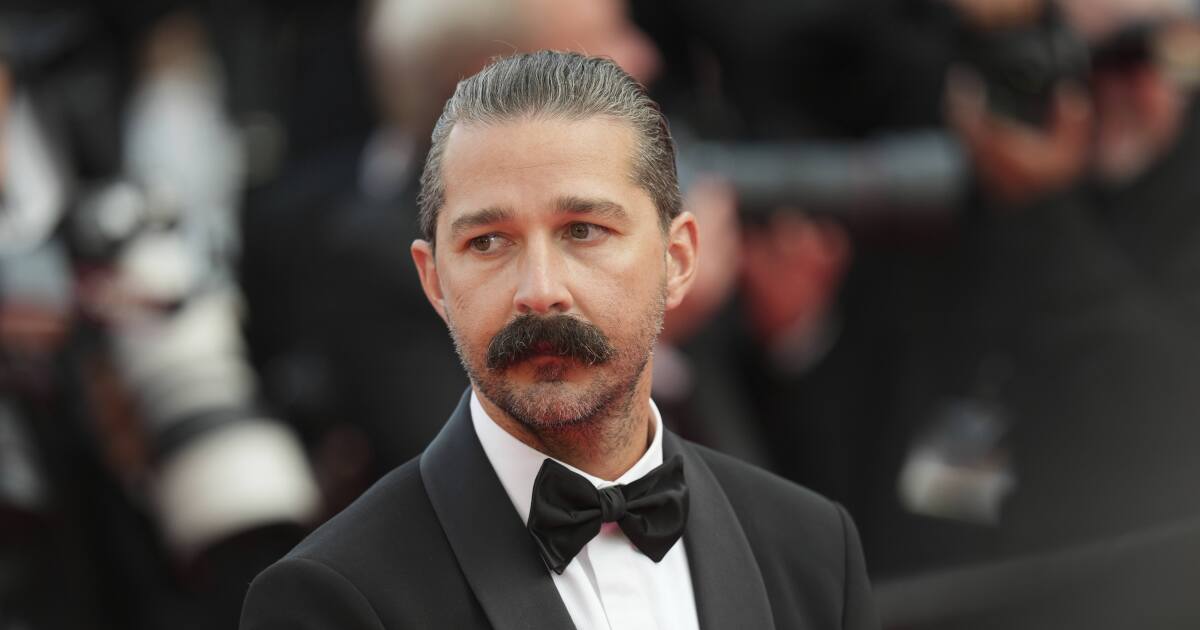
‘You’re scaring my people.’ Shia LaBeouf’s alleged stalker arrested after posting viral video
-
 Politics44 minutes ago
Californians back Becerra and reject AI data centers by big margins, poll finds
-
 Science50 minutes ago
How to eat safely amid outbreak of diarrhea-causing cyclosporiasis

