Utah
More office buildings converted into apartments across Utah, nation


SALT LAKE CITY (KUTV) — Empty office buildings are being redesigned into rental apartments in Utah and across the nation.
A handful of new apartment projects are being constructed in old office buildings right in Salt Lake City.
Projects like Arbor 515 in downtown Salt Lake City and Seraph at South Temple have created over 300 rental units in existing buildings. 600 office-to-apartment units are now in progress, according to RentCafe.
Nationwide, over 90,000 apartments were in the process of conversion at the start of this year. According to RentCafe, that’s up 28% from about a year ago.
While Utah has its own mix of projects, New York, Washington DC, and Chicago lead the nation with the most conversion projects.
Researchers explained that since the COVID-19 pandemic, there has been too much office space on the market. RentCafe says financial pressure and government-backed incentives are encouraging office to apartment living.
The rental site states that office-to-apartment conversions take several years to complete and are slower due to structural constraints, high construction costs, financing hurdles, and local regulatory requirements.
_____


SALT LAKE CITY — A first-of-its-kind monument that could become one of the largest bronze sculptures in the western United States is under construction in Utah.
Surrounded by sculptures lining his home, sculptor Sabin Howard refines his model for what will become the Grand Liberty Arch, a 60-foot-long, 36-foot-tall bronze monument depicting American history.
“It’s based upon geometric solids and how they move in and out of space,” Howard said.
The Grand Liberty Arch tells the story of America through a series of bronze reliefs.
“It is an arch to honor what we can be and is built to celebrate our nation’s 250th year with pride for the original American virtues and ideals,” Howard wrote in the monument’s proposal.
The front of the monument depicts the birth of America, including the Revolutionary War and the Declaration of Independence. Visitors walking through the arch will see the Declaration of Independence and the Constitution displayed on the interior walls alongside an eternal flame.
The opposite side portrays westward expansion and the 20th century, from World War I through space exploration. The two ends depict emancipation and the Civil War.
Each figurine is deeply symbolic. One recurring figure throughout the monument is Lady Liberty.
“Because that liberty is here. It’s a symbol,” Howard said.
Another figure carries a shield, representing the protection of freedom.
The monument features 56 sculpted figures, some standing up to 12 feet tall.
One of those figures, carrying an American flag, is modeled after a Texas veteran. Howard said the veteran served in two wars and, shortly before returning from Afghanistan, stepped on an explosive device that resulted in the loss of his leg.
“He has a tremendous amount of strength and courage,” Howard said. “He’s still going forward, so we’ve been wounded, we’ve been injured, yet we still have the courage to proceed forward.”
Many of the models Howard found in the Beehive State were at local CrossFit. Howard wanted bodybuilders and athletes for his artistic style, something he described as putting a movie on a monument.
“It’s a superhero’s version of American history,” Howard said.
The $55 million monument has been approved by the Capitol Preservation Board and Gov. Spencer Cox for a site above the Capitol. A circular plaza will surround the arch, symbolizing unity and a beacon of guiding light.
Partnering with the American Preparatory Academy, Howard hopes it will design lessons and programs that allow students to recite founding texts and perform at the monument.
Howard will work alongside three or four sculptors, including two from the Beehive State. He has most of the project funded, but is still seeking donors.
“This will show the world what’s going on in Utah,” Howard said.
At 62, decades of dedication have led Howard to this moment.
“It took 42 years to get here,” Howard said.
Howard couldn’t even draw when he was 19 years old, yet he was determined to try.
“I decided one afternoon, I’m going to make art like Michelangelo, Leonardo and Raphael,” Howard said.
Becoming a sculptor for Howard is about more than mastering technique.
“You’re not only developing your skills, you’re also developing your ability to tell a story through visual narrative,” Howard said.
The story Howard is telling, he said, has never been presented on this scale before.
“What I’m basically doing is I’m manifesting a universe,” Howard said.
A universe that was inspired by his previous creations, and most recently, a monument for the nation.
After more than 75,000 hours of sculpting and after roughly four decades, Howard was commissioned to create the National World War I Memorial in Washington, D.C., featuring 38 figures.
The WWI model took six months to complete. Although the Grand Liberty Arch will be a larger monument, Howard said the current model took only three weeks, not because it’s less complicated, quite the opposite.
Howard attributes his successes to his belief in God.
“I operate with the assumption that someone has my back and Christ and God and light and truth are what drives things forward,” Howard said. “You cannot accomplish things of such magnitude if you do not have faith in something larger than yourself.”
That faith ultimately brought Howard to Utah.
“I was told, ‘Go make a monument for your country. Go make a monument to represent who we are and what our history is,’” Howard said. “There is no human commissioner here. It’s my maker.”
Howard was encouraged by Sen. Mike Lee to make Utah home to his monument, and Howard agreed that the faith-based communities would appreciate the monument more than any other location.
“I don’t think there’s another place in the country that could manage a sculpture of this magnitude or meaning except Utah,” Howard said. “Nothing like this has ever happened.”
The monument’s magnitude in size alone makes the project significant, and Howard called it akin to the Sistine Chapel with how many figurines and symbols will be portrayed.
“When they go look at a monument like that, they’re hit in the gut in a very visceral, alchemical way,” Howard said.
Howard’s six-foot model of the Grand Liberty Arch will be displayed during Independence Day weekend in the Capitol Rotunda.
He will begin sculpting the full-sized monument in July, hoping to install a new panel every 15 months. Howard plans to complete the monument in time for Utah to host the 2034 Winter Olympics.
The Key Takeaways for this article were generated with the assistance of large language models and reviewed by our editorial team. The article, itself, is solely human-written.

The Utah Mammoth announced today the roster for their 2026 Development Camp, which will take place with on-ice sessions from June 29 to July 2. Development camp is designed to provide Mammoth prospects with NHL coaching and instruction during on- and off-ice workout sessions.
Five of Utah’s six 2026 draft picks, including 17th overall selection Ethan Belchetz, will participate in the camp, along with previous first-round selections Caleb Desnoyers (2025), Tij Iginla (2024) and Cole Beaudoin (2024). The full roster includes 35 players, consisting of 16 forwards, 14 defensemen and five goaltenders.
2026 DEVELOPMENT CAMP ROSTER:
Forwards: Owen Allard, Samu Bau, Cole Beaudoin, Ethan Belchetz, Yegor Borikov, Caleb Desnoyers, Štĕpán Hoch, Florent Houle, Vojtěch Hradec, Tij Iginla, Quinn Kennedy (invite), Tanner Ludtke, Jacob Newcombe (invite), Noel Nordh, Gabe Smith, Adam Valentini
Defensemen: Reko Alanko, Gregor Biber, CJ Foley (invite), Terrell Goldsmith, Brandon Holt (free agent), Ludvig Johnson, Theodor Knights, Ludvig Lafton, Tomas Lavoie, Matthew Morden, Max Pšenička, Will Skahan, Cal Thomas, Veeti Väisänen
Goaltenders: Carl Axelsson, Michael Hrabal, Carsen Musser, Melker Thelin, Ivan Tkach-Tkachenko
NUMERICAL ROSTER:
2 – Theodor Knights
4 – Brandon Holt
5 – CJ Foley
12 – Tij Iginla
14 – Štěpán Hoch
16 – Ethan Belchetz
18 – Caleb Desnoyers
23 – Ludvig Johnson
24 – Cole Beaudoin
29 – Carl Axelsson
30 – Michael Hrabal
32 – Carsen Musser
34 – Ivan Tkach-Tkachenko
36 – Florent Houle
37 – Owen Allard
42 – Cal Thomas
45 – Noel Nordh
46 – Jacob Newcombe
47 – Max Pšenička
51 – Veeti Väisänen
54 – Terrell Goldsmith
59 – Matthew Morden
60 – Melker Thelin
61 – Will Skahan
64 – Reko Alanko
65 – Yegor Borikov
68 – Ludvig Lafton
72 – Vojtěch Hradec
73 – Samu Bau
75 – Tomas Lavoie
80 – Tanner Ludtke
85 – Quinn Kennedy
93 – Gabe Smith
94 – Gregor Biber
95 – Adam Valentini

MOAB, Utah (KUTV) — Two wildfires that ignited along the Utah-Colorado border in Grand County have merged and were mapped at about 28,000 acres, according to Utah Fire Info.
Officials named the blaze the Snyder Fire. It was burning in Mesa County, Colorado.
Officials said the fire was threatening structures and that pre-evacuation orders were in effect.
According to the Moab Valley Fire Department, the wildfires started between 11 p.m. Friday and 3:30 a.m. Saturday on Bureau of Land Management land south of the Colorado River.
BE THE FIRST TO COMMENT
_____
-
 Lifestyle7 minutes ago
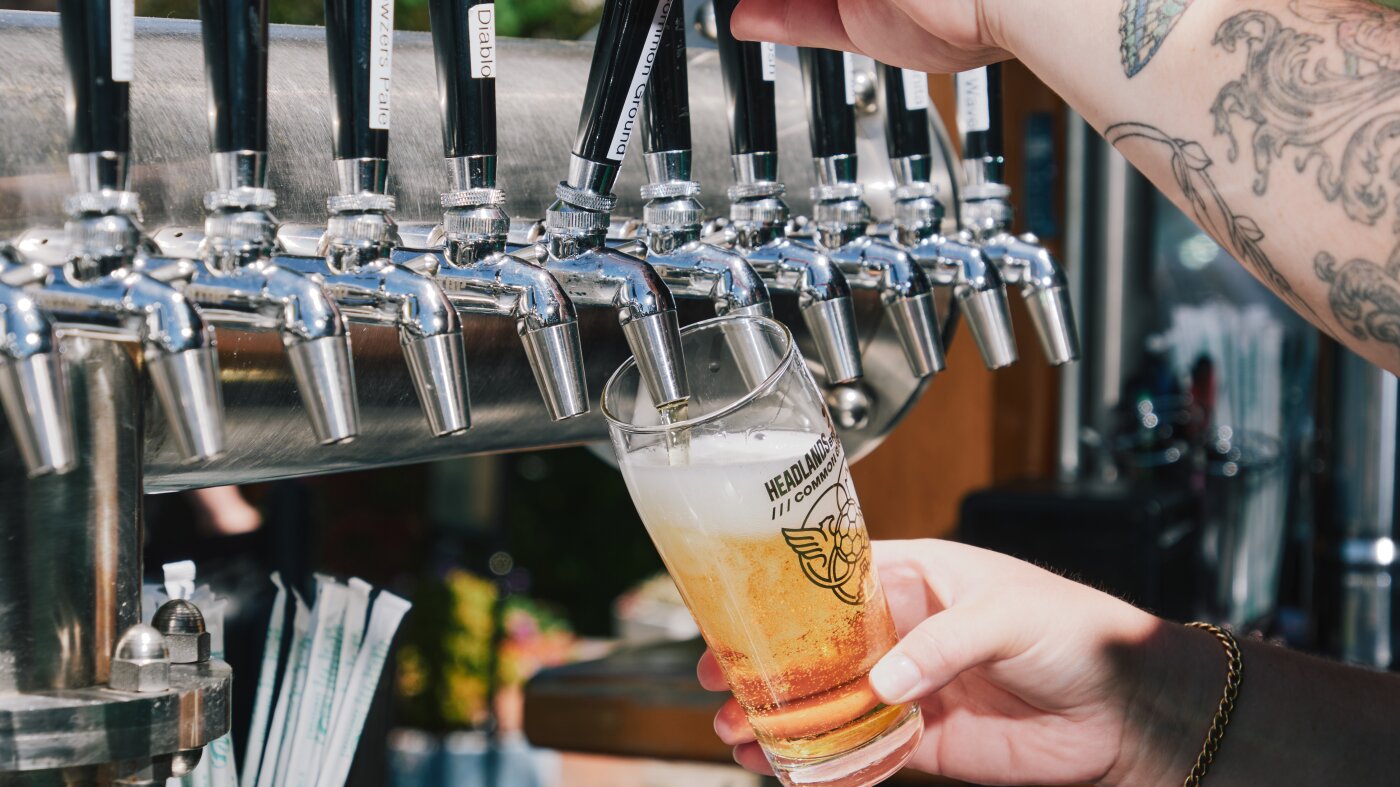
3 World Cup rivals find ‘Common Ground’ in a cross-border beer
-

 Technology19 minutes ago
The Flipper Zero creators’ Busy Bar productivity display will go on sale next month
-

 World22 minutes ago
Families watch in horror as skydiving plane crashes in France, killing all 11 aboard
-

 Politics27 minutes ago
DOJ launches grand jury probe into Marxist mogul Neville Roy Singham’s funding of leftist groups
-

 Health34 minutes ago
America’s lifespan has doubled since 1776 — experts reveal what changed
-

 Sports36 minutes ago
Thekla embarrasses Stardom’s Starlight Kid after retaining AEW World Women’s Championship at Forbidden Door
-

 Technology42 minutes ago
AI may spot deadly heart risk in a routine ECG
-
 Business49 minutes ago
SpaceX IPO sparks race for luxury housing in Southern California

