Utah
3 heroes who lifted Utah past BYU in a rivalry thriller


The 265th edition of the BYU-Utah basketball rivalry had its share of heroes from the team wearing red.
Thanks to the efforts of Ezra Ausar, Lawson Lovering and Hunter Erickson — and key contributions from other Runnin’ Utes — Utah was able to win a 73-72 thriller in overtime on Saturday night at the Huntsman Center.
It was a game where free-throw shooting ended up being a primary factor, and one where Utah’s identity it has forged during a three-game winning streak — attacking the paint — played out in its favor.
While the Utes went 17 of 32 from the free-throw line, far from the type of efficiency Utah would like to see from the line, that was much better than BYU’s 4 of 10 shooting from the charity stripe.
In a way, Ausar, Lovering and Erickson all had their own free-throw stories to tell from the Utah victory, and it was spurred by their ability to help the Utes win the battle in the paint against the Cougars.
“That’s the glass half empty,” Utah coach Craig Smith said, of the high number of free throws the team missed. “The glass half full is at least we got to the free throw line 32 times, and we made 17.
“Two weeks ago, there was no chance we’re going to make 17 free throws in a game because we wouldn’t get fouled. But we’re playing a different brand now. We’re getting to the line more, we’re attacking more. We’re just playing with way more force, and it’s big boy basketball. And that was a big boy basketball win.”
Ausar, Lovering and Erickson led that “big boy basketball” mentality against BYU.
Ezra Ausar
Ausar had easily his most impactful game as a Ute, scoring a season-high 26 points, just two of his career-high of 28 last season when he was at East Carolina.
The 6-foot-8 junior forward shot 11 of 15 from the floor, as well as 4 of 8 from the free-throw line.
He also had six rebounds, two assists and two steals.
“I love that man,” an emotional Smith said about Ausar, when asked about their postgame hug. “I don’t know what got into him, but it needs to happen all the time. He’s just a really amazing person. I’ve met a lot of people in my life. I’m not sure I met anybody exactly like Ezra, and that’s a real compliment.”
Smith relayed that Ausar has been dealing with some personal things, which includes the death of a family member, but the way he’s handled himself through it has struck a chord with the coach.
“He had a great look, and I think he’s learning how to really compete. He’s really learning how to play with force. He’s got to keep doing this,” Smith said.
After scoring two points in the first half, Ausar had 21 in the second half and three more in overtime.
He scored 12 of those points alone during a 16-4 run where Utah turned a 35-27 deficit into a 43-39 lead.
Ausar scored on a wide-open dunk in the final minute of regulation when Gabe Madsen drove then kicked to Ausar for the slam. That play gave Utah a 63-62 lead.
He rebounded a BYU miss on the next possession and was fouled, then hit 1 of 2 free throws to make it a two-point game.
The Cougars responded with a short jumper from Fousseyni Traore, forcing overtime.
Ausar then scored Utah’s first three points of the extra session.
In the final minute of overtime, with Utah trailing by one, he poked the ball away from Richie Saunders, and that led to a possession where Hunter Erickson was fouled, then hit two free throws to give the Utes the lead back.
“I’m just proud of the performance,” Ausar said. “I’m going to take it in and let it marinate, but you know (then it’s) definitely on to the next.”
It’s also an encouraging sign given the context of Utah’s two wins last week. In the Utes’ 73-65 victory over TCU on Wednesday, fellow forward Keanu Dawes scored 16 points and had two critical defensive plays in the final minute — one a block, and another a steal — as Utah held off a TCU comeback.
Lawson Lovering
The 7-foot Lovering was a physical force for Utah in the paint, setting the tone inside from the get-go.
When Utah went on a 16-4 run early in the second half, he had four points in that stretch and also proved to be a menace on the defensive end.
Lovering ended the night with 13 points, seven rebounds, four assists and three blocks.
“I just tried to focus on being me,” said Lovering, who added the team focus was “not let the moment get too big for us — be us and play rugged, physical basketball.”
It’s the latest in an impressive run of games for the senior big man, who’s been integral in each of Utah’s games during its three-game win streak.
The only negative in his game Saturday night was his free-throw shooting — Lovering was 5 of 11 as BYU employed a Hack-a-Shaq philosophy, daring him to make the Cougars pay from the free-throw line.
The idea worked more than it didn’t — that included Lovering missing two free throws in overtime, and on the year, he’s shooting 42.6% from the line.
Lovering, though, was still a handful for BYU to deal with, and he played much of the second half and overtime with four fouls without fouling out — a sign of growth from the center.
“Lawson, I thought was amazing tonight, and especially to start that second half,” Smith said. “You know, he got a quick third foul. Josh Eilert, who’s our big man coach, he’s like, ‘Coach, we gotta get Lawson out.’ And I’m like, ‘No, what? I’m not taking him out. He’s the one who’s really hooping right now.’ And then he came back in with six, seven minutes left with four fouls, and played the rest of the game and overtime.”

Hunter Erickson
Erickson, the former BYU guard whose college career has taken him from Provo to a year at Salt Lake Community College to now two seasons at Utah, came up in several clutch moments for the Utes against his former team.
“Hunter, he just has this … everybody believes in him, just the ultimate respect (from) everybody because of how hard he competes. They trust him. He always makes the right play,” Smith said.
His first points of the game came on a 3-pointer with 9:39 left in regulation, and was a direct response to a BYU 3-pointer moments earlier. That play gave Utah a 53-48 lead.
Then in overtime, Erickson was as assertive as he’s been all year.
When Utah was struggling to score in overtime as it clanked several free throws, Erickson drilled a 3-pointer with 2:08 on the clock that made it a 70-70 game. He confidently stepped back and made the shot with BYU’s Dallin Hall on defense.
On that play, Smith said the Utes were trying to run the same play they had successfully converted for the go-ahead Ausar dunk in the final minute of regulation. Things got discombobulated on offense, though, and Erickson rolled off a screen from Lovering and confidently made the 3.
That came after, according to Smith, assistant coach Lo Leath had told Erickson earlier in the game, “Hunter, you always make the right play. … You know what, tonight, the right play might be shooting it a little bit more.”
“Lawson just goes, sets the ball screen, then Hunter sticks it,” Smith said, of that critical 3-pointer. “You know, players make plays bottom line. And so he stuck with it. He’s just such a connector and he’s a real competitor, and he plays both ends of the floor. “
Then in the final minute, Erickson again was assertive, scoring the Utes’ final three points, all from the free-throw line.
First, he was fouled with 47 seconds left and Utah trailing by two.
Erickson made the first shot from the charity stripe, but with the chance to tie the game, he airballed the second attempt.
That was his first free-throw miss since mid-November — Erickson is an 87.5% free throw shooter this year, on 16 attempts.
Erickson, though, got the chance for redemption.
After Ausar forced a turnover, Utah again had possession and the chance to take the lead. Erickson again drove into the lane and was fouled.
This time, he nailed both free throws.
Erickson finished the night with nine points, two assists, one steal and a rebound while playing 23 minutes.
“It’s definitely really fun, obviously a lot of connections on both sides, and it’s just super fun playing with the energy that the fans bring for both teams,” Erickson said, of playing in the rivalry game.
What’s next
Utah will be tested again this week with a trip to No. 10 Houston on Tuesday, followed by a home matchup against No. 25 Baylor.
The Cougars narrowly avoided an upset against UCF on Saturday, while the Bears were knocked off at home by TCU on Sunday.
A side note from Baylor’s loss: TCU, which Utah beat on the road last Wednesday, rose to No. 73 in the NET NCAA rankings by beating the Bears.
The Utes’ win on the road over the Horned Frogs now qualifies, at least for the moment, as a Quad 1 win.



NHL, the NHL Shield, the word mark and image of the Stanley Cup and the NHL Conference logos are registered trademarks of the National Hockey League. All NHL logos and marks, including the foregoing, and NHL team logos and marks, as well as all other proprietary materials depicted herein are the property of the NHL and the respective NHL teams and may not be reproduced without the prior written consent of NHL Enterprises, L.P. © National Hockey League. All rights reserved.

WEST VALLEY CITY, Utah (KUTV) — A woman was killed in a crash after running a red light on Mountain View Corridor in West Valley City.
Police said the collision was reported just before 1:30 p.m. at the intersection of 4100 South.
Officers said a northbound tow truck entered the intersection on a green light when an eastbound SUV ran a red light and was T-boned.
Both vehicles reportedly caught fire after the impact.
The SUV driver was taken to a hospital, where she later died. Authorities are working to identify her.
The tow truck driver suffered non-life-threatening injuries.
Northbound lanes at 4100 South will remain closed for several hours while crews clear the scene and investigate the crash.
BE THE FIRST TO COMMENT
_____

SALT LAKE CITY (KUTV) — A little mid-level moisture will drift across Utah this weekend, but most areas will stay dry.
A few very isolated mountain showers are possible, mainly in the afternoons, but nothing widespread.
The big story is the heat. High pressure will build in, pushing temperatures 15–20 degrees above normal.
It will feel more like late spring, with many areas nearing or breaking March records, especially across central and southern Utah.
Overall, expect a warm, mostly dry weekend, with just a small chance for a quick mountain shower. Rain chances increase significantly later next week.
_______

Politics3 minutes ago
Scathing report claims nation’s oldest labor union ‘betrayed’ MAGA members through ‘shocking’ spending

Health9 minutes ago
Cases of ‘white plague’ rising in US as doctors warn of ‘rebound effect’

Sports15 minutes ago
F1 star Max Verstappen suggests he’s considering retirement at age 28

Technology21 minutes ago
FBI email hack shows why you must lock down your tech
Business27 minutes ago
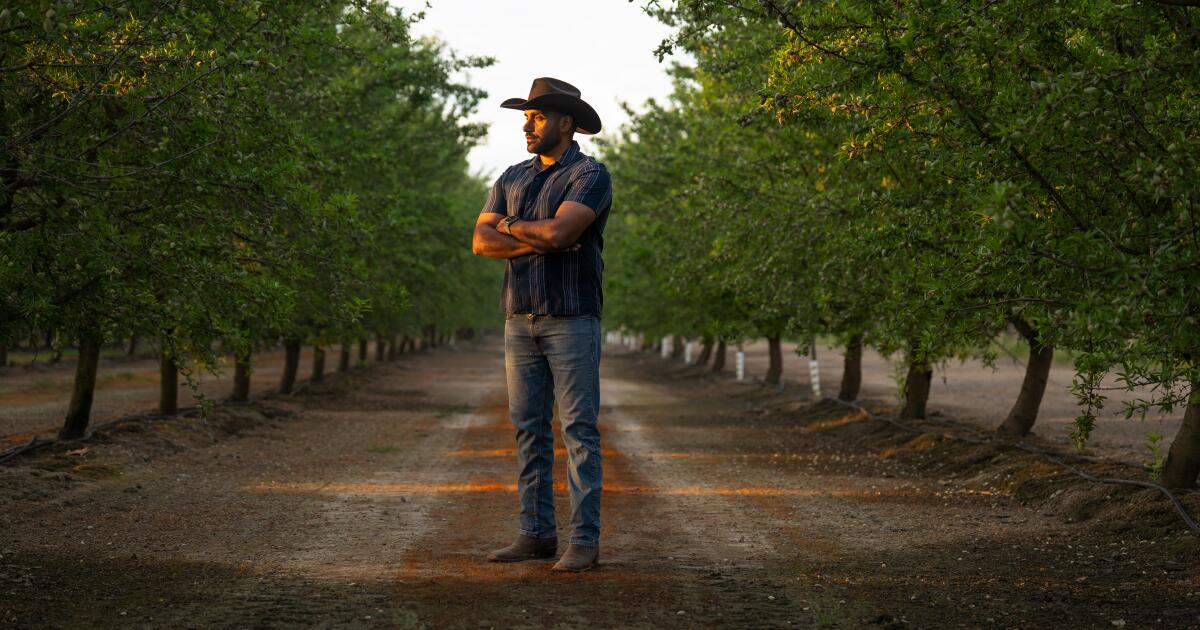
California farmers were already struggling. Then came the Iran war

Florida1 year ago
Florida High School Football Rankings: Top 25 teams – Oct. 21

Oregon2 years ago
How old is Bo Nix? What to know about Oregon quarterback ahead of 2024 NFL Draft

Connecticut2 years ago
Cleary's 21 help Le Moyne down Central Connecticut State 69-64 in OT

Virginia2 years ago
99th annual Pony Swim held in Virginia

Indiana2 years ago
Indiana Members Credit Union announced as new anchor tenant at Bottleworks District
Politics3 minutes ago
Scathing report claims nation’s oldest labor union ‘betrayed’ MAGA members through ‘shocking’ spending

World1 hour ago
Republican US lawmaker demands Congress vote on any Iran troop deployment

News2 hours ago
So you went to a No Kings protest. Now what?

Politics12 hours ago
JD Vance says he was ‘obsessed’ with UFOs, believes aliens are actually ‘demons’
World13 hours ago
The EU's recipe for trade deals : easy on beef, tough on wine
-

 Sports1 week ago
IOC addresses execution of 19-year-old Iranian wrestler Saleh Mohammadi
-

 New Mexico7 days ago
Clovis shooting leaves one dead, four injured
-

 Miami, FL3 days ago
Jannik Sinner’s Girlfriend Laila Hasanovic Stuns in Ab-Revealing Post Amid Miami Open
-

 Tennessee6 days ago
Tennessee Police Investigating Alleged Assault Involving ‘Reacher’ Star Alan Ritchson
-

 Minneapolis, MN3 days ago
Boy who shielded classmate during school shooting receives Medal of Honor
-

 Technology1 week ago
YouTube job scam text: How to spot it fast
-

 Politics1 week ago
Schumer gambit fails as DHS shutdown hits 36 days and airport lines grow
-

 Science1 week ago
Record Heat Meets a Major Snow Drought Across the West