West
Trump plans to undo Obama’s ‘insulting’ rename of Mt. McKinley; ‘Awful idea’ says Alaska Republican

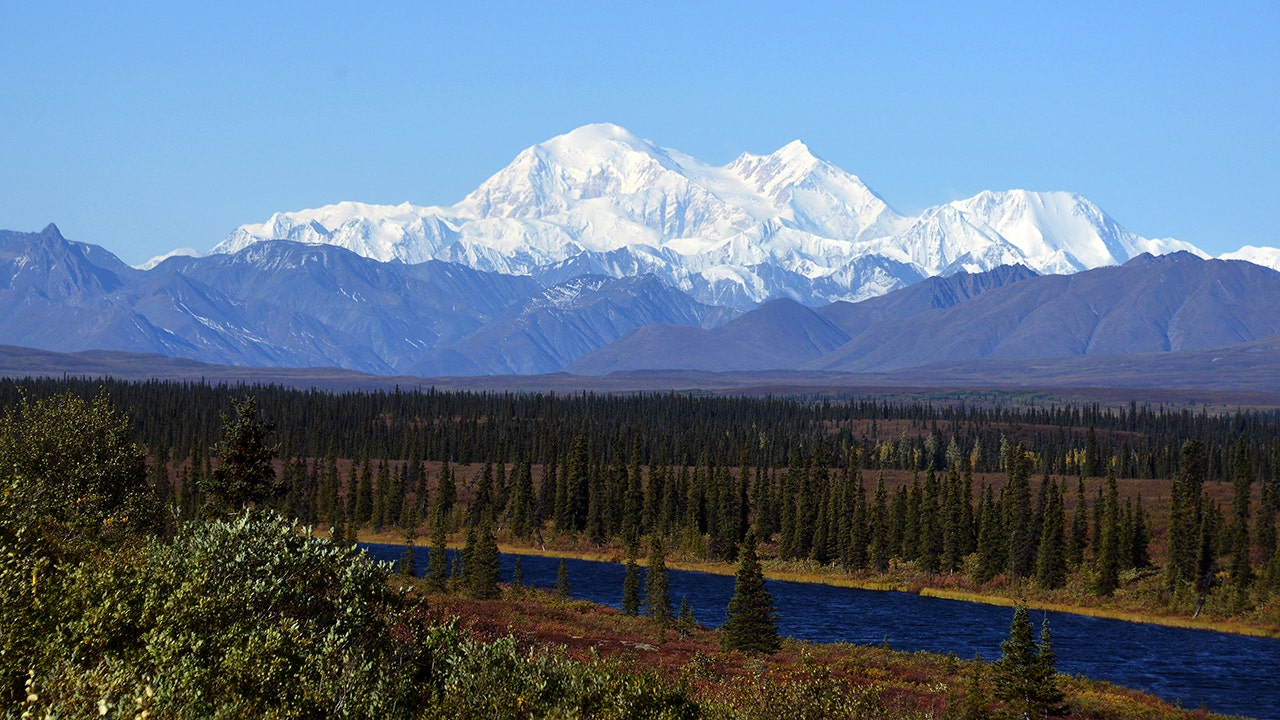
President-elect Trump pledged this week to undo former President Obama’s 2015 decision to change the name of North America’s tallest peak to its Koyukon Athabascan name “Denali,” meaning “High One” or “Great One.”
Speaking to conservatives at a Phoenix conference, Trump made the pledge and noted President William McKinley was also a Republican who believed in tariffs. He first promised to undo Obama’s action in August 2015 and called it an “insult to Ohio,” where McKinley was born and raised.
During his Phoenix remarks, he also pledged to undo Democrats’ rebranding of southern military bases named for Confederates – like Fort Liberty in Fayetteville, North Carolina, which was formerly named after Gen. Braxton Bragg.
The 20,320-foot mountain was first dubbed Mount McKinley in 1896 by gold prospector William Dickey, after learning the Ohioan had won the GOP presidential nomination – and as a swipe at silver prospectors he met who preferred Democrat William Jennings Bryan and his plan for a silver standard for the dollar.
ALASKA OUTRAGED AT BIDEN’S FEDERAL OIL LEASE SALE SETUP AS ‘FITTING FINALE’ TO FOSSIL FUEL-AVERSE PRESIDENCY
Ohio’s William McKinley (1843-1901) was the 25th president of the United States, serving from March 4, 1897, until his assassination in September 1901. (Universal History Archive/Universal Images Group via Getty Images)
Six months into his second term, McKinley was visiting Buffalo, New York, when anarchist laborer Leon Czolgosz assassinated him in a gladhanding line. Czolgosz believed the root of economic inequality stood with the government and was reportedly inspired by the 1900 assassination of Italian King Umberto I.
However, many Alaskans have appeared to prefer the historic name Denali:
GOP Sen. Lisa Murkowski told KTUU that Trump’s plan to bring back “Mt. McKinley” is an “awful idea.”
“We already went through this with President Trump back and at the very, very beginning of his first term,” she said Monday.
Murkowski said both she and Sen. Dan Sullivan, R-Alaska, – who originally hails from McKinley’s Ohio – support the name Denali.
“[Denali] is a name that has been around for thousands of years… North America’s tallest mountain – shouldn’t it have a name like ‘The Great One’?” Murkowski added.
MURKOWSKI SAYS SHE’S NOT ‘ATTACHED’ TO GOP LABEL
Denali, near Talkeetna, Alaska (AP Photo/Becky Bohrer, File)
In 2015, Sullivan told the Anchorage Daily News that “Denali belongs to Alaska and its citizens” and that the naming rights are held by Alaskan Natives.
In a statement to KTUU this week, a spokesperson for Sullivan said he, “like many Alaskans prefers the name that the very tough, very strong, very patriotic Athabascan people gave” the peak.
Meanwhile, then-Rep. Ralph Regula, R-Ohio, spent decades in Congress preventing any name change from McKinley to Denali – as the namesake president hailed from his Canton district.
Regula, who died in 2017, lambasted Obama over the name change, saying he “thinks he is a dictator.”
Appearing to cite his own work presenting procedural roadblocks and language added to Interior-related bills, Regula said Obama could not change such a law “by a flick of his pen.”
“You want to change the Ohio River?” he quipped.
Sen. Lisa Murkowski speaks during a news conference. (Drew Angerer/Getty Images)
However, some Ohio officials have also been deferential to the will of Alaskans.
Current Lt. Gov. Jon Husted told the Dayton Daily News in 2015 that if Denali is what Alaskans want, then he in turn understood, as he wouldn’t want Alaskans dictating Ohio name changes.
“So, I guess we shouldn’t tell people in Alaska should do in their own state. But I’m a big fan of Canton and McKinley and I’m glad that he’s getting talked about some more,” he said at the time.
Read the full article from Here


There are many uses for old missile silos out in Wyoming. One such site, with several silos, is used to restore old trains, buses, and any other old history on wheels.
Let’s go visit and see what is happening in southeast Wyoming, where work is being done at a place that was once meant for destruction.
Wyoming’s Vintage Rail Restorations
Out in a corner of southeast Wyoming, working from old nuclear missile silos, old trains and train cars are being restored.
Gallery Credit: Glenn Woods
San Francisco, CA
Dozens of apparent shopping carts stuck in marsh along SF Bay: ‘How did they get there?!’

SOUTH SAN FRANCISCO, Calif. (KGO) — Dozens of apparent shopping carts are stuck in a marsh along the San Francisco Bay. And residents are puzzled as to how they got there.
“It’s crazy! Gross!” said Kim Avalos, who frequents the trail. “What is that?!”
The San Francisco Bay Trail in South San Francisco curves around the mouth of the Colma Creek marsh. It’s a popular walking and running trail, but local residents are starting to notice something in the water.
“Now that I’m looking at… wow…there’s actually so many shopping carts out here,” said Avalos. “There’s an extreme amount.”
Avalos works for a nearby garbage company. She says she walks the trail every day but has never seen anything like this.
“It’s actually kind of insane to think about how they even got there,” Avalos said.
It’s the same story for others who frequent the trail. At first glance, mistaking the debris for rocks until they actually stare at it.
“It kind of blends in,” said Hondres when we approached him on the trail. “I’ve never seen grocery carts out in the Bay like this… I don’t know, it’s kind of weird.”
“Have you noticed it before?” 7 On Your Side’s Stephanie Sierra asked another passer-by.
“Uh… no. This is kind of new,” he said. “Someone is being very stupid… I’ve seen them over the years. I don’t remember there being this many. There’s quite a few.”
Many people who frequent the trail said when it’s high tide it’s hard to notice anything.
“It does look like shopping carts, do you know if that’s what it is?”
It’s hard to say for sure. But at low tide, it certainly looks that way.
“It does look like shopping carts, amongst other things,” Save the Bay representative Josh Quigley said.

And there’s not just one or two, but there’s what appears to be dozens of them spanning the Colma Creek marsh adjacent to the bay.
“Have you ever seen this many shopping carts along the bay?” Stephanie Sierra asked.
“I have not, no,” Quigley said. “This is certainly the greater concentration that I’ve ever seen in one place.”
Quigley is the Senior Policy Manager for Save the Bay, an environmental nonprofit founded in 1961 to stop excessive filling of the San Francisco Bay.
“I think it’s really unfortunate… the bay is treated not as the jewel and resource that it should be, but as a dumping ground,” Quigley said.
So, where is it all coming from? That seems to be up for debate.
“It could be a big prank, if anything, but at this rate I have no idea,” said Alvin Lau, who visits the trail regularly.
“There’s often homeless people in the mobile RV vehicles,” said another. “There’s always a lot of trash here, not going to lie.”
“I don’t know, maybe Costco. They are our neighbors,” Kim Avalos said. “Could be because they do look bigger.”
A Costco Business Center is about a mile from Colma Marsh. 7 On Your Side reached out to Costco’s corporate office, and the South San Francisco Costco General Manager said: “We walk and clean the trail multiple times a week, in addition to checking for any carts that might end up in the bay.”
The goal now is to clean it out — and ensure it stays that way.
“Stop being dumb. There’s only one planet we got, so take care of it,” said Lau.
“It hurts me as an animal lover to see all these shopping carts in their place of habitat,” Avalos said.
“Save the Bay” says overall pollution is decreasing across the bay shoreline, but there are instances–like this one–where smaller pockets need to be addressed.
Locally, there are regulations in place to prevent this type of pollution.
7 On Your Side contacted the San Francisco Bay Regional Water Quality Control Board to further investigate and clean up the area.
Take a look at more stories and videos by 7 On Your Side.
7OYS’s consumer hotline is a free consumer mediation service for those in the San Francisco Bay Area. We assist individuals with consumer-related issues; we cannot assist on cases between businesses, or cases involving family law, criminal matters, landlord/tenant disputes, labor issues, or medical issues. Please review our FAQ here. As a part of our process in assisting you, it is necessary that we contact the company / agency you are writing about. If you do not wish us to contact them, please let us know right away, as it will affect our ability to work on your case. If we are able to assist you, we will reach back out.
Copyright © 2026 KGO-TV. All Rights Reserved.
Denver, CO
Filled with stories, Denver’s Rockmount Ranch Wear owner Steve Weil shares inside scoop on famous customers

Nestled in Denver’s oldest historic district is a piece of Americana dating back decades. A new book shares the star-studded history of Rockmount Ranch Wear and its influence on fashion icons.
Current owner Steve Weil grew up inside Rockmount Ranch Wear. Long days in a warehouse and store aren’t unusual for a member of the Weil family, considering his grandfather kept at it until he was 107.
“I have been here pretty much since I was a little kid,” said Weil.
Customer watching at Rockmount Ranch Wear in LoDo is, at times, like a night at the Grammys. Music stars abound. Film stars, too. And regular customers looking for a piece of Americana.
Weil says Rockmount has weathered booms and busts over its eighty years of business.
“Everything was about responding to a changing market. That’s the cycle of business, right?” said Weil, who serves as the company’s President and chief creative officer.
His latest creative effort is a third book, “Rockmount Legends: Celebrities in Classic American Fashion.” The book is a compilation of memories of rock stars like David Bowie, Eric Clapton, and Bob Dylan, who have branded their own look with Rockmount clothing. There are stories and back-and-forth communications, as well as style notes and sightings of Rockmount on film sets and among stars.

Weil first noticed a shirt on Elvis Presley in the movie “Love Me Tender.”
“I looked, and I looked, and suddenly I remembered I’d seen a shirt exactly like that that my father had in the 50s,” he recalled.
Weil re-introduced the shirt, and it was a sellout.
The company was started soon after World War II by “Papa Jack,” who cut out a niche as unique as the sawtooth pockets he popularized. The company was the first to put snaps on shirts. His grandfather figured it would keep men on horseback from getting snagged. His shirts also featured yokes and wider cuffs, a departure from the norm at the time.
“My grandfather and his advertising, ‘Designed in the West by Westerners.’ Distinctive,” Steve Weil summarized.
Over the years, more and more stars looking for western wear eventually came into the store on Wazee Street in LoDo.
“People who write music or movies, I think they’re visionaries. And I think they appreciate that in their clothing, and I think we’ve, that’s what we do,” said Weil.

“Rockmount Legends” follows two other books, “Ask Papa Jack: Wisdom of the World’s Oldest CEO,” which is filled with stories and sayings from Papa Jack, who worked at the store until his passing, and “Western Shirts: A Classic American Fashion,” which puts in print the history of the development of western wear.
“I’m inspired by my grandfather. He could mesmerize you with his stories,” said Weil.
One passage features letters exchanged between Papa Jack and Ronald Reagan. Reagan was decrying the U.S.’s shift toward a service economy.
“And my grandfather writes him and says, ‘Servicing is when they take the mare to the stud,’” laughs Weil.
Weil’s father was also an innovator, taking the company nationwide. Weil says he could tell a story of his own.
Weil says, one Saturday at the warehouse, before there was a store, “There’s a guy peering in the window like this, and he sees my father pull up. Opened the door and he says, ‘Bloody hell, you’re never open when I’m here.’ And it’s a guy with an English accent. And my father’s a nice guy, he says, ‘come on in.’”
Later that day, there was a family get-together, and Steve’s father told him the story.
Weil recalled, “My father says, ‘An English rock star came in and I took care of him,’ and I’m thinking, ‘Yeah, right. Who was it?’”
It took his father a few moments to remember, then he spat out, “David Bowie,” mispronouncing the name. Steve was still skeptical until Monday.

“And then the phone rings, and it’s David Bowie’s secretary. He wants a duplicate of the same order sent to Madison Square Garden overnight,” he laughed.
Weil says they try to respect the stars’ space, adding that there are the friendly ones and the more remote ones.
“Robert Plant was really fun,” explained Weil.
When he arrived in the store, Steve says he received a call from one of the workers. He could hear Led Zeppelin’s Plant in the background, crowing about what he’d found.
“I walk in and here’s this guy like, just beaming. He’s having fun,” Weil shared.
The staff ended up getting invited to three nights of shows by Plant and his band at the Fillmore, and Steve went out to breakfast with Plant.
Eric Clapton’s look seems well-branded by Rockmount. Weil says Clapton has been a regular customer over the years. He sent a picture of himself in a Rockmount shirt at one point.
“Can I use that you know in some of our material?” he recalled asking Clapton. “He says, ‘Yeah, what’s in it for me? I said how about a ten percent discount?”

One time, Clapton emailed that he needed shirts for a Cream reunion in London in two days.
“I said, ‘Well, it takes a week from Denver. But I know where you can have a shirt on Thursday, and that’s if I hand deliver one,” he explained.
And so he did. Weil and a friend, capable of making last-minute travel decisions, flew over, but then doubt set in.
“What if this is bogus?” Weil thought.
He had Clapton’s phone number but was too worried about the cost of calling from his cell phone, so he sought out a British phone booth and rang him. Turned out, it was legitimate, and they made the delivery at the Royal Albert Hall. They went to dinner with Clapton as well.
The book is another way to share the memories that go with the images and the stories about people who have found an image along with the clothing.
Weil says sales have changed over the years, with the web now a big component. But personal engagement is still a big part of the Rockmount experience.
“It’s kind of a rare art. And I don’t know, I hope with the internet we don’t lose that kind of stuff,” said Weil.
-

 Wisconsin30 seconds ago
Wisconsin schools added thousands of staff despite enrollment falling
-

 West Virginia8 minutes ago
Commentary: As Mountaineers ready for elimination game, harping on errors does no good – WV MetroNews
-

 Wyoming11 minutes ago
Old Wyoming Missile Silos Used For Train Restorations
-

 Crypto16 minutes ago
Binance Research: April DeFi Exploits Triggered $13 Billion in Outflows
-

 Finance23 minutes ago
New global framework launched to help financial firms make transition plans
-

 Fitness25 minutes ago
US Health Clubs and Studios to Offer Free Memberships for Military Recruits Under New Service Ready Program – Health & Fitness Association
-

 Movie Reviews38 minutes ago
Review | Dog Day Evening: Kafkaesque comedy reflects on a Hong Kong hostage incident
-
World46 minutes ago
Author Amy Griffin sues woman who alleged she stole her stories of sexual abuse in memoir ‘The Tell’


