Connect with us

West

The true cost of the 2025 Elections

Published

on

The true cost of the 2025 Elections

NEWYou can now listen to Fox News articles!

The year after a presidential election is typically the low point when it comes to campaign trail action, but 2025 is not your typical off-year election.

Between competitive races for governor in New Jersey and Virginia, a high-profile showdown for New York City mayor that’s grabbed plenty of national attention, and the Proposition 50 ballot initiative in California in the bitter battle between President Donald Trump and Republicans versus Democrats over congressional redistricting, 2025 has been a beehive of campaign activity.

And that means plenty of money has been inserted into this year’s campaigns.

HEAD HERE FOR THE LATEST FOX NEWS REPORTING ON THE 2025 ELECTIONS

Advertisement

New Jersey Democratic gubernatorial nominee Rep. Mikie Sherrill, right, and Republican nominee Jack Ciattarelli, on the stage moments at the start of their second and final debate, on Oct. 8, 2025, in New Brunswick, N.J. (Paul Steinhauser/Fox News Digital)

As of early October, New Jersey Democratic gubernatorial nominee Rep. Mikie Sherrill had raised roughly $17.5 million dollars, with GOP rival Jack Cittarelli at $16.5 million. Sherrill, as of a month ago, had spent around $11 million on her campaign, with Ciattarelli dishing out nearly $13 million.

FIVE KEY 2025 RACES TO WATCH

In Virginia, the Democratic nominee for governor, former Rep. Abigail Spanberger, hauled in nearly $12 million in fundraising in October alone, with Lt. Gov. Winsome Earle-Sears raking in $9.5 million last month.

Virginia Republican gubernatorial nominee Lt. Gov. Winsome Earle-Sears, left, and her Democratic rival, former Rep. Abigail Spanberger. (Pool/Getty Images)

Advertisement

In New York City, where there are fundraising and spending caps, Democratic Party nominee Zohran Mamdani hauled in nearly $17 million in public and private contributions, with Independent candidate former Gov. Andrew Cuomo at $12.5 million and GOP nominee Curtis Sliwa raising nearly $6 million.

Independent mayoral candidate, former Gov. Andrew Cuomo, left, Democratic nominee Zohran Mamdani, center, and Republican nominee Curtis Sliwa participate in the second New York City mayoral debate at LaGuardia Community College in Long Island City, Queens, New York City, on Oct. 22, 2025.  (Hiroko Masuike/POOL/AFP via Getty Images)

And none of these figures include the tens of millions of dollars dished out in all three races by outside groups, such as super PACs.

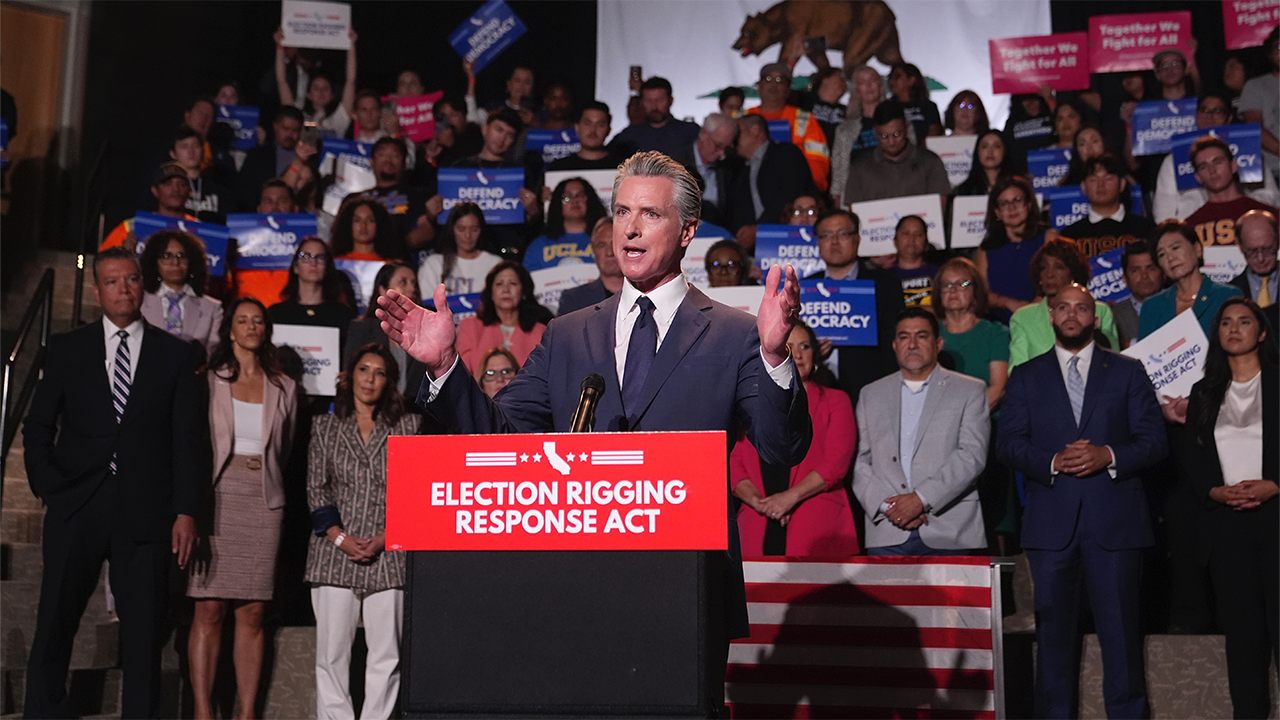
Meanwhile, the Prop 50 battle in California, the nation’s most populous state, saw a surge in spending.

California Gov. Gavin Newsom speaks about the “Election Rigging Response Act” at a press conference on Aug. 14, 2025, in Los Angeles, California. (Mario Tama/Getty Images)

Advertisement

CLICK HERE TO DOWNLOAD THE FOX NEWS APP

A whopping $140 million was dished out as of last month in the battle between Democrats and Republicans in left-leaning California to return control of congressional redistricting from the current non-partisan commission back to the Democrat-dominated legislature.

The Yes on Prop 50 forces pulled in nearly $100 million, vastly outraising and spending the No forces.

Read the full article from Here

San Diego, CA

100-unit affordable housing community ‘The Iris’ opens in San Ysidro

Published

on

100-unit affordable housing community ‘The Iris’ opens in San Ysidro


Housing developer National CORE, the San Diego Housing Commission, the county and city of San Diego celebrated the grand opening Tuesday of a 100-unit affordable housing community in San Ysidro.

The Iris, 1663 Dairy Mart Road, is across the street from a trolley stop and the newly renovated Howard Lane Park. It features 42 one-bedroom, 32 two-bedroom, and 25 three-bedroom apartments for low-income families and individuals, along with a manager’s unit.

“I am proud to support The Iris at San Ysidro because it reflects the kind of thoughtful development our region needs,” said San Diego County Supervisor Paloma Aguirre. “It is housing that is affordable, sustainable and connected to parks, transit and community services.”

Advertisement

Residents at The Iris have “extremely low,” to low income making anywhere from 25% to 60% of the Area Median Income. AMI is $130,800 for a family of two, $165,500 for a family of four, according to the county’s figures.

The Iris includes 15 permanent supportive housing units for people who have experienced homelessness and 50 apartments designed to support residents with mobility challenges and five homes for people with hearing loss.

All units at The Iris will be required to remain affordable for 55 years for households with income up to 60% of San Diego’s Area Median Income.

SDHC awarded 25 housing vouchers to The Iris to help pay rent for residents with extremely low income. These vouchers are tied directly to this development, so that when a household moves on, the voucher stays to help another household with extremely low income.

Advertisement

The project was developed by National CORE and featured public/private partnerships, such as a county investment of $5 million from the Innovative Housing Trust Fund and $6.5 million in No Place Like Home funds. County Behavioral Health Services will also provide supportive services to residents for the next 20 years.

The Iris includes a community room with office space, a laundry room and a courtyard play area with outdoor seating.

City News Service contributed to this article.


Source link

Advertisement
Continue Reading

Alaska

LNG pipeline legislation debate divides Alaska lawmakers after consultant calls it ‘essential’

Published

on

LNG pipeline legislation debate divides Alaska lawmakers after consultant calls it ‘essential’


ANCHORAGE, Alaska (KTUU) Alaska lawmakers are divided over whether new legislation is needed for a liquified natural gas pipeline, with the state’s energy consultant calling it “essential” while some legislators say existing laws are sufficient.

“A successful project will likely require suitable enabling legislation from the state legislature, among other key prerequisites,” state-contracted energy consulting firm GaffneyCline, hired by the Legislative Budget and Audit Committee for up to $200,000 in April 2024, says in a document made public for the first time Monday.

The 62-page document, presented to the Legislative Budget and Audit Committee last month, concludes that legislation is essential for the pipeline to be viable but more needs to be done to get the project across the finish line.

“A detailed economic model of the project is required before the legislature can take an informed view as to the appropriate degree of government take that the project can sustain, and how this could evolve over time,” the document states.

Advertisement

Alaska’s News Source reached out to Glenfarne Tuesday for comment on who presents the economic model and when that model could be presented. Spokesperson Tim Fitzpatrick referred on the report for GaffneyCline.

“We will continue to work closely with the legislature to discuss policy issues that may affect Alaska LNG and work collaboratively on solutions that enable Glenfarne to provide Alaskans with affordable energy security as rapidly as possible,” he said in a statement.

The document’s release comes amid optimism from pipeline developers and federal officials but growing skepticism from some state lawmakers.

During a November Legislative Budget and Audit Committee which discussed the same topic, House Speaker Bryce Edgmon, NA-Dillingham, left believing “the upcoming 2026 legislative session could be dominated by policy measures related to advancing the Alaska gas line project.”

“We don’t have any of this,” Edgmon said last month, relating to laws GaffneyCline says are essential.

Advertisement

Rep. Mia Costello, R-Anchorage, former House minority leader and co-chair of the Alaska Gasline Caucus, said she believes legislation for the pipeline is not needed, citing previous legislative involvement.

“Large scale LNG projects around the world are successfully developed through commercial agreements, private capital, and existing regulatory processes not legislative intervention,” Costello said in a statement. “Alaska already has established permitting, taxation, and regulatory framework capable of supporting energy development. Legislative involvement risks introducing political uncertainty, delaying timelines, and discouraging investors who prioritize stability and market driven decision-making.”

However, Sen. Elvi Gray-Jackson, D-Anchorage, told Alaska’s News Source the policy measures currently in place are more than a decade old, created for a different project, and don’t easily mesh with the task in front of them today.

“When project leadership … and financial models change, it’s our responsibility to revisit the policy framework that governs the state involvement, and that’s what we’re going to do as a legislature,” Gray-Jackson said.

Legislative action?

The asks pipeline developers want in those policies could be steep.

Advertisement

On the list of asks is a concept called “fiscal stability,” essentially a promise if Alaska changes its tax or regulatory policies later, the state would make up any financial losses to investors, according to a GaffneyCline presentation shown to lawmakers on the Legislative Budget and Audit Committee.

Those guarantees can mean a “tax freeze” — locking in the current tax system for the life of the project — potentially 20-30 years, according to GaffneyCline’s presentation to lawmakers. If Alaska later raises taxes or imposes new regulations, the presentation said the state would have to compensate investors to maintain their original profit expectations.

Another ask is the lowering of property taxes for the pipeline, something GaffneyCline’s November presentation said could cost the project $1 billion and add 9% to the cost of delivered gas.

Gov. Mike Dunleavy plans to introduce a bill to lower property taxes for the pipeline, spokesperson Jeff Turner confirmed Tuesday. No other LNG bills are planned at this time, he added.

Time crunch

Whatever the legislature decides to do, they’ll need to do it quickly. The regular session convenes Jan. 20, and for the following 120 days, the process to create a package of policies and framework addressing LNG issues will likely be front of mind.

Advertisement

That comes after Glenfarne Alaska LNG set expectations in October that construction for the pipeline will begin in late 2026 and be operational by mid-2029.

“What Alaskans should take away from the report is that we need to hope for the best, but prepare for the situation not moving as fast as Glenfarne and the other players are thinking,” Gray-Jackson said.

Lawmakers have signaled a mixture of optimism for what the pipeline could create, but it comes with skepticism, too. Gray-Jackson said she was “cautiously optimistic.”

“Frankly, I don’t know where we’re at as far as the legislature is concerned because we haven’t gotten any real answers from Glenfarne,” Gray-Jackson said.

A Glenfarne spokesperson said last month they are active in providing information to the state legislature.

Advertisement

“Glenfarne is making rapid progress on Alaska LNG and regularly meets with legislators to provide updates and discuss important state and local policy considerations,” Glenfarne communications director Tim Fitzpatrick said. “We appreciate the legislature’s continued engagement to help make Alaska LNG a success for the state.”

“I understand the potential, huge, multi-generational impact of the state, as well as being very positive,” Sen. Bert Stedman, R-Sitka, told Alaska’s News Source following the Legislative Budget and Audit Committee meeting in November.

“Concentrating on the benefit of the project that we know, if it’s successful, it’s going to be very beneficial, and if it’s unsuccessful, it could be detrimental for generations.”

“Will the project even come unless we present the right scenario?” House Majority Leader Chuck Kopp, R-Anchorage, asked Nick Fulford, GaffneyCline senior director and global head of gas and LNG.

“You mentioned the buyers want 20–30 years of stability … our fiscal framework might be a little bit out of alignment, if I’m hearing you correctly,” Kopp said.

Advertisement

“If those things are all true, our needs, our situation, us being out of alignment, we’re going to have to look at possibly a reality that this line doesn’t even get [built],” the representative added.

Federal permits completed

The project completed 20 federal permits and environmental reviews last week, according to the Permitting Council, clearing what the governor called “the last major regulatory hurdle.”

“Alaska LNG received the major federal permits needed to proceed in 2020,” Fitzpatrick said. “Some of these permits have a five-year renewal cycle, which was completed last week and all of Alaska LNG’s major permits are current and in effect. Glenfarne has an ongoing process to maintain permits and authorizations for Alaska LNG.”

With the permits cleared, the pipeline inches toward a final investment decision (FID). Natural Gas Intelligence, a natural gas news provider, described an FID as “the last step of determining whether to move forward with the sanctioning and construction of an infrastructure project.”

A source familiar with the pipeline developments previously told Alaska’s News Source to expect an FID early next year.

Advertisement

“Alaska LNG will strengthen our economy, create long-term jobs, and provide reliable energy to Alaskans and our global partners for generations to come,” Dunleavy said.

“I am thrilled to see the Alaska LNG project finish federal permitting actions ahead of schedule,” said Permitting Council Executive Director Emily Domenech in the press release.

“This combined effort reflects our commitment to the State of Alaska and to achieving President Trump’s energy dominance agenda.”

Domenech visited the state alongside the congressional Natural Resources Committee in August, when Dunleavy signed a deal with the Trump administration aimed at bringing more resource development investment will come to Alaska.

LNG, however, was not heavily discussed at the meeting.

Advertisement
Governor Mike Dunleavy (right) shows a signed memorandum of understanding promising “improve(d) coordination and transparency in permitting major infrastructure projects across the state,” his office said.(Rachel McPherron)

“Completing federal permitting for Alaska LNG ahead of schedule shows how the Trump administration is restoring America’s Energy Dominance by cutting unnecessary delays and unleashing our abundant resources,” Interior Secretary Doug Burgum said in the release. “This project strengthens U.S. energy security, creates jobs for Alaskans, and reinforces our commitment to a permitting system that works at the speed of American innovation.”

National momentum

The federal push comes as as GaffneyCline’s presentation said both LNG supply and demand are expected to boom globally. Liquefaction, or the process of turning gas into liquid, is expected to increase by 42% by 2030, reaching about 594 million tons per year.

This summer, Dunleavy vetoed several bills and cut more than $100 million from the state budget, largely due to reduced state revenues from oil price declines.

“The oil situation has deteriorated,” Dunleavy said in a video statement before his budget was revealed. “The price of oil has gone down; therefore, our revenue is going down.

“Basically, we don’t have enough money to pay for all of our obligations. So, as a result of that, you’re going to see some reductions in this year’s budget.”

Advertisement

The pipeline project has support from both the state and federal levels. President Donald Trump has pledged to ensure an LNG project gets built “to provide affordable energy to Alaska and allies all over the world.”

On Jan. 20, Trump signed the “Unleashing Alaska’s Extraordinary Resource Potential” executive order, which the administration says prioritizes “the development of Alaska’s liquefied natural gas (LNG) potential, including the sale and transportation of Alaskan LNG to other regions of the United States and allied nations within the Pacific region.”

Despite the optimistic timeline, Alaska has seen multiple LNG pipeline proposals fail over the past two decades due to financing challenges, regulatory delays and market conditions.

Environmental groups and some Alaska Native groups have also raised concerns about the pipeline’s potential impact on wildlife and traditional lands.

See a spelling or grammar error? Report it to web@ktuu.com

Advertisement


Source link

Continue Reading

Arizona

What Tommy Lloyd, Jaden Bradley and Brayden Burries said after Arizona’s win over Abilene Christian

Published

on

What Tommy Lloyd, Jaden Bradley and Brayden Burries said after Arizona’s win over Abilene Christian


Arizona is 10-0 to start a season for the 7th time in school history, and the last five games have been won by at least 20 points.

The 96-62 win over Abilene Christian on Tuesday night came only three days after winning in Alabama, with a long, late flight home in between. And there’s another game in four days in Phoenix, a stark contrast from the previous few weeks where the Wildcats played three times in a span of 19 days.

“I told our guys, this is normal,” UA coach Tommy Lloyd said. “This is the rhythm we need to get accustomed to. We had, like, a football schedule. We played three Saturdays in a row. It’s not normal. You build in days off and prep time. So we got to get more comfortable playing and preparing in tighter windows. I welcome the change in schedule, because this is definitely way more realistic than what we’ve been doing.”

Our full game recap can be found here. Below is what Lloyd and guards Jaden Bradley and Brayden Burries said afterward:

Advertisement

On facing a team that fouls a lot: “Abilene Christian has an identity, they’re a scrappy defensive team. They do a great job stealing the basketball and putting pressure on you, and kind of denying some maybe normal passes you would get. So you want to be able to attack that pressure. But one of the downfalls of the way they place, there’s a lot of fouls. They have a high foul rate. We don’t overthink that, but for sure, we wanted our guys to be strong with the ball. We were able to get in the bonus early, but we still had (19) turnovers, and that’s a credit to them, a little bit, and maybe just a little bit of casualness on us that we can definitely tighten up. But I want to give Abilene some credit. They are scrappy program, and those guys played hard, and, they’ve had a lot of success for kind of a newly found Division I program.”

On having that kind of opponent in between Alabama and San Diego State: “Let’s not give us enough credit to think that we scheduled Abilene Christian in between here, thinking it’s going to prepare us for the next game. It’s just kind of how the dates worked out. But there’s no doubt. I mean, we know we’re going to have to take a look at where some of those turnovers came from and tighten some things up a little bit before Saturday.”

On Bradley going 10 for 10 from the line in first 11 minutes: “I don’t know if I had in my notes before the game that it would happen, but it happened. Jaden’s kind of proficient in getting fouls, he’s good playing downhill. He’s good playing on balance. And that’s usually a good recipe for getting a good whistle.”

On starting 10-0: “Hopefully we’re starting to establish who we want to be and what we can be. I really challenged our guys, before the game, to kind of hone in on our on-court values and our on-court identity. I think it’s important to kind of refocus on those things, they can kind of be a beacon for how we want to play and understand what’s important to us. AS opposed to thinking maybe this can be a certain game where I can play well and or I’m going to get a highlight tonight. We want to think like that. We want to honor our our values and honor our identity, and that’s what we focus on.”

On Burries’ last 5 games: “Brayden obviously is a good player, and I’ll let his performance do the speaking. And I was never worried. Maybe some people were, I don’t know if they were or not, but I know how good of a player he is. I trust my judgment. He’s playing how he’s capable of, and I think he can consistently play at this level for an extended period of time.”

Advertisement

On Sidi Gueye’s development: “Before the Alabama game, I grabbed Sidi and I told him, I want him to be ready to play in a high-level game in four weeks. Sidi has gotten off to a slow, slower start here for a variety of reasons. But Sidi is really talented, and he’s a great kid. He can catch up fast, so I want to get him in catch up mode right now. Physically, just with his strength, his conditioning, his physicality, his IQ and understanding of what we’re trying to do. You could see just his ability out there and some flashes. There’s obviously more we need to get to, but let’s just have a good day today, and we’re going to follow the good day in the weight room tomorrow, and a good day of practice. We’ll just stack, and then, you know what? We’ll periodically poke our head up from the ditch that he’s digging, and we’ll see where he’s at. I don’t have a yearlong plan.”

On Gueye’s block/dunk sequence: “He’s had some of those plays in practice. And he’s really given our big fits protecting the rim. He’s not easy to score over there. He’s got great timing on blocking shots. What I really encouraging him to do, like a week ago, I’m like Sidi, when we were watching you, when we were recruiting you, you were catching all these alley-oops. I don’t think our team thinks you can catch one. So start showing us, show your teammates and then let’s create some belief in yourself and go but. But I like where he’s at, tonight, and just looking forward to what tomorrow brings.”

On going to the press early: “We spent some time on it, worked on it. We feel like we got some good pressing lineups. We want to keep exploring, we don’t want to lock ourselves in and maybe just play it one way all the time. Honestly, there was no master plan. It just kind of how the game started. I think we got a foul or something on the first possession. I’m like, what the heck? Let’s just go to our press right now. And then, to be honest with you, I called it one time, then the guys put themselves in it after that.”

On Anthony Dell’Orso: “There’s a few turnover issues today, and he’ll have to take a look at those. Delly is a really important piece. We can’t be the team we want to be without Delly being the player he can be. There’s really no other way to put it. I really appreciate what he brings to the table. I got a ton of trust and confidence in him, a few turnovers today. I really trust that guy, we’ll move on and figure out if there’s a way we can help him. In a lot of way, a guy like him will probably figure it out on his own. You know, how he how he can avoid some of those.”

On San Diego State: “I haven’t watched really any of them yet this year. I’ll start digging into them, I’m sure, tomorrow. But Coach (Dutcher), he’s done a great job there. I mean, that program with Coach Fisher before him, they’re going on a long run and being very successful. I don’t think they’re ranked right now, but I want to make sure our guys understand that just because they don’t have a number next to their name doesn’t mean they’re not as good as the teams we played already. So so our guys need to be locked in and understand that Saturday is a super important game, and it’s going to be a battle. And we got a ton of respect for San Diego State and their program.”

Advertisement

On SDSU and Gonzaga joining the Pac-12 next season: “I don’t spend a lot of time thinking about stuff outside of my my reality that I’m living in every day. I’m sure it’s exciting for all of them, and I hope it ends up being a great basketball conference. I think that would be great for the West Coast to kind of re-establish another strong basketball conference.”

On playing in Phoenix: “We’re playing this game in Phoenix because we think it’s really important to connect with our fan base up there, and and I hope as many people come to that game as possible. We know there’s a lot going on around the holidays. We totally respect that, okay, but we want to go up there and we want to connect with our fans, and we have players from that area. There’s a kid in our roster right now. I think he’s number 10. He’s pretty important to the community of Phoenix. Okay, so let’s get out there and support our program. Let’s support our local players and get as many people as we can Saturday night. And this is what I know, late Saturday night games in Phoenix can be pretty special. So let’s have a ton of fun, and I hope to see everybody out there on Saturday and then at our two games over winter break.”

Bradley on scoring in double figures without a field goal: “I was just fortunate enough to make all my free throws, and my teammates took care of the rest.”

On playing a team that fouls a lot: “Just play through it, not depending on the ref to call a foul, just block that out.”

On Burries coming around after a slow start: “His first couple games we played UConn and those other games. Other freshmen were able to get their feet wet with kind of some easy games and he was thrown in the fire right away. I knew he was going to get better.”

Advertisement

On past games in Phoenix: “Phoenix, the crowd up there it’s crazy, it’s pretty much like a home game for us. We’re about to go play a great San Diego State team. Just knowing we’re gonna have the crowd on our side, we still got to come and bring it, bring the energy and do everything we need to take to win.”

Burries on his recent run: “I feel like I’m starting to get more comfortable, just learning after the vets like JB and Delly, and the coaches believing in me. It’s just confidence, I’m starting to get it. It comes from teammates just trusting me, putting extra work. And just now that if I miss a few shots I know they’re going to live and die with the shots I take.”

On what could be improved from this game: “All the turnovers we had, myself included, mainly it was just ill-advised. I feel like I got to get better at that.”

On playing Tuesday night after a flight home late Saturday: “I feel like all of us have goals of getting to like the next level, and I feel like the next level has a lot of back-to-backs. You have to get used to it.”


Source link

Advertisement
Continue Reading
Advertisement

Trending