
West
Supreme Court prepares hearing on Trump removal from Colorado ballot

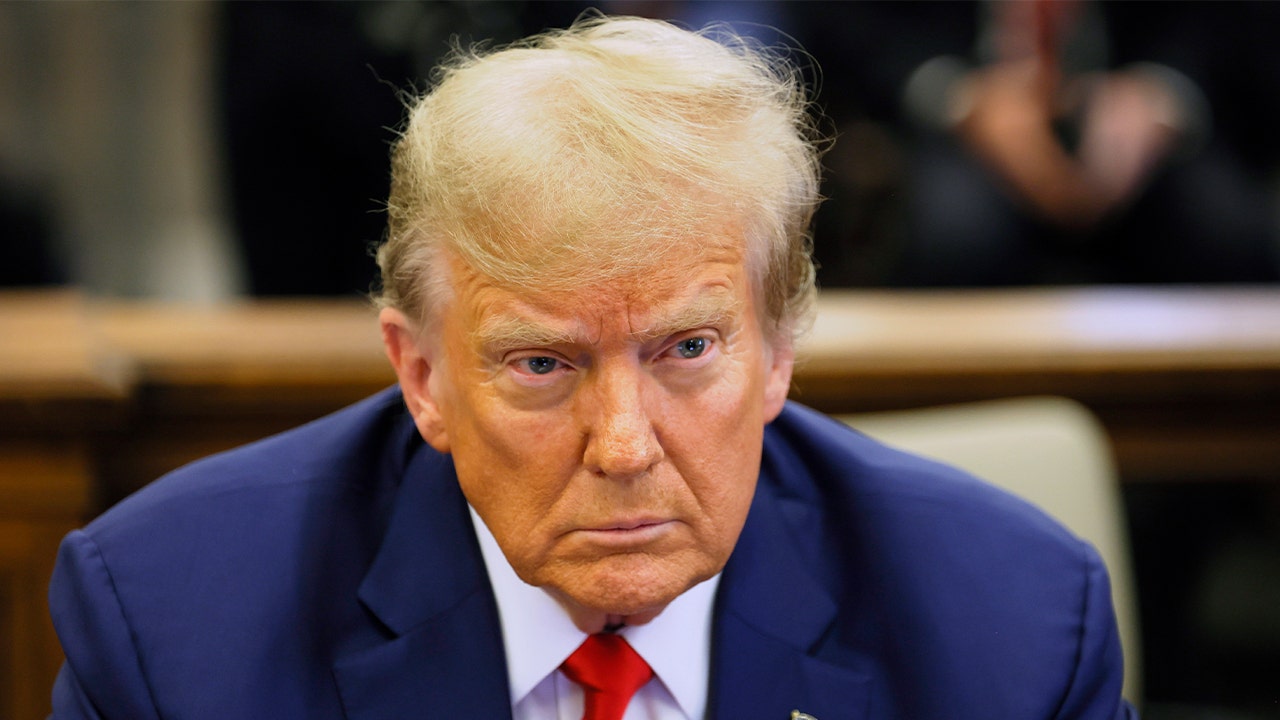
The U.S. Supreme Court will soon debate whether former President Donald Trump should be removed from Colorado’s primary ballot, the first of what could be several legal challenges by Trump to confront the nine justices.
At issue is whether Trump committed “insurrection” by inciting a crowd to storm the U.S. Capitol Jan. 6, 2021, and whether that would make him constitutionally ineligible to be re-elected president. That, in turn, could block him from appearing on a state primary ballot as a candidate for that office.
Oral arguments are scheduled for Thursday at 10 a.m. ET, and an expedited ruling could come within days or weeks.
The issues have never been tested at the nation’s highest court and are framed as both a constitutional and political fight with enormous stakes for public confidence in the judicial system and the already divisive electoral process.
TRUMP ASKS SUPREME COURT TO KEEP NAME ON COLORADO BALLOT
The U.S. Supreme Court will be listening to oral arguments on whether Trump committed “insurrection” Jan. 6, 2021, and whether that disqualifies him constitutionally from being re-elected president. (Michael M. Santiago)
The wording
The 14th Amendment, Section 3 of the Constitution states, “No person shall… hold any office… under the United States … who, having previously taken an oath, as a member of Congress, or as an officer of the United States… to support the Constitution of the United States, shall have engaged in insurrection or rebellion against the same, or given aid or comfort to the enemies thereof.”
Colorado’s highest court in December ruled that clause covers Trump’s conduct on Jan. 6, 2021, and therefore does apply to a president despite not being explicitly indicated in the text.
“President Trump is disqualified from holding the office of president,” the state court wrote in an unsigned opinion. “Because he is disqualified, it would be a wrongful act under the election code for the secretary to list him as a candidate on the presidential primary ballot.”
SUPREME COURT TO DECIDE IF TRUMP BANNED FROM COLORADO BALLOT IN HISTORIC CASE
The issue could turn on whether the high court interprets “officer of the United States” to apply to a president’s conduct in office.
The arguments
Trump’s legal team in its merits brief said, “The [Supreme] Court should put a swift and decisive end to these ballot-disqualification efforts, which threaten to disenfranchise tens of millions of Americans and which promise to unleash chaos and bedlam if other state courts and state officials follow Colorado’s lead and exclude the likely Republican presidential nominee from their ballots.”
The Constitution treats the presidency separately from other federal officers, Trump’s team argued.
The U.S. Supreme Court is prepping to debate whether Trump should be removed from Colorado’s primary ballot ahead of the 2024 presidential election. (Olivier Douliery/AFP via Getty Images)
“The president swears a different oath set forth in Article II, in which he promises to ‘preserve, protect, and defend the Constitution of the United States’ — and in which the word ‘support’ is nowhere to be found,” like it appears in Section 3, Trump’s team wrote.
But lawyers for the Colorado voters challenging Trump’s eligibility said in response, “The thrust of Trump’s position is less legal than it is political. He not-so-subtly threatens ‘bedlam’ if he is not on the ballot. But we already saw the ‘bedlam’ Trump unleashed when he was on the ballot and lost. Section 3 is designed precisely to avoid giving oath-breaking insurrectionists like Trump the power to unleash such mayhem again.
“Nobody, not even a former President, is above the law,” the brief added, comparing Trump to a “mob boss.”
Also at issue:
TRUMP BACKED BY 27 STATES IN SUPREME COURT FIGHT, WHO WARN OF 2024 ‘CHAOS’ IF HE’S REMOVED FROM BALLOT
– Whether state courts or elected state officials can unilaterally enforce constitutional provisions and declare candidates ineligible for federal office — so-called “self-executing” authority — or is that exclusively the jurisdiction of the U.S. Congress. Also, whether Trump can be disqualified without a thorough fact-finding or criminal trial.
– Whether this issue is a purely “political” one that voters should ultimately decide.
– Whether the U.S. Senate’s acquittal at his impeachment trial over Jan. 6 makes him therefore eligible to seek re-election.
– And whether Section 3 prohibits individuals only from “holding” office, not from “seeking or winning” election to office.
The impact
More than a dozen states have pending legal challenges over Trump’s ballot eligibility.
At least 16 state courts and secretaries of state have already concluded his name can appear on the ballot. Colorado and Maine are the only two so far to keep his name off.
Many states have backed the former president, and at least 16 state courts and secretaries of state have allowed his name to appear on the ballot. (Scott Olson/Getty Images)
Other states are saying stay tuned. The Oregon Supreme Court earlier this year dismissed a related lawsuit but told a coalition of voters that, based on what the U.S. Supreme Court decides, they can refile again.
In conducting what are expected to be lengthy and contentious oral arguments, the justices will likely be forced to revisit the events of Jan. 6 and the pivotal speech Trump gave to supporters just before Congress was to certify the Electoral College ballots.
Trump has repeatedly claimed he was not trying to incite violence and that his speech was protected by First Amendment guarantees, especially pertinent as the top federal office holder.
The storming of the U.S. Capitol left 140 law enforcement officers injured, and lawmakers and Vice President Pence fled a mob that breached the building.
The Colorado decision has been on pause pending the U.S. Supreme Court’s final ruling.
MAINE’S TOP COURT WON’T RULE ON TRUMP BALLOT ELIGIBILITY UNTIL SUPREME COURT DECISION IN COLORADO
The state’s 2024 presidential primary ballot with Trump’s name on the Republican ballot has already been certified by the Colorado secretary of state.
But if Trump is ultimately declared ineligible for public office before the state’s March 5 primary, any votes cast in his favor would be nullified.
The Supreme Court has traditionally been reluctant to get involved in overtly political disputes, especially involving elections.
The partisan blowback over the 2000 ruling in Bush v. Gore still resonates, creating the impression among the public that many of the justices harbor partisan political intentions.
“Sometimes the Supreme Court has no choice but to be involved in the election cases because that is an area where, unlike most, the Supreme Court doesn’t even have discretion over whether it takes the case,” said Brianne Gorod, chief counsel at the Constitutional Accountability Center.
“There are some voting rights and election cases that the Supreme Court is required to resolve on the merits.”
Arguments for the Colorado ballot case will be heard Thursday, Feb. 8, at 10 a.m. ET. (AP Photo/Jacquelyn Martin, File)
And beyond …
It is important to note the legal debate over “insurrection” comes to the Supreme Court on a ballot eligibility question.
Special counsel Jack Smith is separately prosecuting Trump for alleged election interference leading up to the Jan. 6 riot, but the former president is not charged specifically with “insurrection” or “rebellion.” The four charges he faces relate to conspiracy and obstruction. Some legal scholars have pointed out Section 3 does not require a criminal conviction to take effect.
The Supreme Court could soon be asked to decide an important component of Smith’s federal case — whether Trump has “absolute immunity” for alleged crimes committed in office.
A federal appeals court is considering the question, and the issue could soon reach the high court on an expedited basis.
Trump’s criminal trial was scheduled for March 4, 2024, but it is likely any Supreme Court consideration of the issues would force a delay, perhaps past the November election.
The former president also faces a state criminal prosecution for alleged election interference in Georgia; a federal criminal prosecution in Florida for alleged mishandling of classified documents that is also led by the special counsel; and a New York state criminal case over allegedly falsifying business records for hush money payments to a porn star.
Pro-Trump protesters rally at the U.S. Capitol in Washington Jan. 6, 2021. Trump faces four charges under special counsel Jack Smith’s prosecution for election interference leading up to the Jan. 6 riot. (AP Photo/Jose Luis Magana, File)
And there are various civil claims against Trump, from lawsuits: by U.S. Capitol police officers over Jan. 6; alleged fraud involving various Trump-related businesses; and an $83 million defamation judgment stemming from an alleged sexual assault.
It is unclear if any of these cases will eventually reach the U.S. Supreme Court on appeal on the merits. Some may not be considered for years.
In the short term, any further petition with the name “Trump” on the cover could severely strain public confidence in a judicial institution designed to hover above partisan politics.
“I don’t think that the court really follows the political calendar,” said Thomas Dupree, a former top Justice Department attorney in the George W. Bush administration. “I think they’re aware of the fact, obviously, that we’re in an election year, but I don’t think the fact that we’re in an election year is going to be driving the outcomes of any of these decisions.”
The ballot case is Trump v. Anderson (23-719).
Read the full article from Here

Continue Reading
West
Newsom’s ‘disgraceful’ call for Dems to be ‘culturally normal’ is ‘dangerous,’ far-left podcaster says
NEWYou can now listen to Fox News articles!
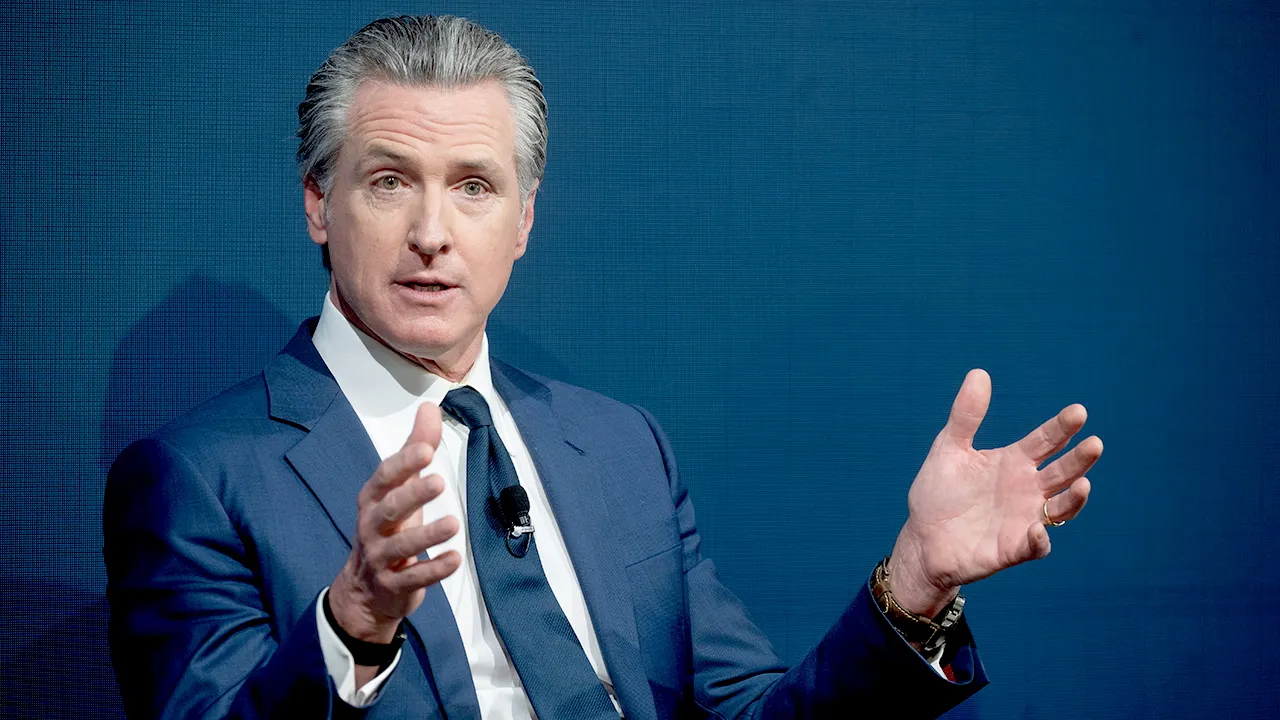
“I’ve Had It” podcast host Jennifer Welch accused Democratic California Gov. Gavin Newsom of committing “political suicide” Wednesday after he called on the Democratic Party to become “more culturally normal” to win elections.
Welch reacted to Newsom’s interview with CNN Monday during which he called on Democrats to be more focused on affordability rather than niche cultural issues.
“From a tactical perspective, from the prism of purely politics, there’s no doubt that the Democratic Party needs to be, dare I say, more culturally normal,” Newsom said.
“I believe that — less prone to spending a disproportionate amount of time on pronouns, identity, politics, more focused on tabletop issues, things that really matter, the stacking of stress in terms of electricity bills and childcare costs and healthcare and, obviously, housing costs and how easily we get trapped in that, how I’ve fallen prey to that.”
Far-left podcast star Jennifer Welch has emerged as a darling of the liberal media and Democratic politicians. (Bryan Bedder/Getty Images for GLAAD)
Welch accused Newsom of “ceding ground” to Republicans with his comments and attempts to appear more moderate.
“What you’re saying, Gov. Newsom, is breathtakingly dangerous,” Welch said. “And you’re ceding ground to the narratives that Republicans try to define free people that mind their own business that stand up for everything. You’re allowing their b—— narratives to define Americans, and it is utterly disgraceful.”
GAVIN NEWSOM SPOX TELLS REPORTER ‘F— OFF’ WHEN ASKED FOR RECORDS OF HIS DYSLEXIA DIAGNOSIS
Welch, whose podcast has become a hub for high-ranking Democratic leaders, also expressed frustration that Newsom appeared to be taking advice from “corporate Democrats” on trying to move to the center of politics.
Gavin Newsom told CNN Democrats need to be “more culturally normal” to win elections. (Marijan Murat/picture alliance via Getty Images)
“He is adamantly against a billionaire tax, which I just think, ‘My god, that’s a layup right now.’ Tax the billionaires. It is not even remotely a liberal thing. It is a moderate position from both parties. But here’s Gavin Newsom as he continues his death march to the center,” Welch said.
STEPHEN A SMITH CALLS ON GAVIN NEWSOM TO ‘ANSWER’ FOR CALIFORNIA’S HOMELESSNESS, CRIME
She pointed to other politicians like New York City Mayor Zohran Mamdani as examples of Democrats who held onto progressive politics and were still elected.
“Gavin Newsom, this is so incredibly disappointing. It’s so devastating that you cede ground to these bigots, and you allow their b—— framework to redefine you. I just think this is political suicide. You don’t have to throw one person under the bus,” Welch said.
Gov. Gavin Newsom has been pushing a more moderate position on transgender issues. (Amy Sussman/Getty Images)
Fox News Digital reached out to Newsom’s office for comment.
CLICK HERE TO DOWNLOAD THE FOX NEWS APP
Newsom faced backlash from members of his own party for his more moderate position on transgender issues. He has nevertheless insisted that he remains a staunch advocate for the transgender community.
Related Article

Read the full article from Here

If you purchase an independently reviewed product or service through a link on our website, The Hollywood Reporter may receive an affiliate commission.
Sam Smith has kicked off his residency at the Castro Theatre in San Francisco, with the singer’s 20-date stint helping to officially usher in a new era for the historic landmark.
First erected in 1922, the Castro closed in 2024 for a reported $41 million renovation project. But the century-old Spanish-style Baroque theatre is open for business — and music — once again, with its gilded ceiling and ornamental walls restored to its original design, while seating is now reconfigurable for different events, including 650 seats that can be removed to create more standing room space (like for Smith’s concert). More importantly, city officials hope the re-opening of the Castro Theatre will also help revive the predominantly queer neighborhood it sits in, which shares a name with the venerable venue.
“Do you guys realize how special this street is?” Smith asked the sold-out crowd, during night two of their residency last week. “I grew up in a village in the middle of f-ckin’ nowhere,” they shared. “I was the only gay in the village and yes I was very dramatic about it as well,” they added with a laugh.
“There is nothing like this street and nothing like the Castro and the community here,” Smith said. “I’ll never forget coming here when I was 20 years old, so reopening this theater now is such an honor.”
BUY ONLINE
Sam Smith Tickets on StubHub
Tickets to Smith’s Castro residency quickly sold out when the shows were first announced but you can still find stubs on sites like StubHub, Vivid Seats and SeatGeek. New users can use the promo code THR30 to save $30 on orders of $300 and up at VividSeats.com. SeatGeek customers can use promo code HOLLYWOOD10 to save $10 at SeatGeek.com.
Smith’s San Francisco stint follows their “To Be Free: New York City,” residency which took place last fall at Brooklyn’s historic Warsaw club. Other artists set to play at the Castro this spring include Father John Misty, José González, Santigold and Lucy Dacus. The Castro will also help celebrate the 50th anniversary of the LGBTQ-themed Frameline Film Festival this June.

ALSO AVAILABLE
Castro Theatre Tickets on Vivid Seats
Smith’s residency runs until March 14.
According to tourism officials and local businesses, Smith’s new Castro residency and the reopening of the theatre has already helped to bring in a number of new visitors to the area. Mat Schuster, the executive chef and owner of long-time neighborhood fixture, Canela, says business has been “very busy” in the last few weeks, crediting Smith’s show with bringing out new diners to the Spanish restaurant, which has been on Market Street since 2011. Other local hotspots like wine bar Bar49, the San Francisco outpost of Hi Tops, and the women’s sports bar, Rikki’s (named after Gay Games Federation founder Rikki Streicher), were all packed on a recent evening following Smith’s Castro concert.
According to San Francisco Tourism, the reopening of The Castro Theatre is poised to deliver “meaningful economic gains” to the surrounding neighborhood, which some stats estimating that the venue will draw more than 200,000 visitors annually.
With the Castro Theatre now open again, local officials are looking ahead to other upcoming celebrations, including a planned reimagining of the Castro and Market Street intersection into The Memorial at Harvey Milk Plaza, honoring the first openly gay elected official in California (and the inspiration for the 2009 Sean Penn film). Milk’s legacy is already enshrined at the San Francisco airport of course, with terminal 1 at SFO renamed as the “Harvey Milk Terminal;” the new memorial is scheduled to be completed by 2028. The annual Castro Street Fair, meantime, a community street celebration founded by Harvey Milk in 1974, will take place on the first weekend of October.
The reopening of the Castro comes amidst a busy few months for San Francisco, which recently saw a number of athletes and celebrities in town for the Super Bowl. Steph Curry’s new speakeasy, The Eighth Rule, was among the hotspots over the big game weekend and the basketball star’s bourbon-forward bar continues to be a hot reservation in the city. Opened in the fall, the bar is tucked away in a nondescript hallway inside the Westin St. Francis hotel in Union Square, offering an intimate and exclusive setting for the Golden State Warriors point guard’s Gentleman’s Cut Bourbon, which can be ordered on its own or as part of a six-course omakase-style cocktail tasting (we loved the clarified coconut milk punch and the truffle-vanilla whiskey sour). Of course, guests can also order cocktails a la carte, choosing from different bourbons and whiskeys, plus a full selection of other spirits.

Next door to The Eighth Rule is Bourbon Steak San Francisco, the latest outpost of Chef Michael Mina’s award-winning steakhouse. The restaurant marks the celebrity chef’s return to the Westin St. Francis, where he opened his first eponymous restaurant in 2004. In addition to its selection of steaks, seafood and caviar offerings (like Mina’s famous “caviar twinkee”), this Bourbon Steak outpost offers a family-style dining experience for six people, available through advance reservations. This is the only Bourbon Steak location to offer this communal table format.
New this month is the highly-anticipated opening of JouJou, an elevated French brasserie concept from the owners of the two Michelin-starred Lazy Bear. Located in the city’s Design District, JouJou is poised to be the next celebrity hangout, with its ornate dining room and marble-topped counters setting the scene for steak frites and star sightings alike. As chef David Barzelay told the San Francisco Chronicle when asked about the inspiration for JouJou: “It always feels like you’re just in a place where it’s happening.”

Richard Jackson
OBITUARY
Richard E. Jackson, affectionately called “Jackson”, was beloved by his family, friends and colleagues. He passed peacefully surrounded by his wife and children. He was receiving exceptional medical care at City Park Healthcare and Rehabilitation Center at the time of his death. A devout Catholic, he received his Last Rights from Fr. John Ludanha of Blessed Sacrament Church and School.
He earned a Bachelor’s degree in Economics from Gannon University and a Master’s degree in Education from the George Washington University. For over 30 years, he was employed by the federal government, mostly as an analyst for the Social Security Administration (SSA). Other positions he held were: Beneficiary Services Specialist, Division of Medicare, Health Care Financing Administration; Public Affairs Specialist for SSA; and Management Analyst SSA Office of Management and Budget. After he retired, he was a consultant to the State of Colorado Center for Medicare and Medicaid Services.
Jackson was a devoted father, step-father and foster father. He would take over the kitchen and cook spaghetti and meatballs, a family favorite, and then transport children to gymnastics practice and friends’ houses. He had a remarkable sense of humor, bringing joy and laughter to his home. He adored his wife and would leave her weekly love notes in drawers around the house. Exercising at the Denver Athletic Club, taking walks with his wife, and reading the New York Times were three of his favorite activities. He was born in Westfield, New York. His parents were Canadian immigrants. He was the youngest of eight children.
He is survived by his wife, Joycee Kennedy; his children – Kimberly Jackson (Mike Estes), Dawn Jennings (Ed Jennings) and Kevin Jackson; his stepchildren – Cary Kennedy (Saurabh Mangalik) and Jody Kennedy (Christopher Thompson); his grandchildren – Elizabeth, Chase and Drew; his step grandchildren – Kadin, Kyra, Bryce and Sena; and his first wife Madonna Smyth.
Services will be held at Blessed Sacrament Church – the time and day to be announced.

News2 minutes ago
Video: What the Texas Primary Battle Means for the Midterms

Politics8 minutes ago
Video: Trump’s War of Choice With Iran

Lifestyle44 minutes ago
Bet on Anything, Everywhere, All at Once : Up First from NPR

Technology55 minutes ago
Soundcore new Space 2 promise improved ANC and sound

World1 hour ago
3 US service members killed, 5 seriously wounded in Iran operation

Florida1 year ago
Florida High School Football Rankings: Top 25 teams – Oct. 21

Connecticut2 years ago
Cleary's 21 help Le Moyne down Central Connecticut State 69-64 in OT

Oregon2 years ago
How old is Bo Nix? What to know about Oregon quarterback ahead of 2024 NFL Draft

Virginia2 years ago
99th annual Pony Swim held in Virginia

Indiana1 year ago
Indiana Members Credit Union announced as new anchor tenant at Bottleworks District
News2 minutes ago
Video: What the Texas Primary Battle Means for the Midterms

Politics1 hour ago
Dems’ potential 2028 hopefuls come out against US strikes on Iran

World2 hours ago
At least nine killed after Iranian strike on Israel’s Beit Shemesh

News3 hours ago
Mass shooting at Austin, Texas bar leaves at least 3 dead, 14 wounded, authorities say

Politics13 hours ago
Mamdani’s response to Trump’s Iran strike sparks conservative backlash: ‘Rooting for the ayatollah’
-

 World4 days ago
Exclusive: DeepSeek withholds latest AI model from US chipmakers including Nvidia, sources say
-

 Massachusetts4 days ago
Mother and daughter injured in Taunton house explosion
-

 Montana1 week ago
2026 MHSA Montana Wrestling State Championship Brackets And Results – FloWrestling
-

 Denver, CO4 days ago
10 acres charred, 5 injured in Thornton grass fire, evacuation orders lifted
-

 Louisiana6 days ago
Wildfire near Gum Swamp Road in Livingston Parish now under control; more than 200 acres burned
-

 Technology1 week ago
YouTube TV billing scam emails are hitting inboxes
-

 Technology1 week ago
Stellantis is in a crisis of its own making
-

 Politics1 week ago
OpenAI didn’t contact police despite employees flagging mass shooter’s concerning chatbot interactions: REPORT