Like most of the liberation movements of the period we call the Sixties, the women’s liberation movement seems a shadow of its former self. In a manner similar to those other movements, the politics of what’s known as second-stage feminism have shifted rightward. This is in part due to the non-stop attacks on women’s rights by the right-wing patriarchal forces in the United States—from the Catholic Church hierarchy to the Republican Party and its adherents. Equally important, though, is the fact that the liberal wing of mainstream US politics has yet to make many women’s rights legally protected in a way that prevents the reactionaries from curtailing those rights. Instead, issues crucial to women’s liberation like reproductive rights and pay equity tend to be reduced to Democratic talking points during elections. Other factors in this rightward shift go deeper. Perhaps foremost among these causes is the predominantly bourgeois nature of the women’s movement and its consequent focus on the individual instead of the group. This latter, more fundamental, cause can be traced back to the movement’s origins in the early 1960s. Those origins reflected the concerns of the US middle class: suburban ennui, sexual harassment at work and elsewhere, women’s restrictions in public and the workplace and sexual freedom. It’s not that these weren’t important issues, but they reflected the concerns of women who did not have to worry about a place to live or how they were going to feed their family. Furthermore, they did not address the gross racial discrimination that existed in the United States at the time.
Indeed, as Barbara Winslow makes clear in her new book Revolutionary Feminists:The Women’s Liberation Movement in Seattle, it wasn’t until women from the considerably more left and more radical antiwar/anti-imperialist and anti-racist movements began forming women’s liberation groups and caucuses that the more fundamental issues regarding women’s oppression began to inform the direction of the movement. As her title makes clear, Winslow’s narrative focuses on the movement in the Seattle, Washington area. It is a story of strong-willed individuals, socialist organizations and sects and a constant battle with sexism in mainstream society and on the Left. That battle was against individuals and institutions. Some of the most sexist individuals were not in the larger society, but within the Left and its associated movements. While Winslow makes certain to make this fact clear, she does so in a manner which approaches it in terms of the historical and political moment. Of course, those individuals whose chauvinism was, for the lack of a better term, over the top, are named as they should be.
Revolutionary Feminists details the three organizations most involved in the development of the Seattle women’s liberation movement. All three had connections via individual members and organizationally to larger socialist groups. Radical Women, which was linked to the Freedom Socialist Party Bolshevik; Campus Women’s Liberation, which was linked to the Socialist Workers Party (SWP) and Young Socialist Alliance (YSA); and Women’s Liberation-Seattle (WL-S), which had ties to many anti-imperialist, Maoist, and Stalinist Left. Winslow does an excellent job explaining the lineage of these organizations and the organizations from which they sprung. In doing so, she can’t help but discuss the sexist experience of women across the United States who were organizing against the war in Vietnam and for Black liberation. Those experiences revealed themselves in Seattle in often explicitly hostile terms. In fact, the sexism of the Seattle Liberation Front (SLF) leadership was so vicious, many women in the Seattle Left refused to support their defense after they were arrested during an action protesting the conviction of the Chicago 7 in February 1970.
Eleanor Marx and Edward Aveling wrote in and 1886 article for The Westminster Review titled “The Woman Question” that “Women are the creatures of an organized tyranny of men, as the workers are the creatures of an organised tyranny of men, as the workers are the creatures of an organized tyranny of idlers. Both the oppressed classes, women and the immediate producers, must understand that their emancipation will come from themselves. Women will find allies in the better sort of men, as the labourers are finding allies among the philosophers, artists, and poets. But the one has nothing to hope from man as a whole, and the other has nothing to hope from the middle class as a whole.” It seems fair to say that these sentences provided a basis (if not the basis) for the women of the US left determined to organize for their liberation. Given the heterosexism and male supremacy that dominated US culture (and most every other culture) in the 1960s and 1970s, the fact that leftist women ran into so much resistance from their male comrades should not be surprising. The fact that that resistance was echoed by women on the Left perhaps might be.
Advertisement
Winslow suggests that the peak of Seattle radical feminism ran from 1969 to about 1972. She divides her book into chapters highlighting the issues of the day—the war, healthcare, reproductive rights and the equal rights amendment, to name a few—and the role the radical feminists played in them. I would argue that the chapter that is the most important and would not have even have existed if it weren’t for the women’s liberation movement is reproductive rights. Not only is this chapter important for the history it provides regarding the fight to legalize abortion and other forms of contraception, it is important for the present, now that reproductive rights are once again under assault from a coalition of churches, reactionary politicians and certain sectors of capital. Revolutionary Feminists revisits the debates and describes the organizing, detailing the actions and the reaction to the movement and its arguments.
Winslow has produced a valiant testament to radical women, left-wing feminism and the city of Seattle. It is a history that both needed to be told. It is also one that reminds the reader how sexist US society truly was fifty years ago. In doing this, it also reminds us of how sexist it still is. Her role as an organizer and participant in the movement most certainly informed the history she provides. Together with the experience and wisdom accrued over time, the resulting text stands as a crucial addition to the already expansive library focused on that period we still call the Sixties.
SEATTLE — From my first visit as an adult, I was absolutely smitten with this city with snow-capped mountains and glistening bodies of water visible on all sides.
The decision to move here when my wife was accepted to Seattle University was probably one of the easiest and most fortuitous choices I’ve ever made. I loved the city’s topography, how people went outside no matter the weather and even the weather itself. I would often feel as if I was living someplace I would have chosen to vacation.
But it was soccer that made me feel like part of the city myself, like I had found my new home. I’ve often talked about how watching the Sounders win their first U.S. Open Cup at the George & Dragon was my first real introduction to the team. A few months later, I started working at Sounder at Heart. That summer, I experienced my first World Cup in Seattle. We showed up to a bar at 6 AM to get a spot for the USA-England match, and barely even got in. Bars all over town were packed, even when the USA wasn’t playing.
It was then that I started imagining what it would be like for the World Cup to actually come here.
Advertisement
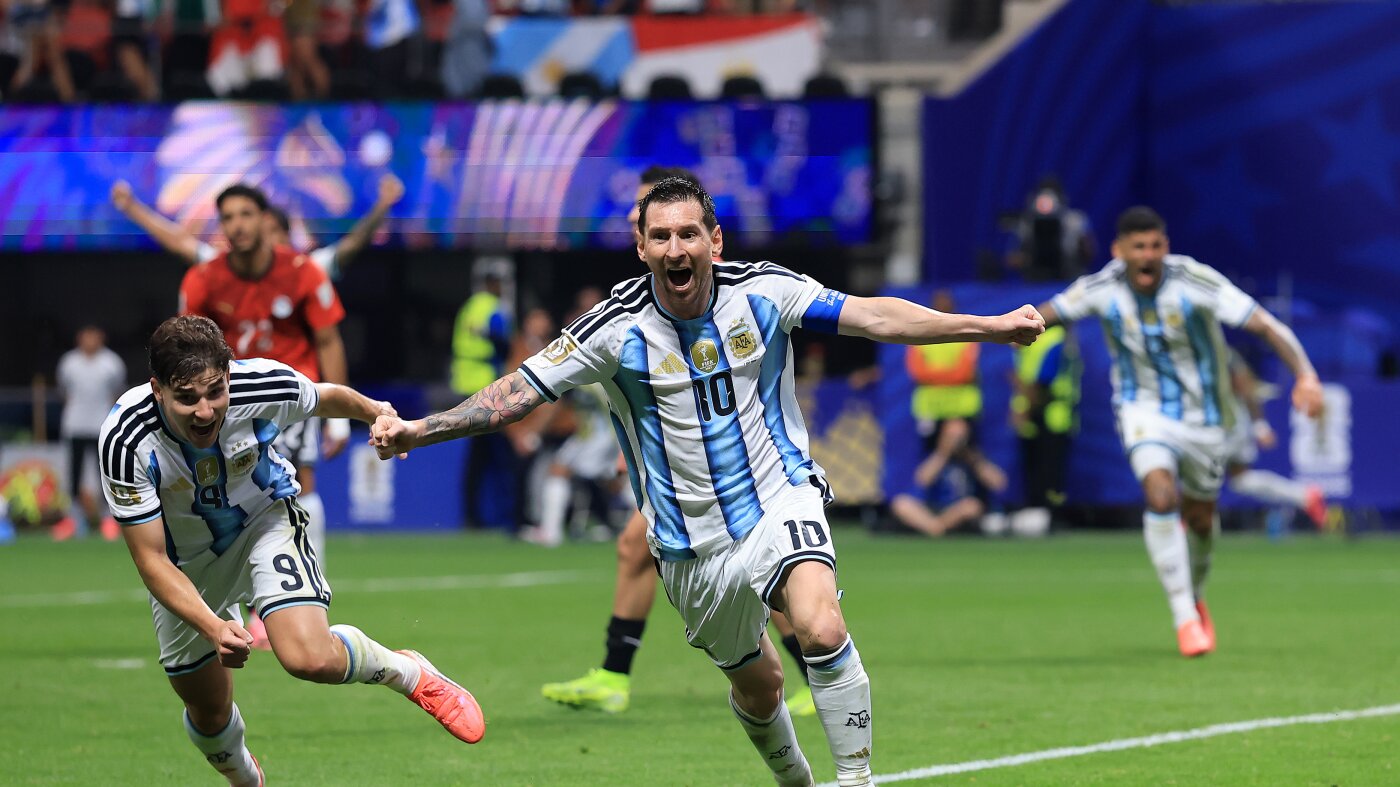
Although the United States’ 4–1 loss to Belgium on Monday wasn’t exactly the way I wanted it to end, I can safely say the Seattle World Cup experience exceeded even my lofty dreams.
Picking one highlight from the six games is almost impossible as every game surprised me in different ways. In the immediate buildup to this tournament, the shine had seemingly started to wear off. Actually getting the World Cup was feeling like a pyrrhic victory, one of those “careful what you wish for” achievements. All anyone could talk about was ticket prices and corruption. Empty seats and unsold hotel rooms felt inevitable. I believed the mood and narratives would change once the soccer actually started being played, but my expectations had been massively re-set.
Once the games began, I immediately realized just how powerful the World Cup can be, especially in a setting like this. The crowd for Egypt-Belgium – Seattle’s first-ever World Cup match – was a near sellout, and it was then that I appreciated the power of the diaspora. I saw Egypt fans with tears in their eyes as they saw their compatriots gathered by the Great Wheel. Their march to the match was pure joy, filled with chants, giant flags and pharoah costumes. The match, itself, was a bit underwhelming – a 1–1 tie – but everyone seemed so happy. That set a standard that was probably exceeded in each game.
The only way stories like this are possible is through the support of readers like you. Support independent soccer journalism by becoming a subscriber to Sounder at Heart.
Advertisement
Join
The Bosnia & Herzegovina fan march was genuinely awe-inspiring, as it seemed to go on forever. I swear there were 40,000 people wearing BiH’s blue, yellow and white and they were all singing ‘Ljiljani’ once it was over. The atmosphere for Iran-Egypt was absolutely electric, and I honestly felt like the stadium might explode when Iran scored what seemed to be a late game-winner only for VAR to overturn it.
My favorite memories from this tournament, though, will likely be tied to the way Seattle really came alive for the two USA matches. To see an American downtown flooded with soccer fans is not something I ever thought I’d see, and for it to happen twice in my hometown only made it more special.
Advertisement
For the Australia match, I came into downtown from my home in Wallingford on a rental bike, traveling along the newly refurbished waterfront before 8 AM. There were already massive crowds gathered.
For this match, I chose to arrive on the Link Light Rail. It was the first time I used it to get to one of the World Cup games, but I wanted to experience what it was like to emerge from Pioneer Square station with hundreds of thousands of others.
Three hours before kickoff, Occidental Square was already packed as thousands of people watched the final moments of Spain-Portugal on the Brick Park big screen. Virtually every bar was already at capacity, with lines snaking out the doors. Inside the stadium, the north pavilion was already teaming with activity and lines to get into the various pro shops snaking through the concourse.
A short while later, I caught up to the USA march to the match. Led by horse-riding Civil War re-enactors, the march took 20 minutes to pass through the intersection of 1st and Main. As it passed, sections of fans broke out into impromptu “U-S-A” chants, sang other American Outlaw standards, played instruments and held a wide variety of signs. My favorite was probably Captain America punching out a Smurf (which were created in Belgium). There were others with Clint Dempsey, Grant Wahl, Weston McKennie and John Denver. They wore eagle costumes, dressed as Founding Fathers, and flag-inspired soccer shirts … so many stripes. I swear I didn’t see a single frown.
Joe Towner / PNWMF
Given the size of the crowd inside, I have to assume that the vast majority of those in the march weren’t planning to attend the game in person. They just wanted to be part of this intoxicating energy, equal parts hope, anticipation and FOMO. City officials said 25,000 fans participated in the march, 10,000 more than took part in the one before USA-Australia. Some estimates have suggested there were as many people downtown as there were for the Seahawks’ Super Bowl prade that pushed into seven digits. Hard as that is to believe – that a soccer match could attract a crowd like that – my eyes told me it was at least possible.
The Overlook Walk’s Salish Steps were packed, just as they were many other times during these magical few weeks. Otherwise vacant storefronts were suddenly impromptu soccer bars. The Historic Triangle Pub was revived, featuring a massive screen and overflowing beer garden just around the corner from the stadium. In the Chinatown/International District — which is one of the downtown neighborhoods that hasn’t benefited as much from the World Cup crowds — hundreds crowded into Hing Hay Park to watch the game. The demand for viewing spots was seemingly insatiable.
Advertisement
The good vibes flowed seamlessly into the stadium. The buzz was overwhelmingly positive, talk of a serious run was on lips all over the park. “Why not US?” wasn’t just an empty platitude spoken by Argentinian head coach Mauricio Pochettino, it was a mantra that turned otherwise uninterested Americans into believers.
Photos by Max Aquino / Sounder at Heart
Seattle, long overlooked on U.S. Soccer’s list of preferred sites, has been dubbed “The Cathedral of Cascadia” by none other than the USMNT’s Twitter account and fans did everything possible to live up to that lofty praise. I’m not one to get emotional about the National Anthem, but when 67,000 people are collectively singing “The Star-Spangled Banner” it’s hard not to get lost in the moment. Somehow, I didn’t even notice the four fighter jets that buzzed the stadium to punctuate the song. At Minute 1, fans broke out the classic “Boom-Boom-Clap”-style “U-S-A.” You’d have thought the USMNT players would have been ready to run through walls.
Instead, they were utterly incapable of channeling that into their play against Belgium. After four matches in which they played with energy and spirit, they came out utterly flat against their most talented opponents to date. At no point did they have control of the match. They were down 1–0 before the match was even 10 minutes old, and were a bit lucky not to be down 3–0 by that time.
The one moment the USMNT had a chance – following Malik Tillman’s wonderful free kick that brought the match level – was almost immediately spoiled when they allowed Belgium to re-take the lead immediately off the ensuing kickoff.
Advertisement
Still, there was hope coming out of halftime. It didn’t take long for that to be spoiled, either. In the 57th minute, goalkeeper Matt Freese came way out of his box and badly misplayed a seemingly innocuous ball over the top, allowing Hans Vanaken to loft an uncontested shot from 35 yards into a virtually undefended net.
There were more “U-S-A” chants and Eddie Vedder even tried to inspire the Yanks by chugging a beer while on the jumbotron during a hydration break.
If there was a shred of belief left in the building, it was slowly and achingly asphyxiated until Romelu Lukaku struck the final blow with a powerful strike off another sloppy turnover in stoppage time. Fittingly, he and the Belgium bench celebrated with a mocking “Trump dance,” acknowledging the role the president insisted on playing after potentially getting FIFA to declare Folarin Balogun eligible for the match despite getting a red card against Bosnia & Herzegovina.
The mood in the streets after was obviously a far cry from how the day started. Players spoke about letting themselves and the fans down. There’s an undeniable sense that an opportunity has been missed, that a confluence of events quite like this may never arrive again. That may be true for the USMNT and the greater American soccer scene.
But I’m not sure it’s true for Seattle. Our status as “Best Soccer City in America” is not new, even if it’s not a moniker we’ve tried to trademark. We reguarly brought 30,000 to Lumen Field when most of the MLS was lucky to draw half of that. Although the buzz around the Sounders has diminished a bit over the years, the World Cup crowds were actually smaller than the club’s most popular games.
Advertisement
Updated Seattle/PNW attendance records show World Cup matches occupying slots 6-10 (66,925 for each of final 5). Sounders own top 5. Among those bumped out of top 10: Sounders-Barcelona, DC United-Real Madrid, Man United-Celtic.
— Frank MacDonald (@frankmsounders.bsky.social) July 7, 2026 at 1:12 PM
It’s not that our city has discovered a love for soccer, but maybe this was the catalyst for its reawakening. Sounders leadership has a chance to embrace this moment and make sure it has legs long after the FIFA circus leaves town.
Our local leaders have a similar responsibility. We’ve always known that Seattle is a world-class city and now the world does, too. Our public transit is very good by American standards, but it can be world-class if we will it into existence. We showed how much energy can be harnessed when public space is given back to the people, and not handed to cars. Local businesses showed what they can do when unnecessary and burdensome paperwork doesn’t get in their way.
Advertisement
The World Cup was an event that I think exceeded all expectations, but the aftermath can be even better.
Thanks to Susan for the photo. She called to tell us about a dog stuck on the rocks off Beach Drive near Harbor West (the condos on pilings), and a crowd gathering to figure out how to rescue it from the rising tide. We were away from the desk at the time but after returning a little while later, we heard the situation mentioned on police radio, with word the dog had been rescued, so we didn’t head that way. Then late tonight Susan sent photos, explaining that the dog apparently is known to swim to those rocks and back, but for some reason got stuck this time, “until a paddle boarder and kayaker paddled out to it to coax it off the rocks and back to the shore.”