Seattle, WA
Cigar Thoughts, Game 5: The Seahawks might be bad


***As most of you know, Cigar Thoughts is also a podcast. Check out this week’s episode:
—
The Seattle Seahawks came into this game fresh off their first loss of the Mika Macdonald era with one more layup before a brutal stretch in the schedule. A terrible New York Giants team traveled across the country like so many sacrificial lambs on Seattle’s march to 4-1 and a buzzworthy start to the 2024 season. I think a lot of us were just chalking this up as a win, and why not? The Giants stink and the Seahawks have looked mostly great. Add to it that the Giants were without basically the only two players to score for them this year in Malik Nabers and Devin Singletary and this should have been as easy a win as Seattle’s decisive victory over these same Giants last year, right. Right???
Well, that’s the thing about football. I say it all the time in this column and on the podcast— the gap between the “good” teams and the “bad” teams is a lot smaller than we want to think, mostly because everyone in the NFL is really fucking good at football.
And when one team comes out disciplined and focused, and the other looks like they showed up after a four-day Vegas bender, then all bets are off. I’m not gonna mince words— the Giants kicked the Seahawks’ ass. Full stop. Seattle gave themselves a chance to win late but even if they had, it wouldn’t have felt great. And if that statement arouses any furor (aka “who cares how they win as long as they win?”) well, I have great news for you— it ended up not mattering.
If I didn’t know anything about either of these teams, and you told me one was 3-1 and the other was 1-3, I would’ve told you without hesitation that the Giants were the 3-1 squad. They were locked in and mistake-free, while the Seahawks played like a bunch of bums.
Seattle took a 7-0 lead when Rayshawn Jenkins returned a dubious goal-line fumble 102 yards for a touchdown on the ass end of a 16-play drive but that’s the only thing keeping this game from being a blowout. Seattle played their worst game of the season, making mistakes in every facet of the game and throwing the e-brake on a Seahawks bandwagon that was going 100mph on I-5.
The crazy thing is that, despite all the buffoonery, the Seahawks were in position to tie this game with a minute left with a very makable 48-yard field goal but that was blocked and returned for a touchdown to seal the deal. I honestly believe that Jason Myers would’ve made that kick and that Seattle would’ve escaped with an ill-gotten win in overtime but the way things went for the first 59 minutes, I can’t say Im surprised that the ‘Hawks were stymied by a complete meltdown in a key situation.
A bad, inexcusable loss. Every team has them, and the good teams bounce right back. The fact that the bounce-back opportunity comes against a division rival and the best team in the NFC over the last four years in the 49ers on three day’s rest is… not ideal. Let’s get to it.
—
CIGAR THOUGHTS
~Perhaps the single most noticeable motif of the 2024 Seahawks team has been their discipline. They’ve been so solid from an assignment and game-management standpoint through the first month of the season, and it felt like a welcome departure from the previous regime. Well, all that got folded up and thrown down the laundry shoot today. This was a gross performance from a team that all of a sudden looks wildly unprepared to compete in any meaningful way.
Lots will be made about the DK Metcalf fumble in the second half and honestly, that’s fair. Metcalf now leads all receivers in fumbles lost since coming in the league and that aspect of his game is flat out unacceptable. But that fumble was a symptom, not the disease. The core issue was a team that looked woefully overmatched and terribly unprepared. I’m not gonna lie, this game presses pause on everything I’ve thought about Mike Macdonald’s precocious ability to get his team ready for a game.
Last week there was the built-in excuse of missing half your starting defense against a good offense. This week? Whew. Sure, you’re missing Byron Murphy and Boye Mafe but the Giants were missing Malik Nabers and Devin Singletary and if you offered me that trade, I’d take it. This was just bad football top to bottom. The coverage was looser than a 51st St hooker, the tackling was sloppier than cafeteria Joes, and the O-line looked like a JV squad against the only remaining strength of the New York team.
The Seahawks lost at the line of scrimmage on both sides of the ball and the skill guys on offense and the secondary on defense were the worst versions of themselves— unable to make up the difference. Gross, bad football and if we’re gonna give the new coaches credit for the hot start, then the failures of the last two weeks fall firmly at their feet as well.
~Geno Smith had his worst game of the year. The volume numbers were suppressed by the defense’s inability to get off the field but if you watched the game, he looked sluggish and out of sorts. His final line was fine— completing 28 of 40 passes for 284 yards and a touchdown but he collapsed under pressure in a way that runs counter to his superfluous analytical profile when it comes to managing pressure.
He ate seven sacks, and sacks are drive-killers. It looked like he was slow in his processing and look, the O-line was awful— but the O-line has been awful his entire tenure in Seattle and tonight was as bad as I’ve ever seen him against pressure. And him sliding a yard short of the sticks early in the 4th quarter, instead of diving for the first down— that’s the first time I’ve ever gotten the ick from Geno.
~Ken Walker never had a chance to show what he can do. Make no mistake, I love that Seattle has been pass-first this year and that has mostly been borne out in their offensive success this year. But this was a game that demanded rushing dominance and that never materialized. Walker had an inexcusable five carries in this game, turning those intermittent opportunities into 19 yards but he made the most of the passing game by translating a team-high eight targets into a team-high seven catches for 57 yards. Kudos to the team for making sure their backfield stud remained a focal point but it was so clear the Giants were happy to defend the run with their four down lineman and the Seahawks never challenged that in a meaningful way.
~It seems that each game there’s a different feature in the passing game and among receivers, it was Tyler Lockett’s day. And when your offensive line is getting whipped on every play, Lockett is the best guy on the team to act as a relief valve. Lockett led the way with four catches for 75 yards, displaying both sides of his coin with a few avoided tackles and a few fall-downs. It is what it is.
DK Metcalf does way more good than harm, but that’s only because he normally does so much good. The penalties and turnovers are a real thing and for the vast majority of his career, it’s just been the cost of doing business for a game-wrecker like Metcalf. Today though… man. He had four catches for 55 yards but he lost a fumble for the second straight game and a league-leading eighth time since he entered the league. He’s my favorite player in the world but this was a bad game from my boy; and I’m guessing he’d tell you the same thing.
Jaxon Smith-Njigba was a giant zero until the fourth quarter before feasting in catch-up mode. He caught four passes for 31 yards and the team’s only offensive touchdown, a slick lil slip route to make it 23-20 but it’s concerning that he wasn’t a factor until garbage time. Just a bad game from Ryan Grubb and I guess this is as good a time as any to talk about it.
Now listen, offensive coordinator is a tough gig— your successes are expected and your failures are vilified. randomly poll 1,000 NFL fans and the majority of them will give a negative review of their OC. Grubb has been excellent in his NFL debut season but today he seemed stagnant and unimaginative. And when your offense is only running half as many plays as your opponent, it makes it tough to do all of the things you want to. But I have a tough time squaring how effective their 4th quarter / hurry-up offense looked with how ineffective everything else did. Here’s hoping it’s a learning experience.
~The offensive line was well, offensive. They’ve been bad all year but today was especially poor. They were all sub-par, if I’m being generous, but if I’m not— then Laken Tomlinson is the worst starting OL I’ve ever seen in a long list of poor offensive lineman for the Seahawks. He got smoked on nearly every snap and inexplicably favored his outside shoulder on the potential game-tying field goal, allowing the kick-blocker to slip unfettered off the center’s shoulder and snuff out his team’s last chance at winning this game. The fact that he’s still a starting guard in Week 5 falls squarely at the feet of John Schneider. Do better— this ain’t working.
~The Seahawks defense was (/Charles Barkley voice) turrrrrrible. Every single aspect of it was awful. Even Rayshawn Jenkins’ 102-yard opening TD was the beneficiary of a questionable review and cae on the ass-end of a 16-play drive that evoked PTSD of bad Seattle defenses over the last half-decade. Tre Brown got absolutely cooked today, getting powdered by every receiver lined up against him. He wasn’t the only one in the secondary that struggled today, but he was the most obvious. Darius Slayton and Wan’Dale Robinson dusted him with regularity and Daniel Jones hunted him accordingly. With Riq Woolen on and off the field with injuries, Brian Daboll did what good play-callers do and focused nearly every pass play on the weak link in the opposing defense. Brown has been great this year but today was the worst I’ve ever seen him.
I’d like to point out other defensive performances but be honest with me— who do you think I’m neglecting? The defense sucked for the second straight week and all of a sudden the mountain that Mike Macdonald has to climb looks steeper than it ever has. Yuck.
—
Incredibly, the Seahawks are still first place in the NFC West. Despite this afternoon’s circus, their 3-2 record is somehow still the best in the division, thanks to the Cardinals upset of the 49ers. Doesn’t mean I’m felling good though.
It’s funny, the vibes after last week’s loss feel immeasurably better than they do right now, and I think that would be the case even if Seattle won today. That’s because last week you felt like the tea gave their all and came up short against a good opponent on the road. Spending three and a half hours defecating into the bed you refuse to get out of, at home, ahead of a killer stretch of games just, well— it feels very bad.
The Seahawks play their third game in eleven days on Thursday. I think the realistic hope coming into that stretch is that they’d go 1-2 over that stretch, but most of us assumed that 1 would come today. Now the gambit is exorcising the 49ers demon. Do that, and miraculously, you have a two-game lead over the team that poses the biggest threat to the peak-outcome goal of winning the NFC West in 2024. Lose and you’re in second place coming off a three-game losing streak and fighting a national assumption that your 3-0 start was a fluke.
It’s look-in-the-mirror time, and we’re about to find out if this Seahawks team is any different than the 9-8 teams of the last couple of years. Are we legit, or did we get out over our skis? We’ll find out in four days. In the meantime, onwards and upwards my friends.
—
And if you didn’t know, we also have our own cigars now, which you can order below:
~~ORDER YOUR OFFICIAL CIGAR THOUGHTS CIGARS HERE~~—
I’ve been obsessed with the new release of Cigar Thoughts RedZones but today I went back to the Cigar Thoughts Originals and man, I forgot just how smooth these are. A touch darker than the RedZones, so we’ve got you covered for whichever mood you’re in.
We’ve linked up with one of the premier cigar manufacturers in the world to offer a special 13-year-aged blend of Dominican tobacco leaf to Cigar Thoughts readers for less than half of MSRP. These cigars, banded and branded by their creator, sell for $35-$40 per stick but we’re able to offer them to you for just $149 for a bundle of 10. They come with a Mylar bag and Boveda humidification pack so they’ll stay fresh whether you have a humidor or not. Just use the link!
—
We’re also on YouTube, where you can catch video clips from the podcast, entire video episodes, and the audio recordings of the articles. Go watch our latest episode where yours truly gives my honest perception of the team so far. This is maybe the best way to support Cigar Thoughts, so I appreciate the few seconds it takes to like and subscribe.
—
This is the 6th year of our incredible partnership with Seattle Cigar Concierge. They have the plug on some of the most insane stogies on the market and they’re offering them to Cigar Thoughts readers for 20% off. These are extremely special sticks, and among the most enjoyable I’ve ever smoked. To get the hook-up, just email SeattleCigarConcierge@GMail.com. They are carrying over 70 cigar brands with many rare releases, including Davidoff, Opus X, and Padron. You can also hit them up on Twitter: @SeattleCigars. Just be sure to mention that you’re a Cigar Thoughts reader. Many of you have taken advantage of this incredible opportunity and for those who have always wondered what elite cigars are like, this may the best chance you’ll get to step into that world.
—
We’re also thrilled to partner with The Balvenie, one of my favorite distilleries. Popped open their Doublewood today, which has earthier tones than some of their lighter fair. Very complex, and strong enough to hold up against the Cigar Thoughts RedZone series I was smoking..
—
The 2024 season of Cigar Thoughts is also proud to be sponsored by Fairhaven Floors in Bellingham, WA.



Seattle – The weekend brought a much-needed break from the rainy atmospheric river. We enjoyed a mainly sunny and dry sky. Monday will see a few more clouds around the area ahead of our next rainmaker, which is forecast to arrive on Tuesday.

After enjoying a dry an mainly sunny weekend, more clouds will move inland throughout the day Monday.
Grab an extra layer on Monday morning as morning lows will be chilly, near freezing in some spots. Partly cloudy and slightly cooler in the afternoon with highs near 50.
Afternoon highs remain cool to start the week.
After the latest atmospheric river sent snow levels up near 8000 and 9000 feet, much of the beneficial snow we picked up was melted. This next round of will lower snow levels back down, where a light dusting of snow is forecast to fall.
Cooler air will force snow levels to lower beginning on Tuesday with a light dusting of snow.
Winds will be gusty next week when the next system arrives on Tuesday. Some spots may see gusts nearing 45 mph.
Gusty winds picking up on Tuesday with speeds nearing 45 mph.
Hard to believe, but the new season of Mariners baseball starts this Thursday. The home open is looking good so far with an even nicer weekend ahead.
Lowland rain and mountain snow early in the week with a dry weekend ahead.

With spring training wrapping up and opening day just a few days away, the Seattle Mariners continued to whittle down their roster on Sunday.
Drayer: Mariners to go with Garver as backup catcher
The Mariners optioned catcher Jhonny Pereda, right-handed reliever Cole Wilcox and right-handed reliever Yosver Zulueta to Triple-A Tacoma. They also re-assigned first baseman/outfielder Connor Joe and infield prospect Brock Rodden to minor league camp.
The Mariners’ spring training roster is now at 31 players.
Pereda, 29, was acquired from the Minnesota Twins for cash in January. He was brought in to compete for Seattle’s backup catcher role, but Mariners insider Shannon Drayer reported earlier Sunday that veteran Mitch Garver will break camp as Cal Raleigh’s backup. Pereda batted .200 in 25 Cactus League at-bats this spring.
Wilcox, 26, flashed potential this spring after he was acquired from the Tampa Bay Rays for cash last November. He struck out 11 batters across 8 1/3 innings in eight Cactus League appearances, while allowing four runs, six hits and four walks. Mariners manager Dan Wilson said earlier this month that “his stuff has been tremendous” and he “has opened some eyes.”
Zulueta, 28, struck out 10 batters across seven innings in eight Cactus League appearances, while allowing three runs, six hits and three walks. He was acquired from the Cincinnati Reds in a January trade.
Joe, 33, signed a minor league contract with Seattle in February. The six-year MLB veteran had a strong spring, batting .362 with one home run, one triple and six doubles in 47 Cactus League at-bats.
Rodden, 25, is ranked by MLB Pipeline as the Mariners’ No. 18 prospect. A 2023 fifth-round draft pick out of Wichita State, Rodden hit .361 with two homers, one triple and one double in 36 Cactus League at-bats.
More on the Seattle Mariners
• Randy says he apologized, Cal says WBC drama ‘in the past’
• ‘Torpedo 2.0’: Seattle Mariners release another new commercial
• Seattle Mariners re-assign Colt Emerson to minor league camp
• Seattle Mariners’ Cole Young blasts 478-foot moonshot home run
• 3 standouts from Seattle Mariners’ Spring Breakout game

Seattle – March has been off to a very wet start. We have already surpassed the normal monthly rainfall total by an inch with more on the way next week. The atmospheric river event we were tracking wrapped up yesterday and our area rivers have crested and continue to recede. The rain also triggered a landslide on I-5 near Bellingham. Fortunately, the risk of additional landslides is also decreasing.
It’s been a wet start to the month with more than 5″ of rain already recorded so far.
We’ve enjoyed a pleasant, dry first weekend of Spring. Much of Sunday is also expected to be dry. A weak system is forecast to brush by which may bring a few sprinkles with it to a few spots. A few stray flurries are also possible in the mountains.
The much-needed break in rain will continue. Only a stray shower is possible on Sunday.
The cold front which swept through yesterday, ending the days-long rain, also brought some cooler air with it. Afternoon highs will remain slightly below normal on Sunday.
Highs near normal on Sunday with some afternoon sunbreaks.
While Sunday and Monday remain mostly dry, a more significant weather system is expected to move into the region on Tuesday, bringing widespread rain to the lowlands and snow to the mountain passes along with breezy winds.
Increasing clouds Monday with rain returning by Tuesday. Snow in the mountains.

Historic Tall Ship Faces Eviction in San Diego

Milwaukee man identified as victim in shooting that injured four others

US Soccer trains in Atlanta ahead of friendlies at Mercedes-Benz Stadium

Woman dies in Minneapolis hit-and-run crash, driver still at large

IMPD says detective arrived at crime scene smelling like alcohol

Florida High School Football Rankings: Top 25 teams – Oct. 21

How old is Bo Nix? What to know about Oregon quarterback ahead of 2024 NFL Draft

Cleary's 21 help Le Moyne down Central Connecticut State 69-64 in OT

99th annual Pony Swim held in Virginia

Indiana Members Credit Union announced as new anchor tenant at Bottleworks District

See TSA Wait Times at Major U.S. Airports

Senate hopeful with deep Dem ties slapped with scathing complaint targeting alleged family payout ‘scheme’

How the Iran war is about to hit your wallet

Suspect in slaying of Loyola University student was in the country illegally, officials say

Video: Plane Collides With Vehicle at LaGuardia Airport
-

 Detroit, MI5 days ago
Drummer Brian Pastoria, longtime Detroit music advocate, dies at 68
-

 Oklahoma1 week ago
Family rallies around Oklahoma father after head-on crash
-

 Georgia1 week ago
How ICE plans for a detention warehouse pushed a Georgia town to fight back | CNN Politics
-
 Science1 week ago
Federal EPA moves to roll back recent limits on ethylene oxide, a carcinogen
-

 Alaska1 week ago
Police looking for man considered ‘armed and dangerous’
-

 Movie Reviews5 days ago
‘Youth’ Twitter review: Ken Karunaas impresses audiences; Suraj Venjaramoodu adds charm; music wins praise | – The Times of India
-
 Science1 week ago
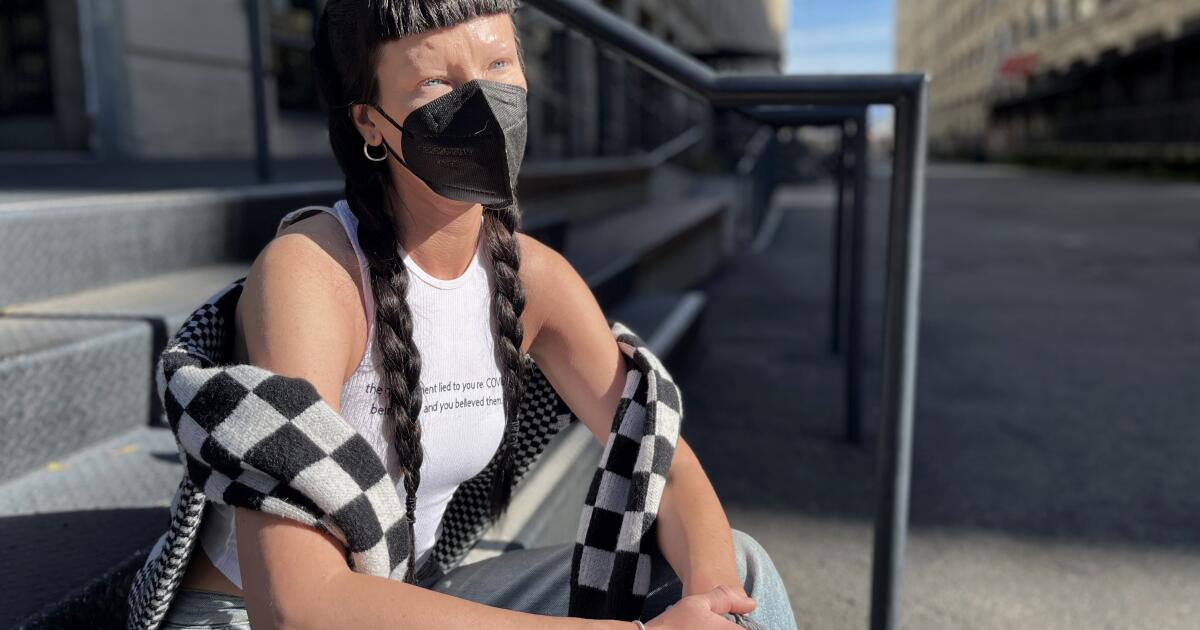
Long COVID leaves thousands of L.A. county residents sick, broke and ignored
-

 Education1 week ago
Video: Turning Point USA Clubs Expand to High Schools Across America