San Francisco, CA
Monica Magtoto’s utility boxes: a healing love for San Francisco


Guerrero Street is a bustling thoroughfare for people making their way through the Mission.
For artist Monica Magtoto it’s an ideal stretch of road to showcase her art.
Magtoto’s work is featured on ten sidewalk utility boxes, seven of which are on the corner of Guerrero, between 14th and 22nd streets. The boxes–usually painted dark green–are used by the city to house electrical equipment for regulating traffic.
“You get people who are crossing through the neighborhood to go more to the Mission side,” Magtoto said. “You get people who are crossing back over to go more towards the Dolores, Noe Valley, Castro side. So, for me, it’s the perfect location.”
Her other three boxes are on Dolores Street, on the corner of 14th and 15th Streets, and on Folsom, on the corner of 14th.
Magtoto is also a yoga instructor and an energy worker. In the latter capacity, she incorporates “reiki, curanderismo, somatic work and other energy work and spiritual modalities.” She painted each of her utility boxes black before layering on images such as hearts, butterflies, candles, suns, moons, flowers, and skulls in vibrant red, yellow, and white.
Each box has a unique design but all have a unifying theme: healing.
“Our city’s been through a lot, and for me, this set of paintings was a little bit of a love letter — like, ‘If I could heal the spirit of the city, this is where I would start,’” she said.
Magtoto is one of the artists selected for the “Paint the City” project backed by two San Francisco-based nonprofits, Paint the Void and the Civic Joy Fund.
The project’s first round includes 24 artists and 241 city utility boxes, 39 of them in the Mission.
Other Paint the City utility boxes in the Mission feature Jane Kang’s Korean-themed murals on Dolores and Church streets, native birds by Claudio Talavera-Ballón and various colorful illustrations, including renderings of city fixtures such as Sutro Tower and the Roxie Theater, by Shirley Lee.
Magtoto, a fourth-generation San Franciscan, said she draws inspiration from her multicultural background which includes Filipino, Mexican, Irish, and Cape Verdean family members, as well as from her connection to the city and its diverse community.
“Like a lot of people in San Francisco, my family was adjacent to the Catholic Church, but my mom was more like, ‘Get the basics and then develop your own way of being with nature and with spirit,’” she said.
As an energy healer, she said, she’s interested in the connection between the physical and the spiritual, and carries that over into her art.
“How we exist in our bodies and how we can attack things from both angles — that intersection is really important to me,” she said.
On one utility box, on the corner of Guerrero and 15th Streets, Magtoto painted a rendering of the Three of Swords tarot card, with white-outlined swords piercing a bright red heart.
“That card is about healing and about removing the swords one by one. So if you find yourself with those three swords in your heart, you can’t really move. Any way you move, it hurts, so you pull each out, one at a time, and deal with it,” she explained.
Magtoto appreciates the attention her boxes get from passers-by. People say, “‘Oh, I saw you painting on Guerrero!’ It’s not often I get to paint and just do my own thing, too. So having this be really authentically me and having people resonate with that and recognize [my work] has been a really high point for me.”
Best of all, perhaps, family members are delighted.
“My family getting to see my work and sending me photos that they’re taking in front of the boxes when doing errands or going out to dinner — that’s the dream, right?”





San Francisco, CA
San Francisco fishermen recount harrowing rescue after boat capsizes near Alcatraz


SAN FRANCISCO – While one person died after a cabin cruiser sank in the San Francisco Bay on Tuesday afternoon, a harrowing rescue near Alcatraz Island saved 16 lives.
The U.S. Coast Guard and the San Francisco Fire Department continue to search for three missing people who went overboard after the vessel went down around 3:30 p.m.
Clifford Joseph Boisa, 79, of Sutter County, was pronounced dead following the incident. However, 16 others were brought to safety, many of them rescued by civilian boaters who rushed to help. Among the Good Samaritans were fishermen Mike Montoya and Justin Marceline, who were aboard the Khea, a 22-foot Boston Whaler.
At a Wednesday afternoon press conference, Coast Guard Incident Commander Jarod Toczko praised the fishermen and a nearby kiteboarder for their heroic actions.
A rush to help
Dig deeper:
Montoya and Marceline were on the water when they noticed signs of trouble nearby.
“I turned around and I saw a plume of either smoke or steam,” Montoya said. “I just knew that somebody was in distress.”
Montoya told his partner they needed to move their boat closer to investigate. When they arrived, they found people struggling to stay afloat in the Bay’s frigid waters.
The rescuers began throwing life jackets and flotation devices to those in the water, pulling victims aboard as quickly as possible. Many of the victims were exhausted and unable to pull themselves out of the water.
Witnesses recount people ‘trapped’ inside
What they’re saying:
As they pulled survivors aboard, Montoya said he saw people trapped inside the cabin of the sinking vessel, banging on the windows.
“We were throwing fishing weights at the window, trying to get it to break, and we handed a guy a fishing weight that was in the water, and he didn’t have a life jacket on,” Montoya said.
In total, Montoya and Marceline pulled nine people onto their boat and brought them to safety.
Marceline was prepared to jump into the Bay to help more victims, but Montoya stopped him, warning of debris and other dangers beneath the surface.
“My first thought was to kick my shoes off and get down to my underwear and jump in and start to get the elderly people off the boat, because it was elderly people helping elderly people and it wasn’t going fast enough,” Marceline said.
Memorial service turns tragically fatal
Survivors told the fishermen they had gathered on the water for a memorial service. Authorities later confirmed that the victims and survivors were relatives and close friends holding a memorial when the boat went down.
Toczko said the 50-foot cabin cruiser was capable of carrying the number of people on board, but noted that investigators must consider several factors regarding the boat’s stability.
The investigation into what caused the vessel to sink is ongoing.

San Francisco supervisors authorized a resolution Tuesday urging California lawmakers to expand the city’s automated speed camera program, which currently has 33 cameras operating in the city under a state pilot.
The board’s 10-to-1 vote on Tuesday, with District 10 Supervisor Shamann Walton voting against it, will not add cameras immediately, but formally asks the state to explore changes to the program. The San Francisco Municipal Transportation Agency has identified at least 80 additional high-need locations that could benefit from automated enforcement, according to a report filed with the Public Safety and Neighborhood Services Committee.
Richard Zieman, whose son Andrew, a paraeducator, was killed in November 2021 by a speeding driver outside Sherman Elementary School on Franklin Street, told Mission Local that city officials should do more. “They waited for a tragedy,” Zieman said. Parents and school leaders had repeatedly asked the city to slow traffic on Franklin Street, where drivers barreled downhill toward the Marina, said Zieman.
Supervisor Matt Dorsey, who introduced the resolution, has said the city’s first year of automated speed enforcement shows that the technology works. The SFMTA reported nearly an 80 percent reduction in drivers traveling at least 10 miles per hour over the speed limit at camera locations after the program launched in March 2025. San Francisco was the first city to implement the pilot authorized under Assembly Bill 645.
The pilot, however, is capped by state law at 33 camera locations. Tuesday’s resolution asks California lawmakers to consider allowing more, prioritizing corridors on San Francisco’s High Injury Network, including Franklin Street.
Walk San Francisco, a pedestrian advocacy group which spent roughly eight years advocating for the state legislation that created the pilot, called the resolution an important first step toward broader expansion.
“Thirty-three cameras is nowhere near the number of cameras we need for people to realize that San Francisco is a safe-speed city,” said executive director Jodie Medeiros. “This tool is working. People are lowering their speeds.”
District 6, represented by Dorsey, currently has seven of the city’s 33 cameras, most of them in SoMa. The district also records the highest number of crashes involving injuries or fatalities in San Francisco, making it a focal point in the debate over expanding automated enforcement.
The resolution advanced unanimously from the Board of Supervisors’ Public Safety and Neighborhood Services Committee last week, where Dorsey said the cameras have made streets “feel safer” and argued the early results show “why we should have even more of this life-saving technology.”
Zieman, whose son’s death prompted traffic-calming improvements and eventually a speed camera near Sherman Elementary, said the issue is urgent.
“There are probably other Franklin streets out there,” he said. “I just hope they don’t wait for someone else before they expand the program. It’s too late for Andrew.”

One person is dead and two others are missing near Alcatraz Island in San Francisco Bay after a boat with 19 people aboard capsized Tuesday afternoon, officials said.
A vessel was reported to be on fire around 600 yards off Alcatraz around 3:35 p.m., and police found a capsized three-deck pontoon boat, San Francisco Fire Chief Dean Crispen said.
The incident was initially reported as a fire, but no first responders reported witnessing a blaze, Crispen said.
Everyone on the boat is believed to have been adults, Crispen said. A dog was also on board and is dead, he said.
Thirteen people were safely rescued, and another three were transported to hospitals, Crispen said.
Firefighters are “in full rescue mode,” with 11 boats and divers as part of the response, Crispen said.
“We are going to continue for hours to make sure that we find these two missing people, if possible,” Crispen said.
“It seemed like a recreational-type vessel, but that’s all we know at this point,” Crispen told reporters.
The vessel reportedly launched from a yacht club, and investigators were still gathering information, he said.
Helicopter footage from NBC Bay Area showed responding rescue boats and debris floating in the water. Video from the station appeared to show some of the rescued with blankets on shore.
Local police departments and private vessels also responded to the incident, Crispen said.
“This is an all-hands-on-deck search and hopefully rescue,” San Francisco Mayor Daniel Lurie said.
When first responders arrived, some people were in the water, others were on the sinking boat, and others were falling into the water, Crispen said.
Alcatraz Island is the site of the famous prison located in San Francisco Bay, around 1 mile offshore. It was closed as a federal prison in 1963 and is now a National Park.
Crispen said the search would be extensive.
“Our standard operating procedure is to continue to search, as long as it’s safe enough for us to search,” he said.
He said divers were in the water, helicopters were above, and officials were searching areas where survivors in the water would tend to move to.
“This search will go on for some time,” Crispen said.
-

 Politics32 seconds ago
Lindsey Graham’s final act reverberates in Senate as sister is urged to “keep pedaling”
-

 Health6 minutes ago
Is lettuce still safe to eat amid Taco Bell illness probe? Doctors answer
-

 Sports13 minutes ago
Marcello Hernández roasts Jake Paul, Tiger Woods and Bill Belichick in ESPYS monologue
-

 Technology19 minutes ago
You paid for it. So why is your device showing ads?
-
 Business25 minutes ago
Paramount shareholder lawsuit accuses Ellisons of corruption
-
 Entertainment31 minutes ago
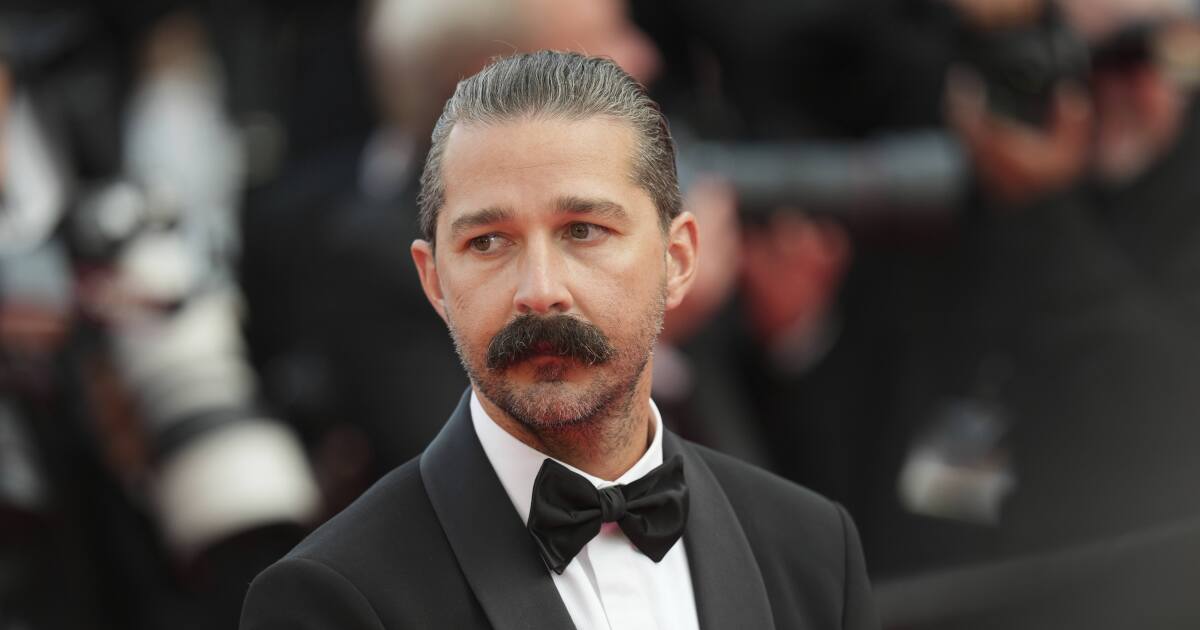
‘You’re scaring my people.’ Shia LaBeouf’s alleged stalker arrested after posting viral video
-
 Politics43 minutes ago
Californians back Becerra and reject AI data centers by big margins, poll finds
-
 Science49 minutes ago
How to eat safely amid outbreak of diarrhea-causing cyclosporiasis

