San Diego, CA
San Diego wants hotels and restaurants to pay more for valet stands and on-street dining. It’s not going over well.


San Diego hotel and restaurant owners are balking at a city proposal to charge them steeply higher fees for their valet parking spaces and on-street outdoor dining areas.
City officials say the hikes are justified, because San Diego loses revenue when parking spots that could otherwise have meters are devoted to other uses like dining or valet parking drop-off and pickup.
But critics, including the county lodging association and merchant groups, say the hikes could prompt some restaurants to eliminate on-street dining altogether and force hotel guests to clog streets by double parking.
One Mission Beach restaurant owner said Tuesday the city can’t keep raising fees and costs on a struggling industry and not expect a rash of closures. “We are teetering,” said Eric Christiansen, the owner of Guava Beach Bar & Grill.
The proposal, which the City Council is scheduled to consider early next month, is part of a wider city campaign to cope with expected budget deficits by raising parking rates and beginning to charge in new places like Balboa Park.
City officials say it’s costing taxpayers many thousands of dollars per year in potential parking meter revenue — revenue that could fund city services — by allowing on-street dining and valet spots, especially popular downtown because hotels there lack space for self-parking by their guests.
And the amount of potential revenue the city is missing out on rose sharply this year, after hourly meter rates were doubled from $1.25 to $2.50, daily meter operations were extended by two hours and a special event zone with higher rates was created near Petco Park.
In an effort to recover a greater share of that lost revenue, city officials are proposing to raise the fees for street-dining space by more than 30% and to hike valet parking fees even more dramatically. Currently, those fees are nearly $38 per square foot in most areas; they would rise to $50.
Fees for outdoor dining would rise by nearly 32% in most neighborhoods and even more in the special-event zone. Also, a fee exemption would be eliminated for seating that is open to the public, instead of reserved only for restaurant customers.
For valet spaces, hotels would pay $5,600 per year for the standard allotment of two valet street spots of 22 feet each, up from the current $600 per year. City officials say the $600 is an application fee, and the $5,000 is a new fee that aims to recover part of the city’s costs.
The hotel industry has mostly accepted that change, but it’s objecting to proposed fees for hotels that want more than two valet spots. Each additional valet spot beyond two would cost a hotel $10,000 in areas that have parking meters and $15,000 in the special-event zone.
“That is just too high for guests, as well as the operators, to be able to absorb,” said Fred Tayco, executive director of the San Diego County Lodging Association.
Tayco said some hotels could end up paying close to $100,000 per year if they need several additional valet spots, predicting that scaling back valet spots would lead to dangerous double parking and unloading of luggage.
“While valet parking may appear like a luxury, for downtown it’s a necessity,” said Tayco, noting that 63% of tourists who visited San Diego last year came by car.
Michael Trimble, executive director of the Gaslamp Quarter Association, questioned how the city arrived at the new proposed fee amounts.
“We can’t support arbitrary, unpublished surcharges that punish businesses,” Trimble said.
City officials say the proposed fees were carefully calculated based on the typical revenue a parking meter generates in a year.
Ahmad Erikat, a program manager in the city’s Transportation Department, said a typical meter downtown generates $25 per day, which may rise to $30 per day now that operating hours have been extended by two hours.
Erikat said the city multiplied that rate times the 350 days per year that meters operate — there are 15 holidays per year when they don’t — to get a total expected revenue per downtown meter of $10,500. So the city decided to charge $10,000 for additional valet spots.
“The objective is to be as close as possible to cost recovery,” he said.
In the special-event zone, a similar calculation led the city to propose $15,000 per valet spot, Erikat said.
For restaurants or hotels willing to operate valet spots only from 5 p.m. to midnight, the fee would be $2,500, which is based on how much meter revenue could otherwise be generated during those hours, Erikat said.
He stressed that the first two valet spots would still be heavily subsidized by the city. Instead of charging the $20,000 that cost recovery would dictate — $30,000 in the special-event zone — the city would charge $5,600 for those two spots.
Full cost recovery would kick in only when additional spots beyond the standard two are required by a business.
The proposal was approved 4-0 by the City Council’s Active Transportation and Infrastructure Committee last month. It is scheduled for a vote by the full council on either Nov. 2 or Nov. 3, according to a spokesperson for Mayor Todd Gloria.

Councilmember Stephen Whitburn, who chairs the committee and represents downtown, said he sympathizes with businesses facing higher fees.
But he suggested keeping those fees down is less important than making sure hotels have the ability to claim additional valet spots if they need them.
“The policy enables valet services to remain possible while enabling the city to recover the true cost of lost parking revenue,” Whitburn said.
He said the hotels make enough money to cover the higher costs. “The collection of valet parking revenue results in some pretty significant revenue,” he added.
Christiansen, the Mission Beach restaurant owner, considers the fee hike for street dining a huge mistake.
“It’s a ridiculous increase by a tone-deaf city,” said Christiansen, who has operated Guava Beach Bar & Grill for 23 years.
With the city’s minimum wage still rising incrementally and costs for food and energy going up, he said the city shouldn’t charge more for street dining spots when restaurants are barely surviving.
“We can’t absorb anymore costs — we are teetering,” he added. “It’s going to be a rude awakening for the city when restaurants start to close. Boarded-up buildings are a bad look for tourists.”
The Little Italy Association, whose businesses would be some of those most affected, declined requests for an interview.



The 2026 March Madness tournament began with selections on Sunday, March 15. The tournament lasts through the Final Four in Indianapolis on April 4 and 6.
BRACKET CHALLENGE GAME: Check out your bracket now
Check out the full March Madness tournament schedule below. You can also print out a bracket here.
2026 NCAA tournament schedule, dates
Here is the schedule:
- Selection Sunday: 6 p.m. ET Sunday, March 15 on CBS
- First Four: Tuesday, March 17 and Wednesday, March 18
- First round: Thursday, March 19 and Friday, March 20
- Second round: Saturday, March 21 and Sunday, March 22
- Sweet 16: Thursday, March 26 and Friday, March 27
- Elite Eight: Saturday, March 28 and Sunday, March 29
- Final Four: Saturday, April 4 at Lucas Oil Stadium in Indianapolis
- NCAA championship game: Monday, April 6 at Lucas Oil Stadium in Indianapolis
2026 NCAA men’s tournament bracket
Click or tap here for the interactive bracket

2026 March Madness tournament locations
| 2026 PRELIMINARY ROUND SITES | ||||
|---|---|---|---|---|
| Round | Dates |
City |
Venue |
Host(s) |
|
First Four |
March 17 & 18 |
Dayton, OH |
UD Arena |
University of Dayton |
|
First/Second |
March 19 & 21 |
Buffalo, NY |
KeyBank Center |
Metro Atlantic |
|
First/Second |
March 19 & 21 |
Greenville, SC |
Bon Secours Wellness Arena |
Furman |
| First/Second |
March 19 & 21 |
Oklahoma City, OK |
Paycom Center |
Big 12 Conference |
| First/Second | March 19 & 21 | Portland, OR | Moda Center | Oregon State University |
| First/Second | March 20 & 22 | Tampa, FL | Benchmark International Arena | University of South Florida |
| First/Second | March 20 & 22 | Philadelphia, PA | Xfinity Mobile Arena | Saint Joseph’s University |
| First/Second | March 20 & 22 | San Diego, CA | Viejas Arena | San Diego State University |
|
First/Second |
March 20 & 22 |
St. Louis, MO |
Enterprise Center |
Missouri Valley Conference |
|
South Regional |
March 26 & 28 |
Houston, TX |
Toyota Center |
Rice University |
|
West Regional |
March 26 & 28 |
San Jose, CA |
SAP Center |
San Jose State University |
|
Midwest Regional |
March 27 & 29 | Chicago, IL | United Center | Northwestern University |
|
East Regional |
March 27 & 29 |
Washington, D.C. |
Capital One Arena |
Georgetown University |
| Final Four | April 4 & 6 | Indianapolis | Lucas Oil Stadium |
Horizon League |
2025 NCAA men’s tournament bracket
March Madness: Future sites, dates
Here are the future sites for the NCAA Division I men’s basketball Final Four:
| FINAL FOUR DATES | CITY, REGION | FACILITY | HOST |
|---|---|---|---|
| April 4 and 6, 2026 | Indianapolis | Lucas Oil Stadium | Horizon League, IU Indianapolis |
| April 3 and 5, 2027 | Detroit | Ford Field | Michigan State University |
| April 1 and 3, 2028 | Las Vegas | Allegiant Stadium | UNLV |
| March 31 and April 2, 2029 | Indianapolis | Lucas Oil Stadium | Horizon League, IU Indianapolis |
| April 6 and 8, 2030 | North Texas | AT&T Stadium | Big 12 Conference |
| April 5 and 7, 2031 | Atlanta | Mercedes-Benz Stadium | Georgia Tech |
San Diego, CA
Servicemembers can request to carry personal firearms on military bases, Hegseth announces

Uniformed servicemembers can request to carry their personal firearms on military installations, Defense Secretary Pete Hegseth said in a video posted to social media Thursday, sparking mixed reaction from veterans in a community that’s at the center of the mental health conversation and knows weapons better than anyone else.
“The War Department’s uniformed service members are trained at the highest and unwavering standards,” Hegseth said. “These warfighters, entrusted with the safety of our nation, are no less entitled to exercise their God given right to keep and bear arms than any other American.”
“Our warfighters defend the right of others to carry. They should be able to carry themselves,” he continued, signing a memo on camera that he said would direct installation commanders to allow requests “with the presumption that it is necessary for personal protection.”
Previously, privately owned firearms had to be kept off base or in some places, approved for storage in the armory.
Representatives for San Diego bases – including Marine Corps Base Camp Pendleton, Marine Corps Air Station Miramar, Marine Corps Recruit Depot San Diego and Naval Air Station North Island – pointed inquiries on how those requests would be processed and how the new policy would be implemented to the Pentagon, which has released few details beyond Hegseth’s announcement.
A release from the department said the memo makes the undersecretary of war for intelligence and security responsible for updating the manual that lays out physical security measures and will authorize officials to review those requests.
“If a request is for some reason denied, the reason for that denial will be in writing and will explain — in detail — the basis for that direction,” Hegseth said.
He pointed to incidents on bases, including a deadly shooting last August at Fort Stewart in Georgia, and another at a New Mexico Air Force base last month, as motivation in part for the policy change.
“In these instances, minutes are a lifetime, and our servicemembers have the courage and training to make those precious short minutes count,” Hegseth said.
The change inspired mixed reaction from veterans, much like the national gun debate in a microcosm: some believed it would offer more protection while others worried shootings and suicides would rise.
“I believe this is a step in the right direction for safety,” said Marine Corps veteran Lance Gilson, who spent more than six years at Camp Pendleton.
“There were a lot of times where I thought about, you know what, if something happened right here, right now, is the military police going to be able to respond quick enough?” he said.
“It is my job to protect not only myself, but the others around me and ones who can’t protect themselves,” Gilson continued. “On military bases, it’s not just military personnel. You have civilians, families that live there. And if you’re not able to respond to them in time, you know, that to me is a concerning feeling — knowing that I can respond but I don’t have the tools necessary to be able to effectively respond in that timely manner.”
“I will definitely be more on edge,” said Navy veteran Ryan McCullough, who owned a handgun before he enlisted, storing it with his parents for his five years on base. He said he never felt he needed his personal weapon and was comforted by the fact that no one else had one. “You start hearing stories about soldiers having weapons at boot camp and turning on their own people. You’re like, ‘Oh, there’s a reason why they disarm these people on the base.’”
“I’m not just, you know, a purple hair, left-wing, somebody from California that … wants more gun control,” he said. “There were guards 24-7, right, making the rounds. There was people within your battalion checking on you. So I felt more safe there than I had ever felt before, which is surprising because I thought, ‘Okay, at home, I feel the most safe with my weapon.’”
And after a Navy buddy committed suicide with a firearm a few years ago, McCullough said he worries about more weapons on base, cautioning civilians who may cheer the change.
“It’s different for that person to own a weapon than it is for somebody who just got trained to kill and has lots of things going on and lots more stresses than you,” McCullough said.
“That does concern me, but I do hope that there’s going to be a vetted process whenever they do go through it,” Gilson said of the suicide risk. “Especially mental health check-up, and I think that the leaders will be able to gauge that pretty well, especially at the junior level. And I think that will help mitigate any further suicides, and I pray.”

This year marks the 50th anniversary of Buckley v. Valeo, the Supreme Court ruling that first equated campaign spending with “free speech.” Sixteen years ago, Citizens United extended similar rights to corporations and unions.
The results are clear: an explosion of campaign spending and growing concern that our democracy is being dominated by a small, wealthy few. In California, outside money plays an outsized role, causing our elections to be among the most expensive in the nation.
Polling shows broad, bipartisan agreement that money has too much influence in politics.
Americans want voters and elected officials — not the courts — to set the rules.
The solution is a constitutional amendment to restore the authority of Congress and the states to regulate campaign spending. We have amended the Constitution before to correct our nation’s course. It’s time to do it again and put “We the People” back in charge.
— Rosalind Hirst, Normal Heights

Woman presumed dead in Readfield house fire; husband hospitalized

No. 12 Maryland men’s lacrosse escapes past No. 9 Ohio State in overtime 8-7 – WMUC Sports

Yaxel Lendeborg injury update: Michigan star hurt in Final Four

Old mills are hard to turn into apartments. But could they help solve the state’s housing crisis? – The Boston Globe

Morning Skate Wrap Up: Wild at Senators | Minnesota Wild

Florida High School Football Rankings: Top 25 teams – Oct. 21

How old is Bo Nix? What to know about Oregon quarterback ahead of 2024 NFL Draft

Cleary's 21 help Le Moyne down Central Connecticut State 69-64 in OT

99th annual Pony Swim held in Virginia

Indiana Members Credit Union announced as new anchor tenant at Bottleworks District

FBI’s Patel delivers blunt warning to law enforcement attackers: ‘We’re going to put you down’

Indonesia receives bodies of peacekeepers killed in southern Lebanon
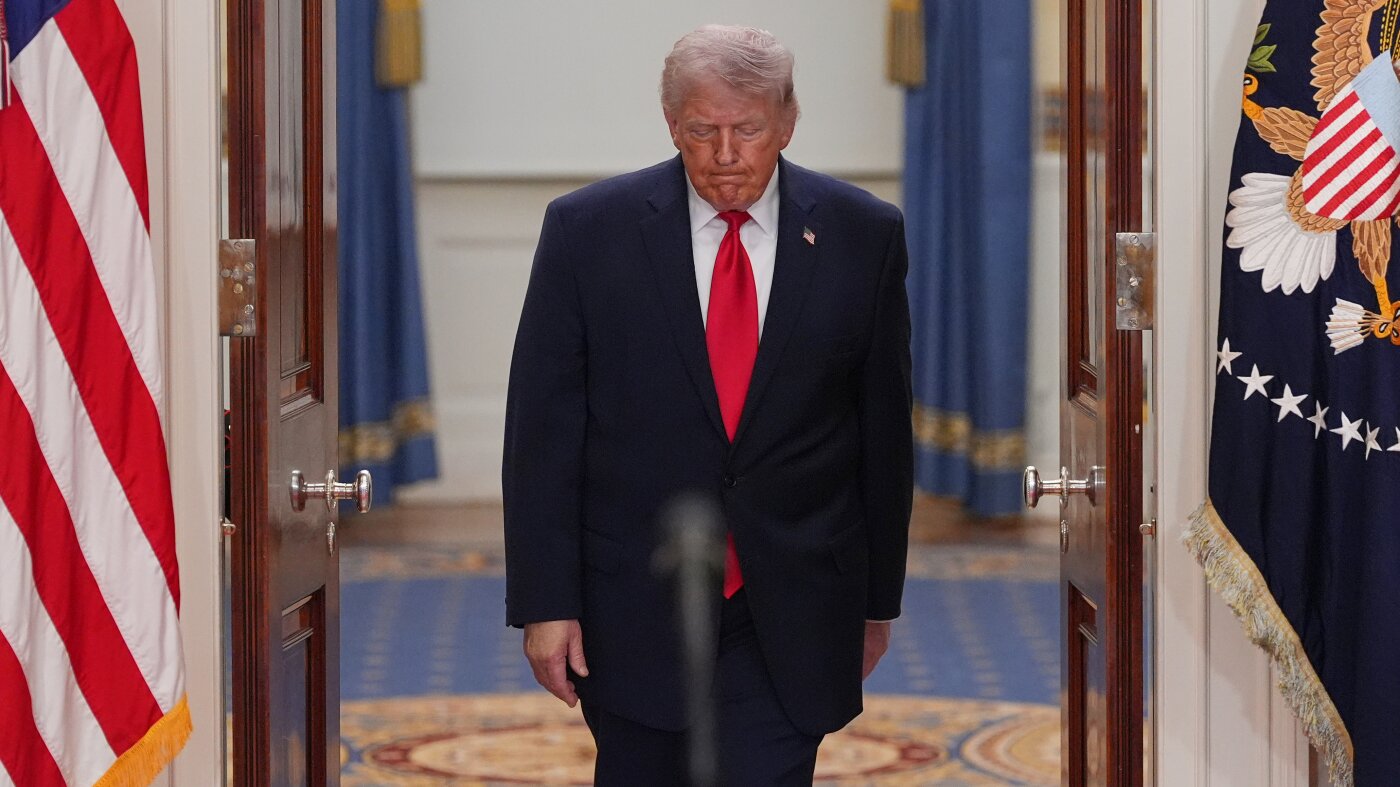
Judge halts Trump effort requiring colleges to show they don’t consider race in admissions

Trump says ‘America needs God’ in Good Friday message touting ‘resurgence of religion’
Fact check: How can a country actually withdraw from NATO?
-

 South-Carolina7 days ago
South Carolina vs TCU predictions for Elite Eight game in March Madness
-

 Miami, FL1 week ago
Jannik Sinner’s Girlfriend Laila Hasanovic Stuns in Ab-Revealing Post Amid Miami Open
-

 Education1 week ago
Video: Transgender Athletes Barred From Women’s Olympic Events
-

 Minneapolis, MN1 week ago
Boy who shielded classmate during school shooting receives Medal of Honor
-

 Vermont7 days ago
Skier dies after fall at Sugarbush Resort
-

 Politics7 days ago
Trump’s Ballroom Design Has Barely Been Scrutinized
-

 Atlanta, GA6 days ago
Fetishist ‘No Kings’ protester in mask drags ‘Trump’ and ‘JD Vance’ behind her wheelchair
-
 Entertainment3 days ago
Inside Ye’s first comeback show at SoFi Stadium