Oregon
Who are potential Oregon State coaching candidates? Meet these 4 names


Watch Oregon State celebrate its win against Washington State
Oregon State players and fans celebrate their 10-7 victory against Washington State on Nov. 1 in Corvallis.
Oregon State football is looking for its new head coach.
While a disastrous season is coming to an end Nov. 29 with a matchup against Pac-12 foe Washington State, the Beavers’ search for a head coach is well underway.
Oregon State began the season with Trent Bray at the helm, but fired the OSU alum after an 0-7 start and just two seasons in charge. Interim head coach Robb Akey has led the Beavers to a 2-2 record since but has not emerged as a top candidate for the job long term.
Nearly a dozen major college football programs across the country have fired their head coaches this season. Stanford, UCLA, Arkansas, Penn State, Florida, LSU, Auburn, California and more are filling vacancies and competing for top candidates.
The national coaching carousel is speeding up and Oregon State has some hefty competition in the search for the right head coach to lead the Beavers into a new era of Pac-12 football in Corvallis.
Here are some of the coaches reportedly gaining traction as candidates for the Oregon State football head coaching job.
Paul Chryst
Chryst does not currently operate as an NCAA coach, but he has the most experience of nearly any candidate rumored to be in the running for the Oregon State gig.
Chryst, 60, is a Madison, Wisc., native who played quarterback for the Badgers in the 1980s. He jumpstarted his coaching career with West Virginia, followed by short stints with teams in the Canadian Football League and NFL.
In 2003, Chryst joined the Oregon State staff as an offensive coordinator and quarterbacks coach, a job that lasted just two years. Chryst was notably in charge of the offense with OSU legends in quarterback Derek Anderson and running back Steven Jackson.
He then jumped to Wisconsin for seven years in similar roles before landing his first head coaching job with Pittsburgh in 2012.
Wisconsin called Chryst back in 2015, where he spent seven years as the Badgers’ head coach. He had an overall record of 86-45 as head coach of Wisconsin.
Kerry Eggers, a longtime sports reporter based out of Portland, reported Nov. 24 that Chryst pulled his name out of contention for the OSU role despite being a favorable candidate.
Tosh Lupoi
Lupoi is currently the defensive coordinator and linebackers coach for the Oregon Ducks. Lupoi, 44, joined the Ducks in 2022 and has been an integral part of the team’s success in the transition to the Big 10.
He’s a California native who played for the Golden Bears in the early 2000s. His first coaching gig was with the Golden Bears, too; he served as defensive line coach from 2008-11.
A jump to Washington in the same role in 2012 was followed by a five-year run with Alabama. With the Tide, Lupoi acted as a defensive analyst, then linebackers coach, then co-defensive coordinator and linebackers coach.
In 2019, Lupoi moved to the NFL. He was a defensive line coach for the Cleveland Browns, Atlanta Falcons and Jacksonville Jaguars in consecutive years until joining the Ducks in 2022.
Lupoi is a two-time national champion as a coach with Alabama but has never been a head coach. His credible defensive coaching experience working with some of the most talented defenders to come out of college over the last decade, as well as his recruiting prowess, would make him an enticing get for numerous programs.
On Nov. 24, Oregon head coach Dan Lanning said Lupoi is a “relentless worker,” and will make “an outstanding head coach,” one day when the right job comes along.
With a recent California head coaching vacancy, Lupoi has also emerged as a candidate for that job. There has been no official reporting on Lupoi’s interest in the Oregon State job despite social media buzz.
JaMarcus Shephard
Shephard is currently an assistant head coach, co-offensive coordinator and wide receivers coach at Alabama. The 42-year-old Indiana native joined the Tide’s staff in February of 2024 following a career that’s taken him across the country.
After starting out as a high school coach in the mid-2000s, Shephard took a job to Western Kentucky, where he acted as an assistant in numerous facets from 2011-15.
Shephard had a brief one-year role with Washington State before moving to Purdue in 2017. There, he was pass game coordinator and eventually co-offensive coordinator and wide receivers coach.
His name was recalled by Washington in 2022-23 under current Alabama coach Kalen DeBoer. Shephard served as assistant head coach, pass game coordinator and wide receivers coach for an offense that fielded now-Atlanta Falcons QB Michael Penix and all-American now-NFL receivers Rome Odunze and Ja’Lynn Polk.
Shephard is renowned for his work with top-end wide receivers, such as Alabama’s Ryan Williams, and as a hard worker on the recruiting trail.
Shephard is reported to be on Oregon State’s candidates list by On3.
Brent Vigen
Vigen is currently the head coach at Montana State. He’s led the Bobcats to a 10-2 record this season in the Big Sky Conference, with the team’s only two losses coming in the first two weeks to Oregon and South Dakota State.
Vigen, 50, is a North Dakota native with 15 years of assistant coaching experience at North Dakota State. His roles spread across the offense from tight ends coach, quarterbacks coach, running backs coach and was eventually named offensive coordinator from 2009-13.
Following that, Vigen had a two-year stint with Wyoming, where he was offensive coordinator and quarterbacks coach, followed by three years of associate head coaching duties. Vigen, notably, was Buffalo Bills QB Josh Allen’s coach and coordinator at Wyoming.
Since 2021, Vigen has been head coach of Montana State. He has an 88% win percentage with the Bobcats, the best in MSU history. In 2022, Vigen won the Eddie Robinson Award for college best coach of a Football Championship Subdivision team.
Vigen landed at the Portland International Airport earlier this week, as reported by The Oregonian’s Ryan Clarke, but did not share what he was doing at PDX.
Rumors and social media are in a frenzy that Vigen made the trip to Oregon to interview and meet for the Oregon State coaching vacancy.
Justin Wilcox
Wilcox was the head coach of California for the past nine seasons before being fired by the Golden Bears on Nov. 24.
Wilcox, a Eugene native, went to Junction City High School and played for the Ducks upon graduation. He played from 1996-99 under head coach Mike Bellotti.
Before his nine-year tenure with California, Wilcox travelled the country as a defensive coordinator with a track record of producing quality defenses.
From 2006-09, Wilcox was the defensive coordinator at Boise State. He then bounced to Tennessee for the same gig, then Washington, then USC, then Wisconsin. Wilcox spent less than two years at each of those schools before taking the reins in Berkeley in 2017.
At Cal, Wilcox delivered a career record of 48-55 all time. Wilcox was 5-4 against Oregon State, including a 34-15 win this season over former OSU head coach Trent Bray.
The 49-year-old is not likely to be a candidate for top head coaching vacancies around the NCAA following his more-to-be-desired stint with Cal. But his defensive mind and years of experience make him a quality candidate for the opening in Corvallis.
Landon Bartlett covers high school sports and Oregon State for the Statesman Journal. He can be reached at lbartlett@salem.gannett.com or on X or Instagram @bartlelo.



Oregon Ducks wide receivers coach Ross Douglas spoke to the media after Saturday’s scrimmage, and he shared his thoughts on Evan Stewart’s injury, the addition of receiver Gatlin Bair, and a number of other topics.
Here’s everything Douglas said:
On Jeremiah McClellan
“I think his progress has been great. Even just I came in last spring and, you know, we went through spring ball, and I challenged him to do a couple of things. I challenged him to be more violent as a football player. I challenged him to be more dependable in critical situations. And I think you saw that all year. I mean, just all the big plays he made for us on third and fourth down, two-minute drives. you know, contested catches. So now we just got to take it to the next level. Now it’s just the competitive stamina, like doing it all the time, regardless of circumstances, situations. So just really improving on that,” said Douglas.
On Dante Moore, Oregon’s Offense
“Our quarterback is one of the best in the United States of America. I think NFL or college, I think he’s one of the best quarterbacks. We have really good tight ends. We have good backs. We got good wideouts. And the thing about them, they’re all selfless. There’s only one football to go around, but everyone wants to see each other win. So I think that’s what’s more unique, more than the skill set itself, just the personalities that you have and the different skill sets. So collectively, that makes a very dangerous group.”
On Evan Stewart’s Work Ethic
I think E-Stew’s still is operating with a sense of desperation because he realized he has one year left of eligibility and this is kind of all he has. So he’s been practicing at a little bit different clip,” said Douglas.
“I’m challenging him just to have that mindset, especially like run after the catch, like catching the ball and going to score, like practicing making somebody miss, alignment, versatility, being able to know every single spot in our playbook so we can line them up and put them in different situations, so the NFL could evaluate his skill set and so he could put certain things on tape. But I think he’s attacking great. He’s been great in winter conditioning. He’s been great at practice. He’s been a good veteran leader to the room. So, no, I’m excited about his progress, but still a long way to go.”
On Saturday’s Scrimmage
“You know, it was definitely our first scrimmage, so we had some first scrimmage things going on. So some good, some bad, some things we’ve got to clean up. But that’s the beautiful thing about football. What’s today, April 11th? So, no, we’ve got a long ways to go until we tee it up versus Boise State for our first game. So a lot of things we’ve got to clean up. We’re going to watch the film and see some things that we like. We’re going to watch some things on the film that we want to clean up. So it’s just beautiful. We’ve just got to continue to make progress.”
On Evan Stewart’s Return from Injury
“I actually have not had experience working with a player who’s been out for a year. But the thing I appreciate about E Stew, he’s never too high, he’s never too low. He’s just kind of neutral all the time. So when I first got here, he was out when I first got here because he was dealing with a little injury from the Rose Bowl in the last game of the year. But he’s a constant guy. He was always in my office at 6:30 in the morning and always asking me for extra film,” said Douglas.
“Like me, I come from the NFL, so he would ask me to critically evaluate his tape as if I was going to draft him. So we’ve had a lot of great positive conversations. He’s in my office a lot. He texts me about plays before we even watch the film together at practice. So he’s just a guy who’s hungry and always constantly wants to get better. So that’s kind of been his mindset since I’ve really got here. Now, like I said, he’s operating with a sense of desperation. So if he continues to have that same mindset and mentality towards his work and towards his craft, it’ll serve him very well.”
On Gatlin Bair
“No doubt, well, Gatlin, obviously, you see him, like, he’s physically gifted, like, crazily physically gifted. Like, he has size, he has speed, you know, both his parents were high-level collegiate athletes, I mean, his brother’s on our track team right here, he was at Mississippi State last year, like, he’s an NCAA champion in decathlon, so he comes from great parents and has great genes.”
“So now, again, he hasn’t played football for two years, but football is a game of repetition. So the more you play it, the better you get at it. So just continue to get him practice reps and really forge him in a fire, like just like learning on the fly and making mistakes, getting corrected, like not making the same mistakes again. So it’s just really been a good process with Gatlin. I like where he’s at and just excited to continue to work with him,” said Douglas.
On Iverson Hooks
“I think he’s been a great addition to the room. He’s a guy who’s played a lot of football. He had almost 1,000 yards last year. But the thing with him, now coming to Oregon, it’s a little bit different level playing at Oregon than it was where he was previously at. So now just adapting to the new level of physicality, new level of volume in the offense, maybe that he wasn’t accustomed to at his old spot. But ‘Trap’s’ coming along great. He has an amazing attitude. Our players love him. I love to coach him. You know what you’re going to get out of him every single day. So now just continue to push him to get better and make him a better version of himself.”
On Organizing the Depth Chart
“When I evaluate receivers, I evaluate skill sets because if you’re a good football player, you should be able to play anything. So it’s really positioned this football here in my room. So whether you’re outside, whether you’re inside, you should be able to plug and play anywhere. All those guys have unique skill sets, whether it’s speed, contested catchability, twitch, ball skills. whatever it might be, run after the catchability,” said Douglas.
“So you evaluate the skill set, and then now you package them and put them in good positions so we can be advantageous towards the defense. So really just focusing on that, make sure that we understand concepts. So regardless of who lines up where, we all know what we’re doing and then we know how to do it.”
On Ryan Switzer
“Me and Switzy, we go back to 2011. We were actually committed to Penn State together. So Bill O’Brien was the head coach. We were actually committed to Penn State. We’ve known each other since we were about 16 years old. And he’s a guy we followed each other all the way throughout. We were at the opening when they bought back the opening now. But back in 2012, we were at the opening together and then we were at the Semper Fi Dallas game in 2013,” said Douglas.
“It’s funny. Like I just, I was scrolling through my phone one day where she found a picture of me and him in high school. We took a picture together and I put in our receiver group chat. So no, we go way back and he was, obviously he was a heck of a player at North Carolina drafted to the Steelers and played for a long time in the NFL.”
“And he was at Tulsa last year and some certain things happened. He ended up getting let go and he reached out to me and, I’m just thankful that I’m in a position now where I can help a good friend. And it’s just a blessing to have him on our staff. He’s a valuable addition to the room, to me, to our players. So, no, he’ll do big things here. I’m happy he’s with us,” said Douglas.
On Dakorien Moore’s Offseason
“He’s a guy, again, he’s attacking the offseason. You know, I think last year, you know, he had the injury, but he was doing some good things for us. And then, you know, critically watched all his tape last year. Like, there’s some things that you like to see on film and there’s some things that plays that we wish we had back,” said Douglas.
“So now it’s just minimizing those plays that we wish we had back. I feel like he’s had a great attitude. He’s been practicing with great effort and, you know, he’s getting better every single day. Even as talented as he is, he’s getting better every single day. He’s coachable, and his attitude is a little different this year. Asking a lot of questions in the meeting room, making sure that he’s good on concepts, regardless of where he lines up. So I love where he’s at right now. He’s got to keep getting better.”
Sign up to our free newsletter and follow us on Facebook, X and Instagram for the latest news.

PORTLAND, Ore. (KATU) — Federal disaster assistance is now available to Oregon communities hit by a powerful round of winter weather that brought severe storms, straight-line winds, flooding, landslides and mudslides from Dec. 15-21, 2025.
FEMA announced on April 11 that President Donald Trump approved a major disaster declaration for Oregon to supplement recovery efforts in the affected areas.
A landslide forced the closure of the Historic Columbia River Highway on Thursday, Dec. 18, 2025, as rain pounded the region. (Corry Young/KATU)
STORM COVERAGE | Heavy rain soaks W. Oregon, S.W. Wash., prep for potential flooding & more power outages
Public Assistance federal funding will be available on a cost-sharing basis to the state, tribal and eligible local governments, as well as certain private nonprofit organizations.
ODOT crews flew a drone over a massive landslide in Lincoln City near Siletz which closed highway 229 in December 2025 to get an idea of the extent of the damage. (Courtesy: ODOT, Dec. 12, 2025)
The funding can be used for emergency work and for the repair and replacement of facilities damaged by the storms and related impacts, the announcement stated.
The declaration covers Clackamas, Hood River, Lane, Lincoln, Linn, Polk, Tillamook, Union and Yamhill counties.
KATU News reached out to different counties and FEMA for clarification on how affected Oregon residents can benefit from the financial assistance, awaiting response.
JOIN THE CONVERSATION (3)
FEMA said additional designations may be made later if requested by the state and warranted by the results of further damage assessments.
The Oregon Lottery offers several draw games for those aiming to win big.
Here’s a look at April 10, 2026, results for each game:
Winning Mega Millions numbers from April 10 drawing
03-18-36-42-49, Mega Ball: 06
Check Mega Millions payouts and previous drawings here.
Winning Pick 4 numbers from April 10 drawing
1PM: 9-7-3-1
4PM: 3-5-6-5
7PM: 8-9-2-0
10PM: 6-6-2-1
Check Pick 4 payouts and previous drawings here.
Feeling lucky? Explore the latest lottery news & results
When are the Oregon Lottery drawings held?
- Powerball: 7:59 p.m. on Monday, Wednesday and Saturday.
- Mega Millions: 7:59 p.m. on Tuesday and Friday.
- Pick 4: 1 p.m., 4 p.m., 7 p.m. and 10 p.m. daily.
- Win for Life: 7:30 p.m. on Monday, Wednesday, and Saturday.
- Megabucks: 7:29 p.m. on Monday, Wednesday, and Saturday.
This results page was generated automatically using information from TinBu and a template written and reviewed by an Oregon editor. You can send feedback using this form.

Lawmakers close door on Massachusetts online casino legalization

Minnesota’s Pohlkamp helps Denver beat Wisconsin 2-1 for 11th national hockey title, 3rd in 5 years

Mississippi reveals its full history for America’s anniversary year, a contrast to federal efforts
KCPD investigating after 1 man hurt in Saturday shooting

The ugly truth behind ‘restoring Montana values’ • Daily Montanan

Florida High School Football Rankings: Top 25 teams – Oct. 21

How old is Bo Nix? What to know about Oregon quarterback ahead of 2024 NFL Draft

Cleary's 21 help Le Moyne down Central Connecticut State 69-64 in OT

99th annual Pony Swim held in Virginia

Indiana Members Credit Union announced as new anchor tenant at Bottleworks District

Carney casts himself as NATO defender amid Trump beef, despite Canada missing key benchmark for decades

‘Enough of war!’ says Pope Leo XIV who grows increasingly frustrated
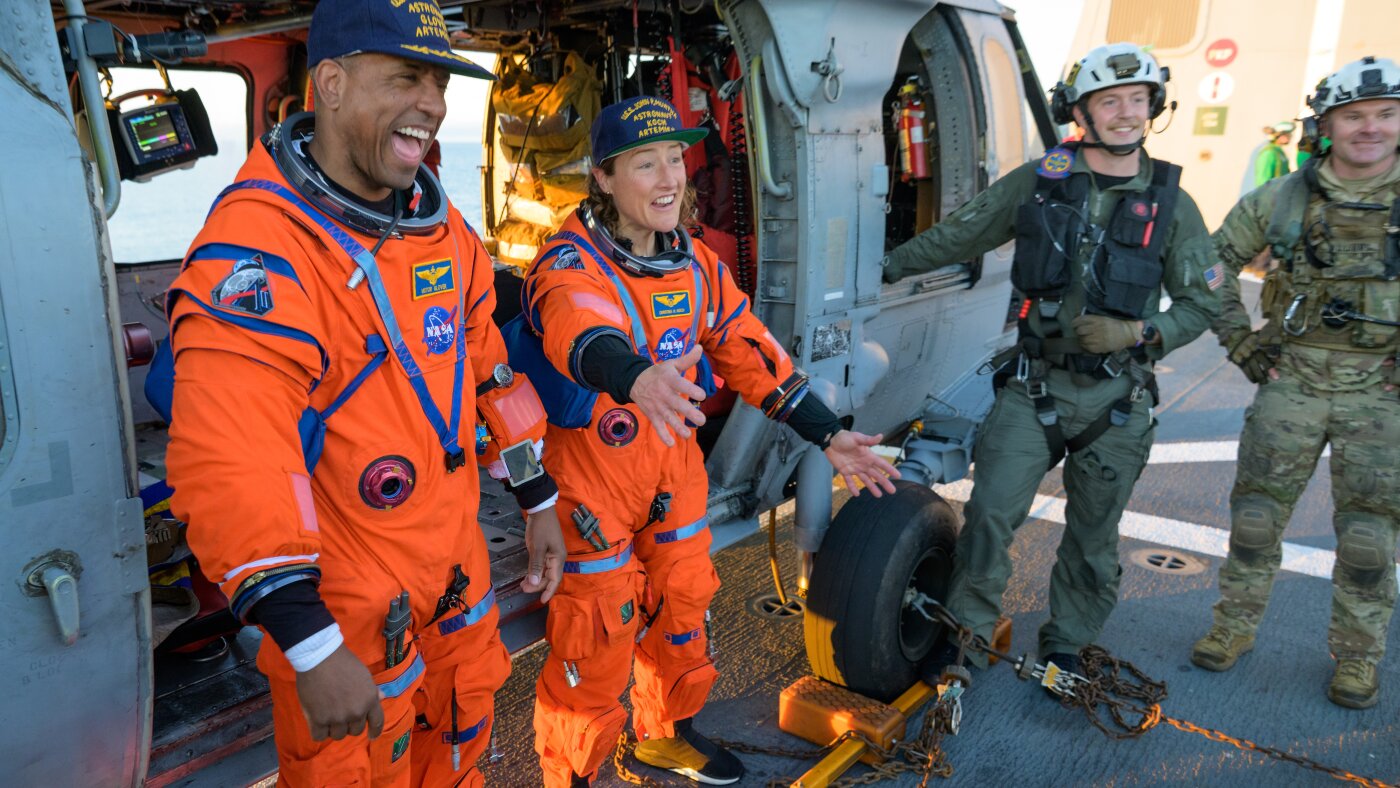
Artemis II splashdown captures nationwide attention

Video: Police Fatally Shoot Man After Stabbings at Grand Central Subway Station

Trump blasts Spanberger ahead of Virginia meetings, says state faces tax base exodus like New York, California
-

 Atlanta, GA1 week ago
1 teenage girl killed, another injured in shooting at Piedmont Park, police say
-

 Georgia5 days ago
Georgia House Special Runoff Election 2026 Live Results
-

 Pennsylvania6 days ago
Parents charged after toddler injured by wolf at Pennsylvania zoo
-

 Arkansas2 days ago
Arkansas TV meteorologist Melinda Mayo retires after nearly four decades on air
-
 Milwaukee, WI6 days ago
Potawatomi Casino Hotel evacuated after fire breaks out in rooftop HVAC system
-

 Indianapolis, IN1 week ago
Fighting Illini begin Final Four preparations in Indianapolis
-

 Technology1 week ago
Anthropic essentially bans OpenClaw from Claude by making subscribers pay extra
-

 Detroit, MI1 week ago
Puppy rescued after getting stuck on chimney in Detroit