Oregon
Some Members of Kotek’s Prosperity Council Unhappy About Tax Change


This story was produced by the Oregon Journalism Project, a nonprofit newsroom covering the state.
One of the most contentious issues in the current legislative session revolves around an issue called “bonus depreciation.”
It’s a tax break that business groups hope could spur purchases of everything from tractors and commercial fishing boats to high-tech machinery and new housing. To progressive groups, it’s a giveaway to businesses that were going to make such investments anyway, at the expense of schools and social services.
The issue is also timely, as Gov. Tina Kotek builds her reelection campaign around a new focus on Oregon’s business climate.
Last week, Kotek’s Prosperity Council held its second meeting, this one in Redmond, where the panel toured BASX Solutions, which makes cooling systems for data centers, along with HVAC systems for everyday structures.
Kotek cited BASX as the kind of family-wage employer the state must nurture and seek to attract. “Oregon’s prosperity is not a given. We have to act with intention to be more competitive,” the governor said. “That’s exactly what the Prosperity Council has been charged to do, and today’s meeting helps us to understand the perspectives of Central Oregon.”
But just a week removed from the Redmond gathering, one member of Kotek’s Prosperity Council, real estate investor Jordan Schnitzer, expressed frustration with the governor’s actions, which he says are contradictory to the charge Kotek gave the panel: “to recommend actionable steps to accelerate Oregon’s economy, create good paying jobs, and recruit and grow Oregon’s businesses.”
Schnitzer, whose firm owns or operates 31 million square feet of real estate across 200 properties in six Western states, says Kotek’s position on Senate Bill 1507A, which would disconnect Oregon from certain tax cuts in President Donald Trump’s so-called One Big Beautiful Bill Act, is inconsistent with her prosperity message.
States have the option to follow federal tax cuts in Trump’s bill or to “disconnect” from some or all of the changes. Oregon typically applies changes in the federal tax code to state taxes, but this year has decided not to in the form of SB 1507A.
Legislative number-crunchers calculated that remaining fully connected to the Trump tax cuts would cost Oregon nearly $900 million in tax revenue over the next two years. That estimate came at a time when looming cuts to Medicaid and food stamps already threatened the state’s 2025–27 budget.
In legislative testimony, advocates, such as the Oregon Education Association and the Oregon Center for Public Policy, argued that the state should fully disconnect from the Trump tax cuts because Oregon schools and social service programs need the money. Business groups, such as Oregon Business & Industry and the Oregon Farm Bureau, argued that bonus depreciation provided a valuable incentive for their members to make new investments and create jobs in Oregon.
Democratic lawmakers are taking a piecemeal approach with SB 1507A. The bill retains Trump’s tax cuts on tips and overtime income but disconnects from bonus depreciation. That change eliminates a tax cut for businesses worth $267 million over a two-year period.
Typically, businesses depreciate new capital investments—such as equipment, buildings and machinery—over a period of years. That allows them to deduct a portion of their capital investment from current income, reducing their taxes. Bonus depreciation (a tool previous presidential administrations have also used to stimulate the economy) allows the entire investment to be written off in the first year. Democrats say that creates an unacceptable hit to tax revenues; Republicans and businesses say it would help Oregon’s economy, which has stagnated.
Democrats hold supermajorities in both legislative chambers, of course, and the bill passed the Senate and then the House on Feb. 25, on party line votes. As the bill moved, some in the business community expressed their concerns directly to Kotek, who announced her support for the bill earlier this week.
In a widely circulated Feb. 24 letter, Portland developer Bob Ball, part of a group Kotek and Portland Mayor Keith Wilson convened last year to brainstorm ideas to increase housing supply, cautioned Kotek that killing bonus depreciation is “putting another nail in our coffin.”
“I encourage you to exempt multifamily properties from SB 1507A,” Ball wrote. “I don’t think Oregon should decouple for any of the depreciation categories if we want to stay competitive in every industry, but the one industry I can say definitively will be hurt is housing production.”
Schnitzer told OJP he sent a similar message to Kotek on Feb. 25 via text.
“The only way to get out of the economic doom loop we are facing is by people coming and opening more businesses that pay good wages and paying their fair share of taxes,” Schnitzer says he told Kotek. “This bill creates a disincentive for businesses to invest in this wonderful state. Why would we do that?”
Schnitzer says other members of the Prosperity Council—he declined to say which ones—are also not happy with the governor’s position on bonus depreciation. Kotek did not immediately respond to his text message.
A Kotek spokesman says the governor believes the Legislature took necessary steps to preserve some of the tax revenue Trump’s tax bill would otherwise have cut, without putting Oregon at a competitive disadvantage.
“In disconnecting Oregon’s state taxes from the bonus depreciation and deciding to allow businesses to depreciate their investments over the life of the investment rather than all at once up front, Oregon would align with more than 20 other states including Idaho,” says Kevin Glenn.
SB 1507A now heads to Kotek’s desk for her signature.



The Oregon Lottery offers several draw games for those aiming to win big.
Here’s a look at July 14, 2026, results for each game:
Winning Mega Millions numbers from July 14 drawing
02-04-10-48-56, Mega Ball: 22
Check Mega Millions payouts and previous drawings here.
Winning Pick 4 numbers from July 14 drawing
1PM: 6-3-6-3
4PM: 7-0-0-9
7PM: 2-0-6-0
10PM: 2-5-1-5
Check Pick 4 payouts and previous drawings here.
Feeling lucky? Explore the latest lottery news & results
When are the Oregon Lottery drawings held?
- Powerball: 7:59 p.m. on Monday, Wednesday and Saturday.
- Mega Millions: 7:59 p.m. on Tuesday and Friday.
- Pick 4: 1 p.m., 4 p.m., 7 p.m. and 10 p.m. daily.
- Win for Life: 7:30 p.m. on Monday, Wednesday, and Saturday.
- Megabucks: 7:29 p.m. on Monday, Wednesday, and Saturday.
This results page was generated automatically using information from TinBu and a template written and reviewed by an Oregon editor. You can send feedback using this form.

DESCHUTES COUNTY, Ore. — Oregon State Police are asking for additional witnesses to come forward after a three-vehicle crash on Highway 20E in Deschutes County left two people seriously injured.
Troopers responded at 12:47 p.m. Friday, July 10, to the crash near milepost 41. A preliminary investigation found a westbound 2013 black Chevrolet Silverado pickup truck pulling a single-axle utility trailer attempted to pass a black Dodge 4500 towing a trailer. Police said an eastbound Hyundai Elantra tried to avoid a collision with the Chevrolet, lost control in the gravel on the eastbound shoulder, veered into the westbound lane and collided with the trailer pulled by the Dodge 4500.
The driver and passenger of the Hyundai were flown by air medic to a local hospital with serious injuries.
The crash affected traffic for about five hours. The driver of the Chevrolet was cited for careless driving and unsafe passing.
OSP is asking anyone who may have seen the Chevrolet driving westbound on Highway 20 at the moment of, or prior to, the collision to contact the OSP Northern Command Center dispatch at 800-442-0776 or *OSP (*677) from a mobile phone. Callers should reference case number SP26-255130.

The Oregon Supreme Court on Thursday declined to review the Oregon Court of Appeals’ decision upholding Multnomah County’s ban on flavored tobacco and nicotine products.
Legal challenges have so far delayed the ordinance from taking effect since it was passed four years ago. It was not immediately clear when the ban would go into effect.
“Flavors are one of Big Tobacco’s biggest tricks to hook the next generation of Oregonians on their deadly products,” Christina Bodamer, who leads the Western states region of the American Heart Association, said following the court’s decision.
The Board of County Commissioners originally approved the ordinance banning flavored tobacco and nicotine products in December 2022 to take effect Jan. 1, 2024. But the ordinance hit a roadblock: a court challenge by the 21+ Tobacco and Vapor Retail Association of Oregon, e-cigarette retailer No Moke Daddy LLC, and vape shop owner Paul Bates.
It has been working its way through the state court system since. The Multnomah County Circuit Court upheld the ban in September 2023. The state Court of Appeals continued the pause on implementation February 2024, before upholding the ban in an April 2025 decision. The Supreme Court’s denial of review marks the end of the saga.
The Supreme Court rejected a challenge to a similar restriction in Washington County in May. That now sets up both ordinances to go into effect, which will together ban flavored tobacco and nicotine for one-third of Oregonians. A similar ban failed in the Oregon Legislature in 2025, dying in committee.
Tobacco use is the top cause of preventable death and disease in Oregon, according to the Oregon Health Authority. More than 8,000 Oregonians die from tobacco use each year.
Supporters of the ban argue that flavored tobacco acts as a gateway for underage use. According to Flavors Hook Oregon Kids, a coalition of more than 60 organizations that support the ban, 81% of Oregonian kids who’ve used tobacco started with flavored products. And flavored products are much more popular among kids and young adults than older adults, OHA says.
Richard Burke, executive director of the 21+ Tobacco and Vapor Retail Association of Oregon, tells WW the group is disappointed that the Supreme Court did not take up the case. He argues that banning flavored tobacco “has effectively granted a monopoly to the black market,” where flavored products are often laced with more dangerous substances.
“We agree with the goal of keeping these products out of the hands of minors,” Burke says. “But this is an overcorrection that will result in unintended consequences as has been shown by attempts to institute flavor bans in other parts of the country.”
Willamette Week’s reporting has real-life impact that changes laws, forces action by civic leaders, and drives compromised politicians from public office.
Support WW.
-
 Lifestyle2 minutes ago
They just completed all of L.A. Times’ 101 Best California Experiences — and we’ve got questions!
-
 Politics8 minutes ago
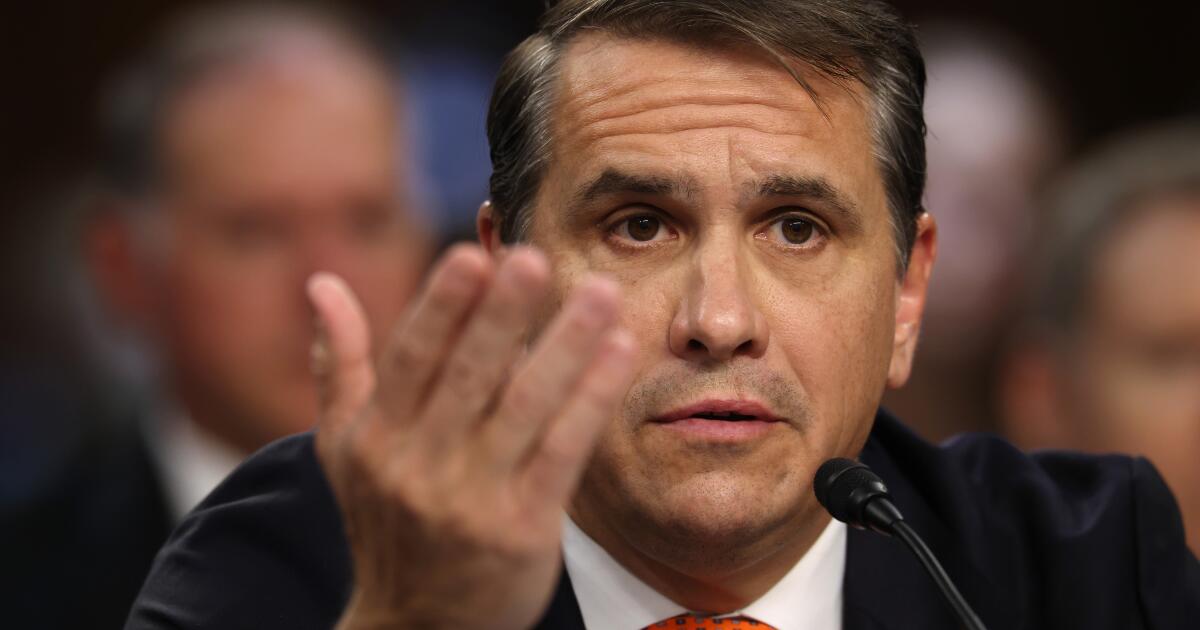
Blanche to face questions about his independence at attorney general confirmation hearing
-
 Sports20 minutes ago
How World Cup senior citizens like Lionel Messi have bio-hacked longer careers
-

 World32 minutes ago
Baltic presidents warn of Russian infrastructure attack plans
-
News1 hour ago
ICE should do traffic stops despite recent shootings, Trump says, seeming to oppose new suspension
-

 Los Angeles, Ca3 hours ago
Southern California hits hottest day of its extreme heat warning
-

 Detroit, MI3 hours ago
Steve Yzerman out as Detroit Red Wings GM, moves to senior advisor role
-
 San Francisco, CA3 hours ago
Supervisors urge California to expand S.F. speed-camera program

