Oregon
Oregon policymakers look to mend broken trust with Harney County irrigators


It’s January, fields of water-hungry hay are dormant, and a layer of hoarfrost and fog blankets the sagebrush for miles in Oregon’s remote southeast corner.
But as fields lie frozen, the seeds of an impending crisis continue to grow in Harney County.
It’s sure to force many farmers into a tough financial spot. Some say it could put them out of business. And now, some farmers are trying to navigate a problem that’s both about the economy, and the environment.
A center pivot sits on agricultural land in Harney County, Ore., on Dec. 18, 2025. Eli Imadali / OPB
The Harney Basin does not have enough groundwater to allow the current pace of irrigation to continue.
In December, water regulators adopted a plan to address the issue.
But many locals feel that the plan ignores their needs and could devastate a region whose economy largely revolves around agriculture.
Some have come to distrust the very agency in charge of managing the state’s water. They’re now forging a partnership with the governor’s office with the hope they can avoid, or at least delay, costly litigation.
“There’s a lot of animosity. And some of it is valid, and some of it’s not,” said state Rep. Mark Owens — a Republican from Harney County and a farmer. “Right now, if the state wants to work with this community, there needs to be a different face leading this instead of the water resource department, and the other option is the governor’s office.”
A disagreement over water management
Last month, the Oregon Water Resources Commission unanimously voted to designate much of the Harney Basin in southeast Oregon a critical groundwater area.
This designation will give the state more authority to reduce how much water irrigators can pump out of the aquifer, with the goal to stabilize it by 2058.
The Harney Basin spans 5,240 square miles of southeast Oregon’s high desert.
Almost all of the groundwater that’s used each year, about 97%, is pumped out to irrigate fields of hay that feed beef and dairy cattle.
For the last three decades, there’s been a problem: The water is drying up.
A center pivot sits on agricultural land in Harney County, Ore., on Dec. 18, 2025.
Eli Imadali / OPB

For decades, the state’s water resources department – overseen by the commission – enabled developers to drill new wells and pump out more water from the aquifer than what can naturally be replenished by rain and snowmelt.
That continued long after the department knew it wasn’t sustainable.
Irrigators in the basin acknowledge the problem – but many disagree with the state’s “critical groundwater area” designation and with how the state has interpreted the science that underpins it.
In one area of the basin north of Malheur Lake, groundwater levels have declined by more than 140 feet below the water table and, since 2016, have continued to drop by as much as eight feet per year.
But groundwater levels in other parts of the basin have not dropped as drastically – falling by less than a foot per year in some places.
As it stands, the water resources department’s plan to cut how much water irrigators can use in the basin doesn’t go into effect until 2028. That plan outlines how some water users will have to cut back their use by up to 70% over the next 30 years.
Before the plan takes effect, water users will have the opportunity to contest the restrictions they might face – a process that would require an attorney and an administrative law judge. It could be costly and take years to resolve.
But many farmers disagree with this plan.
Some feel they’re being punished for the water resources department’s failure. Some say the plan treats all irrigators the same, even though groundwater declines are not uniform across the basin.
Meanwhile, other people in the basin, residents who have domestic or livestock wells but are not irrigators, say the state is not acting fast enough to regulate water users.
In September, a coalition of residents, irrigators, tribes and local governments organized under Owens filed a petition asking the water resources commission to consider a different plan that diverged from the state’s own proposals to cut water use in the region.
In a memo, the water resources department determined the petition’s proposal would result in “continued long-term groundwater level declines” in most areas of the basin.
The commission rejected the petition and adopted the state’s plan instead.
Lost trust, and a different approach
Now, Owens is advocating for a different approach.
If the water resources department proceeds with its plan, many irrigators are likely to contest the restrictions they face.
Owens would like to give them more time to work on what’s called a “voluntary water conservation agreement” – a binding agreement to reduce water use, but one that irrigators would have a say in writing.
That’s where the governor’s office could come in, he said.
“There is some trust that needs to be gained again if we have a desire to work with the [water resources] commission on voluntary actions, because it’s not there right now,” Owens said. “The governor’s office can weigh in with the agencies, specifically the water resource department, and give direction on, ‘You have regulatory sideboards now, but slow down.’”
FILE – State Rep. Mark Owens, R-Crane, poses for a portrait in his Burns, Ore., office on Dec. 17, 2025.
Eli Imadali / OPB
That doesn’t mean the governor’s office plans to take over for the water resource department, according to Anca Matica, a spokesperson for Gov. Tina Kotek.
“We trust our agency. We know we monitor the agency’s work and implementation, but we also want to hear from community members to figure out are there ways we can do better,” Matica said. “Are there ways that we can help provide guidance to that agency that maybe they didn’t have?”
Geoff Huntington, a senior natural resources advisor for the governor, was at a meeting last week in Burns when irrigators met with Owens and state officials to discuss their options.
He acknowledged the lack of trust.
“We have a trust issue, right? Let’s call it what it is. It’s a trust issue,” Huntington said. “That’s a legitimate thing that has to be overcome if we’re going to be moving forward, and I say that on behalf of the department and the governor’s office.”
Geoff Huntington and Chandra Ferrari, both with the governors natural resources policy office, at a community meeting in Burns, Ore. on Jan. 22, 2026.
Alejandro Figueroa / OPB
Chandra Ferrari, also a natural resources advisor for the governor, told irrigators at the meeting that developing voluntary water conservation agreements would require a joint effort between the governor and the water resources department.
“Part of the trust building is us resetting right now and recognizing that we have an opportunity for a better pathway,” Ferrari said. “There is potential right now for this agreement, but ideally, we’re coming with you, right? The [Kotek] administration is coming with you to the [water resources] commission and saying we have a good path here.”
To date, no voluntary water conservation agreements have succeeded or even been proposed in Oregon, though.
A center pivot in a field covered with a layer of hoarfrost at a farm near Crane, Ore., Jan 22, 2026.
Alejandro Figueroa / OPB
“Voluntary agreements are a tool that’s available, but has not been used,” said a spokesperson with Oregon’s Water Resources Department. “There has not been one proposed to the department in regards to the Harney Basin.”
Owens said he’s optimistic the approach can work in the Harney Basin, but it will take time.
“These community members would like to try to take some of the fate in their own hands,” he said. “I am optimistic that our farmers will come together for the benefit of the community, for the benefit of themselves, and for the benefit of the state. And work toward reasonable reductions to hit reasonably stable [water levels] within a time frame that can work.”


Entering the 2026 college football season, the Oregon Ducks are looking to not only win their first national championship in program history but also their second Big Ten title in the last three seasons.
When the Ducks joined the Big Ten in 2024, they kicked off their inaugural season in the conference in style, finishing the regular season undefeated at 13-0. This regular season was concluded with a thrilling 45-37 win over the Penn State Nittany Lions in the Big Ten championship game.
Eug 040522 Lanning 02 | USA TODAY Network via Reuters Connect
The Ohio State Buckeyes, however, got revenge for their loss to the Ducks at Autzen Stadium earlier in the regular season, beating Oregon 41-21 in the CFP Quarterfinal at the Rose Bowl. Entering the 2026 season, here’s a look at the Ducks’ chances of winning the Big Ten for the second time.
Oregon Ducks Big Ten Title Odds: Who’s The Biggest Threat?
According to the latest betting odds by FanDuel Sportsbook, the Ducks have +270 odds to win the Big Ten championship this season. The one team ahead of them is the Ohio State Buckeyes at +190, who, believe it or not, are in search of their first Big Ten title since 2020. The Buckeyes were upset by the Indiana Hoosiers 13-10 in the Big Ten championship last season.
Among the top teams in the Big Ten next season, Ohio State poses the biggest threat to the Ducks’ chances of not only winning a conference title but also the national championship. The Buckeyes and Ducks will face off in what could be the game of the year in Columbus on Nov. 7.
As exciting as this matchup will be for college football fans, it likely won’t be the only one between the Buckeyes and Ducks. Regardless of which team wins the Nov. 7 showdown in Columbus, the Buckeyes and Ducks could match up again in the Big Ten title game and in the CFP.
Other Teams That Pose a Threat to Oregon
While the Buckeyes are the main threat to the Ducks’ Big Ten title aspirations, other teams will be worth watching. One of those teams is the defending national champions, the Indiana Hoosiers.
Despite the key losses this offseason, which include Heisman Trophy-winning quarterback Fernando Mendoza, coach Curt Cignetti’s Hoosiers restocked talent with the addition of TCU Horned Frogs transfer quarterback Josh Hoover and Michigan State Spartans wide receiver Nick Marsh.
The only two losses that the Ducks suffered last season came against the Hoosiers. If the two face off in the Big Ten championship, Indiana looks to continue its dominance over the Ducks. The Hoosiers and Ducks don’t play each other during the regular season.
The USC Trojans, whom the Ducks will face at the Los Angeles Coliseum on Sept. 26, also look to knock off Oregon in what should be one of the top games of the first month of the college football season. Oregon coach Dan Lanning is undefeated 2-0 against USC’s Lincoln Riley and looks to extend the Ducks’ winning streak against the Trojans to five games.
Game odds refresh periodically and are subject to change. If you or someone you know has a gambling problem and wants help, call 1-800-GAMBLER.
Sign up to our free newsletter and follow us on Facebook, X and Instagram for the latest news.
Add us as a preferred source on GoogleFollow
The Oregon Lottery offers several draw games for those aiming to win big.
Here’s a look at July 14, 2026, results for each game:
Winning Mega Millions numbers from July 14 drawing
02-04-10-48-56, Mega Ball: 22
Check Mega Millions payouts and previous drawings here.
Winning Pick 4 numbers from July 14 drawing
1PM: 6-3-6-3
4PM: 7-0-0-9
7PM: 2-0-6-0
10PM: 2-5-1-5
Check Pick 4 payouts and previous drawings here.
Feeling lucky? Explore the latest lottery news & results
When are the Oregon Lottery drawings held?
- Powerball: 7:59 p.m. on Monday, Wednesday and Saturday.
- Mega Millions: 7:59 p.m. on Tuesday and Friday.
- Pick 4: 1 p.m., 4 p.m., 7 p.m. and 10 p.m. daily.
- Win for Life: 7:30 p.m. on Monday, Wednesday, and Saturday.
- Megabucks: 7:29 p.m. on Monday, Wednesday, and Saturday.
This results page was generated automatically using information from TinBu and a template written and reviewed by an Oregon editor. You can send feedback using this form.

DESCHUTES COUNTY, Ore. — Oregon State Police are asking for additional witnesses to come forward after a three-vehicle crash on Highway 20E in Deschutes County left two people seriously injured.
Troopers responded at 12:47 p.m. Friday, July 10, to the crash near milepost 41. A preliminary investigation found a westbound 2013 black Chevrolet Silverado pickup truck pulling a single-axle utility trailer attempted to pass a black Dodge 4500 towing a trailer. Police said an eastbound Hyundai Elantra tried to avoid a collision with the Chevrolet, lost control in the gravel on the eastbound shoulder, veered into the westbound lane and collided with the trailer pulled by the Dodge 4500.
The driver and passenger of the Hyundai were flown by air medic to a local hospital with serious injuries.
The crash affected traffic for about five hours. The driver of the Chevrolet was cited for careless driving and unsafe passing.
OSP is asking anyone who may have seen the Chevrolet driving westbound on Highway 20 at the moment of, or prior to, the collision to contact the OSP Northern Command Center dispatch at 800-442-0776 or *OSP (*677) from a mobile phone. Callers should reference case number SP26-255130.
-

 Politics22 seconds ago
Lindsey Graham’s final act reverberates in Senate as sister is urged to “keep pedaling”
-

 Health6 minutes ago
Is lettuce still safe to eat amid Taco Bell illness probe? Doctors answer
-

 Sports12 minutes ago
Marcello Hernández roasts Jake Paul, Tiger Woods and Bill Belichick in ESPYS monologue
-

 Technology18 minutes ago
You paid for it. So why is your device showing ads?
-
 Business24 minutes ago
Paramount shareholder lawsuit accuses Ellisons of corruption
-
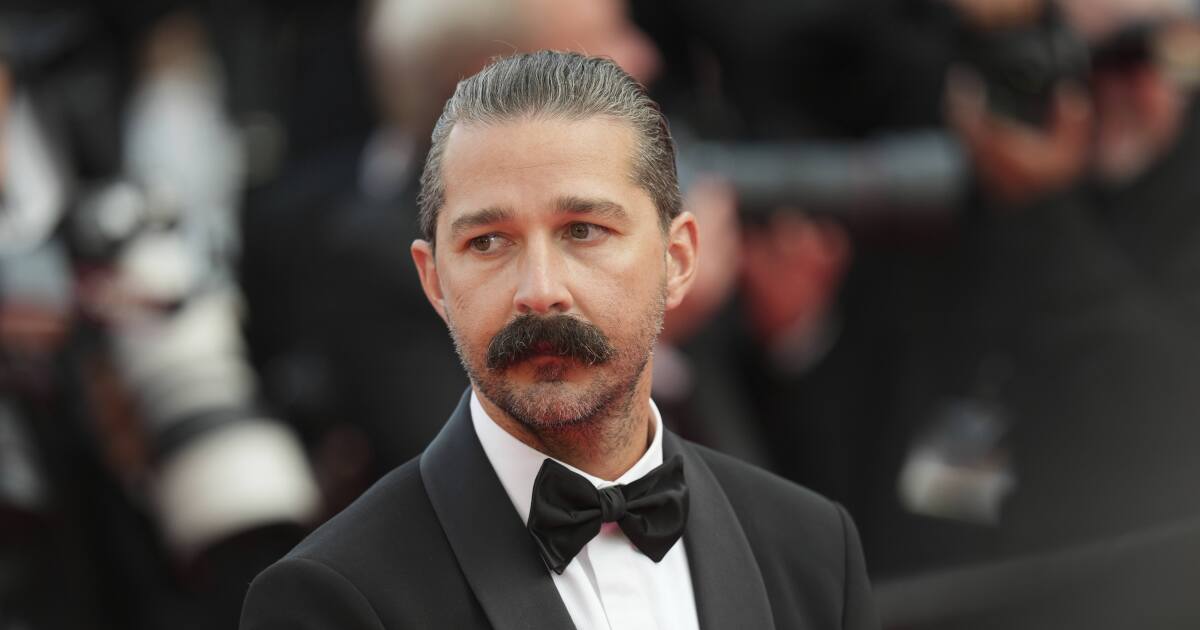 Entertainment30 minutes ago
‘You’re scaring my people.’ Shia LaBeouf’s alleged stalker arrested after posting viral video
-
 Politics42 minutes ago
Californians back Becerra and reject AI data centers by big margins, poll finds
-
 Science48 minutes ago
How to eat safely amid outbreak of diarrhea-causing cyclosporiasis

