West
Oregon election system faces scrutiny as state moves to address 800,000 inactive voters: ‘Astounding’

NEWYou can now listen to Fox News articles!
Oregon election officials are set to begin removing hundreds of thousands of inactive voters from the state’s registration rolls, a move that comes after years of inaction, mounting public pressure, and lawsuits filed against the state in recent months.
Oregon’s Democratic Secretary of State Tobias Read, in a press release Friday, outlined two new directives he said will “restart” the “routine cleanup of outdated, inactive voter registration records” in accordance with state law to address the roughly 800,000 inactive voter records that are being maintained by election officials.
The first directive orders counties to immediately cancel long-inactive voter registrations that already met the legal requirements for removal before 2017. These are registrations where election mail was returned as undeliverable, voters failed to respond to official notices, and they did not participate in multiple federal elections. State officials estimate roughly 160,000 registrations fall into this category and should have been removed years ago.
The second directive changes how the state handles inactive voters going forward. It updates the language on voter confirmation cards to clearly warn voters that their registrations will be canceled if they do not respond or vote within the required time frame. State officials say this step restores a process that allows routine cleanup of inactive registrations under federal law.
FEDERAL JUDGE BLOCKS TRUMP ADMINISTRATION FROM ENFORCING MAIL-IN VOTING RULES IN EXECUTIVE ORDER
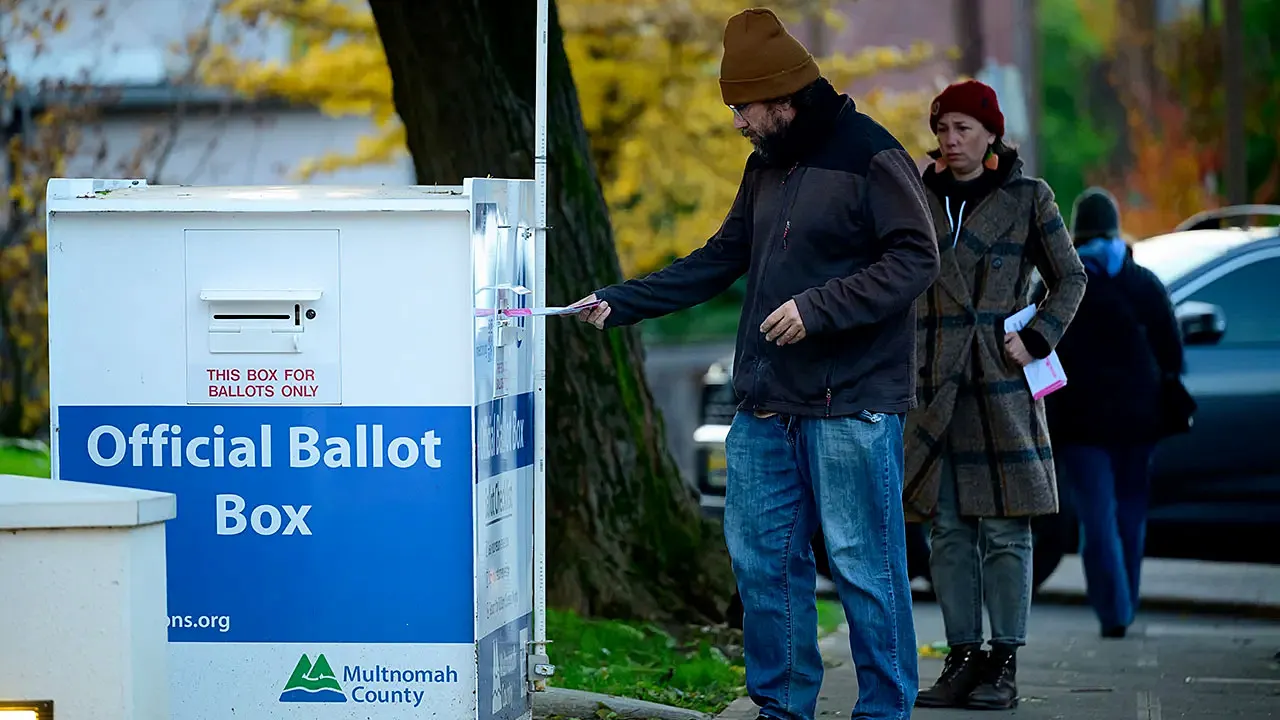
Voters cast their ballots at official ballot boxes on Nov. 8, 2022, in Portland, Oregon. (Mathieu Lewis-Rolland/Getty Images)
Together, the directives are designed to address a backlog of inactive records and restart regular voter-roll maintenance after Oregon paused removals in 2017.
“These directives are about cleaning up old data that’s no longer in use so Oregonians can be confident that our voter records are up-to-date,” Read said. “From day one, our goal was clear: run elections that are secure, fair, and accurate. This move will strengthen our voter rolls and reinforce public trust in our elections.”
State officials acknowledge there are about 800,000 inactive registrations total, roughly 20% of Oregon’s voter rolls, though they stress multiple times in the press release that inactive voters do not currently receive ballots, saying at one point, “again, none of the individuals associated with these records will receive ballots, and these inactive records have no impact on Oregon elections.”
Being marked “inactive” in Oregon means you’re still listed as a registered voter, but you aren’t receiving ballot mail from the state until you reactivate your registration.
MARYLAND DODGES SPECIFICS IN ILLEGAL IMMIGRANT VOTER-ROLL CASE AS CONGRESS VOWS TO KEEP DIGGING
Oregon State Capitol Building (Getty Images)
However, inactive voters are still counted in the official voter roll totals, included in public records, and many experts have made the case that accurate rolls should reflect real, current voters, not people who moved years ago or can’t be located. Leaving outdated records in place increases the risk of mistakes, an expert on the subject told Fox News Digital.
“First of all, it’s astounding that they haven’t been removing anybody from the voter force in almost a decade because this is very basic 101 level election administration,” said Jason Snead, executive director of the Honest Elections Project.
Snead explained that voter rolls naturally change every year as people move, die, lose eligibility due to felony convictions, or leave the state, creating constant churn that must be managed. When states fail to keep up, Snead says, voter rolls become bloated and outdated, making elections harder to administer and increasing the risk of errors and abuse.
Snead emphasized that the problem is especially serious in mail-in voting states like Oregon. He argues that automatically mailing ballots while failing to routinely clean voter rolls makes it more likely that ballots will be sent to people who are no longer eligible, including those who have moved or died. Even if state officials say inactive voters don’t receive ballots, Snead says Oregon’s recent administrative failures, including the suspension of its automatic voter registration program in 2024 after non-citizens were mistakenly registered, justify skepticism about whether safeguards are consistently working as claimed.
CLICK HERE TO DOWNLOAD THE FOX NEWS APP
An election worker tabulating a ballot. (Patrick T. Fallon/AFP via Getty Images)
“I think there’s clearly a degree of skepticism that’s warranted, and I think that it really speaks to the need to always be focused on the basics of election administration,” Snead said. “Cleaning of the vote rolls is really one of the most foundational, important things that a secretary of state should be doing.”
Oregon has been slapped with several lawsuits in recent months related to its handling of voter rolls, from Judicial Watch, Public Interest Legal Foundation, as well as Trump’s Department of Justice, and Snead suspects the timing of the Secretary of State’s announcement is “probably to some degree” related to that.
“There’s an almost pathological resistance on the left to cleaning up the voter rolls, they call it voter purge, and they say that this is going to disenfranchise voters,” Snead said. “We’ve heard of all of the various statements. You know, lots of different ways and lots of different examples. But then when you actually bring litigation over this, sometimes that forces their hand.”
In a statement to Fox News Digital after publication, an Oregon SOS spokesperson said, “We can’t comment on pending litigation. I can say that getting this done was a priority for Secretary Read before he even took office, and he took this step because it’s the right thing to do. He wants his office focused on the details. We know this won’t satisfy those bad actors trying to undermine our free, fair, secure American elections, but the average Oregon voter can rest assured we are doing the hard work of running accurate and transparent elections.”
“Furthermore, the DOJ lawsuit is not related – it’s about whether we have to hand over Oregonians’ private voter data. Which we have no intent of doing.”
Cleaning up voter rolls has become an increasingly politicized issue in recent years, with Republicans pushing for more oversight in the name of election integrity and Democrats accusing Republicans of attempting to “disenfranchise” voters.
“Democrats support normal list maintenance and reasonable efforts to keep voter rolls up to date and in compliance with federal law,” DNC Spokesperson Albert Fujii told Fox News Digital. “The contrast could not be clearer: Donald Trump and the Republican Party are pushing aggressive voter purges to systematically disenfranchise eligible voters across the country, especially voters of color.”
In a statement to Fox News Digital, RNC National Press Secretary Kiersten Pels said, “Oregon’s Democrat Secretary of State has presided over one of the most bloated voter rolls in the country, with more than 800,000 inactive registrations.”
“Democratic states have allowed their voter rolls to spiral out of control, especially in mail-in voting systems like Oregon’s. The RNC is taking action nationwide to ensure states are cleaning their voter rolls as required by law.”
Read the full article from Here



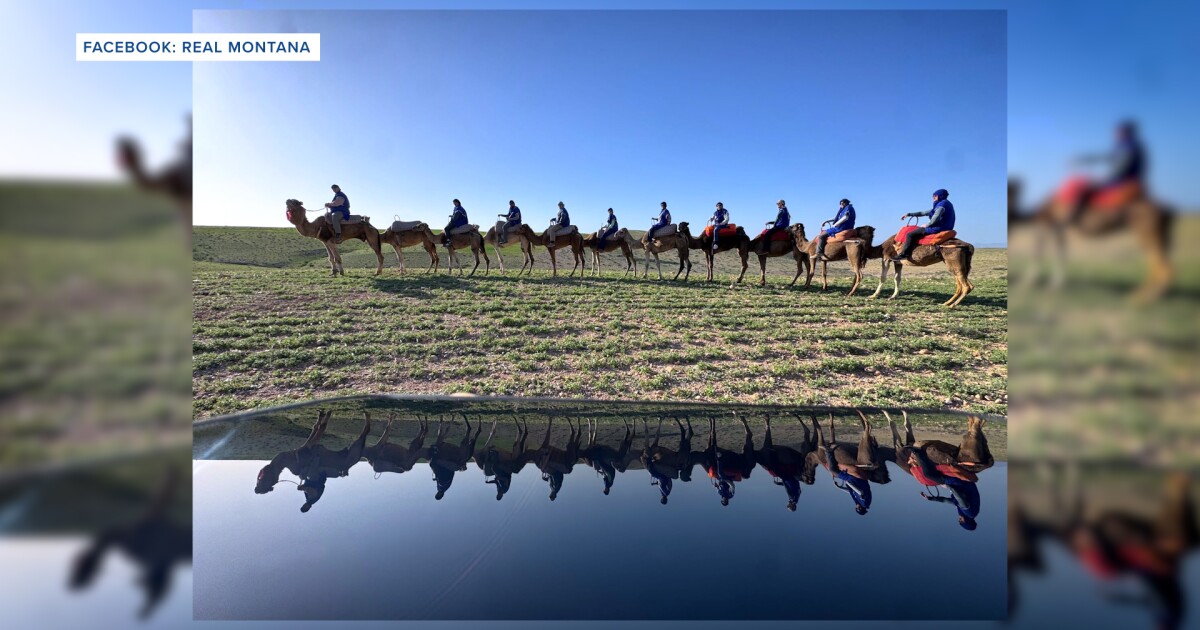
GREAT FALLS — REAL Montana, short for Resource Education & Agriculture Leadership, is a two-year leadership development program through Montana State University Extension designed to strengthen the future of the state’s natural resource industries. The program combines in-state seminars, national travel, and an international study tour to expose participants to a wide range of perspectives.
Madison Collier reports – watch the video here:
Montana Ag Network: REAL group highlights international industry
The mission is simple: build a network of informed leaders who can help advance Montana agriculture and natural resource industries in a rapidly changing world.
A global classroom
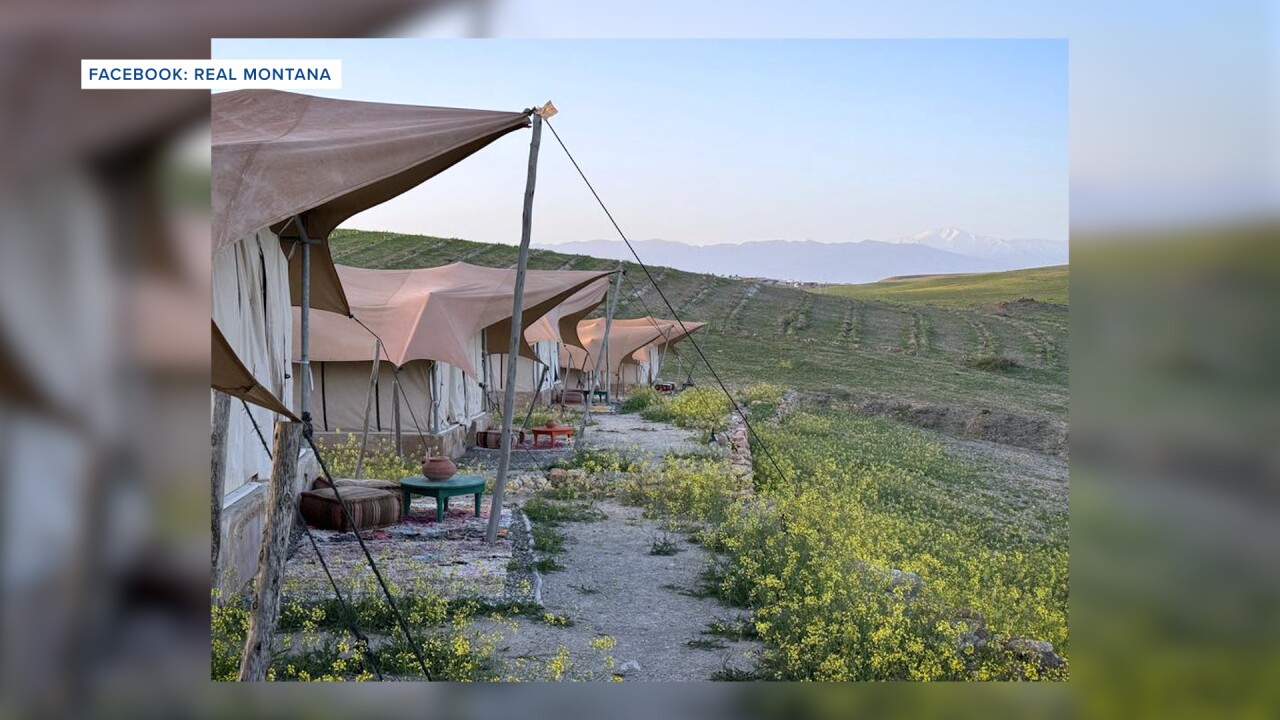
This year, participants traveled across Morocco, visiting farms, research centers, and food production facilities to better understand how agriculture operates on a global scale.
According to REAL Montana Co-Director Tara Becken, the trip is about more than just travel, it’s about perspective.
“We were able to see how Montana commodities fit into the global picture,” said Becken, who also attended the trip. “Wheat from Montana’s Golden Triangle ends up on a plate on the other side of the world.”
Participants explored everything from citrus production to international trade, gaining firsthand insight into how food systems connect across continents.
Similar challenges, different landscapes
While Morocco’s environment and crops differ from those in Montana, participants said the challenges facing producers still felt familiar.
“Even though we’re worlds away, our challenges are very, very similar,” Becken said, pointing to issues like drought, labor shortages, and market pressures.
For Alice Miller, a participant in the program, those similarities stood out immediately.
“They’ve been dealing with drought. They’re working through input costs and labor… those are the same conversations we’re having here,” Miller said.
From farm to global table
One of the most impactful moments for participants came from seeing food production up close and realizing how connected it is to back home.
“Eating oranges right off the trees and then thinking about how that food ends up on our grocery store shelves… it just hits different when you’re there,” Miller said.
The experience reinforced a broader takeaway: Montana agriculture plays a role far beyond state lines.
“Montana really is feeding the world. That’s not just a phrase, that’s a reality,” Miller said.
Building the next generation of leaders
The international trip is just one part of the REAL Montana program, which includes eight in-state seminars and a national policy-focused trip to Washington, D.C.
Participants are selected from across Montana’s natural resource industries, including agriculture, energy, and forestry, with the goal of building a diverse network of future leaders.
Program leaders say those experiences are critical as the industry faces ongoing challenges, from global trade to shifting consumer demands.
“Unless we can understand the world around us, it’s really hard to tackle our own problems,” Becken said.
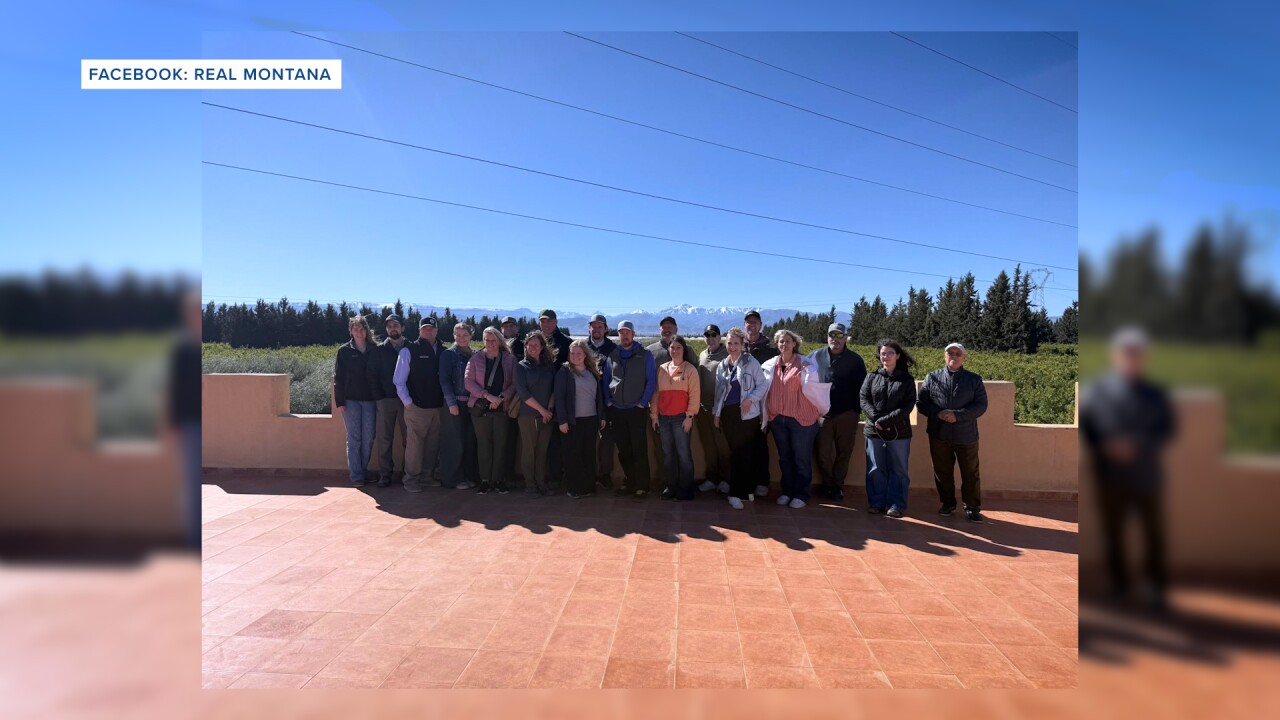
As the current class prepares to graduate, the focus now shifts to applying those lessons back home.
“We hope they go out and make a difference for the state of Montana and their communities,” Becken said.
Looking ahead
Applications for the next REAL Montana class are open through March 31. The program targets individuals working in Montana’s natural resource industries who are interested in growing as leaders and making an impact in their communities.
For Miller, the experience is one she encourages others to pursue.
“It’s an investment you won’t regret making, in yourself and in your industry,” she said.
The Montana Farmers Union is now offering a scholarship to help offset the cost of participation for eligible members accepted into the program. The support is designed to make leadership development more accessible to those working in agriculture and natural resource industries.
More information on scholarship opportunities and the application process can be found on the REAL Montana website.


Reno rules for parking near neighbors
Learn about Reno’s parking rules near neighbors – it’s legal on public streets, but with restrictions. Find out more!
As Nevadans are getting ready for family and friend cookouts and summer parties, they may be looking for a place to park in residential areas. It may be tempting to park near your neighbor’s driveway, but people should first know what’s allowed.
After all, as annoying as it is to have to park far away from your destination, a large fine and a tow is far more inconvenient.
Here’s what the Nevada law says about parking in front of your neighbor’s house, near their driveway, and on a public street.
Can I park in my neighbor’s driveway?
No. Unless you are a United States Postal Service worker, it is prohibited in Nevada to park “within 5 feet of a public or private driveway.”
Can you park in front of your neighbor’s house in Nevada?
Unless a permit is required or other official signage on a street notes special parking requirements, it is legal to park on any public street. That includes in front of your neighbor’s house, as long as it is not blocking their driveway.
Can you park in front of your neighbor’s house?
Unless a permit is required or other official signage on a street notes special parking requirements, it is legal to park on any public street. That includes in front of your neighbor’s house, as long as it is not blocking or less than five feet from their driveway.
Can I sell my car from my yard?
As long as you keep the number of vehicles you sell from your yard to three personally-owned vehicles per year, it is legal. If you exceed that amount and don’t have a dealer’s license, you could be reported to the Nevada DMV.

QUAY COUNTY, N.M. – A grass fire has burned an estimated 1,000-2,000 acres near San Jon in Quay County.
Emergency crews say the Old 66 Fire is threatening structures, and remains 0% contained.
The New Mexico Forestry Division said crews discovered the fire at 12:30 p.m. Friday, March 27 east of San Jon, north of Interstate 40 in Quay County.
Smoke is visible from Interstate 40 and surrounding areas.
The fire is on private land and the cause remains under investigation.
State Road 469 is closed at Main Avenue. Officials said local residents should use caution and avoid the area.
Structures threatened include a wind farm to the southwest.

Police arrest suspect in Westfield homicide

Tennessee basketball vs Iowa State Sweet 16 tipoff time changed for later start

Kansas State Baseball 2026 at Utah

Kentucky Newsmakers 3/29: Senate Candidate Charles Booker; Kentucky League of Cities Pres. Mayor Paul Sandefur

Meta orders 10 gas-fired power plants for its Hyperion AI campus in rural Louisiana—more than triple the initial plans | Fortune

Florida High School Football Rankings: Top 25 teams – Oct. 21

How old is Bo Nix? What to know about Oregon quarterback ahead of 2024 NFL Draft

Cleary's 21 help Le Moyne down Central Connecticut State 69-64 in OT

99th annual Pony Swim held in Virginia

Indiana Members Credit Union announced as new anchor tenant at Bottleworks District

WATCH: Senate hearing goes silent after Angel Father confronts top Dem over daughter’s death

US diplomat Marco Rubio denounces settler violence, tolls in Hormuz strait

Iran-linked hackers have breached FBI Director Kash Patel’s personal emails | CNN Politics

Live: CPAC 2026 Day 2

Video: Will ICE Change Under Its New Leader?
-

 Detroit, MI1 week ago
Drummer Brian Pastoria, longtime Detroit music advocate, dies at 68
-

 Movie Reviews1 week ago
‘Youth’ Twitter review: Ken Karunaas impresses audiences; Suraj Venjaramoodu adds charm; music wins praise | – The Times of India
-

 Sports6 days ago
IOC addresses execution of 19-year-old Iranian wrestler Saleh Mohammadi
-

 New Mexico5 days ago
Clovis shooting leaves one dead, four injured
-
 Business1 week ago
Disney’s new CEO says his focus is on storytelling and creativity
-

 Technology5 days ago
YouTube job scam text: How to spot it fast
-

 Tennessee4 days ago
Tennessee Police Investigating Alleged Assault Involving ‘Reacher’ Star Alan Ritchson
-

 Texas1 week ago
How to buy Houston vs. Texas A&M 2026 March Madness tickets