Plus special access to select articles and other premium content with your account – free of charge.
By entering your email and pushing continue, you are agreeing to Fox News’ Terms of Use and Privacy Policy, which includes our Notice of Financial Incentive.
Please enter a valid email address.
California Gov. Gavin Newsom said Friday that he and fellow Democratic leaders in the state legislature are attempting to negotiate a Proposition 47 reform measure off the November ballot, but Republican leaders affirmed their support for voters to determine if parts of the initiative should be repealed.
Prop 47, which was approved by voters in 2014, made several crimes — including shoplifting, grand theft and receiving stolen property — a misdemeanor instead of a felony if the value of the property did not exceed $950. It also lowered the penalty for the personal use of most illegal drugs below a certain weight.
Advertisement
The initiative has been blamed by law enforcement, businesses and others for the rise in theft in California, according to KCRA.
“There’s a lot of moving parts, a lot of negotiations concurrently happening,” Newsom told reporters on Friday. “Prop 47 is included.”
NEWSOM PROPOSES DEFUNDING LAW ENFORCEMENT, PRISONS, PUBLIC SAFETY AS CALIFORNIA FACES MASSIVE DEFICIT
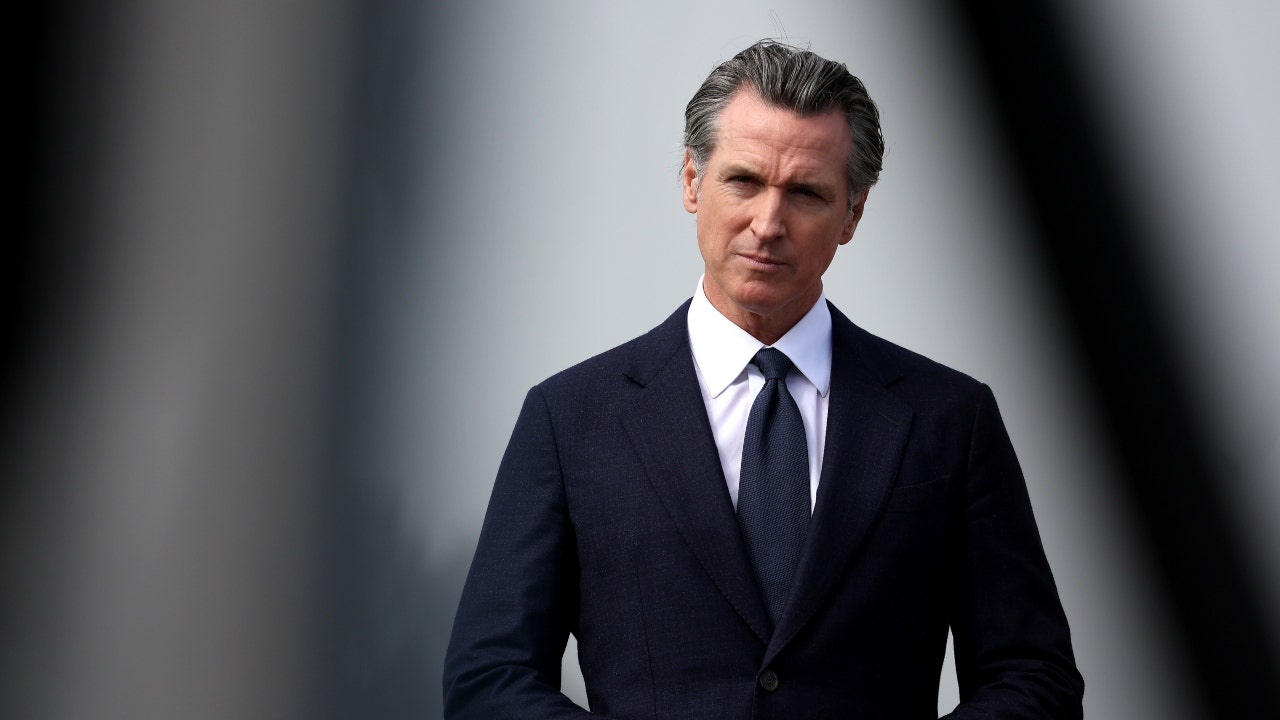
California Gov. Gavin Newsom said he and Democrat leaders in the state Legislature are trying to negotiate a Prop 47 reform off the November ballot.(Justin Sullivan/Getty Images)
The governor and some Democrats have said they do not support the bipartisan effort to amend Prop 47. Newsom and legislative leaders are pushing some public safety bills circulating through the state Capitol that attempt to address organized retail theft, car break-ins and other crimes, after residents in the state voiced their concerns about the rise in crime.
Advertisement
The Prop 47 reform initiative is likely to make it onto the ballot, according to recent data from the California Secretary of State’s office. Proponents of the reform gathered 910,000 signatures supporting the ballot measure, although the signatures are still being verified.
Some Democrat lawmakers plan to add inoperability clauses into the public safety bills to prevent them from going into effect if voters approve the Prop 47 reforms, according to KCRA. Some Democrats said this is to ensure there are not any inconsistencies in the law, a claim the campaign seeking to reform Prop 47 rejected on Friday.
Republicans are calling this plan a “poison pill.” Republican leaders wrote a letter to Democrat leaders on Thursday announcing their opposition to “poison pills” that include repealing retail theft bills should voters adopt Prop 47 reforms.
“To combat the California crime wave, we need to strengthen our laws, both in the Legislature and at the ballot box,” Senate Minority Leader Brian Jones said in a statement. “It’s irresponsible to force voters into a false choice between the two. Unfortunately, some Democrat politicians are too prideful to admit their mistake with Prop 47 and they continue to deny the desperate need for reform. The Democrats’ poison pill amendments are a cynical attempt to mislead voters and prevent the necessary overhaul of our broken laws.”
CALIFORNIA HAS TO PROVIDE 1,200 TINY HOMES FOR STATE’S HOMELESS THAT WERE PROMISED IN MARCH 2023
Advertisement
The governor and some Democrats have said they do not support the bipartisan effort to amend Prop 47.(MediaNews Group/East Bay Times via Getty Images)
Newsom declined to say if he would sign the legislation if it includes the inoperability clauses. When asked if he was not confident that voters would reject the measure if it makes it onto the November ballot, the governor said he does not believe it is necessary to have it on the ballot.
“Why have something on the ballot that doesn’t actually achieve the goals that are intended? Why do something that can be done legislatively, with more flexibility? I think it’s a better approach,” he said.
The ballot initiative would change Prop 47 to enhance penalties for repeat thieves, requiring people who steal for a third time to spend up to three years in prison. The measure would also classify the possession of fentanyl as a felony.
“Democrats need to stop playing politics with public safety and let voters decide on fixing Prop. 47,” Assembly Republican Leader James Gallagher said in a statement. “These poison pills show that Democrats aren’t serious about ending the crime wave – they just want to look like they’re doing something because their years-long support for criminals has become a political liability.”
Advertisement
Prop 47, approved by voters a decade ago, made several crimes, including shoplifting, grand theft and receiving stolen property, a misdemeanor instead of a felony if the value of the property did not exceed $950.(Fox News)
Democrat Senate Pro Tempore Mike McGuire has said the measure is unnecessary, and that the legislative public safety package is the better choice.
“If you want a set of laws that will blunt retail theft, this plan is exactly what’s needed in this state,” McGuire said. “That’s why these bills are supported by law enforcement, firefighters, retailers, store owners and trusted local leaders. These 14 bills that will move next week aren’t about partisan politics, they’re about keeping the people of California safe.”
California’s secretary of state has until June 27 to certify the November ballot, which means Democrat leaders have just weeks to attempt to negotiate the measure off the ballot.
San Francisco kicked off Pride weekend with the return of the Market Street Pride lasers, while the Golden State Valkyries celebrated Pride Night alongside the ValQueeries, an LGBTQ fan group building community through basketball.
A year ago, the Denver Broncos had some questions about the future of their center position. However, during the bye, the Broncos answered those questions by extending one their starter.
Advertisement
Even with that extension, the Broncos still have some questions about the position’s future, partly due to the structure of the deal they granted and the position’s depth.
Advertisement
Our last installment in this positional series was at offensive guard, where the Broncos are very strong and deep. As we continue breaking down each position on the Broncos’ roster ahead of training camp, let’s examine where things stand at center.
Starter
Luke Wattenberg
Advertisement
Wattenberg is the starter and will remain so after the big extension Denver gave him in November 2025. Before the extension, his play was solid, but afterward, he looked like a top 10 center in the NFL — then he suffered a shoulder injury.
Advertisement
Wattenberg’s long-term place with the Broncos will depend entirely on his play, as his four-year, $48 million deal is structured so that Denver can get out of it after the 2027 season. It’s essentially a two-year deal for about $25 million.
If Wattenberg isn’t cutting it or can’t stay healthy, the Broncos could move on and save themselves $23 million. He’s missed six games to injury since becoming the starter in 2024, so the Broncos’ depth could be tested with Wattenberg as the guy.
Advertisement
Backup
Denver Broncos center Alex Forsyth (54) during the game Arizona Cardinals during the second quarter at Empower Field at Mile High. | Ron Chenoy-Imagn Images
Alex Forsyth
The backup spot is held by Forsyth, a solid run blocker who struggles in pass protection. He has seen the field some over the last two years. When Forsyth stepped in for Wattenberg late last season, he looked much the same as he did in the same role in 2024.
Advertisement
There are still questions about Forsyth, not only with his play but also with the fact that he is entering the final year of his rookie deal as a 2023 seventh-round draft pick. Denver could be looking for a new backup center after this season, as he could decide he wants a chance to start elsewhere and walk in free agency, especially with six career starts on his resume.
Advertisement
Wattenberg will be the starter for 2026 and 2027, so long as he avoids the injury bug. He hasn’t been able to stay on the field since taking over for Lloyd Cushenberry III as the starter in 2024, so if the best predictor of future outcomes is past outcomes, the Broncos had better be prepared for Forsyth to see the field at some point in 2026.
The Others
Advertisement
Washington Commanders guard Michael Deiter (60) against the Arizona Cardinals at State Farm Stadium. | Mark J. Rebilas-Imagn Images
Gavin Ortega and Michael Deiter
Oretega is an undrafted rookie the Broncos brought in, and he has a chance to compete for a practice squad spot. The Broncos brought Deiter in last year after injuries to Wattenberg and Forsyth.
There isn’t a spot for either of these players on the 53-man roster, barring preseason injuries, and it can be tough to keep two centers on the practice squad, even if the players have guard versatility.
Advertisement
The Takeaway
While the Broncos have the starting job locked up with Wattenberg for the next two years, their depth is still questionable. Forsyth hasn’t shown the development you want to see, and will be a free agent after this season.
Denver could find itself looking for a center in the 2027 NFL draft to develop in case Wattenberg’s play drops off, or if he isn’t able to sustain the high level of play he displayed after getting his extension late last year.
Sign up for our free Denver Broncos On SI newsletter, and get breaking Broncos news delivered to your inbox daily!