New Mexico
The story of illegal to legal marijuana in New Mexico – Valencia County News-Bulletin


first person
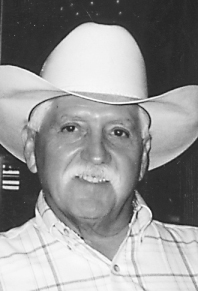
John Lopez
I’ve written about marijuana in several (letters) to the editor in the Valencia County News-Bulletin and the Albuquerque Journal.
In each opinion, I revealed how the CEO of Ultra, the largest producer/vendor of marijuana in New Mexico was able to get a head start on the business way before it was legalized by Gov. Michelle Lujan Grisham, who lobbied the Legislature to do so.
The democratically-controlled Legislature was ready to introduce it and get more than enough Democrats to vote in the affirmative when the bill came before them. Lujan and the Ultra CEO coupled with all the representatives and senators who supported the legislation were elated. All they could see was thousands of new dollars coming into the state coffers for them to spend stupidly as they were used to doing.
Additionally, I as a “no” vote warned of the dangers that would result, the great human heartache and further erosion of the family unit and the population of New Mexico in general, especially the younger members, many who were already experimenting with mind altering drugs and alcohol. Age limits imposed by the law are as effective as is the purchase of alcohol. Underage potential users will find ways to get around any regulations that may supposedly control the sale of the products.
Further, about the same time that work was being directed on marijuana, other players were working on legalizing hemp. This effort was being directed by a representative who presented the effort as a harmless agricultural plant that would help not harm the population when used appropriately. People didn’t know then that the hemp plant and by products were the same plant that produces the ingredients to produce marijuana.
Recently, we learned that youngsters who were given, supposedly, harmless gummies laced with hemp, experienced poisonous results, i.e., nausea, vomiting, dizziness, shortness of breath, etc., many requiring visits to emergency rooms. Clearly, the representative who was pushing the legalization of hemp was in cahoots with the marijuana crowd, all who had evil thoughts in their minds about huge profits that would accrue to all of them.
The representative who led the hemp charge left his office, I’m sure, because he did not want to face the consequences that we are now dealing with in addition to a state-wide water shortage exacerbated by haphazard agricultural practices.
Marijuana legalization was headed by a gentleman who had worked for the state of New Mexico several years. His last job, I believe, was as secretary of the Human Services Department. While employed by the state, he set the stage for New Mexico to eventually legalize marijuana. This man is very smart and used his employment to lobby legislators and others regarding marijuana. When he left his job, he continued lobbying efforts and concomitantly started getting ready to become a marijuana entrepreneur.
He purchased property in Corrales under the pretense that he was going to develop a vineyard. There was some push back by neighbors who were concerned about excessive water consumption that he overcame. When the time came, he was ready to farm marijuana. Water consumption was now a moot issue.
He proved to the opposition that the new crop would not use any more water than what the grape vines had consumed. Water consumption, however, continues to be a problem throughout the state. Regardless, once he got the state permit, he launched his first marijuana farm, followed by others throughout the state. As I indicated before, he is now the “king” of the marijuana farmers.
Now, to be clear, the “king’s” lobbying also included talks of benefits to New Mexico from hemp, which was pushed as a totally safe and friendly agricultural product, all the while keeping an eye on the more potentially harmful and more lucrative product, marijuana.
The employee and lobbyist previously mentioned is indeed, today, the “king” of marijuana growers and vendors. The legislator who succeeded in legalizing hemp is getting his rewards from the supposedly harmless products derived from hemp. Interestingly enough, hemp is the plant that also produces the chemical required to make marijuana. This gentleman was a state representative when the “king” was pushing legalization of marijuana. What a coincidence!
New Mexico loves the revenues being generated by the sale of hemp and marijuana products. Once legalized, the “king” was already producing plants in what started out as a vineyard. Initially, little or no consideration was given to water consumption or equally important, mental and physical problems that hemp and marijuana would produce and we would have to address in an already medically under-served state.
It is only today in 2024 that the New Mexico leadership and medical and law enforcement personnel are seeing the negatives of the wild and senseless legislative efforts that did generate the expected revenue for them to spend, as well as the expenditures that would be required for services to address the negative impacts.
Incidentally, our governor and legislators, along with John Baynor, former speaker of the U.S. House of Representatives, can be credited and thanked for the mess that legalization of hemp and marijuana have handed us. You see, when Baynor was in office, he opposed legalization of marijuana in the country. Once he retired, in short order he supposedly changed his mind, turned pro-legalization and quickly accepted a position on the board of directors of a huge marijuana producer based in New York. To my knowledge, he continues to serve and make bundles.
The push to legalize marijuana across the country continues. Concomitantly, the social, physical and mental problems related to consumption of the products continue to pop up and grow exponentially. New Mexico’s government shows some signs of concern, but, beyond minimal concern, it is more concerned and thrilled with the revenue marijuana and gas and oil are bringing into state coffers. They are like kids going crazy in an ice cream shop, spending public money like there was no end, or more appropriately, “como marranos trompudos!” By the way, what else is new?
Incidentally, three cheers for the city of Belen, its mayor and council for standing up and limiting the number of marijuana shops to seven! Congratulations!
Good luck you senseless servants of the people. Hopefully, the Lord’s words will intervene and bring you to your senses. Otherwise, we wait for the time when water needs create other more serious problems along with social/health problems, when you fully understand, the monster you created, the monster you can’t force back into the magic lamp.
In closing, permit me to beseech you to think about all the human beings that you have hurt and are going to hurt all because of your short sightedness.
(John Lopez is a retired professor and administrator. He has a doctorate from New Mexico State University and taught at Western New Mexico University. He retired as vice president of academic affairs from Luna Community College. He lives in Bosque Farms with his wife, Anna.)


John Lopez, guest columnist



ALBUQUERQUE, N.M. — Country Music Hall of Fame inductee Tanya Tucker will perform at the 2026 New Mexico State Fair, officials announced Tuesday.
Tucker will take to the stage Friday, Sept. 18, after the Chevron PRCA rodeo. The Grammy Award-winning icon has racked up 10 No. 1 country hits since her first hit, “Delta Dawn,” at age 13.
“We couldn’t be more thrilled to bring the legendary Tanya Tucker to the New Mexico State Fair,” said Dan Mourning, general manager of the New Mexico State Fair. “Tanya is one of the greatest icons in country music history and is the perfect fit for the Fair.”
Tucker has 23 Top-40 albums and 56 Top 40 singles on the Billboard country music charts. She has won two Country Music Association awards, two Academy of Country Music awards, three CMT Awards and two Grammys for Best Country Album and Best Country Song.
Tickets are set to go on sale on Friday at 10 a.m.
Here is the full 2026 New Mexico State Fair rodeo-concert lineup:
Friday, Sept. 11
Turnpike Troubadours with Chevron PRCA Xtreme Bulls
Saturday, Sept. 12
Ian Munsick with Chevron PRCA Xtreme Bulls
Wednesday, Sept. 16
Chevron PRCA Standalone Rodeo
Thursday, Sept. 17
Everclear with Chevron PRCA Rodeo
Friday, Sept. 18
Tanya Tucker with Chevron PRCA Rodeo
Saturday, Sept. 19
The Warning with Chevron PRCA Rodeo
Sunday, Sept. 20
Chevron PRCA Rodeo – Matinee

SANTA FE, N.M. (AP) — State investigators began searching a secluded ranch in New Mexico on Monday where financier and sex offender Jeffrey Epstein once entertained guests amid allegations that the property may have been used for sexual abuse and sex trafficking of young women.
The office of state Attorney General Raúl Torrez announced that the search was being done with the cooperation of the current ranch owners.
Torrez last month reopened an investigation of the ranch. New Mexico’s initial case was closed in 2019 at the request of federal prosecutors in New York, and state prosecutors say now that “revelations outlined in the previously sealed FBI files warrant further examination.”
Epstein purchased the sprawling Zorro Ranch in Stanley, New Mexico, about 30 miles (48 kilometers) south of Santa Fe, in 1993 from former Democratic Gov. Bruce King and built a hilltop mansion with a private runway.
The property was sold by Epstein’s estate in 2023 — with proceeds going toward creditors — to the family of Don Huffines, a candidate in Texas for state comptroller who won the Republican primary last week.
“The New Mexico Department of Justice appreciates the cooperation of the current property owners,” the agency said in a statement. Prosecutors “will continue to keep the public appropriately informed, support the survivors, and follow the facts wherever they lead.”
Additionally, New Mexico state legislators have established a new commission to look into past activities at the ranch.
Epstein killed himself in a Manhattan jail while awaiting trial in 2019 on charges that he sexually abused and trafficked dozens of underage girls.
Epstein never faced charges in New Mexico, but the state attorney general’s office in 2019 confirmed that it had interviewed possible victims who visited Epstein’s ranch.
Copyright 2026 The Associated Press. All rights reserved. This material may not be published, broadcast, rewritten or redistributed without permission.

Irish heritage and history run deep in Maryland. Now to celebrate it.

Michigan hockey vs Notre Dame time, channel in Big Ten Tournament

Marijuana prices have been taking a nosedive. What comes next? – The Boston Globe

Minnesota lawmakers push bipartisan measures to regulate AI

Thompson defeats Turnage to highlight U.S. House primaries in Mississippi – SuperTalk Mississippi

Florida High School Football Rankings: Top 25 teams – Oct. 21

Cleary's 21 help Le Moyne down Central Connecticut State 69-64 in OT

How old is Bo Nix? What to know about Oregon quarterback ahead of 2024 NFL Draft

99th annual Pony Swim held in Virginia

Indiana Members Credit Union announced as new anchor tenant at Bottleworks District

EXCLUSIVE: ICE says El Paso detention facility will stay open under new contractor after $1.2B deal scrapped

Von der Leyen ‘acting outside of competence,’ Araud tells Euronews

Wheelchair curler Steve Emt’s path from drunk driver to three-time Paralympian

Map: 2.3-Magnitude Earthquake Reported North of New York City

Trump stirs GOP primary drama with visit to Massie’s Kentucky home turf
-

 Wisconsin1 week ago
Setting sail on iceboats across a frozen lake in Wisconsin
-

 Massachusetts1 week ago
Massachusetts man awaits word from family in Iran after attacks
-

 Pennsylvania6 days ago
Pa. man found guilty of raping teen girl who he took to Mexico
-

 Detroit, MI5 days ago
U.S. Postal Service could run out of money within a year
-

 Miami, FL6 days ago
City of Miami celebrates reopening of Flagler Street as part of beautification project
-

 Sports6 days ago
Keith Olbermann under fire for calling Lou Holtz a ‘scumbag’ after legendary coach’s death
-

 Virginia7 days ago
Giants will hold 2026 training camp in West Virginia
-

 Culture1 week ago
Try This Quiz on the Real Locations in These Magical and Mysterious Novels