Nevada
What did the Nevada Legislature do in its first month?


One month down. Three to go.
The Nevada Legislature is about 30 days through its 120-day session, and the start has been eventful, to say the least.
Legislators passed a bill that Gov. Joe Lombardo signed into law just two weeks into the session to address the rising costs of eggs.
In what could be a headlining topic of the 2025 Legislature, lawmakers heard a bill that would dramatically increase tax credits for film industries to lure a film studio and the jobs that come with it to Southern Nevada, creating a mini-Hollywood in Las Vegans’ backyard.
They’ve been dealing with a budget proposal that was first introduced with a $335 million deficit from the governor’s office, though they’ve made amendments and have since presented a balanced budget proposal.
Legislators have also put forward over 1,100 ideas for bills – including ones that would exempt the state from daylight saving time, change the state’s handling of public records and put in place protections for in vitro fertilization – all while potential federal budget cuts loom over their heads.
Busy beginnings
The 63-member body has introduced more bills than in previous sessions. By Feb. 21, the 19th day of the session, 502 bills had been introduced – an 18.4 percent increase from the previous session, according to data from the Legislative Counsel Bureau.
As of that day, there were still more than 659 bill draft requests submitted but not yet introduced. Most legislators’ bills must be introduced by March 17.
Additionally, 27 resolutions were put forward that urge Nevada or Congress to take certain actions, from protecting the area of Frenchman Mountain to entering into the National Popular Vote Compact.
Assembly Speaker Steve Yeager, D-Las Vegas, said he and Senate Majority Leader Nicole Cannizzaro have done a better job telling legislators to turn their bill draft requests around earlier.
“The sooner your bill is drafted, the better chance you have of getting a hearing,” he said during a press availability Feb. 20.
Democratic legislators have also re-introduced unsuccessful bills from the last session, which has also been helpful in getting bill texts written, Yeager said.
“The first two weeks of session was extraordinarily busy and chaotic, unlike any session I’ve been a part of,” the Assembly speaker said. “I think it had a lot to do with the budget. We had a lot of extra meetings, either public-facing meetings or with our staff, to understand the budget.”
Others say the start of the session hasn’t caught them off guard. Richard McCann, president of McCann Consulting and a lobbyist since 2013, said he felt the pace of business is like early weeks in previous sessions — at least for lobbyists.
“I’m not going to argue with the statistics, but there’s still way too few lobbyists in the building to anticipate that it’s like a barn-burning thing going on,” he said. “There’s still a lot of … where is everybody?’ On a personal level, a lot of my bills aren’t out yet, so I don’t see it.”
Lombardo has also announced his legislative priorities, including permanent teacher pay raises and a $1 billion investment in new housing. His five bills are due March 24, and his office will hold a series of press conferences on the bills.
“Governor Lombardo looks forward to sharing and formally introducing his five key pieces of legislation, which include mandating accountability in education, lowering housing costs, expanding healthcare access, strengthening public safety, and modernizing economic development in Nevada,” spokesperson Elizabeth Ray said in an email.
So far he has signed two bills into law: Senate Bill 1, which funds the costs of the session, and Assembly Bill 171, which allows Nevada to temporarily drop a ban on cage-free egg sale requirements in the state, an effort that was fast-tracked through the Legislature to address rising egg prices.
Federal budget cuts
As part of the Trump administration’s campaign to curb federal spending, the House passed a Republican budget resolution that proposes $4.5 trillion in tax cuts and a $2 trillion reduction in federal spending over a decade.
Nevada legislators have expressed concerns about what that would mean to the state’s budget. Some say they are particularly concerned about changes that could affect Medicaid coverage in the state, where about 800,000 Nevadans are enrolled.
Asked whether he felt federal budget conversations were looming over the session, Assemblymember Phillip “P.K.” O’Neill, R-Carson City, grabbed a magic 8 ball-like toy with President Donald Trump’s likeness on it with the label ‘President Predicto.’ It said: “Yes, but let’s see what happens.”
“I think a lot of it is posturing, and it’s politics at the end of the day. Who’s going to blink, what game of poker do you want to play?” O’Neill said, adding that so much can happen before the federal government’s March 14 funding deadline. His top concern was the impact on Nevada’s Medicaid program, he said.
Assembly Minority Leader Gregory Hafen II, R-Pahrump, said he is happy that the federal government is “finally coming to the play and following Nevada’s lead.”
Nevada has always had a lean budget and a rainy-day fund, Hafen said.
“I’m happy to see that they’re finally taking the steps to follow Nevada’s lead, be responsible with their money and hopefully be able to establish a balanced budget,” Hafen said during a Tuesday press call.
How the budget cuts affect Nevadans is a concern, Hafen said, and he is watching on a daily basis to see how the state should prepare.
“I feel pretty good. I had a really good conversation with fiscal staff this morning on where we’re at and what we might see, but I feel confident that it’ll be good,” he said.
Democratic lawmakers struck a different tone. Many have used the first month’s hearings to gauge how prepared the state is for reductions in federal support and to call on Congressional Republicans to vote against proposed cuts.
“We learn more every day that these cuts will devastate families, devastate their economic security, cause chaos for our health care providers, and cost our state budget billions of dollars,” Cannizzaro, D-Las Vegas, said during a Wednesday press conference before a meeting where lawmakers grilled state health care officials over potential impacts to budget cuts.
During a budget hearing for the Governor’s Office of Federal Assistance, director A’Keia Sanders said the office is evaluating possible long-term effects of a lower federal budget and finding alternative funding sources for programs in which federal funding may no longer be available.
“Our goal is to create sustainable solutions that improve efficiency, increase funding opportunities and support long-term success for our agencies and communities,” she said.
McCann said the lack of clarity in federal support makes it difficult to plan policies.
“When there’s uncertainty in terms of where money’s going to be coming from, we can barely take what we got,” he said. “Asking for more becomes really a problem.”
Contact Jessica Hill at jehill@reviewjournal.com and McKenna Ross at mross@reviewjournal.com. Follow @jess_hillyeah and @mckenna_ross_ on X.


The expected vote is the total number of votes that are expected in a given race once all votes are counted. This number is an estimate and is based on several different factors, including information on the number of votes cast early as well as information provided to our vote reporters on Election Day from county election officials. The figure can change as NBC News gathers new information.
Source: Vote data via the Associated Press. Projections by the NBC News Decision Desk.

LAS VEGAS (AP) — Nevadans are choosing their party nominees Tuesday for two closely watched congressional seats and the governor’s race, among others, as the state grapples with an affordable housing shortage, exploding energy demand from data centers and federal cuts to key state programs.
The state has a closed primary, meaning only registered Democrats and Republicans will vote in party contests after an effort to open them up failed in 2024.
Several primaries feature matchups between candidates backed by party leaders and political outsiders promising change. Come November, the governor’s race is considered one of the most competitive in the country, and holding on to the 3rd Congressional District is considered crucial for Democrats’ hope of retaking the U.S. House.
Here’s a look at the most prominent races:
Democrats seek a rival for Lombardo
Gov. Joe Lombardo, a Republican, is considered one of the most vulnerable governors in the country this fall.
The Democrats vying to challenge him include state Attorney General Aaron Ford, who has the backing of the Democratic congressional delegation and former Vice President Kamala Harris, and Alexis Hill, a county commissioner in northern Nevada who campaigned as a candidate willing to shake things up.
They focused their campaigns on affordability, as the state continues to see a shortage of affordable housing, some of the highest gas prices in the country and cuts to federal healthcare and food assistance programs.
Ford largely ignored Hill, instead directing his attacks at Lombardo and arguing that both the governor and Trump are responsible for Nevadans’ economic woes. He is trying to become Nevada’s first Black governor.
2nd Congressional District
In the Republican contest to replace longtime Rep. Mark Amodei, who is retiring, President Donald Trump has endorsed David Flippo, a loyalist of the president who has never held elected office. Amodei and Lombardo have backed James Settelmeyer, a former state senator with a long political track record.
The district covers northern Nevada and includes Reno and Carson City, the capital, along with an immense rural expanse.
Trump-endorsed candidates have seen successful in primaries elsewhere, underscoring his unrivaled power over the Republican Party as he enters the last years of his presidency. He easily won the district in the 2024 presidential election.
The GOP nominee has a good chance of winning in November, as registered Republicans outnumber Democrats by 70,000 in the 2nd District. A Republican has held the seat since the district was created in the 1980s.
Still, Democrats hope to entice the large number of nonpartisan voters in the district this fall. Their candidates include Teresa Benitez-Thompson, a former majority floor leader of the Nevada Assembly, and Greg Kidd, an investor who ran in the last cycle as a nonpartisan.
3rd Congressional District
Nevada’s other three members of Congress, all Democrats, are expected to win their primaries easily.
In the 3rd District, Republicans are battling to determine who will face Democratic Rep. Susie Lee in what is considered the most competitive congressional district in Nevada because of its narrow Democratic registration advantage, its high number of nonpartisan voters and a history of razor-thin election margins. In 2024 both Lee and Trump won narrowly.
Candidates include Trump-backed Marty O’Donnell, a composer who worked on the “Halo” video game series and ran unsuccessfully for the seat in 2024; Jeff Gunter, a dermatologist and former ambassador to Iceland; neurosurgeon Aury Nagy; and businessperson Tera Anderson.
The candidates ran on border security, energy independence and decreasing the federal debt.
Attorney general
With Ford term-limited and running for governor, the opening has prompted competitive primaries for the state’s top law enforcement post.
The Democratic side features state Senate Majority Leader Nicole Cannizzaro and Treasurer Zach Conine. Both campaigned on promises to take on the Trump administration, following in the footsteps of Ford, who filed numerous lawsuits against the federal government.
For the Republicans, Trump-backed attorney Adriana Guzmán Fralick faces Douglas County commissioner Danny Tarkanian. Tarkanian, son of legendary University of Nevada, Las Vegas basketball coach Jerry Tarkanian, previously ran unsuccessfully in multiple congressional races.
Both candidates campaigned on “election integrity,” casting doubt on voting security. Nevada is one of the swing states in which Trump falsely claimed the 2020 election was stolen, despite officials finding no evidence of widespread fraud.
Tarkanian promised to investigate voter fraud allegations, while Guzmán Fralick vowed to seek passage of the SAVE Nevada Act, which would be similar to changes Trump has sought at the federal level.
Her legislation would require all votes to be counted on Election Day, end universal mail ballots and eliminate automatic voter registration. It would almost certainly hit a dead end in the Democratic-controlled Legislature.
GOP secretary of state candidates question Nevada’s elections
Several Republicans are running for secretary of state, the office that oversees elections, including some who falsely claimed the 2020 election was stolen from Trump. The winner of the primary will take on Democratic Secretary of State Cisco Aguilar.
The GOP candidates include Jim Marchant, a former state lawmaker and perennial candidate who has said the 2020 election “was probably stolen”; Sharron Angle, a former state lawmaker who was part of an effort to block the certification of Nevada’s 2020 election results; and Shirley Folkins-Roberts, an attorney who received Lombardo’s endorsement and has denied there is widespread fraud in Nevada’s elections.
All the candidates support implementing voter ID, which will be on the ballot for the second time in November after the question passed by a wide margin in 2024.
Angle promises to enforce voter ID if voters pass it and supports Trump’s executive order seeking to require documentary proof of citizenship to vote. The courts have so far halted that order, issued last year, from taking effect.
Marchant wants to eliminate electronic voting machines and end the state’s universal mail ballot system. He also wants to require paper ballots, which would be counted by hand, according to his campaign website.
Folkins-Roberts said she will work to keep voter rolls accurate and up-to-date, require voter ID and ensure that election results are delivered on time. She also wants to reverse the automatic voter registration system. In an interview with News 4 Reno, Folkins-Roberts said she believes Nevada’s elections are “good,” but wants to improve voters’ confidence by making changes.

LAS VEGAS (KSNV) — We’ll start the week with a heightened fire danger with dangerous heat later this week.
TODAY
Expect mostly sunny skies with winds picking up again on Monday. High temperatures will reach 98 degrees in Las Vegas with south winds 10-20 mph and wind gusts up to 30 mph.
A RED FLAG WARNING is in place from 10am to 9pm Monday for gusty winds and dry weather, so if a fire started, it would spread quickly.
Winds are estimated to be 20-25 mph with gusts around 40 mph at times with relative humidity of 5%-15%.
Air quality is ranked ‘good’ to ‘moderate’ for dust and tree pollen. The most common pollens are juniper, cedar, willow, sycamore and palm.
TONIGHT
We’ll see variable clouds this evening with skies going from mostly cloudy to mostly clear overnight.
Wind gusts will pick up again before midnight with gusts 30-40 mph possible downslope of the Spring Mountains in the west valley.
Elsewhere, gusts will be 20-30 mph. Breezes will eventually back down to 5-15 mph overnight. Valley lows will drop to around 74 degrees.
WHAT’S NEXT
We have reached 109 consecutive days without measurable rain in Las Vegas.
No rain is in sight, but for perspective, June is the driest month of the year in Las Vegas. Fingers crossed on a hopefully more active monsoon season!
High pressure builds next with highs 5-10 degrees above normal. Temperatures will reach around 108 degrees in Las Vegas by Friday. The last time we hit a high temperature of 108 degrees was back on August 20th of last year.
Not much relief is in sight by the weekend with highs around 107 degrees and temps at or above 105-106 degrees NEXT Monday through Wednesday.
-
 Louisiana6 minutes ago
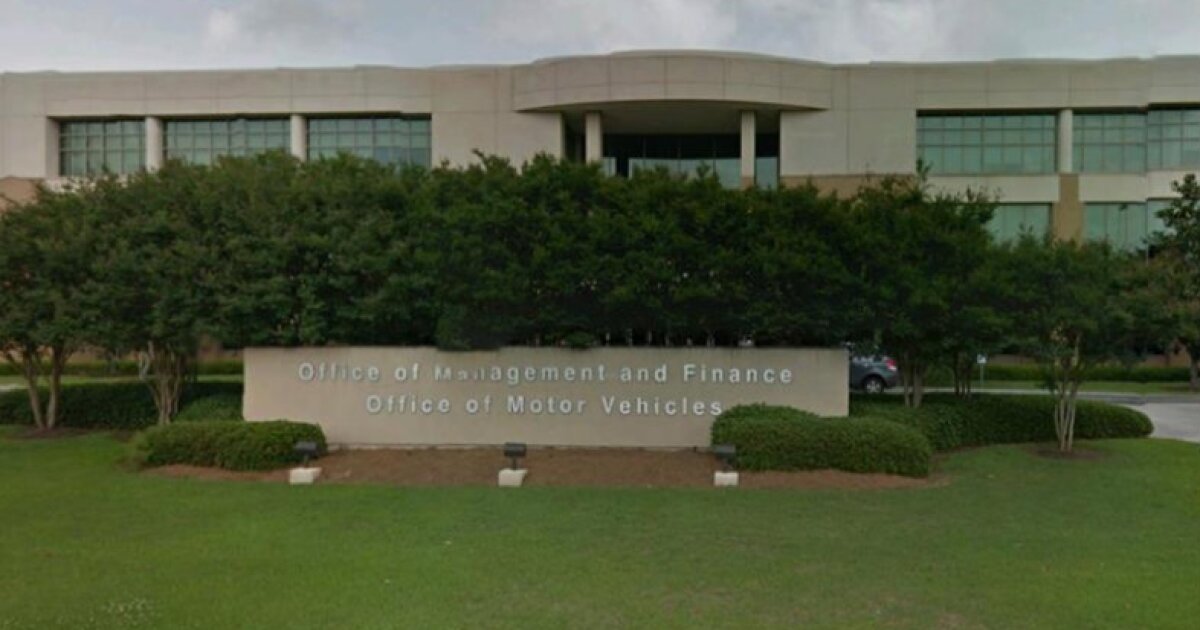
Network outage causing OMV closures across Louisiana
-
 Maine9 minutes ago
Central Maine Power bills to fall this summer
-

 Maryland14 minutes ago
Maryland man charged with arson after investigators say he set his home on fire
-

 Michigan21 minutes ago
Port Huron artist named finalist in Michigan ‘I Voted’ sticker contest
-

 Massachusetts24 minutes ago
Massachusetts Man Arrested On Gun, Drug, Carjacking And More Charges: Cops
-

 Minnesota29 minutes ago
Minnesota Ranks Fifth for Child Well-Being, But Education Scores Continue to Slide
-

 Mississippi36 minutes ago
Manhunt ends after brothers arrested in Covington County deputy shooting
-

 Missouri39 minutes ago
Paragould woman airlifted after rollover crash in Missouri

